My mother encouraged me in everything I did. I remember when I was just starting to buy classical records, she suggested that if there were certain composers I enjoyed, I should consider exploring what else they wrote. I took Beethoven’s “Pathètique” Sonata and Wagner’s “Die Walküre” out of the library (the latter was way over my head), but mostly I went to the record store with my allowance and purchased what I could from the 99-cent bin. Now my record collection is so big, even I’m a little afraid of it. The same thing happened with books.
When I was small, she read me Grimms’ fairy tales and watched black-and-white monster movies with me. Later, she read short stories and novellas I wrote and encouraged me in whatever projects I got up to, including making Super 8 films with my friends.
We colored eggs on Easter; we carved pumpkins at Halloween. One year, she supervised my sister and me in the construction of papier-mâché costumes. I was a scarecrow, which required a pumpkin head, and my sister was Mr. Peanut. Once, we attempted gingerbread houses for Christmas. For a time, she popped popcorn on the stovetop so that we could prick our fingertips with needles as we attempted to thread it with cranberries for old-fashioned garlands for the Christmas tree.
Another time, we painted antique steamer trunks in the styles of our choice. I painted mine red, white and blue. It still sits in my old attic bedroom at my parents’ house. I sometimes think of stripping the paint off and restoring it to its former state, but I don’t think it was anything special to begin with. The paint is as vibrant today as the day it was applied, probably 50 years ago.
From time to time, she brought my sister and me along to her art lessons at the community art league. But I evinced no talent as a painter. I did, however, draw my own comic books. I’m a fun doodler and an okay cartoonist.
One summer, she drove us over to New Jersey, and we pulled off to the side of the road to watch a hot-air balloon race, dozens of them floating in the skies like so many tulips liberated from their stems. Another time, she sat with me in the car at night so that we could view a lunar eclipse.
She did make a few missteps along the way, as when she signed me up for all the stereotypical guy stuff. I played basketball, but was never comfortable with it. She arranged tennis lessons, but I had no finesse or restraint, and she had me try out for Little League. I was pretty good on the sandlot, playing with the neighborhood kids, but I was less successful with crazy, type-A 9-years-olds and abusive coaches. I spent my one season mostly as a bench-warmer.
I was also not big on summer camp. That kind of stuff was for kids who didn’t know what to do with themselves. I was never bored.
At last, she arranged for me to take piano lessons. You’d think, given my mania for music, that I would have been a natural, but I wondered what all those tedious scales had to do with making music. I was always a mediocre student, because I always wanted to hang out with my friends, and then I got interested in girls. But my teacher understood my sincere enthusiasm and lent me records of Brahms and Mahler.
It was clear I was never going to be a virtuoso, but Mom and I kept up doing musical things. We attended piano recitals and string quartet concerts at the local college and at the town theater. I scribbled furiously through many of these, as my head filled with plentiful images and ideas for stories. She was also my regular companion when I attended any Gilbert & Sullivan productions.
Mom drove me everywhere, usually without complaint, although once I remember she did voice her despair when I wanted her to drive me to my cousin’s house for the afternoon. It was an hour’s round-trip, and she had to drop me off AND pick me up.
At the dawn of the home video era, I assembled my friends for annual 24-hour film festivals, which, in those days, required renting from four or five different accounts at different video stores. The coffee was always on, and my mom got up to cook us all breakfast, even though our stomachs were all feeling a bit unstable from sleeplessness.
I’m saying nothing new when I remark that being a mom is not for the faint of heart. There were plenty of times when I had to be rushed to the emergency room, including once when a friend’s mom had to drive me home covered in blood because someone dropped something heavy on me during a rock fight. When I was 10-years-old, I sustained a long-term injury, and she had to nurse me for the better part of a year. But she always shepherded me through.
She’s been gone for quite a while now. I was trying to figure out if it’s been twenty years yet, but not quite. She lived long enough to listen to me on the radio and visit me in my bookstores, but never saw any of my newspaper articles. She knew “The Lost Chord,” but never “Picture Perfect” or “Sweetness and Light.”
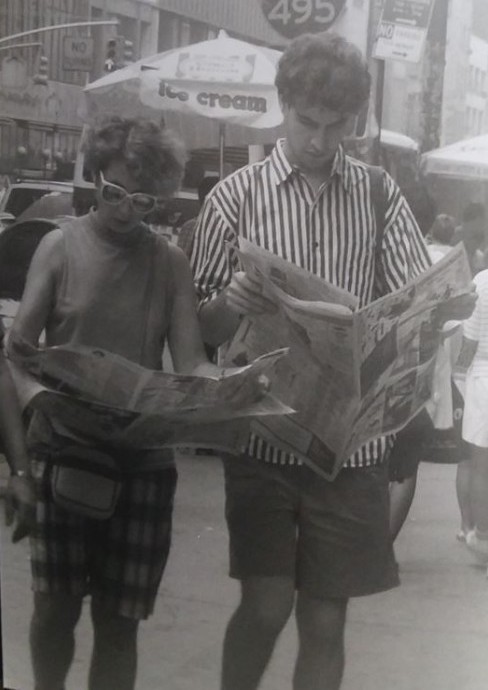
She was the single greatest influence on my life. I don’t have that many photos of her (I still have to go through everything), but in this one, we’re clearly in sync.
Happy Mother’s Day, Mom, wherever you are. And thanks for everything.
Category: Daily Dispatch
-
I Remember Mama
-
Fancy Feline Footware on “The Lost Chord”
You can tune an orchestra, but you can’t tun-a fish.
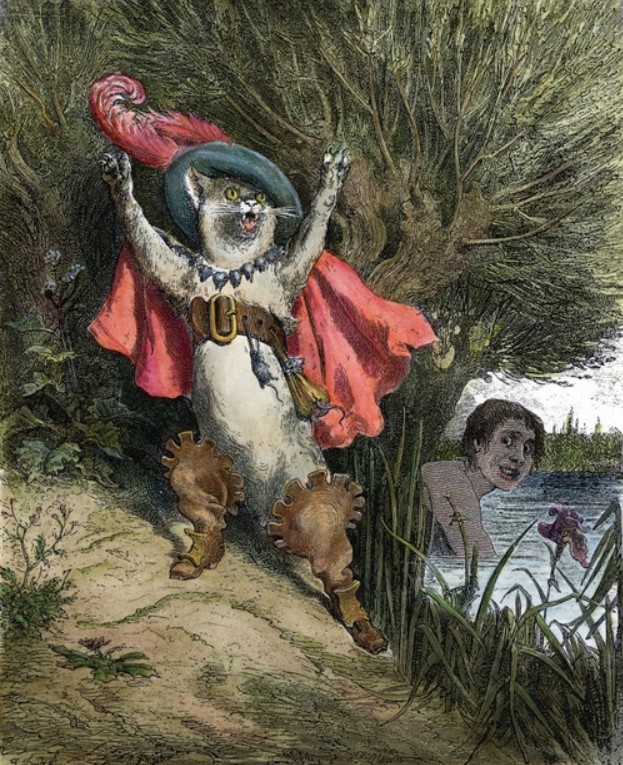
This week on “The Lost Chord,” we put the “cat” in Catalan music with selections from Xavier Montsalvatge’s one-act opera “Puss in Boots.”
“Puss in Boots,” Montsalvatge’s first opera, was composed in 1947. We all know the story. The tale, in its best-known guise, was published by Charles Perrault in 1695 as one of the “Tales of Mother Goose.”
A poor miller laments his inheritance. Most of the family property – the mill and the mules – goes to his elder brothers, and all that’s left for him is an unprepossessing cat. He wonders of what use to him a cat could possibly be. He contemplates eating it, perhaps using the skin to make a hat. The cat, however, promptly endears himself, and offers to gain his master a fortune, a kingdom, and the hand of a beautiful princess. All he asks in exchange is a pair of boots to spare his feet, a stylish hat with a plume, a cape, and a sword fashioned out of bone.
Since the cat presents him with a ring from the hand of the princess, the Miller considers it a fair deal, and sets about getting, by hook or by crook, whatever the cat desires.
Throughout the course of the story, with his cunning and superior wits, the cat is able to deliver on everything he promises.
We’ll heard selections from a 2004 recording on the Columna Musica label, with Argentine mezzo-soprano Marisa Martins as Puss (an unusual take on the traditional “trouser role”) and tenor Antonio Comas as the Miller. The Symphony Orchestra of the Gran Teatre del Liceu is conducted by Antoni Ros Marba.
Listen for charming cat-like touches in the strings and the use of piano throughout to emulate the decorative style of 18th century recitative.
That’s “Fur Love and Valor” – highlights from Xavier Montsalvatge’s “Puss in Boots” – on “The Lost Chord, now in syndication on KWAX Classical Oregon!
——–
Clip and save the start times for all three of my recorded shows:
PICTURE PERFECT, the movie music show – Friday at 8:00 PM EDT/5:00 PM PDT
SWEETNESS AND LIGHT, the light music program – Saturday at 11:00 AM EDT/8:00 AM PDT
THE LOST CHORD, unusual and neglected rep – Saturday at 7:00 PM EDT/4:00 PM PDT
Stream them, wherever you are, at the link!
https://kwax.uoregon.edu -
The Mother of All Shows for Mother’s Day on “Sweetness and Light”
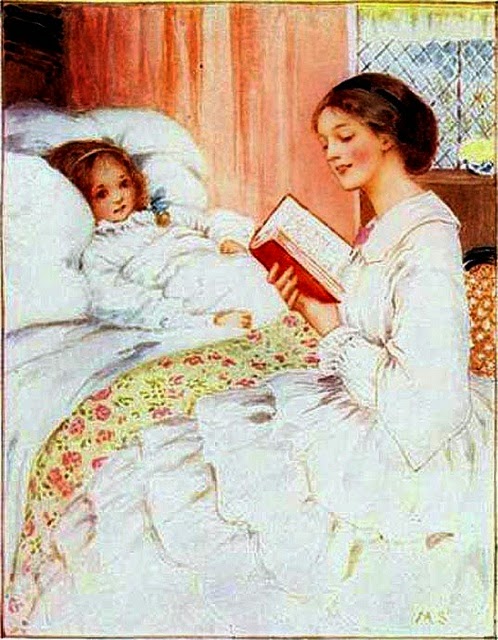
Get ready for the mother of all shows this week, on “Sweetness and Light.” It’s music for Mom for Mother’s Day!
Enjoy works on nursery themes by Grace Williams, Charles Williams, and Vaughan Williams (all unrelated). Also, odd man out Wolfgang Amadeus Mozart.
Of course, Mom deserves more, so I’ve also enlisted Yo-Yo Ma (despite his name, not really a mother, though if said properly, guaranteed to get Mom’s attention) and Luciano Pavarotti (accompanied by Henry Mancini, no less).
Start your day with a musical candygram. It’s a suite of sweets for Mom on “Sweetness and Light, this Saturday morning at 11:00 EDT/8:00 EDT, exclusively on KWAX Classical Oregon!
Stream it, wherever you are, at the link:
https://kwax.uoregon.edu/ -
“What’s in a Name?” on “Picture Perfect”
This week on “Picture Perfect,” a show built around movies with women’s names for titles permits us to travel across a broad of array of genres – contemporary drama, Regency Era comedy of manners, 1940s film noir, and 16th century costume picture.
In “Rachel, Rachel” (1968), Joanne Woodward plays a repressed, small-town schoolteacher, who learns to take control of her own life. The film marked the directorial debut of Woodward’s husband, Paul Newman. “Rachel, Rachel” was nominated for four Academy Awards, including those for Best Actress and Best Picture. Newman picked up a Golden Globe and a New York Critics Circle Award for his direction. The lovely Americana score is by Jerome Moross.
In “Emma” (1996), adapted from novel of Jane Austen, Gwyneth Paltrow plays a high spirited-though-somewhat-clueless matchmaker, who fails to recognize her own feelings or those of the men around her. Among the supporting cast are Alan Cumming, Toni Collette, Ewan McGregor, and Jeremy Northam. Screenwriter and director Douglas McGrath fell in love with the book while an undergraduate at Princeton University. Rachel Portman wrote the Academy Award-winning score.
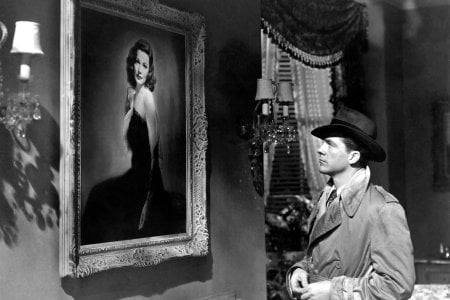
Not surprisingly, the Otto Preminger film noir “Laura” (1944) also sports quite the cast, including Gene Tierney, Dana Andrews, Clifton Webb, Judith Anderson, and Vincent Price. The equally impressive theme, heard in multiple permutations throughout the film, was written by Philadelphia-born composer David Raksin. Outfitted with lyrics by Johnny Mercer, it went on to become the second most-recorded song during the composer’s lifetime, behind only Hoagie Carmichael’s “Stardust.”
Finally, “Diane” (1956) takes us back to 16th century France, with a plot concerning Diane de Poitiers, played by Lana Turner, a member of the court of Francis I, who becomes the mistress of the king’s son, Henri d’Orléans, a very young Roger Moore. Their illicit love unfolds against the backdrop of Medici intrigue and lust for power. Miklós Rózsa, M-G-M’s go-to-composer for historical spectacles, wrote the music.
I hope you’ll join me for “What’s in a Name?,” on “Picture Perfect,” music for the movies, now in syndication on KWAX Classical Oregon!
——–
Clip and save the start times for all three of my recorded shows:
PICTURE PERFECT, the movie music show – Friday at 8:00 PM EDT/5:00 PM PDT
SWEETNESS AND LIGHT, the light music program – Saturday at 11:00 AM EDT/8:00 AM PDT
THE LOST CHORD, unusual and neglected rep – Saturday at 7:00 PM EDT/4:00 PM PDT
Stream them, wherever you are, at the link!
https://kwax.uoregon.edu
——–
PHOTO: Dana Andrews likes his women stiff, like his bourbon -
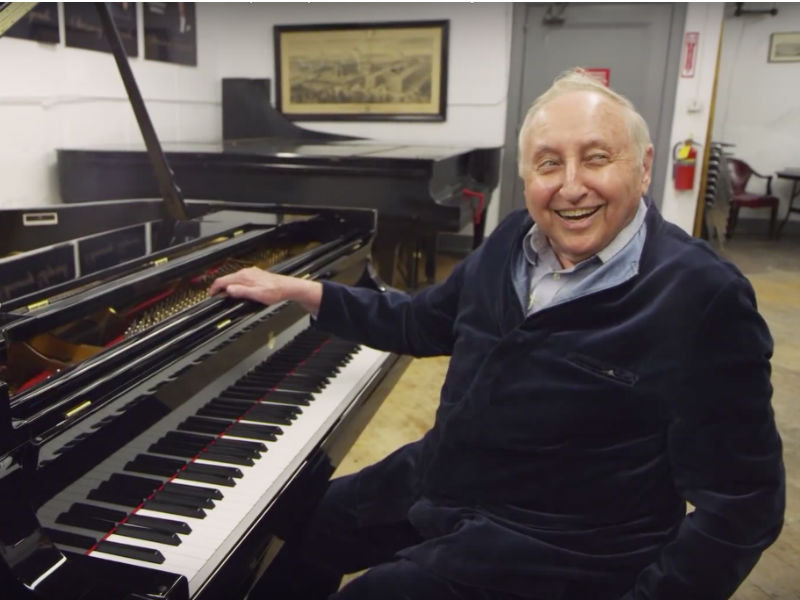
Seymour: An Epilogue
Between the obligation to promote my radio shows every Friday and Saturday, then last week falling ill as I teetered into the weekend, I just couldn’t pull it together to acknowledge the passing of Seymour Bernstein.
Born and raised in Newark, NJ (and no relation to Leonard), Bernstein basically taught piano for 80+ years, from the time his own teacher, Clara Husserl, herself a pupil of Theodor Leschetizky – who studied with Carl Czerny, who studied with Beethoven – delegated the supervision of some of her more gifted, younger pupils to him when he was only 15.
Bernstein also studied with Alexander Brailowsky, Clifford Curzon, and Jan Gorbaty, legendary pedagogue Nadia Boulanger, and master of all trades George Enescu. That is quite the gallery of mentors!
Bernstein was the soloist in the world premiere of Heitor Villa-Lobos’ Piano Concerto No. 2 with the Chicago Symphony Orchestra in 1969. Even at the height of his career as a performer, he taught, conducting master classes in Europe, Asia, and the Americas.
He abandoned the concert stage at the age of 50, opting instead for the quieter satisfactions of teaching and composing. He intimated to no one that his final concert, in 1977, would be his swan song.
His Achilles’ heel was debilitating stage fright. It drove him to early retirement, and later in life, when he was persuaded to go before the cameras for a documentary about him, he blacked out.
He long maintained a private studio in New York City, where he continued to teach practically to the time of his death. His books include “With Your Own Two Hands: Self-Discovery Through Music,” “20 Lessons in Keyboard Choreography,” “Monsters and Angels: Surviving a Career in Music,” and “Chopin: Interpreting His Notational Symbols.”
Warm and funny, dry, opinionated, and always full of insight, Bernstein was a larger-than-life character whose philosophy of musicmaking was always rooted in the heart. He could lull you with that grandfatherly exterior, but watch out! He was as sharp as C-sharp major.
In 2015, that documentary was released. “Seymour: An Introduction” was directed by Princeton’s Ethan Hawke – and if you’re a J.D. Salinger fan, you’ll doubly appreciate the title. The film has a 100-percent fresh rating on Rotten Tomatoes. You can watch the trailer here.
A Bernstein interview at the age of 90 on “Living the Classical Life”
There are also hours of fascinating videos on the YouTube channel “tonebase PIANO.” In this one, Bernstein dismantles Glenn Gould’s Mozart.
Bernstein plays Brahms
At 19, playing Liszt’s “Mephisto Waltz No. 1”
Bernstein died on April 30. At the time of his death, he was 99 years old.
R.I.P.
Tag Cloud
Aaron Copland (94) Beethoven (95) Composer (114) Film Music (149) Film Score (143) Film Scores (255) Halloween (98) John Williams (197) KWAX (232) Leonard Bernstein (105) Marlboro Music Festival (125) Movie Music (164) Mozart (91) Opera (215) Philadelphia Orchestra (90) Picture Perfect (174) Princeton Symphony Orchestra (110) Radio (90) Ross Amico (244) Roy's Tie-Dye Sci-Fi Corner (290) The Classical Network (101) The Lost Chord (269) Vaughan Williams (107) WPRB (397) WWFM (881)