“Oh! The praties they grow small over here…”
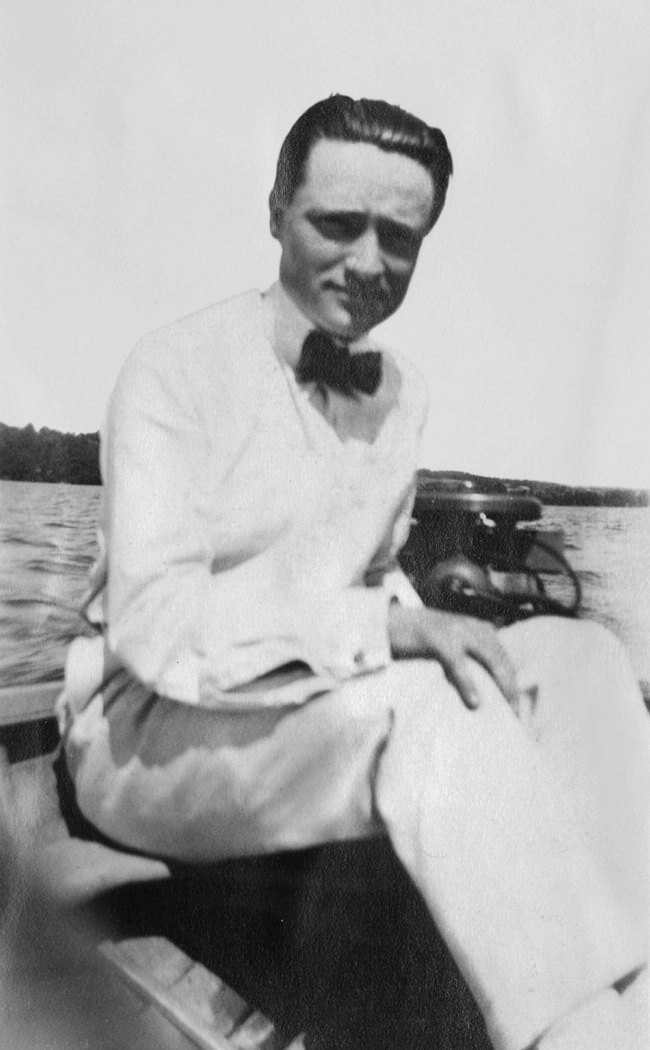
Edward Joseph Collins (1886-1951) was born to Irish-American parents in Joliet, Illinois. Though he studied abroad with Max Bruch and Engelbert Humperdinck, it was in Chicago that he made his career. Nearly a generation older than Copland and Gershwin, he too found inspiration in African-American spirituals, cowboy songs, and jazz.
Collins’ relationship to the Irish was a complex one. Nonetheless, he could not escape the pull of his heritage and its music. Join me this week, as the composer remembers the land of his forebears with three meditations on Irish folk song for St. Patrick’s Day.
That’s “Irish Ties Are Smiling,” on “The Lost Chord,” now in syndication on KWAX Classical Oregon!
——–
Clip and save the start times for all three of my recorded shows:
PICTURE PERFECT, the movie music show – Friday at 8:00 PM EDT/5:00 PM PDT
SWEETNESS AND LIGHT, the light music program – Saturday at 11:00 AM EDT/8:00 AM PDT
THE LOST CHORD, unusual and neglected rep – Saturday at 7:00 PM EDT/4:00 PM PDT
Stream them, wherever you are, at the link!
https://kwax.uoregon.edu
Category: Daily Dispatch
-
Oscar Nostalgia on “Sweetness and Light”
And the winner is… us!
Regardless of how you may feel about the current state of the movies, the Academy Awards are always an excellent excuse to cast a nostalgic look back on Oscar history.
Time was when a good film score was expected to be both melodic and memorable. This morning on “Sweetness and Light,” with the Academy Awards coming up, we’ll take a nostalgic look back to some indelible themes from classic movies of yesteryear.
I don’t want to lay it all out in my Facebook teaser – in fact, during the course of the show, I won’t even identify the pieces until after each one of them is played, so that you can guess along at home – but trust that you’ll likely recognize most of them, all Best Original Score winners or nominees from highly-decorated films.
As a bonus, the show will open with a 90-second montage of introductory fanfares from the great studios of Hollywood’s Golden Age. So you’ll want to be there when the lights go down.
Celluloid memories will be stirred by reel music, on “Sweetness and Light,” this Saturday morning at 11:00 EDT/8:00 PDT, exclusively on KWAX Classical Oregon!
Stream it, wherever you are, at the link:
https://kwax.uoregon.edu/ -
A Hollywood Bowl Super-concert on “Picture Perfect”
Regardless of how you feel about the current state of the industry or the awards ceremony itself, you have to concede, there’s quite a rich history of impressive music written for film. And the Academy Awards is always the perfect excuse to look back.
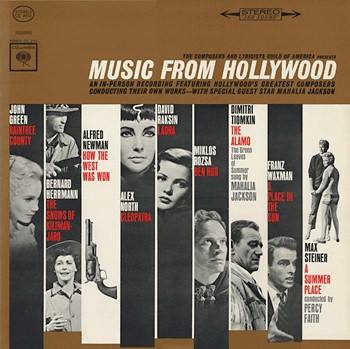
This week on “Picture Perfect,” I’ll be leaning heavily into the nostalgia, as virtually every major composer from the golden age of Hollywood comes together at the Hollywood Bowl for a concert of now-classic film scores, originally broadcast on CBS Television in 1963. The event is often referred to as “the greatest film music concert in history.”Participants included, among others, Alfred Newman (“How the West Was Won”), David Raksin (“Laura”), Alex North (“Cleopatra”), Johnny Green (“Raintree County”), Franz Waxman (“A Place in the Sun”), Bernard Herrmann (“North by Northwest”), Dimitri Tiomkin (“High Noon”), and Miklós Rózsa (“Ben-Hur”). They were joined by Mahalia Jackson, Andy Williams, and Jack Benny!
An album was released on LP, but understandably the three-hour concert was severely truncated. This was somewhat remedied on a CD-reissue on the Columbia Legacy label in 1995 that included 70 minutes of music. Among the casualties, however, was Elmer Bernstein conducting the theme to “The Magnificent Seven.” I will perform a service to film music by restoring that cut from another source.
Based on my reading and the fact that I’m finding other selections in my personal library that were recorded at the venue on the same date, there’s still much that remains to be compiled. Put out whatever you’re holding back on a double-disc, please, Sony Classical!
Hollywood couldn’t assemble this much musical talent today if it tried. Fortunately, recordings like this one endure. I hope you’ll join me for “Once Upon a Time in Hollywood” on “Picture Perfect,” music for the movies, now in syndication on KWAX Classical Oregon!
——–
Clip and save the start times for all three of my recorded shows:
PICTURE PERFECT, the movie music show – Friday at 8:00 PM EDT/5:00 PM PDT
SWEETNESS AND LIGHT, the light music program – Saturday at 11:00 AM EDT/8:00 AM PDT
THE LOST CHORD, unusual and neglected rep – Saturday at 7:00 PM EDT/4:00 PM PDT
Stream them, wherever you are, at the link!
https://kwax.uoregon.edu -
Adieu, Bernard Rands
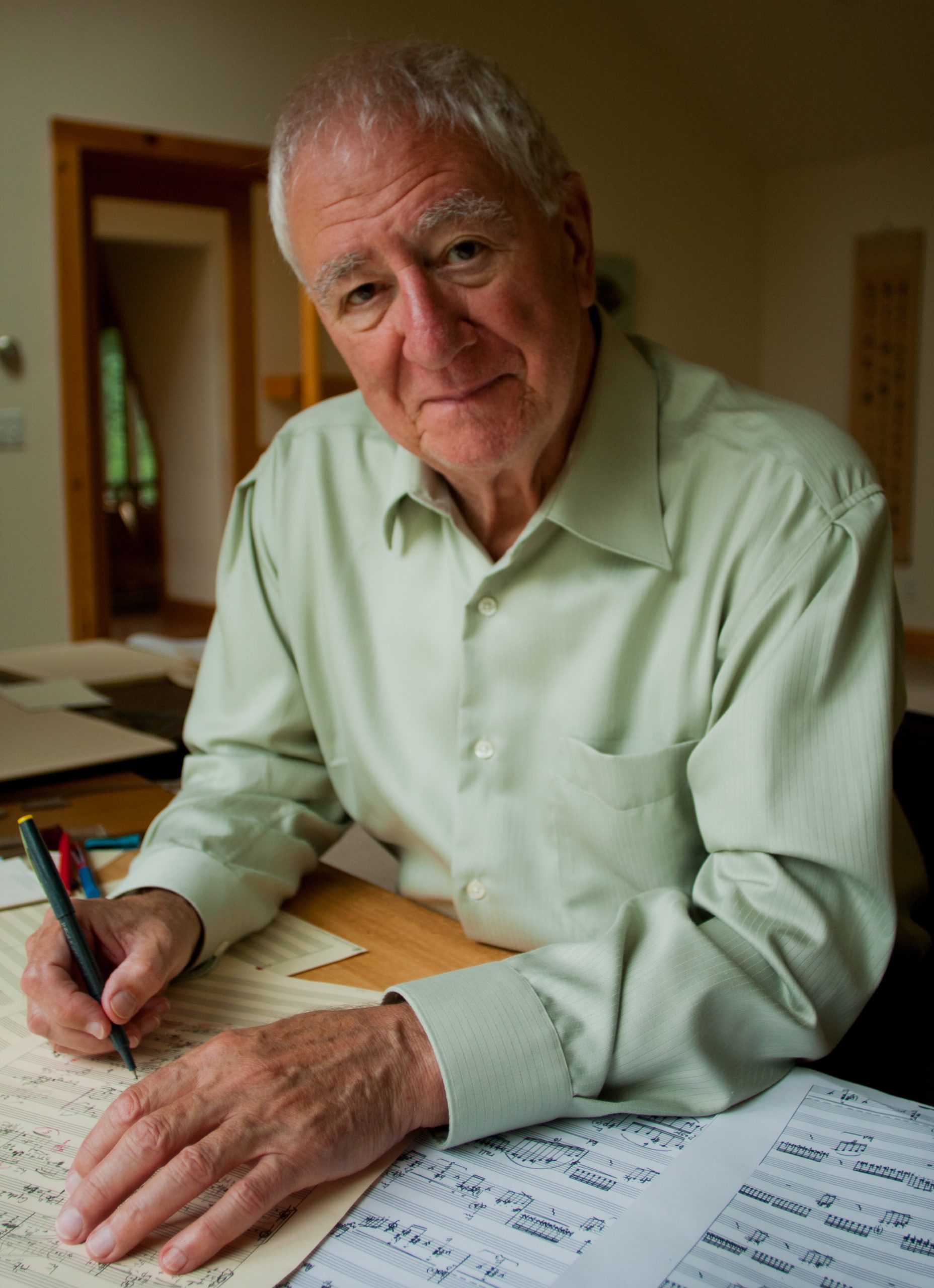
My friend Mather Pfeiffenberger tipped me off last week that composer Bernard Rands died. I received the news with some amazement, as I could have sworn he’d been gone for some time. But Rands lived to a venerable age, passing on March 4, two days after his 92nd birthday.
He was a regular presence at Philadelphia Orchestra concerts during Riccardo Muti’s music directorship in the 1980s and ‘90s. He served as the orchestra’s composer-in-residence from 1989 to 1995. If I remember correctly, as part of his job description, he offered advice on new music and exercised enormous influence over Muti’s contemporary programming. I can’t say I took to very many of the works that were performed, but I was young then. I might appreciate them more now.
EDIT: I did NOT remember correctly. It was Richard Wernick who advised Muti. I wrote about Wernick when he died last April. (Please note, it was A.I. that generated the headline.)
https://rossamico.com/2025/04/28/richard-wernick-pulitzer-winner-almost-hit-me/
Born in Sheffield, England, Rands studied with Pierre Boulez and Bruno Maderna in Darmstadt and Luigi Dallapiccola and Luciano Berio in Milan. This certainly gave him a grounding in contemporary and avant-garde techniques – unquestionably he was well-versed in the multifarious musical idioms of the day, at least the more abstract ones – but I never detected anything that would frighten the horses in his own works.
Among his residencies in the United States was a stint at Princeton University. He emigrated to the U.S. in 1975 and became an American citizen in 1983. He also held teaching posts at the University of California, San Diego, Juilliard, Yale, Boston University, and from 1988 to 2005, Harvard University.
He was married to the composer Augusta Read Thomas. I actually had dinner with them once in Philadelphia, I believe in connection with an Orchestra 2001 concert in 2007. We were not the only guests, and if we talked at all it couldn’t have been about anything of substance, because I can’t remember anything about it.
Rands was an influential figure, no doubt, as an advisor and teacher. He composed around 100 works, which were widely performed, and many of them were recorded. I was a frequent enough attendee of Philadelphia Orchestra concerts back in the day that I was present at the performances that were documented on this New World Records release, including “Canti dell’Eclissi” conducted by Gerard Schwarz, who as I recall was an eleventh-hour substitution for Muti, who was down with the flu. “Canti” was the recipient of the Pulitzer Prize for Music in 1984.
I can’t say it was my favorite of his works.
I thought “Le Tambourin Suite No. 1” was more my speed, but it’s not hitting me right this morning. It would go down a lot easier if it sounded more like “Le tombeau de Couperin.”
In reviews, his music was often compared to that of Ravel and Debussy. This “Aubade,” the second of three movements that make up his English Horn Concerto, seems like something I could live with.
Rands always seemed like a nice guy. I wish I liked his music better.
R.I.P.
———
Rands on listening to new music
“Adieu” -
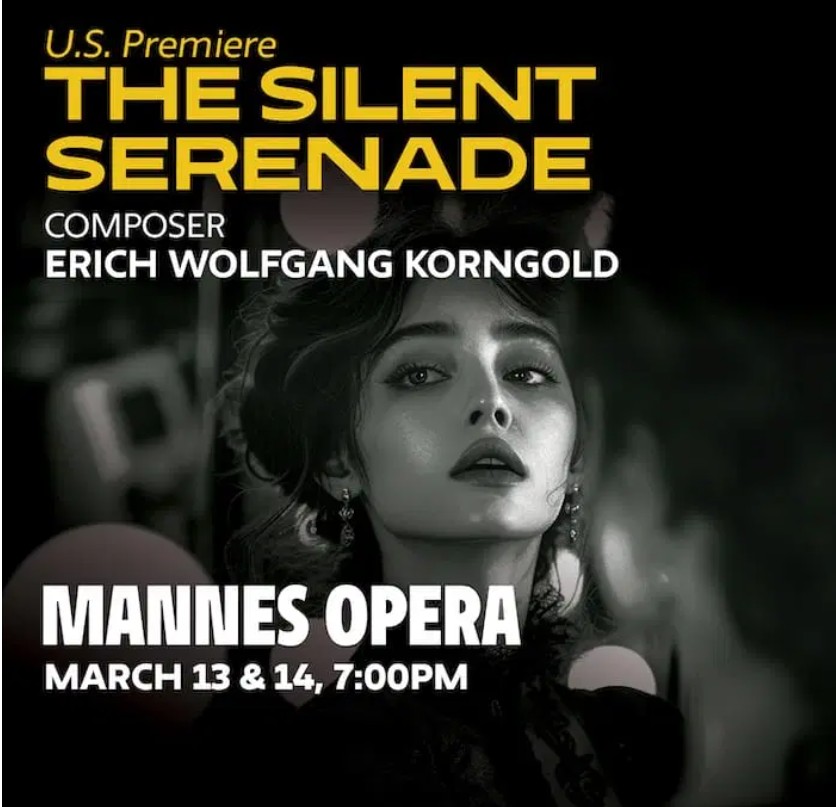
Korngold’s “The Silent Serenade” to Find a Voice at Mannes
I’ve been a fan of Erich Wolfgang Korngold ever since the quarterstaff music got stuck in my head while watching “The Adventures of Robin Hood” on TV when I was a kid and my best friend and I took down the curtain rods and started dueling all over the house. A few years later, I discovered the Classic Flim Scores series conducted by Charles Gerhardt, and I loved the Korngold albums best.
But before the mass-exposure he enjoyed as one of the great composers of Hollywood’s golden age, and in fact one of the progenitors of the Hollywood sound, he was enormously successful in Europe. Whenever you listen to music in an old movie and think that it sounds like Richard Strauss, there’s a reason for that, as Korngold and Max Steiner and many of their colleagues had their origins in that world, driven from their homes and across the Atlantic by fascism, the Holocaust, and World War II.
As a wunderkind in Vienna, Korngold was declared a genius by Gustav Mahler. In his teens, he shared a box with Strauss for the premiere of his own “Schauspiel Overture.” Afterwards, Strauss confessed he found such talent in one so young terrifying. Korngold composed a ballet-pantomime, “Der Schneemann” (“The Snowman”), when he was 12. He wrote his first opera, “Der Ring des Polykrates” (“The Ring of Polykrates”), when he was 17. His greatest hit was the opera “Die tote Stadt” (“The Dead City”), given a double premiere (with Otto Klemperer conducting at one of the venues) when he was 23. By then, he was one of the most famous composers in the world.
The great tragedy of Korngold’s life was that by the time the war ended, the world had changed so much, it was impossible for him to regain his former prominence. His style, rooted in fin-de-siècle post-Romanticism, seemed hopelessly old fashioned after Hitler and Hiroshima. He died in 1957, at the age of 60, believing himself basically forgotten.
That would all change in the early 1970s, as a few well-received albums, especially the Gerhardt series, sparked a renewed interest in the composer. There was also a strongly-argued performance of the post-war Symphony in F-sharp, conducted by Rudolf Kempe, and the world premiere recording of “Die tote Stadt,” what might still be the work’s best, with Erich Leinsdorf at the helm.
As it occurred in real time, progress seemed very slow. In the 1980s, it was still difficult to hear any of the concert pieces. They were seldom programmed and recordings were few. But I acquired what I could, and with the advent of compact disc, I rode the Korngold wave, as record companies looked beyond the standard repertoire to stake out new, hopefully lucrative territory, with attractive, slightly off-the-beaten path, opulently-scored music that would exploit the fidelity and dynamic range of the new technology. I literally bought every single Korngold recording that appeared on CD until the duplications became so frequent I just couldn’t do it anymore.
And what a difference the last 40 years have made. I remember making big plans to hear the Korngold Violin Concerto live back in 1990. Now it’s part of the active repertoire of virtually every major violinist. I can’t even tell you how many times I’ve heard it now. But things were very different then.
Recorded explorations of the composer’s output have been so successful it had seemed there was very little left to revive. Surely the major works have been exhausted? Not so!
It was but a few years ago that I was bouncing around the internet and I stumbled across some music I had never heard. It was a Korngold operetta called “Die stumme Serenade” (“The Silent Serenade”). Again, it was written after the war, at a time when “serious” composers like Marc Blitzstein, Gian Carlo Menotti, and Leonard Bernstein were gaining a toehold on Broadway with accessible operas.
Korngold composed a romantic farce with elements of Viennese operetta, a tradition he knew well, as the arranger of several such works by Johann Strauss II for successful revivals in the 1920s and from having completed Leo Fall’s “Roses from Florida” after Fall’s death toward the end of the decade. In the intervening years, he had assimilated a few Americanisms he surely hoped would endear him to producers and audiences on the Great White Way.He also must have realized the practicality of smaller forces. The work was conceived for eight singers, eight actors, and a chamber orchestra consisting of two pianos, the first doubling on celesta, two violins, cello, flute, clarinet or saxophone, trumpet, and percussion.
Korngold tried it out in Europe in the early ‘50s, only to have it tank badly. There are two recordings of the piece, one taken from a Viennese radio broadcast in 1951 and more recently a 2009 recording, with a lot of German dialogue, released in 2011 on the CPO label.
“The Silent Serenade” has never been performed in the United States. But that’s about to change, as Mannes Opera of the Mannes School of Music will host two performances, this Friday and Saturday at 7 p.m., at the Gerald W. Lynch Theater at John Jay College, 524 West 59th Street (between 10th & 11th Avenues), in New York City.
I am sorry to say, for anyone who didn’t hop on it, tickets – which were free – are no longer available. However, the production will be streamed later this month, from what I understand, on March 23 at 4 p.m. If I were you, I would monitor Mannes’ website and social media. Good luck!
https://event.newschool.edu/mannesoperadiestummeserenadeth
Here’s the CPO recording of the piece, shorn of most of the spoken dialogue. The Mannes performances will be in English.
Tag Cloud
Aaron Copland (92) Beethoven (94) Composer (114) Film Music (116) Film Score (143) Film Scores (255) Halloween (94) John Williams (185) KWAX (228) Leonard Bernstein (99) Marlboro Music Festival (125) Movie Music (131) Opera (197) Philadelphia Orchestra (86) Picture Perfect (174) Princeton Symphony Orchestra (106) Radio (86) Ralph Vaughan Williams (85) Ross Amico (244) Roy's Tie-Dye Sci-Fi Corner (290) The Classical Network (101) The Lost Chord (268) Vaughan Williams (99) WPRB (396) WWFM (881)