Category: Daily Dispatch

  • Cinco de Mayo: How Mexico Saved the U.S.

    Cinco de Mayo: How Mexico Saved the U.S.

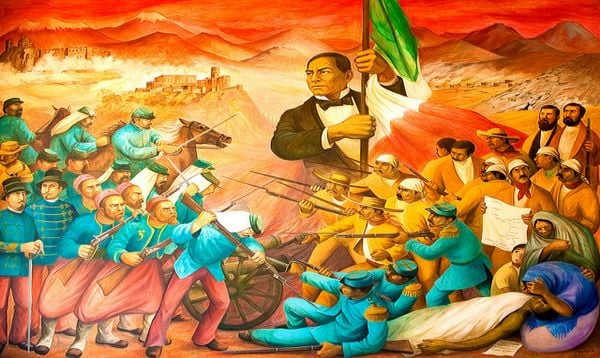
    On May 5, 1862, the Mexican army routed superior French forces at the Battle of Puebla, in the process quite possibly saving the United States’ bacon.

    You see, Napoleon III was not entirely unaware of a little something raging here in the U.S. called the Civil War. It was Napoleon’s idea that by moving in while the union was compromised, he might be able to strike an alliance with the Confederacy and further advance French interests in North America. If not for the events of Cinco de Mayo, we could all be wearing berets right now and saying things like “mais oui.”

    Mexico’s underdog victory at Puebla postponed the French advance for an entire year, plenty of time for Lincoln’s generals to score enough decisive victories that no matter what Napoleon’s designs, they likely would have had very little impact on the outcome of the War Between the States.

    Since Mexico’s historic upset, acquisitive European forces have thought twice before attempting to invade any country in the Americas. So be sure to hoist a margarita to our brothers and sisters to the south.

    I’ll be adding tequila to my coffee and nachos to my oatmeal for Cinco de Mayo!

    ¡Viva México!


    “Sones de Mariachi” by Blas Galindo

    “Xochipilli” by Carlos Chavez, composed for MoMA to showcase pre-Columbian Aztec instruments

    Segovia plays “Sonata Mexicana” by Manuel Ponce

    “The Night of the Mayas” by Silvestre Revueltas

    An encore by Revueltas, “Ocho por radio”

    “Huapango” by José Pablo Moncayo

    I love how YouTube assumes that since I am clicking on videos of Mexican music that my ads should now be in Spanish. Mayo my!
  • Happy Star Wars Day Art Music and Memories

    Happy Star Wars Day Art Music and Memories

    It’s Star Wars Day. May the Fourth be with you!

    Personally, I can’t believe that the designation was made on account of a Dad-worthy pun. The first “Star Wars” opened on May 25, 1977, surely a more appropriate anniversary? But any excuse to celebrate “Star Wars” is fine by me, I suppose, as long as I don’t have to celebrate anything released after 1983.

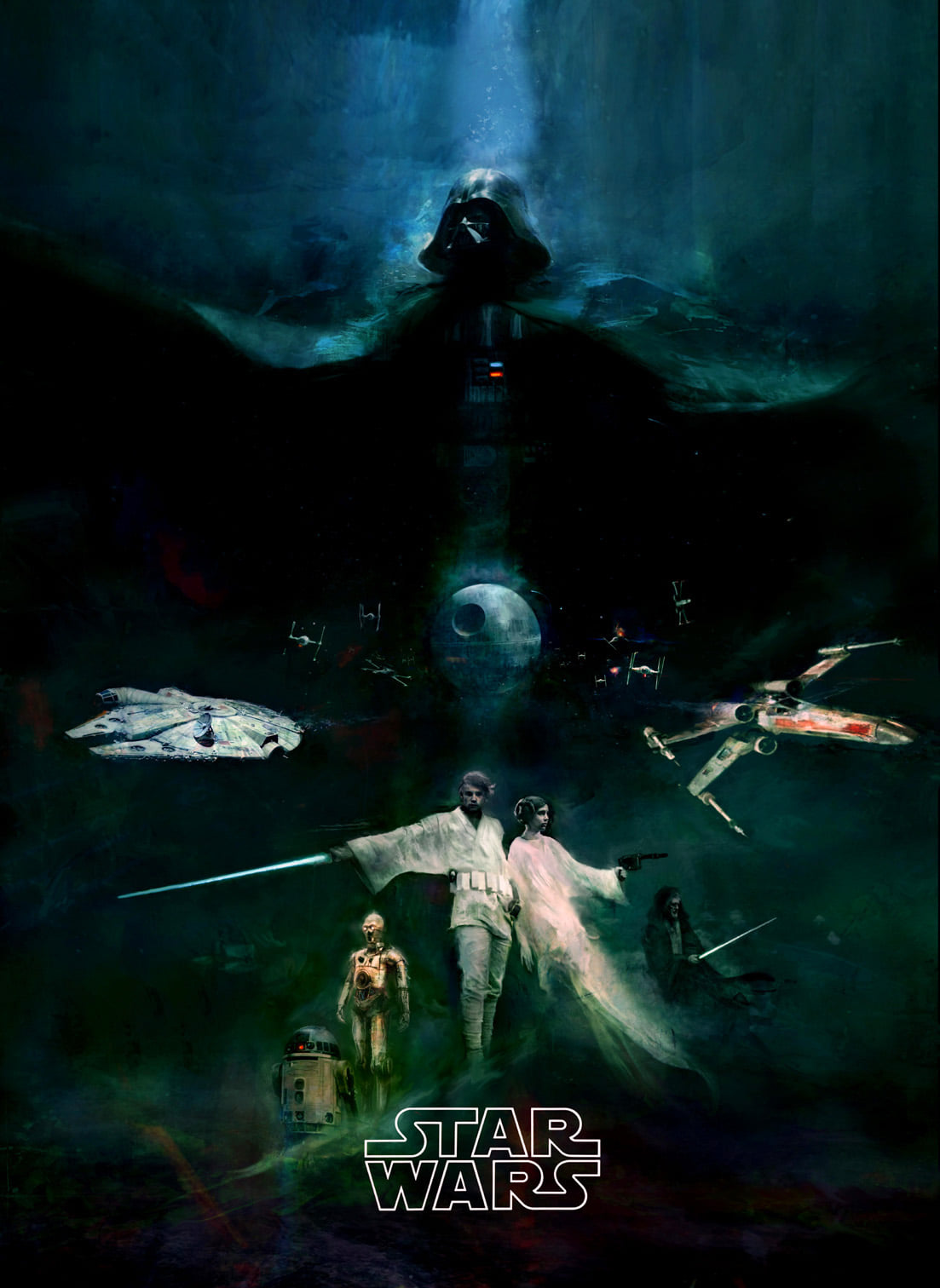
    Until yesterday, I was completely unaware of artist Christopher Shy, but he is one extraordinarily talented individual. Pictured are just a few of his “Star Wars” paintings. The one that employs the original Ralph McQuarrie designs is a hoot!

    Check out his Facebook page for further original interpretations of Godzilla, “Ghostbusters,” Superman, “Star Trek,” “The Thing,” “The Creature from the Black Lagoon,” and many more. Also, make it a point to visit his website, artofronin.com. This will take you directly to a gallery of his work:

    https://www.artofronin.com/showcase

    While you’re at it, why not also spin some of John Williams’ “Star Wars” music? Williams’ original score is a postmodern masterpiece, with echoes of Korngold, Holst, Stravinsky, and William Walton, bound together, permeated, and propelled into delirious transcendence by his stirring, soulful, indelible themes.

    Generally speaking, I enjoy listening to the soundtrack albums in the form they were originally released. It’s nice to have the music note-complete, as has become the fashion on CD , but there was a certain artistry to the arrangements, layouts, and development of commercially-issued soundtracks of the LP era that made them special experiences unto themselves.

    That said, “The Empire Strikes Back” is one of the few note-complete film music recordings that I can listen to straight-through without getting fatigued. In that regard, it must be my favorite of the “Star Wars” scores.

    The original “Star Wars” soundtrack, from 1977, holds great nostalgic significance for me. I spent countless hours writing, drawing, and dreaming to that music. “Star Wars,” to great extent, introduced me to orchestral music, and it changed my life. But, also for me, “The Empire Strikes Back” is the standalone masterpiece, if taken on a purely musical level.

    Here’s how it was originally heard on LP, back in 1980:

    https://www.youtube.com/watch?v=ttZEjs13oO8

    Here it is, note-complete, as on CD – unfortunately with the tracks posted separately, allowing plenty of opportunities for interpolated YouTube ads:

    May the Fourth be with you, indeed!

    Certainly, I wouldn’t want to be without the music for either of the first two films. And by “first two,” I’m speaking in terms of release dates, NOT the geek-pedantic episode numbers. The title “A New Hope” is, quite simply, not in my vocabulary.

    Whatever your bliss, I wish you a happy Star Wars Day. Just keep your midichlorians off this page!

  • 500 Likes! Spaghetti Celebration Thank You!

    500 Likes! Spaghetti Celebration Thank You!

    Oh. Look at that. My page is at 500 likes.

    I choose to celebrate with 500 pounds of spaghetti!

    Thank you for “liking” Classic Ross Amico.

    Recommended listening: all 500 Vivaldi concertos.

  • Discover Polish Composers on The Lost Chord

    Discover Polish Composers on The Lost Chord

    Poland is in bloom! This Sunday night on “The Lost Chord,” find refreshment in musical discoveries by four Polish composers.

    We’ll hear a Fantasy for Cello and Piano by Aleksander Tansman. Tansman spent most of his career in Paris, with an interlude during the war years in the United States. Here, he met Arnold Schoenberg, wrote film scores, and developed an affection for American jazz. Still, his most enduring influences were those of his Polish and Jewish roots.

    Hyper-romantic Mieczyslaw Karlowicz lived his life at such a heightened emotional pitch that he was perhaps fated to die young. His music certainly tends in that direction, occupied as most of it is with ecstasy and death. “A Sad Tale,” his last completed work, is a contemplation of suicide. Karlowicz himself was killed in an avalanche while hiking in the Tatras. He was 32 years-old.

    On a lighter note, we’ll enjoy choral music by Andrzej Koszewski –
    his “Kaszuby Suite,” steeped in folk traditions of northwestern Poland – and a neoclassical woodwind quintet by Wojiech Kilar, who is probably best known in the West for his film scores, including those for “Bram Stoker’s ‘Dracula,’” “The Portrait of a Lady,” and “The Pianist.”

    It’s a flowering of Polish music on “Poland Spring.” I hope you’ll join me, this Sunday night at 10:00 EDT, on WWFM – The Classical Network and wwfm.org.

  • Spring Renewal Music from the Movies

    Spring Renewal Music from the Movies

    Spring is a time of hope and renewal. This week on “Picture Perfect,” on the First of May, enjoy music from movies about fresh growth, new beginnings, and second chances.

    You can’t get much more spring-like than “The Secret Garden,” after the novel of Frances Hodgson Burnett. A spoiled orphan raised in India returns to England and her aloof uncle’s gloomy mansion on the Yorkshire moors. Gradually, she is drawn outside of herself by a cantankerous gardener, a saucy robin, and a fey lad named Dickon, who has a particular affinity with wild creatures. Her transformation, signified by the titular garden, the maintenance of which teaches her to nurture, improves the lives of all around her.

    The story has been adapted numerous times, including a classic version with Margaret O’Brien, in 1949. In 1993, Francis Ford Coppola’s American Zoetrope backed a lovely adaptation directed by Agnieszka Holland. The music was by Zbigniew Preisner.

    “The Best Years of Our Lives,” from 1946, is one of the most beautiful films to treat the subject of American soldiers readjusting to civilian life following World War II. A trio of veterans returns from overseas to find their lives irrevocably changed. It isn’t easy, but they rise to meet all challenges with the help of family and friends. The film is all the more moving and inspirational for its characters’ integrity and tenacity.

    The cast includes Frederic March, Dana Andrews and real-life veteran Harold Russell. Russell was awarded a special Academy Award for “bringing hope and courage to his fellow veterans through his appearance.” Russell had lost both his hands in an explosion. Honored also with an award for Best Supporting Actor, he is the only figure ever to win two Oscars for the same performance.

    The film won nine Oscars in all, among them Best Picture, Best Director (William Wyler), Best Actor (March), Best Screenplay (Robert E. Sherwood), and Best Music (Hugo Friedhofer).

    Based on a novel of Anne Tyler, “The Accidental Tourist,” from 1988, stars William Hurt as a travel writer, the loss of whose son leads to emotional sterility and estrangement from his wife, played by Kathleen Turner. He is eventually brought around by a quirky dog-trainer (Geena Davis, in an Academy Award-winning performance). It’s a movie about letting go, and having the courage to move forward. The understated score is by John Williams.

    Finally, sports movies have always been a popular genre through which to tell stories of resurrection and redemption. “The Natural,” Barry Levinson’s 1984 adaptation of the novel of Bernard Malamud, tells the tale of a baseball player (played by Robert Redford), who is struck down in his prime, only to be reborn in mythic triumph. The inspiring music is by Randy Newman.

    Put some “spring” back into your step, with music from movies about new beginnings and second chances, on “Picture Perfect,” this Saturday evening at 6:00 EDT, on WWFM – The Classical Network and wwfm.org.

Tag Cloud

Aaron Copland (93) Beethoven (95) Composer (114) Film Music (136) Film Score (143) Film Scores (255) Halloween (94) John Williams (195) KWAX (229) Leonard Bernstein (103) Marlboro Music Festival (125) Movie Music (151) Mozart (88) Opera (208) Philadelphia Orchestra (89) Picture Perfect (174) Princeton Symphony Orchestra (108) Radio (88) Ross Amico (244) Roy's Tie-Dye Sci-Fi Corner (290) The Classical Network (101) The Lost Chord (268) Vaughan Williams (103) WPRB (396) WWFM (881)

DON’T MISS A BEAT

Receive a weekly digest every Sunday at noon by signing up here


RECENT POSTS