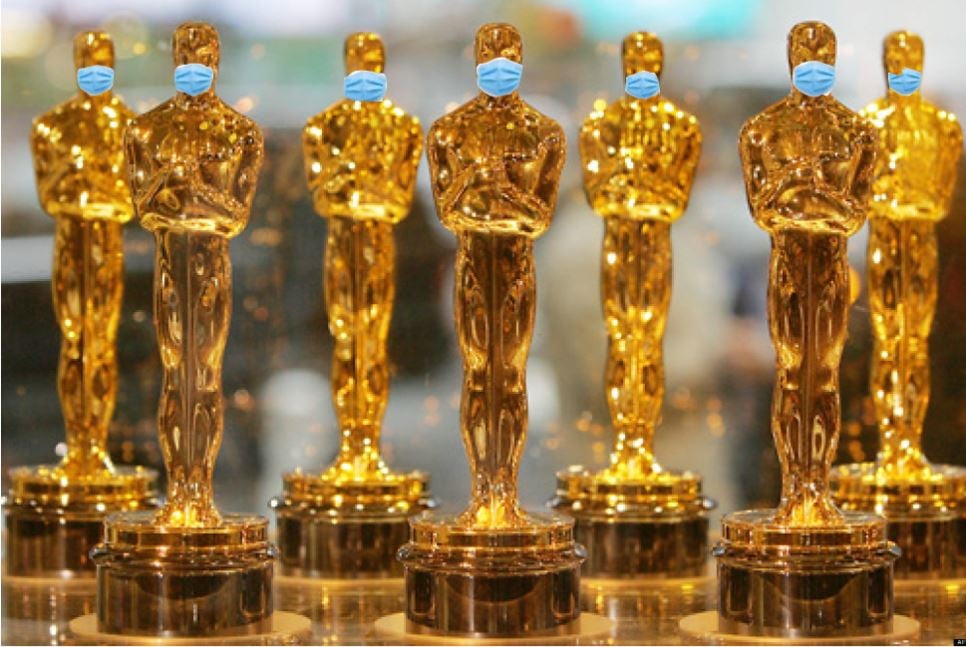
Remember, just because you’re not into this year’s Academy Awards doesn’t mean you can’t enjoy great film music from Oscar history. Take a nostalgic, three-hour journey through Oscar’s glory years with selections from some of your favorite movie classics. Last year’s “Picture Perfect Oscar Party” is still posted as a webcast, at WWFM – The Classical Network and wwfm.org.
This Sunday night on “The Lost Chord,” enjoy a triple-feature of concert works by composers better recognized for their work in film.
First, Jerome Moross was ensured a kind of immortality in the hearts of moviegoers for his Academy Award nominated score for “The Big Country.” He composed music for 16 films in all – comparatively few, actually, on account of a bicoastal career. (He was based in New York City.)
Off-screen, he wrote music for five ballets, a symphony, a flute concerto, various works for orchestra and chamber ensemble, and a one-act opera, “Sorry, Wrong Number.” His best-known musical theatre piece is “The Golden Apple,” which spawned the ever-green “Lazy Afternoon.”
Tonight, we’ll hear his delightful “Sonatina for Clarinet Choir” of 1966.
Very little need be said of John Williams. The most successful film composer of all time, Williams has been a household name since the 1970s, thanks to the one-two punch of “Jaws” and “Star Wars.” But by then, he was already two decades into a career that’s now spanned 65 years. With 52 Academy Award nominations and five wins, he is the second most nominated figure in the history of the Academy, behind only Walt Disney.
For the concert hall, Williams has written music for just about every instrument, including an impressive body of concertos. Tonight, we’ll hear his “Essay for Strings,” composed in 1965, when he was 33 years-old.
Finally, English composer Laurie Johnson (pictured) – still with us at 94 – is appreciated for his contributions to, among others, Stanley Kubrick’s “Dr. Strangelove,” the Hammer cult favorite “Captain Kronos – Vampire Hunter,” and the classic TV series “The Avengers.”
Gramophone Magazine described his “Symphony: Synthesis,” composed in 1971, as a masterpiece. “The work becomes increasingly fascinating with each listening,” writes the critic. “This is perhaps the first truly successful combination of the Jazz and European music traditions.”
The recording we’ll hear, made under the composer’s direction, features a number of prominent jazz artists, including Tubby Hayes, Don Lusher, Joe Harriott, Kenny Wheeler and Stan Tracey.
It’s not always about images. Film composers cast themselves against type, on “Typecast IV: The Curse of Typecast.” It will be there for you when the Oscars sputter, this Sunday night at 10:00 EDT; or enjoy it later, as a webcast, on WWFM – The Classical Network and at wwfm.org.
Forget Plan 1 through 8. “Plan 9” is where it’s at.
We’d like to thank Michael Rizzo and Marybeth Ritkouski for dropping by last night to break bread over Ed, and the “Citizen Kane” of bad movies, “Plan 9 from Outer Space.”
Earlier in the week, M&M kindly had us to their table to talk about Tim Burton’s biopic, about resourceful – though perhaps a little out of touch – “Plan 9” director, “Ed Wood.” Their show, SciFi Distilled, is livestreamed on Facebook every Wednesday at 7 pm EDT. You can eavesdrop on our conversation here:
Friday is Arbor Day. It was actually on Earth Day that Roy and I decided our next topic should be “Silent Running” (1972), a sci-fi cult classic with environmental overtones.
Join us as we chat about space botanist Bruce Dern and his robot sidekicks, Huey, Dewey, and Louie, on their reforestation mission in a floating geodesic greenhouse near Saturn. Peter Schickele wrote the music. Folk icon Joan Baez lends just the right touch of counterculture verisimilitude.
This is one of only two movies directed by special effects legend Douglas Trumbull (of “2001: A Space Odyssey” and “Close Encounters of the Third Kind” fame).
I think you’ll agree, Dern must have been raising more than just trees in that greenhouse. Join us for a trippy discussion of “Silent Running,” on the next Roy’s Tie-Dye Sci-Fi Corner. Our pupils will be dilated, and we’ll be fanning the room with psychedelic album covers. Everyone will be spacing-out, as we livestream on Facebook, next Friday evening at a special time – one half hour later than usual – 7:30 EDT.
Does anyone even know it’s Academy Awards weekend? Has anyone actually seen any of the movies? Or at least heard of most of them? No doubt about it, this will be Oscar’s strangest year.
Since I’m still cut off from studio broadcast, thanks to COVID-19, we’ll have to forgo my annual three-hour celebration of the movies – a festive playlist made up of music associated with Academy Award winning classics, alongside selections from the current year’s nominees.
Be that as it may, Oscar doesn’t always get it right.
As something of a stopgap, this week on “Picture Perfect,” we’ll revisit some enduring and culturally significant movies, most of which were honored in other categories, but were denied the statuette for Best Original Score.
Tune in for selections from “Citizen Kane” (Bernard Herrmann), “The Magnificent Seven” (Elmer Bernstein), “The Big Country” (Jerome Moross), and “Gone with the Wind” (Max Steiner).
One doesn’t need a statuette to be a winner. I hope you’ll join me for “They Been Robbed,” on “Picture Perfect,” music for the movies, this Saturday evening at 6:00 EDT, on WWFM – The Classical Network and wwfm.org.
If you’re really jonesing for the glories of Oscars past, last year’s Oscar Party is still available as a webcast – though of course, last year’s nominees are no longer current. Make yourself a bowl of popcorn and listen here:
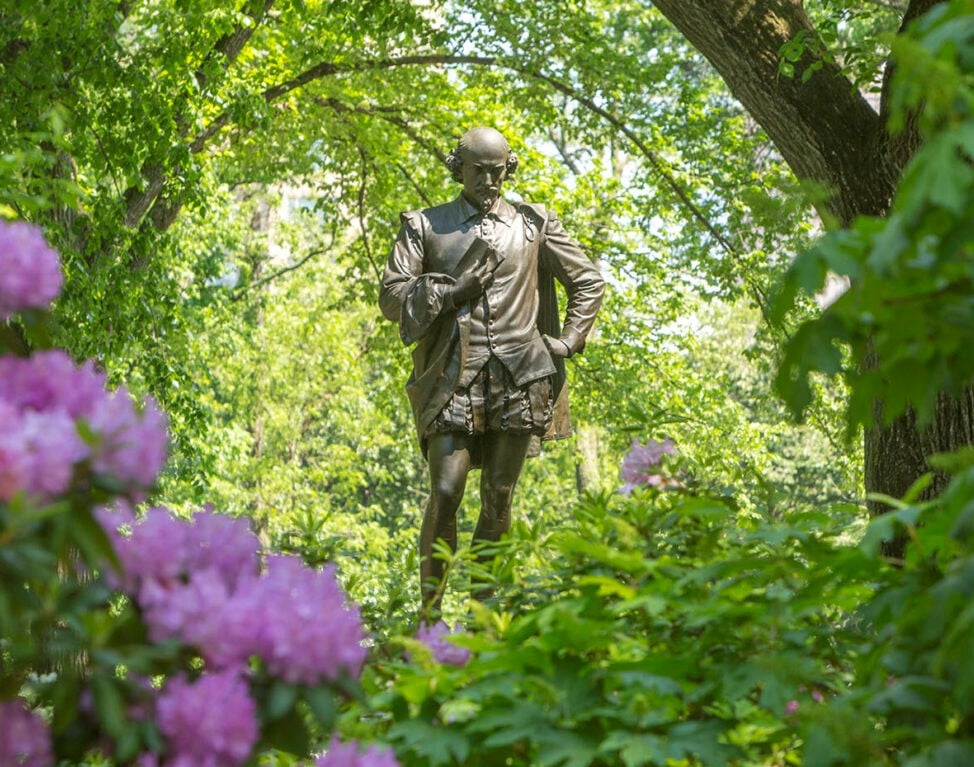
We don’t know when exactly Shakespeare was born. We do know that he was baptized on April 26, 1564. Since he died on April 23, 1616, many have found it difficult to resist the pull of symmetry. Therefore, his birthday has traditionally been merged with the anniversary of his death. To borrow from “The Tempest,” our little lives are rounded with a sleep. But if you’re Shakespeare, and you die close enough to your natal day, your birthday is also rounded down.
It doesn’t really matter when the Bard was born. As one of the world’s most insightful and versatile playwrights, his output remains fresh, and his writings tie in beautifully with the spirit of renewal that springtime fosters. Also, there is just so much interesting and vital music inspired by his plays and sonnets.