Category: Daily Dispatch

  • St Patrick’s Day Irish Music WWFM

    St Patrick’s Day Irish Music WWFM

    On behalf of the O’Dalaigh clan, on me mother’s side, sincere wishes for a happy St. Patrick’s Day! If you be lookin’ for music on Irish themes, here be a few shamrocks to keep you shaking – webcasts of select installments of me WWFM shows, “Picture Perfect” and “The Lost Chord.” You need merely follow the the links and click on “listen.”

    PICTURE PERFECT, “Presentiments of St. Patrick” (air date: 3/13/20)

    Raise a pint (or two or three) to selections from the moving pictures, including “The Luck of the Irish” (Cyril J. Mockridge), “Angela’s Ashes” (John Williams), “Circle of Friends” (Michael Kamen), and “The Quiet Man” (Victor Young).

    https://www.wwfm.org/post/picture-perfect-march-13-presentiments-st-patrick

    THE LOST CHORD, “Airs of Erin” (air date: 3/14/21)

    Laugh and weep along to John Kinsella’s Symphony No. 3, “Joie de vivre,” and Arnold Black’s “Laments and Dances from the Irish,” after melodies of Turlough O’Carolan.

    https://www.wwfm.org/post/lost-chord-march-14-airs-erin#stream/0

    THE LOST CHORD, “The Sharing of the Green” (air date: 3/15/20)

    Enjoy a mulligan stew of works by Irish composers John Larchet, Philip Hammond, Howard Ferguson, and A.J. Potter, and works on Celtic themes by Percy Grainger, Sir Arnold Bax, and John Foulds.

    https://www.wwfm.org/post/lost-chord-march-15-sharing-green

    THE LOST CHORD, “Irish Ties Are Smiling” (air date: 3/17/19)

    Irish-American composer Edward Joseph Collins (1886-1951) reflects on his heritage with “Variations on an Irish Tune,” “Variations on an Irish Folksong,” and the Irish Rhapsody “Hibernia.”

    https://www.wwfm.org/post/lost-chord-march-17-irish-ties-are-smiling

    And if you be feelin’ generous with that pot o’ gold there, make a donation to WWFM, if you please. If we receive 500 contributions, IN ANY AMOUNT, by March 21, we’ll be celebratin’ that great Irish composer, Johann Sebastian McBach, on his birthday, with just his music. No fundraising.

    But first we be needin’ to reach that goal! Go raibh míle maith agat! A thousand times, thank you for your generous support of WWFM – The Classical Network and wwfm.org!

    https://wwwfm.secureallegiance.com/wwfm/WebModule/Donate.aspx?P=DEFAULT&PAGETYPE=PLG&CHECK=vOU2bz5JCWmgCDbf53nm9ezWDeZ%2beA1M

  • Handel’s Solomon St Patrick’s Day Surprise

    Handel’s Solomon St Patrick’s Day Surprise

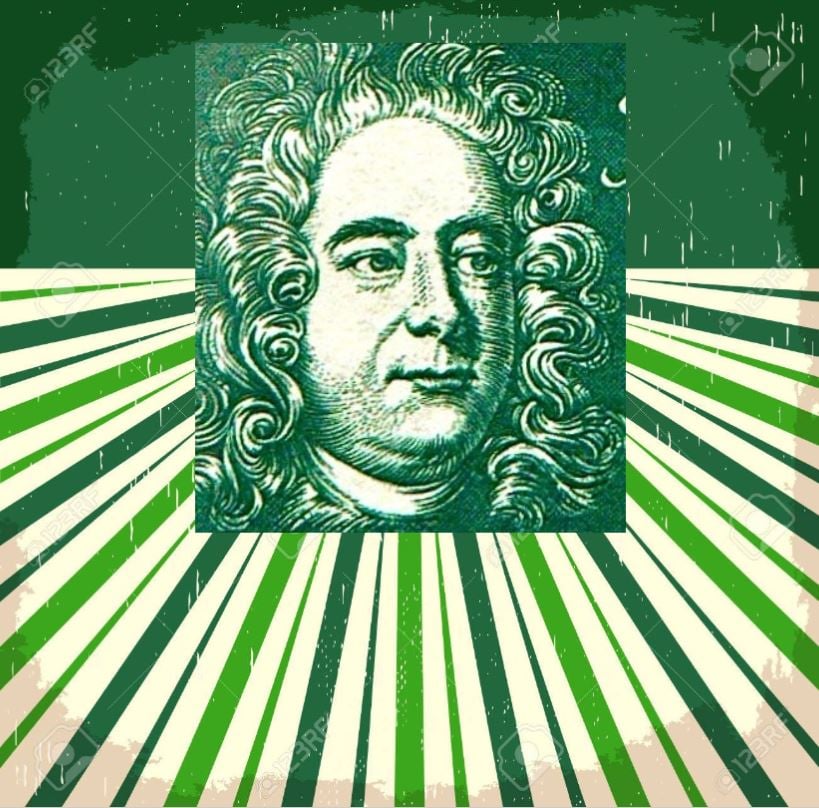
    On this date in 1749, one of George Frideric Handel’s most popular oratorios, “Solomon,” was first performed, at London’s Covent Garden Theater. Little did he dream that, 234 years later, the Irish folk band De Dannan would take his showstopping Act III sinfonia and give it a distinctly Irish twist, as “The Arrival of the Queen of Sheba (In Galway Bay).” I venture to guess even De Dannan didn’t realize “Solomon” received its debut on St. Patrick’s Day!

    https://www.youtube.com/watch?v=MB8NhXtgG_A

    No doubt Handel would have approved. He spent nine months in Ireland in 1742 to raise money for charity. The most performed oratorio in the history of the world, “Messiah,” was introduced in Dublin, at the Great Musick Hall, on Fishamble Street, on April 13, 1742.

  • Remembering Bliss Michelson

    Remembering Bliss Michelson

    I’ve been thinking about Bliss Michelson incessantly since I learned of his death late yesterday afternoon. Bliss, who was production manager at WWFM The Classical Network from 1992 to 2011, died on Sunday of complications from COVID-19. His wife, Peggy, preceded him on February 26.

    First of all, thank you for your condolences. I want to make it very clear that this is not “my” loss, so much as it is a loss to anyone who knew or listened to him. Bliss was so talented at what he did. I already stated, he was probably the best all-around radio host I ever worked with, in terms of being able to do it all – knowledgeable, efficient, personable, conversational, an avuncular presence, impeccable in his pronunciation, and a varied, balanced, and interesting programmer – a real pro. I never saw anyone navigate production work the way he did, while simultaneously doing a live air shift. And he was such a nice man.

    I certainly do not want to give the impression that we were joined at the hip, but we did have a very long association, dating back to 1995, which continued when we worked together at WRTI. If anything, he was like an uncle to me. You can learn a little more about our interactions if you read my post from yesterday.

    Of course, on the most basic level, we shared a passion for music, and because of Bliss’ love of composers from the Northern countries, I have a lot of fond memories of our bonding over Sibelius.

    Perhaps cryptically, I concluded last night by mentioning Sibelius’ Fourth. This is Sibelius’ weirdest, gloomiest symphony, a work written under the shadow of death, as the composer had recently undergone a series of surgeries for throat cancer. It is an austerely beautiful piece, though admittedly it does go to some very strange places.

    Bliss’ morning air shift on The Classical Network ran to 10 a.m. Earlier in the morning, he would mix up the Vivaldi and the Haydn and the Dvořák, with enough lesser-known repertoire to keep it fresh and engaging. But by 9, he would often go for something a little longer, and sometimes a little more challenging. Personally, with Sibelius’ Fourth, I can’t understand what all the fuss is about, but it tends to rub listeners the wrong way. Or at least it manages to wind up the one crank in the audience who is going to call and complain.

    Bliss was generally pretty unflappable, but I remember at least once he was not happy with a phone message from a listener that it fell upon me to convey. I hasten to add, for the most part Bliss was a teddy bear, not a bottle of nitroglycerin, as I tend to be. But I chuckle sometimes to think of his reaction.

    At any rate, a memo was passed around that we shouldn’t be playing Sibelius’ Fourth in the mornings. I prefer to think that this was not disobeyed, but rather conveniently forgotten.

    This one’s for you, Bliss.

    (By coincidence, the video was posted by someone using the screen name Furtwangler, who happened to be one of Bliss’ favorite conductors.)

  • Remembering Bliss Michelson Radio Legend

    I am so sorry to learn of the passing of my friend and colleague, Bliss Michelson. You may recall my mentioning it was Bliss who trained me when I started at WWFM – The Classical Network, preparing me for my long weekend morning run that spanned 19 years, beginning in 1995.

    At the time, I had had nine years’ experience in community radio, but Bliss taught me the new board, how to fill out the logs, how to rewind the reel-to-reel machines without snapping the tape, and how to record our broadcast concerts off of satellite. Most important, he taught me how to turn on the transmitter at 4:50 a.m., in the years before the station went 24 hours.

    Bliss was the most natural radio man I have ever known. In an average hour on a weekday morning, he would share a playlist of five pieces, impeccably curated for maximum variety and interest, work done swiftly at his desk the preceding afternoon. He was also the most-disciplined, accomplishing much of his production work in an adjacent studio, in real time, during his live air shift, laying down voice tracks during a Vivaldi concerto and editing audio in the span of a Joonas Kokkonen symphony.

    He also had the uncanny ability to instant cat-nap. Not infrequently, he would perform evening gigs as a freelance double-bassist. With pack-up and transportation, these could run quite late for a man accustomed to rising in the middle of the night. Even keeping normal hours, by the standards of the rest of humanity, he often didn’t wind up getting very much sleep. After a time, he started asking me if I could fill in for him on mornings following rehearsals. Then he’d saunter in around 6:45 to start on his day.

    On weekends, when I seldom saw other full-time staff, it was not unusual for Bliss to show up early on a Saturday or a Sunday, to check his email and put some finishing touches on a produced show, before heading out for an afternoon of tending the sheep. Literally. He kept sheep. He also loved cats, of which, I gather, he had several.

    Later, we also worked together at WRTI in Philadelphia. We were both on-call classical music hosts, but I also did a regular overnight jazz shift, so occasionally our paths would cross on a Saturday morning. Earlier in his career, Bliss hosted shows on Trinity University’s KRTU and KPAC in San Antonio and, prior to WWFM, WNED in Buffalo.

    Bliss was passionate about Nordic music (he was proud of his Swedish heritage) and also historic recordings of the great conductors. As a double-bassist with the San Antonio Symphony, he played with many of the greats. He shared anecdotes about performing with Aaron Copland, Los Romeros, and a phenomenal roster of guest maestros.

    In front of a microphone, there was nothing he couldn’t do. I’ve been in the studio when he was on the air and he’d just been handed a script, and he’d invariably deliver it with ease and grace, as if he’d already committed it to memory.

    My training amounted to sitting in with him for two air shifts. During the final hour of the second, he turned it over to me. As I sat in the chair, moments away from my WWFM debut, my throat was dry and my hands were shaking. Intuiting my nerves, Bliss offered the following words of advice: “Remember… it’s just you and the microphone.”

    For me, it will always be Bliss and the microphone. Perfect together. Rest easy, my friend. I will think of you whenever I play the Sibelius Fourth.

  • Hungary’s 1848 Revolution in Music

    Hungary’s 1848 Revolution in Music

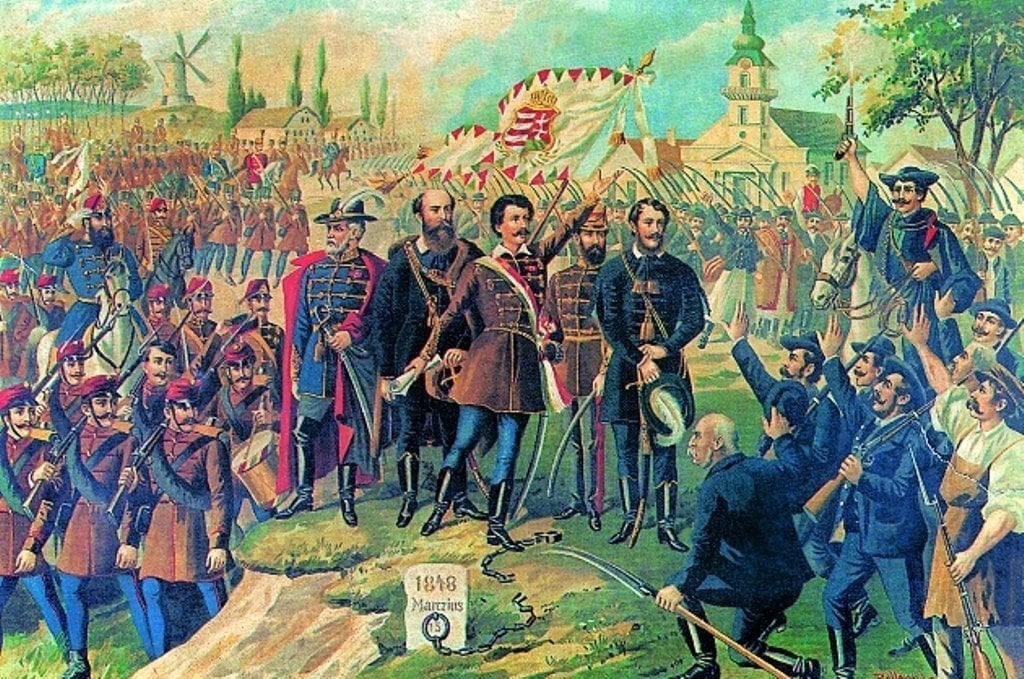
    March 15 may not have worked out so well for Julius Caesar, but it is a festive day in Hungary. It is the day Hungarians mark the Revolution of 1848 and the subsequent War of Independence from Austrian-Habsburg rule. It is one of the most prominent of Hungarian national holidays, though this year, because of coronavirus concerns, public celebration is understandably muted.

    The uprising began as a peaceful demonstration in Pest-Buda. It wasn’t until autumn that armies clashed. Official secession didn’t take place until March 1849, when Franz Joseph moved to subdivide the Kingdom of Hungary. In April, an independent government was formed, with firebrand Lajos Kossuth elected as governor and president. Unfortunately, the new government would be short-lived.

    Here’s Liszt’s symphonic poem “Hungaria.” While Liszt offered no overt program to the piece, its patriotic intent is right there in the title. Listeners at its first performance would have associated the funeral march, based on the work’s B-theme, to the defeat of Kossuth’s revolt. Liszt conducted the piece for the first time at the Hungarian National Theater in what is now Budapest in 1856. At the end, he reported, the audience was in tears.

    Béla Bartók began his symphonic poem “Kossuth,” his first mature orchestral work, in 1903. He had only just attended the Budapest premiere of Richard Strauss’ “Also sprach Zarathustra,” which he found electrifying.

    Broadly speaking, the difference between Liszt’s “symphonic poems” and Strauss’ “tone poems” is that Liszt more often than not attempts to convey the ideas behind the music’s inspiration, while Strauss frequently ties moments in his scores to specific actions. At his best, Strauss can be understood without knowing the program. At his worst (and I still love him at his worst), his music is so closely tied to the action that his tone poems are like precursors to movie music.

    Here is Bartók’s stab at the Straussian tone poem. The work begins with a character portrait of its subject. The Austrian national anthem is parodied to convey the approach of enemy troops. Then comes the battle and Hungarian defeat. In common with Liszt, toward the end, there is a funeral march. Again, the work caused a stir when it was given its first performance by the Budapest Philharmonic Society in 1904.

    Despite the funereal overtones, Kossuth himself escaped. He toured Britain and the United States where he was received as a revolutionary hero, though there were some who bristled at his perceived arrogance and ambition. He died in Turin in 1894. His body was sent home to Pest, where it was interred, amid national mourning, and a bronze statue erected in his honor.

    It’s so easy to accept music, even music that has meant so much to so many, with a degree of complacency, as an abstraction, or as mere entertainment. A broad awareness of the back story to pieces such as these imbues them with something extramusical. It allows a listener to leap across time and distance to truly empathize with the dreams, struggles, and spirit of the Hungarian people.

Tag Cloud

Aaron Copland (93) Beethoven (95) Composer (114) Film Music (136) Film Score (143) Film Scores (255) Halloween (94) John Williams (195) KWAX (229) Leonard Bernstein (103) Marlboro Music Festival (125) Movie Music (151) Mozart (88) Opera (208) Philadelphia Orchestra (89) Picture Perfect (174) Princeton Symphony Orchestra (108) Radio (88) Ross Amico (244) Roy's Tie-Dye Sci-Fi Corner (290) The Classical Network (101) The Lost Chord (268) Vaughan Williams (103) WPRB (396) WWFM (881)

DON’T MISS A BEAT

Receive a weekly digest every Sunday at noon by signing up here


RECENT POSTS