Category: Daily Dispatch

  • Doreen Carwithen Unsung Film Composer

    Doreen Carwithen Unsung Film Composer

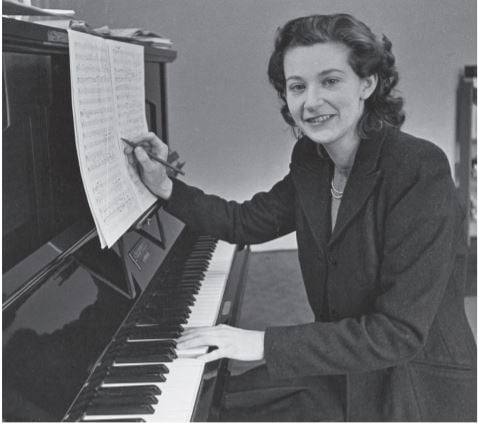
    This week on “Picture Perfect,” we’ll shine a light on the shamefully underutilized talent of Doreen Carwithen.

    In 1941, Carwithen studied harmony and composition with William Alwyn at London’s Royal College of Music. For both, it was love at first sight. Their fateful pairing led to a decades-long romance that culminated in their marriage, finally, in 1975.

    The reason for the delay was, unfortunately, at the time of their meeting, Alwyn happened already to be married. The double-life caused tremendous stress. Alwyn, in particular, descended into alcoholism and suffered a nervous breakdown. Finally, his doctor urged him that, if he was going to live at all, he should get on with it already and live honestly.

    In the concert hall, Alwyn – a contemporary of William Walton and Michael Tippett – enjoyed comparative success as a symphonist. Carwithen, too, got off to a promising start. Her overture “ODTAA (One Damn Thing After Another)” was conducted by Adrian Boult at Covent Garden in 1947. She also wrote two award-winning string quartets. But the cinema promised more lucrative employment. Carwithen was the first selected by J. Arthur Rank to enter the college’s new film music program.

    Combined, during their heyday, in the 1940s and ‘50s, Alwyn and Carwithen wrote the music for over 100 films. Alwyn, in particular, scored such high-profile projects as “The Crimson Pirate,” “A Night to Remember,” and “The Swiss Family Robinson.” Carwithen, although groomed for the very purpose, was not given the same opportunities. In all, she scored only six dramatic features. The rest were documentaries and shorts.

    Neither were her concert works, though well-received, met with the same enthusiasm or eagerness by either programmers or publishers. In 1961, she became Alwyn’s secretary and amanuensis, and following his death in 1985, devoted herself to the preservation of his legacy.

    After her own death, in 2003, discovered among her papers were sketches for an unfinished string quartet (her third), a symphony, and a cello concerto. One can only imagine that, as an artist, her potential remained unfulfilled.

    We’ll do our best to level the playing field this week, dividing the hour between Alwyn and Carwithen, 50/50, on “Picture Perfect,” music for the movies, this Saturday evening at 6:00 EDT, on WWFM – The Classical Network and wwfm.org.


    Remember, you can help support “Picture Perfect” by making a donation at wwfm.org. Enjoy a sense of satisfaction as you cause the mercury to rise in the thermometer on the station’s homepage. Less than 100 contributions in any amount will bring this year’s Bach 500 to a close. Tomorrow is Bach’s birthday, the end of the campaign, so why not do it now? Thank you for your support of The Classical Network!
    https://wwwfm.secureallegiance.com/wwfm/WebModule/Donate.aspx?P=DEFAULT&PAGETYPE=PLG&CHECK=vOU2bz5JCWmgCDbf53nm9ezWDeZ%2beA1M

  • Roy’s Tie-Dye Sci-Fi Corner Podcast

    Haha… I turned “Darby O’Gill” into a drinking game, and I didn’t tell Roy.

    If you’re a fan of classic “Star Trek,” you’ll want to be on hand for Roy’s conversation with another veteran of the original television series, Michael Dante, who played Capellan leader Maab, alongside Julie Newmar, in the episode “Friday’s Child.” In addition to his work in 30 films and 150 television shows, Dante was also a professional baseball player, playing with the Boston Braves and the Washington Senators. Tune in for Roy’s pitch-perfect interview Sunday night at 7 pm EDT.

    Then join us next Friday, when we rendezvous at Clavius Base with my cousin, Joe Metz, to chat around the monolith about one of his all-time favorites, “2001: A Space Odyssey.”

    Open the pod bay doors and leave your comments. Roy’s Tie-Dye Sci-Fi Corner livestreams on Facebook, Fridays and Sundays at 7 pm EDT!

    https://www.facebook.com/roystiedyescificorner

  • Discovering Archived Baroque Music on YouTube

    Discovering Archived Baroque Music on YouTube

    You never know what you’re going to stumble across when you’re bopping around YouTube. This week, I discovered one of my old Noontime Concerts. These aired on WWFM The Classical Network on Tuesdays at noon. Essentially, I was provided with audio files and a copy of a printed program. More often than not, the programs contain information on the performers but little or nothing about the music. These shows were done on the fly, live, with no script. In the moment, I would be a bundle of adrenaline and self-criticism. Going back to it now, I have to say… not bad!

    If you’re a fan of Baroque music, keep in mind that this Sunday is Bach’s birthday, and WWFM is in the midst of its annual “Bach 500” challenge. If we receive 500 donations IN ANY AMOUNT, we will cancel fundraising on March 21st and enjoy just Bach’s music. Furthermore, every dollar will be matched by money from the “Bach Pot,” put up in advance by some especially generous listeners.

    Consulting the donations thermometer on the station’s home page, I note that there are only 187 contributions to go until we meet our goal. Get your weekend underway by Bach-ing up your commitment to the classics on WWFM – The Classical Network and wwfm.org.

    Have a great weekend, and thank you for your support!

    https://wwwfm.secureallegiance.com/wwfm/WebModule/Donate.aspx?P=DEFAULT&PAGETYPE=PLG&CHECK=vOU2bz5JCWmgCDbf53nm9ezWDeZ%2beA1M


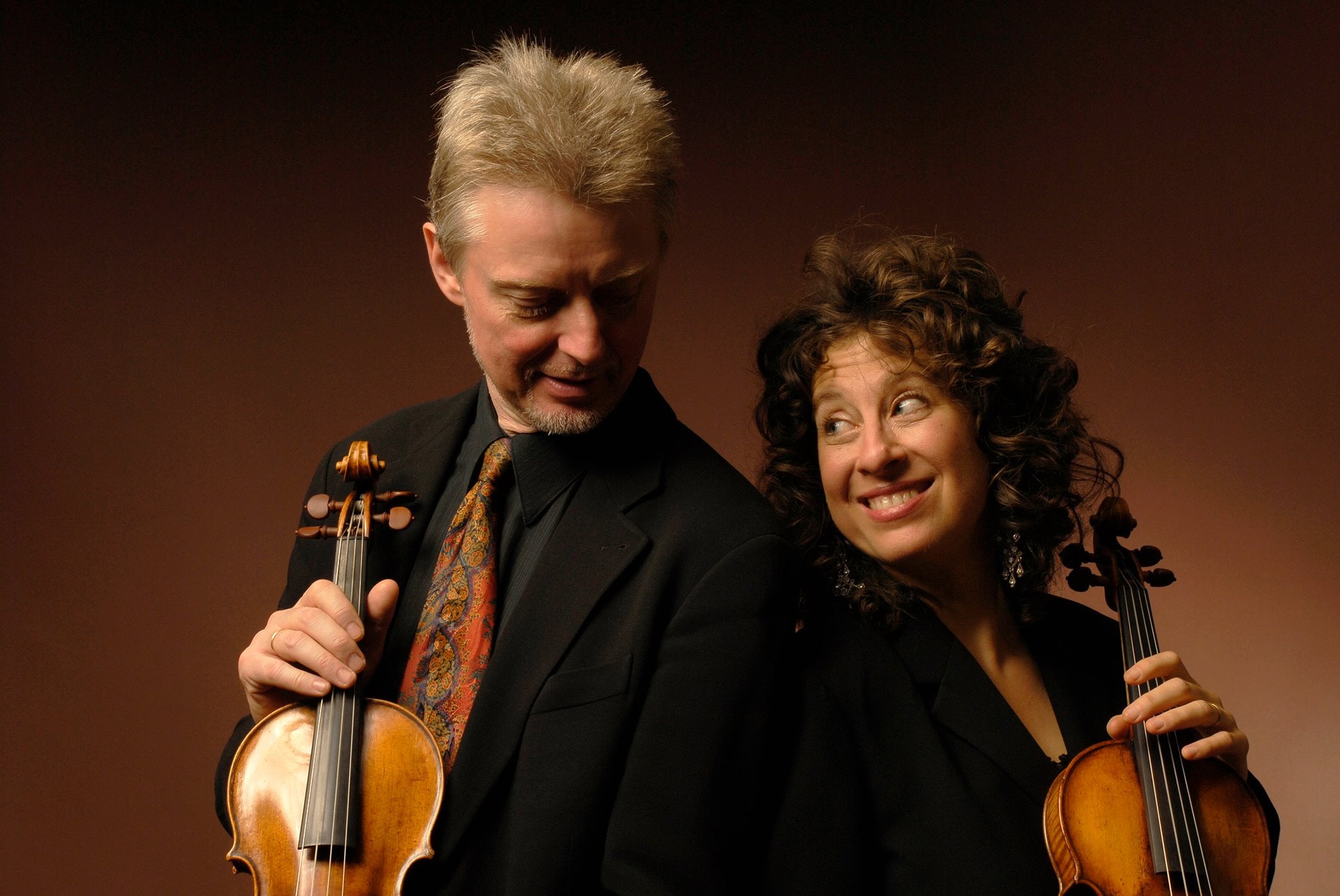
    Archived Noontime Concert musicians, the duo Black Marble: Jörg-Michael Schwarz & Karen Marie Marmer, baroque violins

  • Rimsky-Korsakov’s Mlada A Hidden Opera Gem

    Rimsky-Korsakov’s Mlada A Hidden Opera Gem

    To say that I didn’t enjoy my undergraduate years at Temple University would be an understatement, but I do appreciate the fact that, at the much longed-for commencement ceremony, I got to march to Rimsky-Korsakov’s “Procession of the Nobles.” In fact, the only thing that would have made me happier is if the orchestra had launched into something from “The Sea Hawk.”

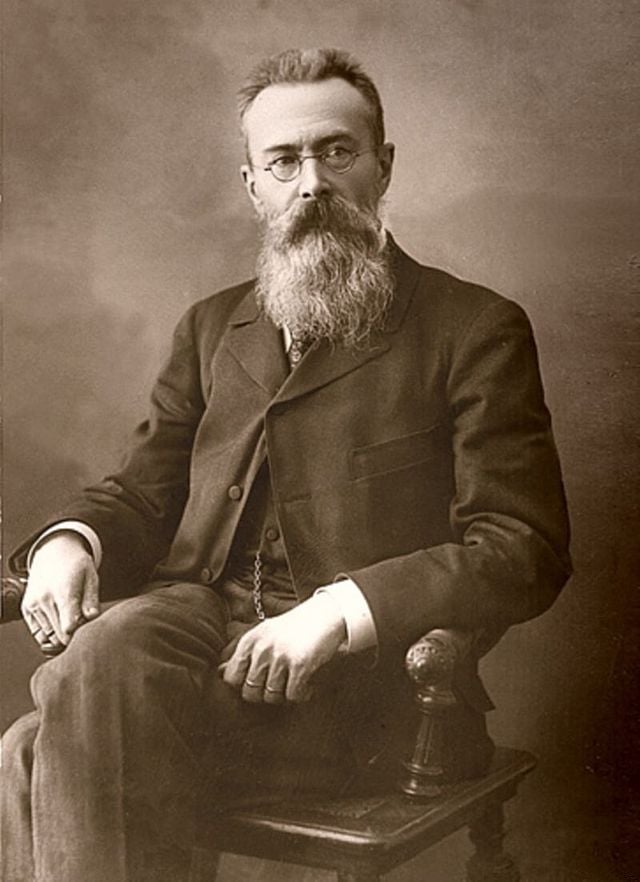
    “Procession of the Nobles” is all that most people know of Rimsky’s opera “Mlada,” an exploration of ancient Slavic paganism that somehow manages to assimilate Cleopatra. The work benefits from the composer’s visit to Paris, during the World Exhibition of 1889, and the eclectic musical influences he absorbed there. “Mlada” encompasses treachery, murder, a supernatural love triangle, a midsummer festival, a witches’ sabbath, Cleopatra, and, in the last act, revenge, widescale destruction, and an apotheosis in which bride and groom are reunited in the Great Beyond. The opera was not a success.

    Rimsky embarked on the work in 1889, after an earlier, collaborative effort, undertaken with his colleagues of the Mighty Handful in 1872, was not completed. Interestingly, Act III of this earlier project included one of several versions of Mussorgsky’s “A Night on Bald Mountain,” then titled “Glorification of Chernobog.” It was at this point that Mussorgsky added vocal soloists and chorus. It was later adapted again for use in his opera, “Sorochinsky Fair.”

    Be that as it may, Rimsky’s suite for his solo outing contains some characteristically transporting music.

    Rimsky also arranged Act III into a purely orchestral work, “Night on Mt. Triglav.” That’s the act with the witches’ sabbath and the vision of Cleopatra.

    In all, the composer wrote 15 operas. Performances in the West are rare, though I’ve managed to collect most of them on record.

    Temple University can go to the devil, as far as I’m concerned, but I will always consider myself lucky to have actually processed with the nobles.

    Happy birthday, Nikolai Rimsky-Korsakov!

  • Darby O’Gill Sean Connery & Wee Folk

    Darby O’Gill Sean Connery & Wee Folk

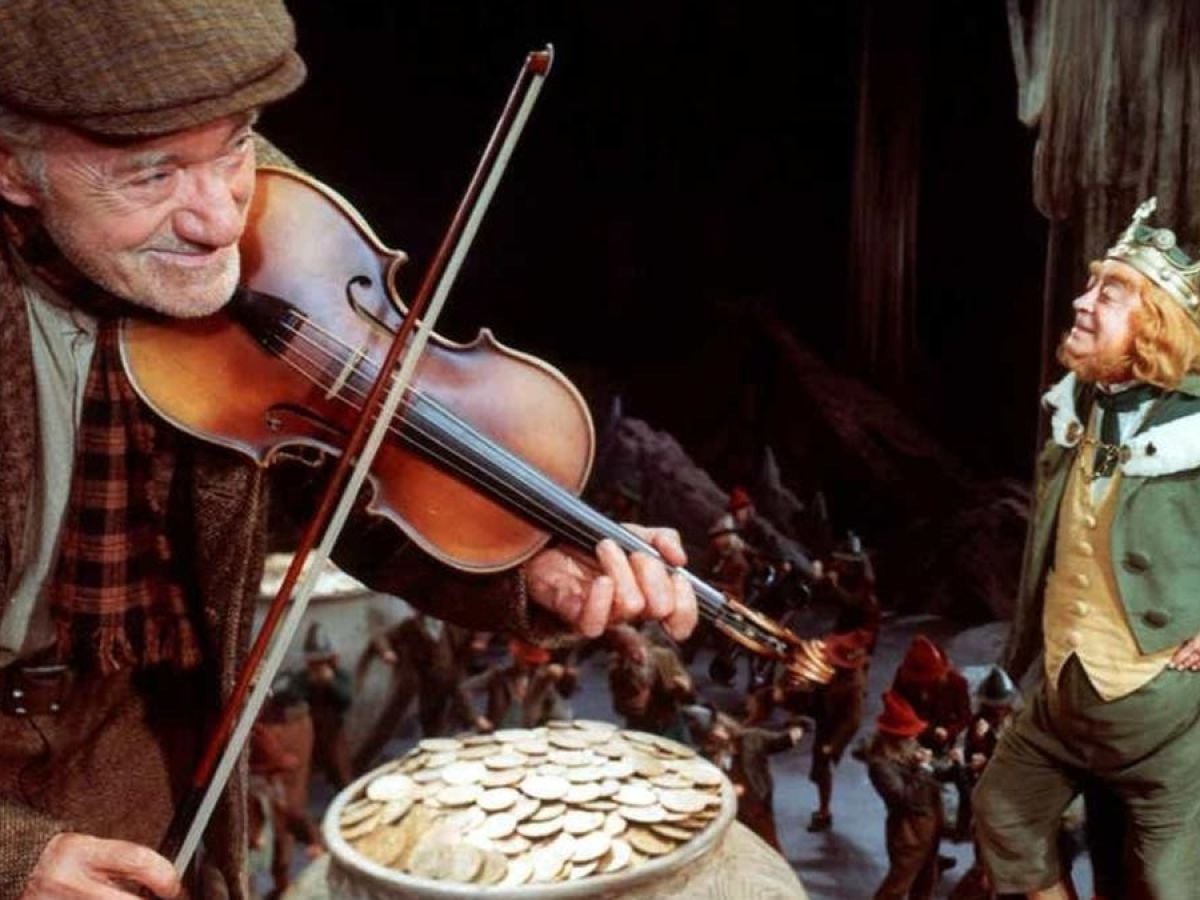
    It’s the “come hither” King Brian will be putting on you, on the next Roy’s Tie-Dye Sci-Fi Corner, as we settle in with our clay pipes, and with our pints in our fists, to discuss “Darby O’Gill and the Little People” (1959).

    Walt Disney’s tall tale about the wee folk makes clever use of matte paintings and forced perspective shots of a type later embraced by Peter Jackson in “The Lord of the Rings” trilogy. But no special effect can disguise a 29 year-old Sean Connery, singing and flashing his dimples, as he attempts to handle a scythe.

    Draw we round the cheerful ring. Two days after St. Paddy’s, we’ll be doling out the blarney, and laughing and weeping and donnybrooking for 60 hours and counting. Leave an eight-pack of Guinness in the comments section. There’s a pot of gold at the end of every rainbow, as we livestream on Facebook, this Friday evening at 7:00 EDT.

    https://www.facebook.com/roystiedyescificorner

Tag Cloud

Aaron Copland (93) Beethoven (95) Composer (114) Film Music (136) Film Score (143) Film Scores (255) Halloween (94) John Williams (195) KWAX (229) Leonard Bernstein (103) Marlboro Music Festival (125) Movie Music (151) Mozart (88) Opera (208) Philadelphia Orchestra (89) Picture Perfect (174) Princeton Symphony Orchestra (108) Radio (88) Ross Amico (244) Roy's Tie-Dye Sci-Fi Corner (290) The Classical Network (101) The Lost Chord (268) Vaughan Williams (103) WPRB (396) WWFM (881)

DON’T MISS A BEAT

Receive a weekly digest every Sunday at noon by signing up here


RECENT POSTS