Category: Daily Dispatch

  • Mario Lanza A Centennial Celebration

    Mario Lanza A Centennial Celebration

    Mario! Mario!

    Who would have dreamt that Alfredo Arnold Cocozza would grow up to become one of the biggest stars of the 1950s?

    Mario Lanza was born in South Philadelphia, in a row home on the 600 block of Christian Street, one hundred years ago today. It was the year the great Caruso died (on August 9th), and Lanza, famously, went on to play him in the movies. In fact, “The Great Caruso” became the highest-grossing M-G-M film of 1951.

    Legend states that Lanza was discovered by Serge Koussevitzky, traveling music director of the Boston Symphony Orchestra, after booking an adjacent hotel room so that he might be overheard practicing. Koussevitzky described Lanza as “Caruso redivivus” (Caruso reborn), and stated, “Yours is a voice such as is heard once in a hundred years.”

    Fresh-faced and forever young, Lanza is preserved in his everlasting vitality on records and celluloid. He died of an apparent pulmonary embolism in 1959 at the age of 38.

    Shortly before his own death in 1987, Enrico Caruso Jr. observed, “I can think of no other tenor, before or since Mario Lanza, who could have risen with comparable success to the challenge of playing Caruso in a screen biography… Lanza was born with one of the dozen or so great tenor voices of the century, with a natural voice placement, an unmistakable and very pleasing timbre, and a nearly infallible musical instinct.”

    On the one hundredth anniversary of his birth, celebrate Koussevitzky’s “voice of a hundred years.”

    Happy birthday, Mario Lanza.


    “Drink drink drink” from “The Student Prince”:

    At the time of his death, Lanza was preparing a return to the operatic stage as Canio in “Pagliacci” (seen here in “The Great Caruso”):

    “Parigi, o cara” from “La Traviata,” with Frances Yeend and Eugene Ormandy conducting, at the Hollywood Bowl in 1947. In the audience was Louis B. Mayer, who signed the 26 year-old tenor to a long-term movie contract.

    High-spirited tribute in Peter Jackson’s “Heavenly Creatures,” set to Rudolf Friml’s “The Donkey Serenade”:

    Lanza’s first gold record, “Be My Love”:
  • Armchair Travel Winter Films & Music

    Armchair Travel Winter Films & Music

    Baby, it’s cold outside! The best time for armchair travel.

    This week on “Picture Perfect,” cozy in, but get a world view, as we drift beyond our shores for an hour of wintry scenes from world cinema, with entries from England, Finland, the Soviet Union, and Japan.

    Akira Kurosawa’s “Dersu Uzala” (1975) is one of the best of his later films, although it seems to have faded into the shadows of “Kagemusha” and “Ran.” The plot centers on an early 20th century friendship between a Russian explorer and an East Asian trapper and hunter, who acts as his guide. This would be the last of Kurosawa’s works to be recognized with an Academy Award for Best Foreign Language Film. The music is by Isaac Schwartz.

    Snow again is in abundance in Finland’s “The White Reindeer” (1952). Set in Lapland, it tells the tale of a lonely herder’s wife, who visits a local shaman and is transformed into a shapeshifting, vampiric hind. The film was honored at the Cannes Film Festival with a special award for Best Fairy Tale Film, and at the Golden Globes as Best Foreign Film. Einar Englund wrote the music.

    Sergei Prokofiev’s concert suite from “Lieutenant Kijé” (1934) is very well known, but for some reason the film is not. In fact, it has been widely circulated in program notes that the film was never actually completed, which is false. It has not been available for purchase in the U.S. for as long as I can remember, but you can watch it here:

    Why The Criterion Collection has never gotten around to this one, I don’t know, but I’m sure there must be an explanation. The famous sleigh-ride, the “Troika,” begins just before the 45-minute mark. Note that the baritone on the soundtrack is none other than the composer himself, who thought the original singer employed for the purpose too refined.

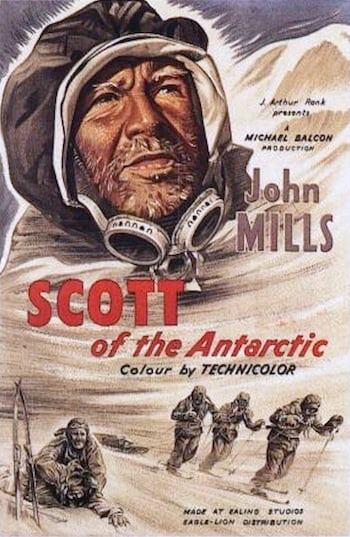
    Finally, we head to the South Pole with Robert Falcon Scott, for “Scott of the Antarctic” (1948). England’s Ealing Studios is probably best recognized for its classic comedies of the 1950s, many of them starring Alec Guinness. There’s not much funny about this harrowing true story, with John Mills as Scott and the most celebrated film score by Ralph Vaughan Williams. Vaughan Williams’ music perfectly reflects the sublime, austere beauty of an impenetrable wilderness. Material from the score was later reworked and incorporated into his Symphony No. 7, the “Sinfonia Antartica” (using the Italian spelling.)

    Don’t forget your gloves and a hat! It’s a small world of cold this week, on “Picture Perfect,” music for the movies, this Saturday evening at 6:00 EST, on WWFM – The Classical Network and wwfm.org.

  • Six Million Dollar Man & Batman on Tie-Dye Sci-Fi

    It’s only appropriate that our tribute to “The Six Million Dollar Man” would run approximately six million minutes. Grab yourself a quart of Pennzoil and brace yourself for this bionic behemoth.

    Since our aim is always to leave everyone wanting more, we’re taking off this Sunday. But then get ready for a double-dose next weekend, as on Friday, February 5, we’ll head to the Bat-poles for a four-fisted reminiscence of “Batman,” the 1966 movie, spun off of the primary-colored camp television series. Then, on Super Sunday, the blood sport of choice is “Rollerball, “as Roy and I go head-to-head with the Super Bowl. Join us for what’s bound to be the lowest-rated Super Bowl in history.

    We’ll be elbows-deep in manwiches and buffalo wings, on the next Roy’s Tie-Dye Sci-Fi Corner. I’ll be waiting in the end zone, while Roy digresses about “Star Trek,” next Friday and Sunday evenings at 7:00 EST!

    https://www.facebook.com/roystiedyescificorner

  • Princeton Symphony & Buskaid Premiere On-Demand

    Princeton Symphony & Buskaid Premiere On-Demand

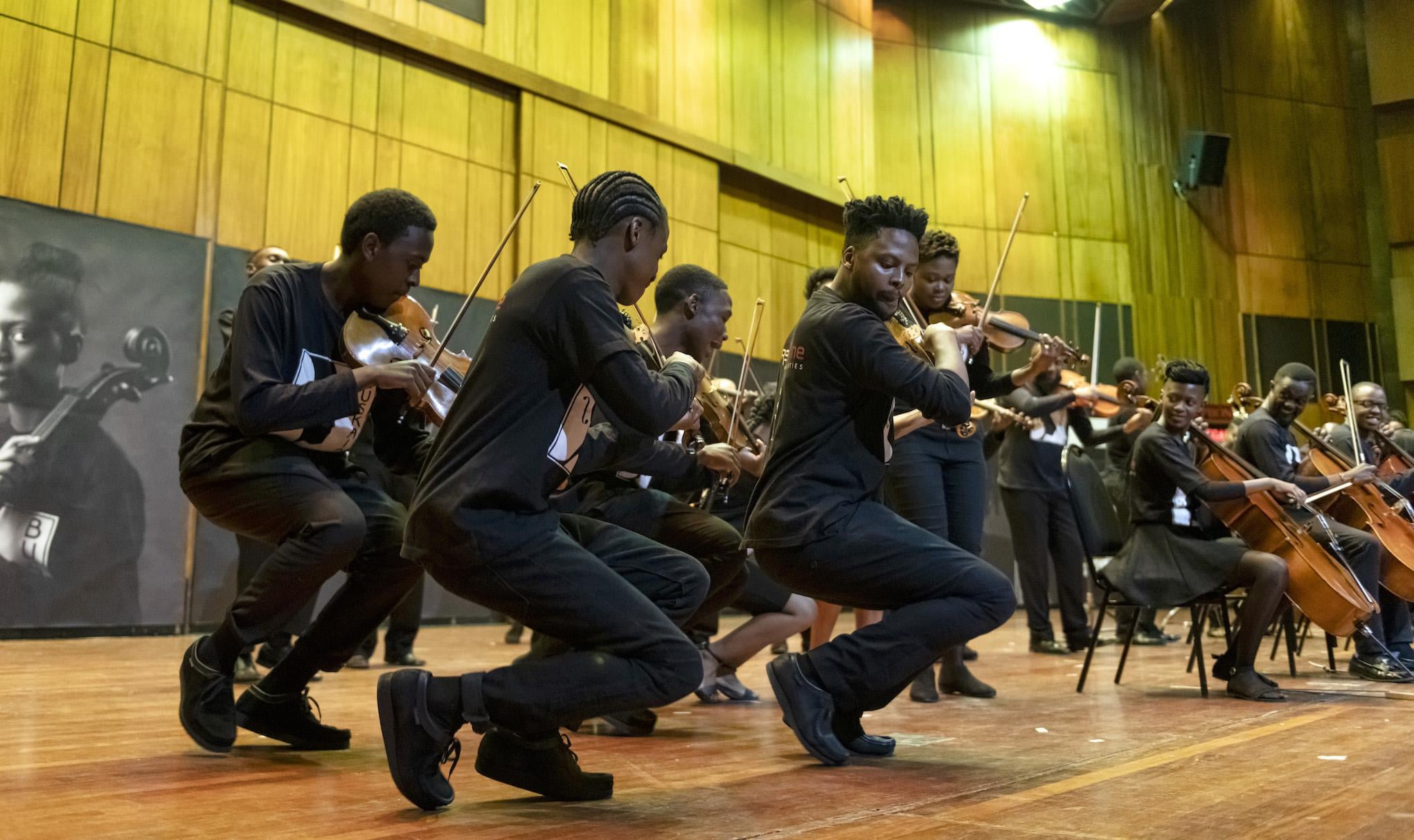
    Starting today, the Princeton Symphony Orchestra unveils a new series of on-demand concerts featuring the remarkable Buskaid Soweto String Ensemble.

    Buskaid is an organization that offers high-quality string teaching to young people in the township of Soweto, South Africa. In 23 years, the organization has produced a world class ensemble that has received acclaim on 26 international tours.

    This weekend’s opener, available now, features guest pianist Melvyn Tan, Buskaid-trained violist Tiisetso Mashishi, popular vocals, and examples of kwela, a South African style of music with jazzy undertones, derived from the marabi sound. The concert was filmed at Johannesburg’s Linder Auditorium.

    PSO Executive Director Marc Uys, who hails from South Africa, visited the Buskaid School with a group of PSO trustees in 2019. Among them was composer Julian Grant, whose work “Sancho’s Dance-Mix,” a Buskaid commission, is featured on this weekend’s program.

    To learn more about the series and to gain three-day access to this weekend’s debut concert, visit princetonsymphony.org.


    Uys and Grant talk about their personal connections to Buskaid on a podcast with Discover Jersey Arts:

    https://jerseyartsfeatures.com/content/2021/1/28/from-soweto-to-princetonthe-buskaid-string-ensemble

    Uys and Buskaid Founder and Music Director Rosemary Nalden visit “A Tempo” on WWFM – The Classical Network and wwfm.org:

    https://www.wwfm.org/post/virtual-performances-transcend-geographic-boundaries-princeton-symphony-south-african-ensemble

  • Six Million Dollar Man Pilot A Bionic Blunder

    Six Million Dollar Man Pilot A Bionic Blunder

    Steve Austin may be the Six Million Dollar Man, but his television pilot looks like it must have been made for a dollar ninety-eight.

    Furthermore, the usually-reliable Darren McGavin and Martin Balsam fail to mesh. Is it any wonder the supporting cast was given a complete overhaul, with Richard Anderson and Alan Oppenheimer stepping up as Steve’s boss and medical overseer, respectively? Bouncing back from a decidedly bumpy landing, Lee Majors was welcomed into the major leagues. Bionic and iconic, “The Six Million Dollar Man” went on to become one of the most popular adventure series of the 1970s.

    I can only imagine the series’ creators as they kept repeating, “We can rebuild it… we have the technology… we have the capability to make THE WORLD’S FIRST BIONIC MAN.” Of course, looking back from the 21st century, all that “advanced technology” seems rib-ticklingly quaint.

    “The Six Million Dollar Man” ran – and ran – for five seasons, spawning a successful spin-off, “The Bionic Woman,” starring Lindsay Wagner, and three reunion TV movies. Not even Bionic Bigfoot could kill “The Six Million Dollar Man.”

    Tomorrow night, Steve Austin will meet his greatest challenge when Roy Bjellquist and I discuss the television pilot that started it all. Superman had his kryptonite; the Six Million Dollar Man has his Roy’s Tie-Dye Sci-Fi Corner. Join us in the comments section as we flex our muscles, livestreamed on Facebook, this Friday evening at 7:30 EST. (Note the special start-time, one half-hour later than usual!)

    https://www.facebook.com/roystiedyescificorner

Tag Cloud

Aaron Copland (93) Beethoven (95) Composer (114) Film Music (136) Film Score (143) Film Scores (255) Halloween (94) John Williams (195) KWAX (229) Leonard Bernstein (103) Marlboro Music Festival (125) Movie Music (151) Mozart (88) Opera (208) Philadelphia Orchestra (89) Picture Perfect (174) Princeton Symphony Orchestra (108) Radio (88) Ross Amico (244) Roy's Tie-Dye Sci-Fi Corner (290) The Classical Network (101) The Lost Chord (268) Vaughan Williams (103) WPRB (396) WWFM (881)

DON’T MISS A BEAT

Receive a weekly digest every Sunday at noon by signing up here


RECENT POSTS