Category: Daily Dispatch

  • Mendelssohn, Schubert, and Composer Birthdays

    Mendelssohn, Schubert, and Composer Birthdays

    Mozart’s birthday is always a signal to me that we are entering a season of great composer birthdays.

    Perhaps it is all coincidence, but for whatever reason, music history has arrayed itself in such a way that larger patterns can be discerned. Autumn is heavy with birthdays of significant American composers (Gershwin, Ives, Hanson, Copland, and Virgil Thomson, to name a few). Revered violinists Fritz Kreisler and Jascha Heifetz were born on the same day (February 2), as were venerated pianists Sergei Rachmaninoff and Ferruccio Busoni (April 1). Brahms and Tchaikovsky share a birthdate (May 7). So do two of the most prominent film composers, Max Steiner and Dimitri Tiomkin (May 10). After 34 years in radio, these natal serendipities are etched in my memory like tablets carved on Mount Sinai.

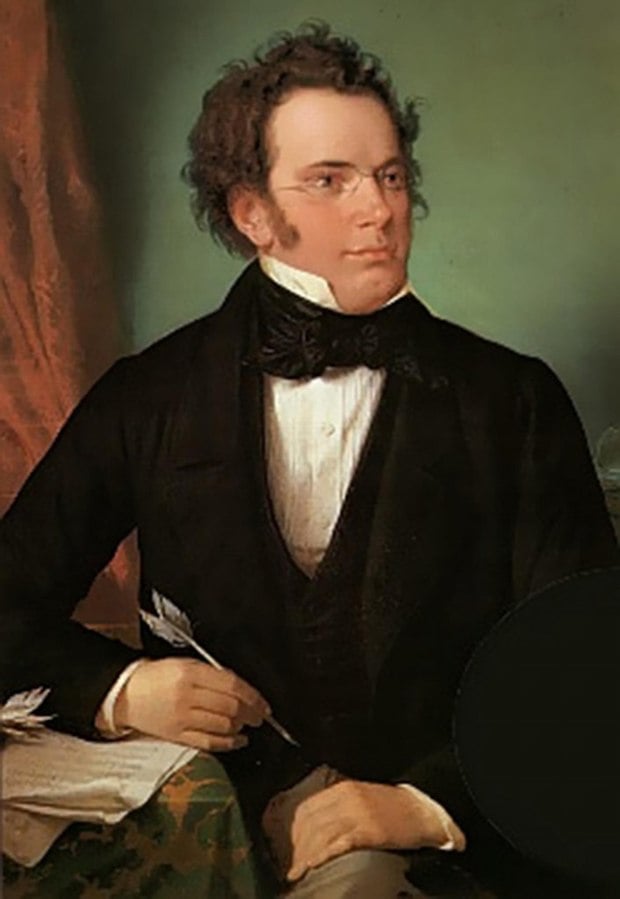
    Nonetheless, even as I anticipated the birthday of Franz Schubert (January 31), in my eagerness to pay tribute to Mario Lanza on the occasion of his centenary, I inadvertently let it slip by. Please forgive me, Schwammerl. Today, on the anniversary of the birth of Felix Mendelssohn (1809-1847), I hope to make amends.

    Mendelssohn, of course, was one of the most astonishing of musical prodigies. He composed his earliest masterpieces, the overture to “A Midsummer Night’s Dream” and the Octet for Strings in E-flat major, at the ages of 16 and 17 respectively. This is some of the “youngest” music in the entire repertoire. In their precocity and polish, both pieces are on a par with anything written by the teenaged Mozart.

    Of course, by then, Mendelssohn had already generated piles of manuscripts – dozens of works, including three piano quartets, a violin sonata, a piano sonata, a singspiel, songs and “Songs without Words,” twelve symphonies for strings, and his first symphony for full orchestra.

    And he would go on to write his “Italian” Symphony, his “Scottish” Symphony, the “Hebrides Overture,” the Violin Concerto in E minor, and the oratorio “Elijah,” all of which are still played in heavy rotation, both on radio and in the concert hall.

    As a conductor, there’s no question he was one of the most influential musicians in Europe, if not the world. For twelve years, he directed the Leipzig Gewandhaus Orchestra, many of whose players went on to distinction in their own right. His performances were especially admired for their precision. He also laid the groundwork for modern concerts in developing a musical “canon.”

    He gave important premieres of music by his contemporaries, while also reviving works of Mozart, Beethoven, and of course Johann Sebastian Bach. It was Mendelssohn who famously dusted off the “St. Matthew Passion,” reinvigorating Bach’s reputation.

    Another composer who benefited from Mendelssohn’s advocacy was Franz Schubert. In 1838, ten year’s after Schubert’s death, his brother, Ferdinand, shared an unpublished manuscript with Robert Schumann, during one of the latter’s visits to Vienna. Schumann returned to Leipzig with a copy of the piece, a Symphony in C major. Mendelssohn gave the symphony its first public performance in 1839.

    Schumann reviewed the concert in the Neue Zeitschrift für Musik, famously praising the work for its “heavenly length.” For this reason, and to distinguish it from an earlier, shorter Schubert symphony composed in the same key, it is usually identified as the “Great” C major.

    Standing only five-foot-one, Schubert himself bore the nickname “Schwammerl” (“Little Mushroom”), bestowed upon him by his friends. Even a minute fungus, it would seem, is more than capable of creating something “Great.”

    Happy birthday, Felix Mendelssohn, and happy belated birthday, Franz Schubert.


    Mendelssohn, “Hebrides Overture”

    His first masterpiece, the Octet in E-flat major, composed at the age of 16:

    Live performance of Leonard Bernstein conducting Schubert’s Symphony No. 9 “Great”
    https://www.youtube.com/watch?v=hCuC8–m-98

  • Kreisler & Heifetz: Violin Legends Remembered

    Kreisler & Heifetz: Violin Legends Remembered

    Today encompasses the anniversaries of the births of two of the greatest fiddlers who ever lived.

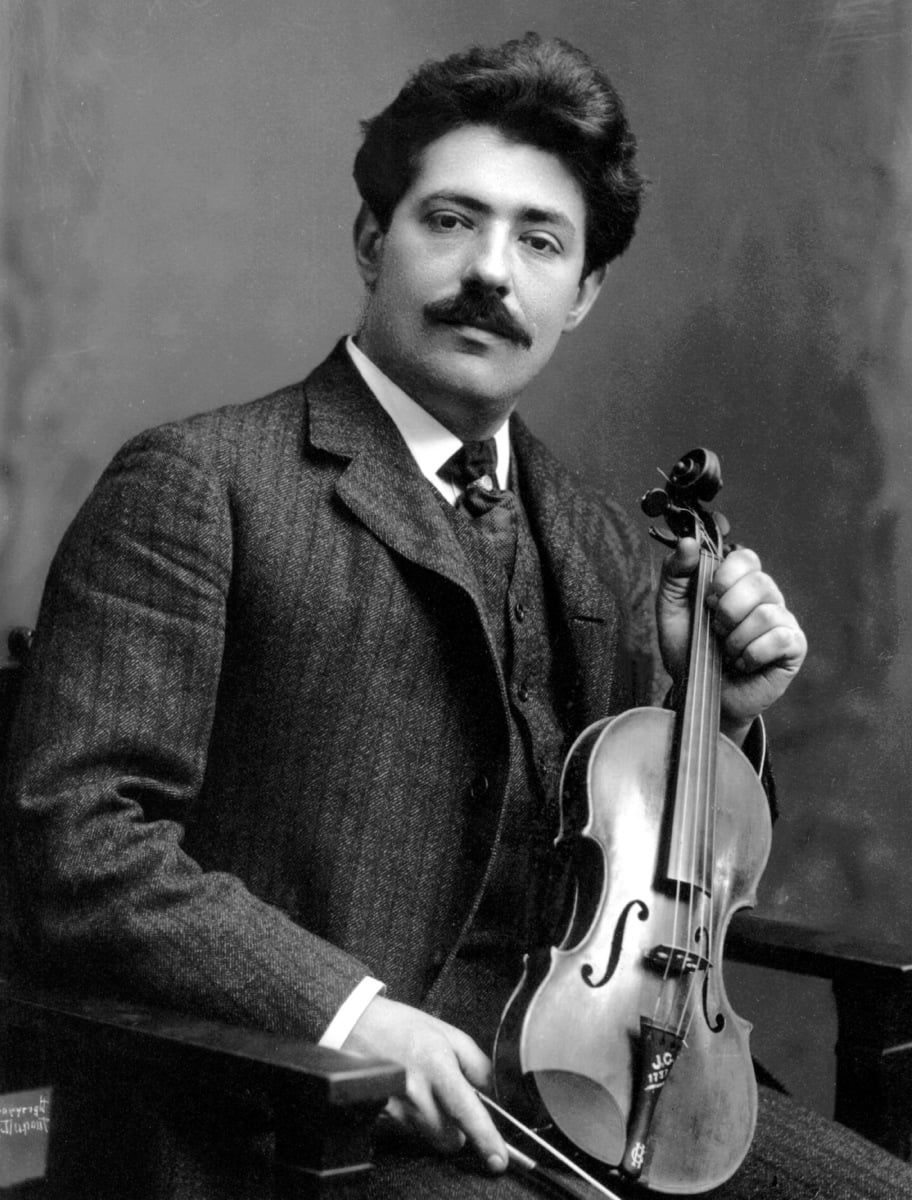
    Fritz Kreisler, the sweet-toned confectioner and purveyor of violin bonbons, was born in Vienna on this date in 1875. Jascha Heifetz, the superhuman technician, who imbued perfection with tonal beauty, was born in Vilnius in 1901. Kreisler was warm, gregarious and easygoing. Heifetz acquired a reputation for a certain cool intensity.

    At a point, Kreisler ruffled feathers, not with his playing, but because he casually let slip that many of the 18th century “rediscoveries” he had used to charm audiences, critics, and musicologists were not in fact rediscoveries at all. Nor did they date from the 18th century. Rather they were composed by Kreisler himself. When the professionals complained, Kreisler shrugged.

    It would be futile to argue against his serious musical credentials. He gave the world premiere of the Elgar concerto and became a favorite recital partner of Sergei Rachmaninoff. A famous anecdote relates that Kreisler and Rachmaninoff were giving a concert in New York. In the middle of a performance, Kreisler suffered a memory lapse, and as he noodled around on his violin, trying to find his way back, he inched closer to his pianist. “Where are we?” Kreisler whispered. To which Rachmaninoff replied, “Carnegie Hall.”

    In 1941, Kreisler was crossing the street, when he was hit by a milk truck. The accident fractured his skull and put him in a coma. Like something out of an early Woody Allen comedy, when he awoke, he could communicate only in Latin and Greek. Thankfully, the effect was only temporary.

    Kreisler met Heifetz for the first time at a private press party in 1912. After listening to the boy play through the Mendelssohn concerto, he declared, “We can all just break our fiddles over our knees.” Arthur Nikisch, conductor of the Berlin Philharmonic, said he had never heard such an excellent violinist. The year before, Heifetz had played before a crowd of 25,000, and police had to be summoned to prevent the young virtuoso from being mobbed.

    A little more collected was Groucho Marx. When Heifetz met Groucho, he mentioned that he had been earning his living as a violinist since the age of seven. Groucho responded, “Before that, I suppose, you were just a bum.”

    Aside from his astounding accomplishments on the concert stage, Heifetz appeared as a mess hall jazz musician in Allied camps across Europe during the Second World War. Under a pseudonym, he wrote “When You Make Love to Me (Don’t Make Believe)” for Bing Crosby. In addition, Heifetz and Bing recorded the “Lullaby” from Benjamin Godard’s opera “Jocelyn.”

    Heifetz was an advocate for certain socio-political and environmental causes. Decades before it was a thing, he had his Renault converted into an electric vehicle, and he lobbied for the acceptance of 911 as an emergency number.

    Once, after a performance in Israel, he was attacked by a man wielding a crowbar for programming a violin sonata by Richard Strauss. Strauss had remained in Germany during World War II and maintained a fraught relationship with the Nazis. Heifetz, by the way, was Jewish.

    Composers who wrote music for him, or whose music he premiered, include Mario Castelnuovo-Tedesco, Erich Wolfgang Korngold, and Sir William Walton. Heifetz commissioned Arnold Schoenberg’s Violin Concerto, but he never played it.

    His standard of performance was stratospheric, and he subjected himself to a punishing, though strictly secret, regimen of self-discipline. He delivered until he felt he no longer could, retiring from the concert stage in 1972.

    Itzhak Perlman reflected, “The goals he set still remain, and for violinists today, it’s rather depressing that they may never really be attained again.”

    Here’s a French film about Heifetz. Interestingly, it opens with him playing one of Kreisler’s forgeries, the “Praeludium and Allegro in the Style of Pugnani”

    Kreisler plays the “Meditation” from Massenet’s “Thaïs”

    Kreisler plays the Mendelssohn concerto

    Kreisler, master of the miniature

    Two-part radio interview on the occasion of Kreisler’s 80th birthday, with spoken tributes from Elman, Menuhin, Milstein, Stern, Szigeti and others:

    Footage of Heifetz performing Grigoras Dinicu’s “Hora Staccato.” The conductor is Donald Vorhees, longtime music director of the Allentown Symphony Orchestra in Allentown, PA.

    Heifetz plays the first movement of the Tchaikovsky Violin Concerto in the 1947 film “Carnegie Hall.” That’s Fritz Reiner on the podium.

    From back in the day when classical music was still popular entertainment, Heifetz playing Schubert and Mendelssohn in a short film, with Piatigorsky and Rubinstein. The three of them actually get to act (albeit badly).

    Heifetz and Jack Benny

    Heifetz and Bing Crosby with the “Lullaby” from Godard’s “Jocelyn”

    Heifetz’s popular hit (as Jim Hoyle), sung by Bing

    Heifetz plays it – on the piano!

  • Punxsutawney Phil Sees Shadow Winter’s Back

    Punxsutawney Phil Sees Shadow Winter’s Back

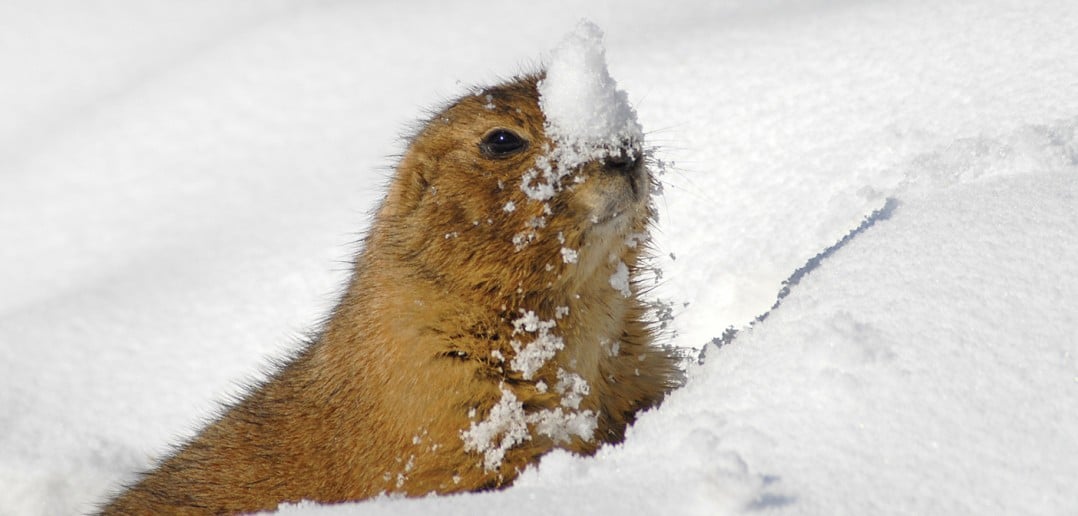
    Ever the sensible rodent, Punxsutawney Phil, after being rudely awakened this morning at Gobbler’s Knob, glimpsed his shadow, wished death on his handlers, and climbed back into bed. Six more weeks of winter!

    O Mystic Groundhog. Thank you for this gift of six more weeks of winter. Ice and slush may not be ideal for walking or driving, but I will take it any day over the prospect of sizzling on the griddle for four months. No, heavy socks and cozy food are more my speed. I love climbing under the blankets with a good book and listening to the wind howl.

    Phil has been calling it now for 135 years. The Washington Post reports that his prognostications have been correct 80 percent of the time. CNN places the figure closer to 39. (Phil’s handlers claim it is 100.) That’s still better than the actual professionals, who whip everyone into a frenzy at the threat of even the humblest dusting. From now on, I get all my forecasts from the groundhog.

    Now join me in singing the Punxsutawney Phil song! Then back to bed.

  • Snow Day Memories of Childhood Winter in Pennsylvania

    Snow Day Memories of Childhood Winter in Pennsylvania

    Snow has a way of making poets of us all, it imprints us so, when we are young.

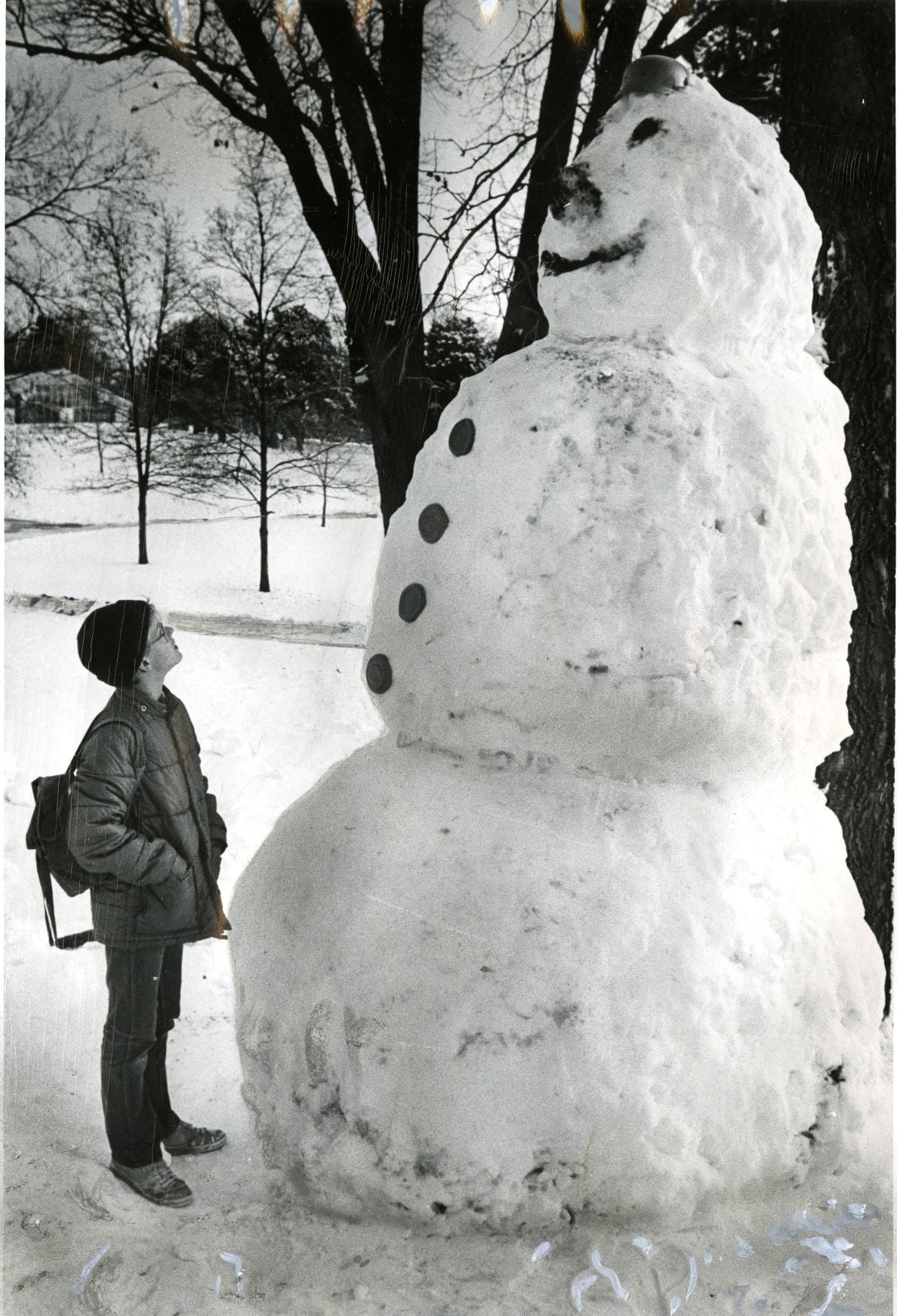
    As I watch the the birds huddling around their feeders, piled high with extra food, replenished for them late yesterday, my thoughts wander back to the monumental snowfalls of my elementary and high school years, while growing up in eastern Pennsylvania. It wasn’t unusual then that schools would close for two or even three days, the district was so vast. Open fields and farmland were like carnival grounds for the elements. The drifting snow was such that buses never left the grounds.

    I would stay up late, watching the snow fall, from my bedroom, in the fervent hope that there would be enough accumulation that I wouldn’t have to be up and out the door in a few hours. Homeroom began at 7:15, and by high school I had given up on the drama of taking the bus, opting instead to walk the five miles (by car), which I was able to shave by taking a shortcut through the woods. I lay there for a long while listening to the sounds of chains on tires, as plows and repurposed garbage trucks made their rounds.

    Of course, in the morning I would be up anyway, listening with my mother and sister for the closings. Once school was officially cancelled, I embarked, with a stomach full of Cream of Wheat, on a long day of shoveling, sledding, and snowball fights. I’d stagger back home, half-frozen, at midday, with blue spots flashing before my eyes and snow caked to my socks, to regroup over toasted cheese sandwiches and tomato soup, lovingly served up by Mom.

    Then I’d be out the door again until suppertime. In the evening, the snow cast a wondrous luminosity, which continued uncannily into the night. By then, friends who lived at respectable distances would have found their way to one another’s houses. The pelting of snowplows ensued.

    There were no snow blowers back then. Only eerie silence, punctuated by the distant squeal of children, perhaps the scrape of a shovel, or an occasional spinning tire. After a good snow there would be such embankments, you would have thought we were living in Lillehammer. All very conducive to the construction of ice fortresses, which we connected through a network of passageways.

    How many years has it been since I’ve barreled down a nearly-vertical plane on a sled? Lain with my back against the snow? Walked in the woods and experienced a fairy world transformation?

    So much laughter, adventure, and romance in those days. Where are the snows of yesteryear?

  • Finnish Birdsong Music This Sunday

    Finnish Birdsong Music This Sunday

    This Sunday night on “The Lost Chord,” in this season of bitter temperatures and falling snow, keep your spirits up with music inspired by Finland’s avian life.

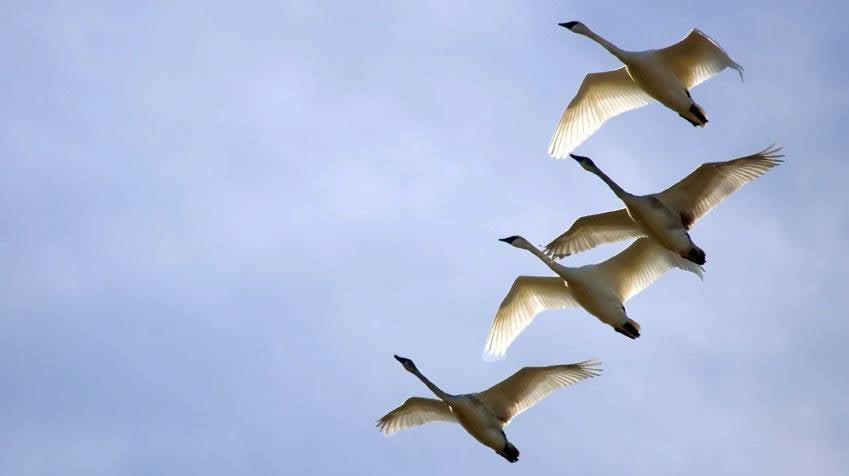
    Einojuhani Rautavaara’s concerto for birdsong and orchestra, “Cantus Arcticus,” from 1972, incorporates tape recordings made by the composer on the bogs of Liminka, near the Arctic Circle. More than just a gimmick, the piece is an inspiring triptych that manages to transcend its potentially New Age conceit. The work falls into three movements: “The Bog,” “Melancholy,” and “Swans Migrating.” The final movement takes the form of a long crescendo for orchestra, and incorporates the songs of whooper swans.

    Jean Sibelius’ uplifting Symphony No. 5 culminates in a grand theme inspired by swans in flight around his home on the shores of Lake Tuusula in Järvenpää. The symphony is standard repertoire, but we’ll hear it as it was first performed in 1915, before it was substantially revised to become the masterwork we know today.

    Encountering the Fifth in its original guise illuminates the composer’s remarkable clarity of purpose, uncanny objectivity, and iron will in reshaping his raw materials to achieve a loftier, definitive vision. It’s not for nothing that Sibelius was described by one critic as “a great artist whose imagination has the wings of an eagle.”

    Take flight with Finnish music. Join me for “Snow Birds,” this Sunday night at 10:00 EST, on WWFM – The Classical Network and wwfm.org.

Tag Cloud

Aaron Copland (93) Beethoven (95) Composer (114) Film Music (136) Film Score (143) Film Scores (255) Halloween (94) John Williams (195) KWAX (229) Leonard Bernstein (103) Marlboro Music Festival (125) Movie Music (151) Mozart (88) Opera (208) Philadelphia Orchestra (89) Picture Perfect (174) Princeton Symphony Orchestra (108) Radio (88) Ross Amico (244) Roy's Tie-Dye Sci-Fi Corner (290) The Classical Network (101) The Lost Chord (268) Vaughan Williams (103) WPRB (396) WWFM (881)

DON’T MISS A BEAT

Receive a weekly digest every Sunday at noon by signing up here


RECENT POSTS