Category: Daily Dispatch

  • Rollerball Tie-Dye Super Sunday Livestream

    Rollerball Tie-Dye Super Sunday Livestream

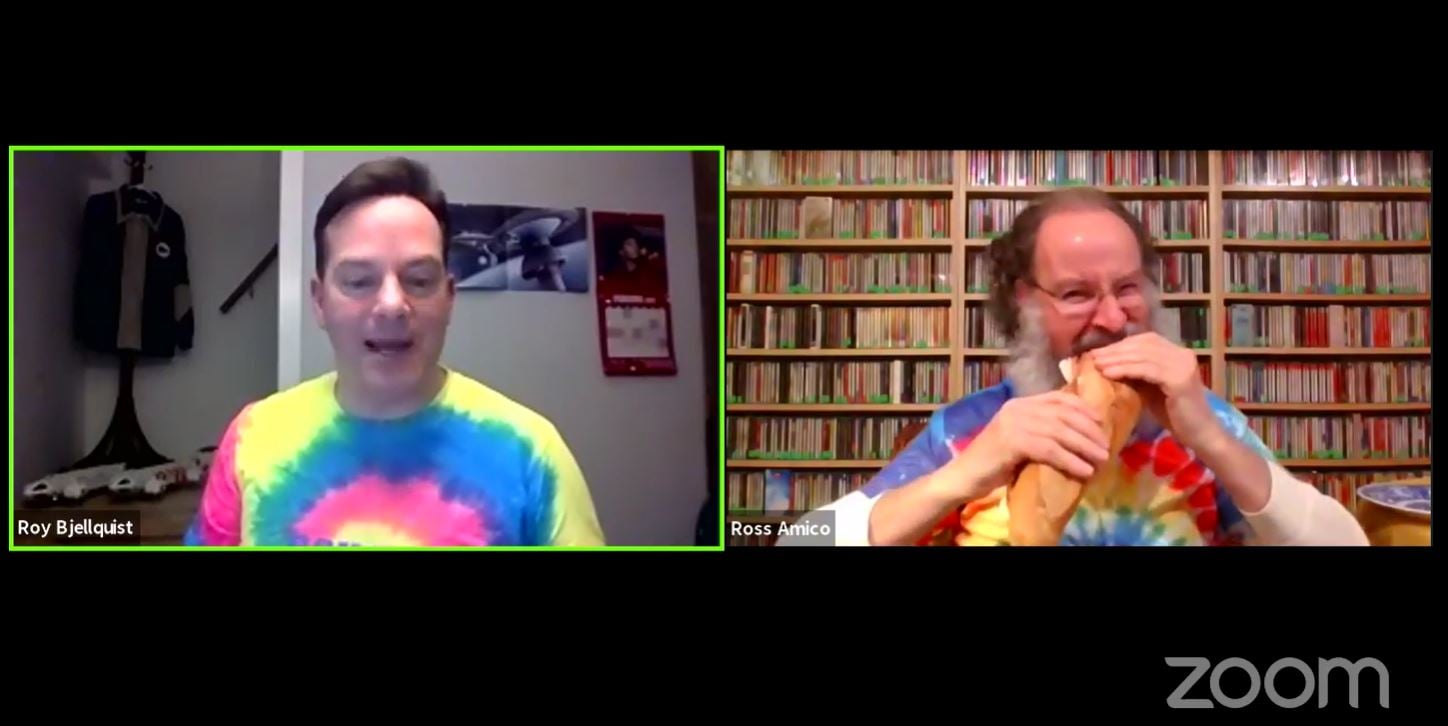
    Roy and I seemed to regain our mojo last night. Chalk it up to ROLLERBALL. That, and a whole lot of tie-dye (to say nothing of the hoagies and buffalo wings). They don’t call it Super Sunday for nothing.

    We’ll be back on Friday, to get you in the mood for Valentine’s Day, with THE FURY (1978). This Brian De Palma thriller is not just about Kirk Douglas and exploding heads. It also features a great score by John Williams from the same year he composed “Superman.” Happy birthday to the Maestro, who is 89 today!

    You don’t need extrasensory perception to divine that Roy’s Tie-Dye Sci-Fi Corner will return, livestreamed on Facebook, this Friday evening at 7:00 EST!

    https://www.facebook.com/roystiedyescificorner

    A direct link to our discussion of ROLLERBALL (with snacks) here:

  • William Grant Still American Composer Rediscovered

    William Grant Still American Composer Rediscovered

    They say that still waters run deep.

    William Grant Still, frequently described as the “Dean of Afro-American Composers,” wrote a lot of attractive music, much of it informed by the black experience. This Sunday night on “The Lost Chord,” we’ll hear some of it, including the delightful Symphony No. 2, subtitled “Song of a New Race.” Also, a more serious work fueled by racial injustice, “And They Lynched Him on a Tree,” for double-choir, narrator and orchestra.

    Still, who lived from 1895 to 1978, emerged from unlikely circumstances – born in Woodville, Mississippi and raised in Little Rock, Arkansas – to become a major force in American music. Having abandoned a career in medicine for studies at the Oberlin Conservatory of Music and the New England Conservatory in Boston, where he studied with George Whitefield Chadwick, Still was a “first” in many respects.

    His Symphony No. 1, the “Afro-American Symphony” was the first written by a black composer to be performed by a major orchestra (the New York Philharmonic). He was the first to be given the opportunity to conduct a major orchestra (the Los Angeles Philharmonic, at the Hollywood Bowl). His opera, “Troubled Island,” became the first to be produced by a major company (the New York City Opera). Another of his operas, “A Bayou Legend,” was the first to be performed on national television (as late as 1981). His works were performed internationally by the Berlin Philharmonic, the London Symphony Orchestra, the BBC Symphony, and the Tokyo Philharmonic.

    Perhaps the least likely pupil of Edgard Varèse, Still incorporated jazz and blues elements into his concert music. He cut his teeth writing arrangements for Paul Whiteman, W.C. Handy, and Artie Shaw. According to Eubie Blake, one of Still’s improvisations in the pit during Blake’s revue “Shuffle Along” became the basis for Gershwin’s hit tune “I Got Rhythm.” (Blake conceded the appropriation was probably inadvertent.) Still and Gershwin were on friendly terms and made it a point to attend one and another’s performances.

    Listen to Still’s Symphony No. 2 – first performed in 1936 by Leopold Stokowski and the Philadelphia Orchestra – and see if you don’t agree that Gershwin could only wish that he had composed its elegant second movement.

    We’ll follow that with a very different piece, Still’s choral ballad “And They Lynched Him on a Tree,” composed in 1940. Poet Katherine G.C. Biddle, niece of Charlotte Mason, “Godmother of the Harlem Renaissance,” provided the libretto. The work is scored for contralto soloist, as mother of the victim, a “white chorus” to depict the mob, a “black chorus” to discover the lynching, a narrator (William Warfield in this recording), and small orchestra. The piece is almost exactly contemporary with Abel Meeropol’s “Strange Fruit.” It was given its first performance by the New York Philharmonic, conducted by Artur Rodzinski.

    Finally, at the end of the hour, we’ll decompress with Still’s beautiful and contemplative “Summerland.”

    I hope you’ll join me for “Still Runs Deep” – music by William Grant Still – this Sunday night at 10:00 EST, on WWFM – The Classical Network and wwfm.org.

  • Rollerball 1975 Review Roy’s Tie-Dye Sci-Fi Corner

    Rollerball 1975 Review Roy’s Tie-Dye Sci-Fi Corner

    In the not-so-distant future (?) – 2018, to be exact – corporations rule world. They see to it that all mankind’s needs are met. There is no crime, there is no war, there is no disease, there is no famine. For the populace, the ultimate distraction is Rollerball, a brutal contact sport engineered to remind everyone that no individual is greater than the system. Champion Jonathan E. thinks otherwise.

    Norman Jewison’s bread-and-circus parable has all the subtlety of a studded glove in the face, and James Caan proves that Sonny can hold a job after all, if only he can make it through the next toll booth.

    A special shout-out to André Previn for his music supervision. Previn conducts the London Symphony Orchestra in selections by Tchaikovsky, Albinoni, and Shostakovich. But it’s Simon Preston who makes the most lasting impression with Bach’s “Toccata and Fugue in D minor.”

    The Super Bowl holds no fear, as Roy and I take on the Man, with “Rollerball” (1975), on the next Roy’s Tie-Dye Sci-Fi Corner. We’ll be looking for your chants of “Jonathan” in the comments section, as we live-stream on Facebook, this Sunday evening at 7:00 EST.

    https://www.facebook.com/roystiedyescificorner

    “GAME??? THIS WASN’T MEANT TO BE A GAME!!!”


    The trailer:

    To get you in the mood – the Puppy Bowl:

    https://www.discovery.com/shows/puppy-bowl/puppy-bowl-xvii#:~:text=PUPPY%20BOWL%20airs%20on%20discovery%2B,February%207%20at%202p%20ET.

  • Dance Movie Music to Beat the Winter Blues

    Dance Movie Music to Beat the Winter Blues

    Slip on your dancing shoes and chase away the winter blues. This week on “Picture Perfect,” get those toes tapping with music from movies that include a prominent role for the dance.

    “The Tales of Beatrix Potter” (1971) was inspired by the popular children’s stories, with anthropomorphized animals in hounds-tooth vests and that sort of thing. Conceived for film by Frederick Ashton, it features a buoyant pastiche score by John Lanchery, drawn from various sources, including works of Sir Arthur Sullivan, Michael Balfe, Leon Minkus and Jacques Offenbach.

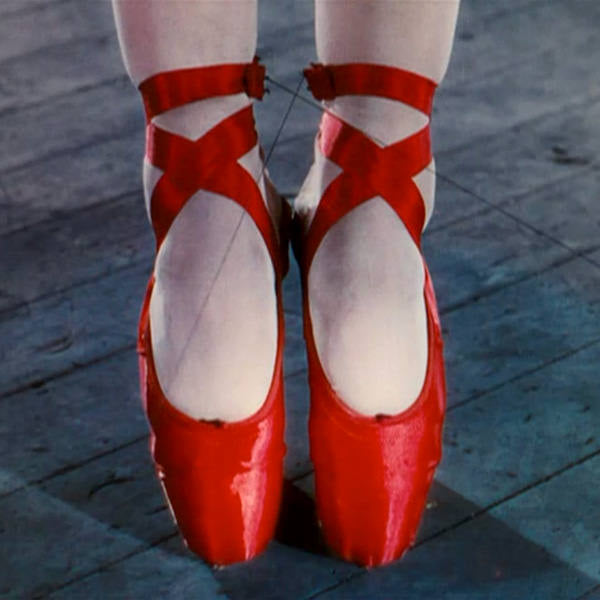
    Then relive the nightmare vision of “The Red Shoes” (1948). Written, directed and produced by the team of Michael Powell and Emeric Pressburger, this feverish dance film stars Scottish ballerina Moira Shearer. At its center is a story within the story, inspired by the Hans Christian Anderson tale about a girl whose vanity lends demonic power to her ruby footwear, with tragic consequences.

    The music is by Brian Easdale, who conducted his own score. However, for the film’s ballet sequence, Easdale specifically requested the services of Sir Thomas Beecham, who leads the Royal Philharmonic Orchestra.

    Screenwriter Ben Hecht worked on an astonishing number of Hollywood classics, including “Scarface,” “The Front Page,” “Nothing Sacred,” “His Girl Friday,” and Alfred Hitchcock’s “Spellbound.” Alongside his dozens of screen credits are uncredited contributions for work on films like “Stagecoach,” “Gone with the Wind,” “The Shop Around the Corner,” and “The Thing from Another World.” Because of his versatility, speed, and reliability, he became known as “the Shakespeare of Hollywood.”

    Twice, he was given free rein to direct his own projects. One of these was a quirky ballet-noir, called “Specter of the Rose” (1946). The plot concerns an unbalanced ballet superstar, played by Ivan Kirov – who looks all the world like Steve Martin – who is suspected of murdering his first wife, his former dance partner. If so, will history repeat itself, with his new bride? With dialogue stylized to the point of absurdity, It’s a film that has to be seen to be believed. The music is by Trenton-born “Bad Boy of Music” George Antheil.

    Much more considered is Luchino Visconti’s adaptation of Giuseppe di Lampedusa’s novel, “The Leopard” (1963). Burt Lancaster stars as a fading aristocrat around the time of Italian unification. The film’s memorable ballroom sequence occupies the last third of its three-hour running time. Nino Rota supplied the music.

    Finally, no show which purports to be about dance in the movies would be complete without music representative of Fred Astaire. Therefore, we’ll conclude with the funhouse dance sequence from “A Damsel in Distress” (1937). No Ginger Rogers in this one – rather Joan Fontaine, George Burns, and Gracie Allen. The energetic score is by George Gershwin.

    Regain your tone with tunes from these movies about the dance, on “Picture Perfect,” music for the movies, this Saturday evening at 6:00 EST, on WWFM – The Classical Network and wwfm.org.
  • Black Composers Rediscovered

    Black Composers Rediscovered

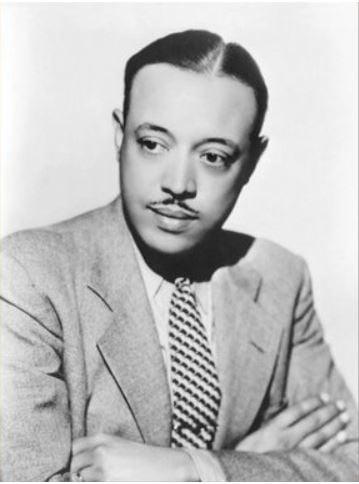
    During Black History Month, I thought it would be good time to share this archived episode of “The Lost Chord,” the first of a four-part series celebrating the efforts of conductor Paul Freeman in reviving 200 years’ worth of neglected repertoire by composers of color.

    The Black Composer Series was originally issued on Columbia Records back in the 1970s, its individual volumes much sought-after by collectors. I almost passed out when I found it had finally been reissued on compact disc as a boxed set, though with astonishingly little fanfare, by Sony Classical. I hadn’t seen anything about it until I discovered it on the shelf at Princeton Record Exchange.

    Some of the composers have since found a toehold on the fringes of the concert repertoire – William Grant Still, George Walker, and the Chevalier de Saint-Georges are being heard with more frequency these days – but there are still many fascinating discoveries to be savored.

    The series originally aired on WWFM – The Classical Network in 2019. I’ll post another segment each Saturday in February. Or you can just binge on all four now.

    Part One features selections by Chevalier de Saint-Georges, Olly Wilson, and Fela Sowande. Follow the link, click “listen,” and enjoy.

    https://www.wwfm.org/post/lost-chord-february-3-black-future

Tag Cloud

Aaron Copland (93) Beethoven (95) Composer (114) Film Music (136) Film Score (143) Film Scores (255) Halloween (94) John Williams (195) KWAX (229) Leonard Bernstein (103) Marlboro Music Festival (125) Movie Music (151) Mozart (88) Opera (208) Philadelphia Orchestra (89) Picture Perfect (174) Princeton Symphony Orchestra (108) Radio (88) Ross Amico (244) Roy's Tie-Dye Sci-Fi Corner (290) The Classical Network (101) The Lost Chord (268) Vaughan Williams (103) WPRB (396) WWFM (881)

DON’T MISS A BEAT

Receive a weekly digest every Sunday at noon by signing up here


RECENT POSTS