Category: Daily Dispatch

  • Brontë Movie Music for Valentine’s Day

    Brontë Movie Music for Valentine’s Day

    There’s no love like star-crossed love.

    This week on “Picture Perfect,” February gets overheated with music from movies inspired by the Brontës. Collectively, the Brontë sisters were responsible for some of the most tortured romances in English literature.

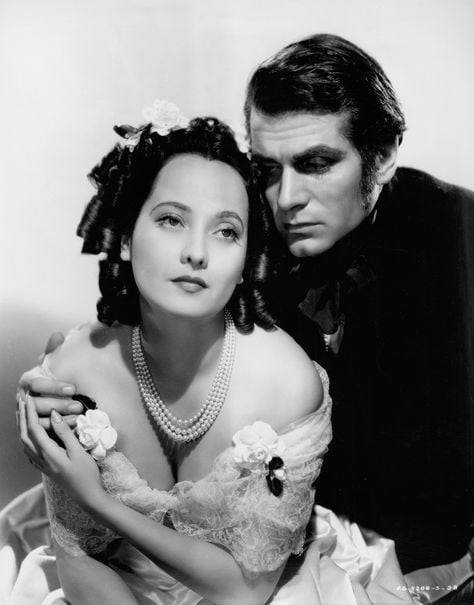
    We’ll begin with one of the all-time classics, a beloved adaptation of Emily Brontë’s “Wuthering Heights.” The 1939 film features Merle Oberon as Cathy, Laurence Olivier as Heathcliff, and David Niven as Edgar, “that milksop with buckles on his shoes.” Alfred Newman’s score is one of the most moving of his storied career.

    Then we’ll turn to Charlotte Brontë’s “Jane Eyre.” The 1943 adaptation stars Joan Fontaine as Jane and Orson Welles as Rochester. The music is by Bernard Herrmann, who had written scores for Welles as a director, both for “Citizen Kane” and “The Magnificent Andersons,” as well as for his Mercury Theatre radio shows. Welles involvement in “Jane Eyre,” however, was strictly as an actor.

    A 1971 television movie of “Jane Eyre” stars Susannah York as Jane and George C. Scott as Rochester. The music, in this case, is by an up-and-coming John Williams, who was still a few years away from becoming a household name, for his work on “Jaws,” “Star Wars,” “Raiders of the Lost Ark,” and “E.T. The Extra-Terrestrial.” Williams has said that his score for “Jane Eyre” is one of his personal favorites.

    We’ll conclude with a piece of biographical fiction about the Brontës, a 1943 Warner Brothers production called “Devotion.” The film stars Ida Lupino as Emily, Olivia de Havilland as Charlotte, Nancy Coleman as Anne, and Arthur Kennedy as their dissolute brother Branwell. It also features Sidney Greenstreet as William Makepeace Thackeray, Paul Henreid as an Irish priest, and – well, you get the idea. The casting, at times, strains credibility.

    De Havilland had originally been slated to play Emily, and her real-life sister, Joan Fontaine, was to play Charlotte. When an offer came through for Fontaine to play Charlotte’s most famous creation, Jane Eyre – opposite Orson Welles’ Rochester, over at 20th Century Fox – De Havilland pivoted into the role vacated by her sister. In the end, “Jane Eyre” wound up being the better film.

    By far the most attractive element of “Devotion” is the rich score provided by Erich Wolfgang Korngold. Korngold himself became so enamored with one of its themes that he resurrected it for use in the first movement of his Violin Concerto.

    I hope you’ll join me for a Yorkshire pudding of passion, torment, and cruelty. Sigh along to tortured romances of the Brontës, for Valentine’s Day, on “Picture Perfect,” music for the movies, this Saturday evening at 6:00 EST, on WWFM – The Classical Network and wwfm.org.
  • Black Composers Series Reissue Celebrated

    Black Composers Series Reissue Celebrated

    During Black History Month, I thought it would be good time to share some archived episodes I put together for “The Lost Chord,” on WWFM – The Classical Network, to celebrate the reissue – after 40 years – of Columbia Records’ Black Composers Series.

    The series was the brainchild of conductor Paul Freeman, who drew from 200 years-worth of neglected repertoire written by composers of color. The performances were released on nine LPs. Trying to collect them over the decades has been like panning for gold for us classical music prospectors.

    Astonishingly, the boxed set of ten CDs, now including a bonus disc of spiritual arrangements, was simply dropped on the market with zero advertising, not even on the Sony Classical website. News was circulated strictly through word of mouth and thanks to bloggers and broadcasters like myself. For me, it was totally unexpected, and the adrenaline surged, when I spotted it on the shelf at Princeton Record Exchange.

    Thankfully, in the decades since the project was first undertaken, a handful of the composers have entered the fringes of the concert repertoire, but there are still a number of fascinating discoveries to be savored.

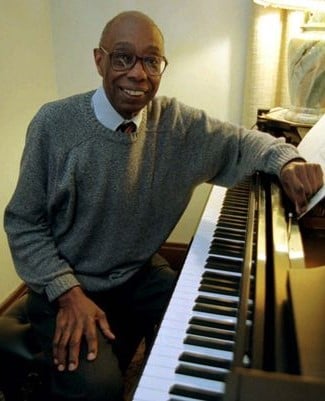
    George Walker’s “Lyric for Strings” (not included in the set) has found particular success recently, and deservedly so. Part Two of my “Lost Chord” broadcasts devoted to the subject (the second of a four-part series) includes Walker’s Trombone Concerto and a Requiem Mass from 1816 by the Brazilian composer José Maurício Nunes Garcia. Walker, not incidentally, was the first African-American recipient of the Pulitzer Prize for Music.

    I am linking webcasts of the individual segments on Saturdays throughout February. Follow the links, click “listen,” and enjoy.

    https://www.wwfm.org/post/lost-chord-black-future-part-ii

    If you missed it, here’s Part One, with music by Chevalier de Saint-Georges, Olly Wilson, and Fela Sowande:

    https://www.wwfm.org/post/lost-chord-february-3-black-future

  • Fury Barbarella Movie Review

    It’s as if Roy and I were connected telepathically, as we blew our tops over “The Fury.” One hour and fifty-six minutes, jaw-boning about the Cassavetes Method (acting with his cigarette) and Kirk Douglas’ aversion to clothing.

    I hope you’ll join us next time, when – Pygar help us – we tackle the cult classic “Barbarella” (1968), starring Jane Fonda, John Phillip Law and, yes, Marcel Marceau.

    I’ll be miming my displeasure on Roy’s Tie-Dye Sci-Fi Corner, when we reconvene to livestream on Facebook, next Friday evening at 7:00 EST.

  • Lincoln Walks: Price Harris & a Nation’s Burden

    Lincoln Walks: Price Harris & a Nation’s Burden

    Before “Lincoln in the Bardo,” there was “Abraham Lincoln Walks at Midnight.”

    Vachel Lindsay’s poem, written in 1914, portrays Lincoln stirring from his eternal rest to roam the streets of Springfield, Illinois, still burdened by the nation’s troubles. I’d hate to think what Lincoln’s spirit must be going through today.

    On Lincoln’s birthday, here’s Florence Price’s setting of Lindsay’s meditation. It is one of three Price settings of the poem rediscovered in 2009. From the information available, it would seem that all three would fit on one album. Somebody record these, please!

    By coincidence, today also happens to be the anniversary of the birth of Roy Harris. Born on Lincoln’s birthday in 1898 – in a log cabin in Lincoln County, Oklahoma – surely Harris must have been filled with an apposite sense of destiny. Harris also set Lindsay’s poem, for mezzo-soprano, violin, cello and piano.

    Harris was regarded as one of America’s greatest composers. He was particularly renowned for his symphonies. His Symphony No. 3 is his most famous work. The Symphony No. 6, formulated over a reading of Sandburg, is subtitled “Gettysburg.”

    Each of the four movements bears a superscription from Lincoln’s Gettysburg Address:

    I. Awakening (“Fourscore and seven years ago…”);

    II. Conflict (“Now we are engaged in a great civil war…”);

    III. Dedication (“We are met on a great battlefield of that war…”);

    IV. Affirmation (“…that we here highly resolve that these dead shall not have died in vain…).

    I call that putting a Price on linkin’ Harris and Lincoln.


    “Abraham Lincoln Walks at Midnight”

    (In Springfield, Illinois)

    It is portentous, and a thing of state
    That here at midnight, in our little town
    A mourning figure walks, and will not rest,
    Near the old court-house pacing up and down,

    Or by his homestead, or in shadowed yards
    He lingers where his children used to play,
    Or through the market, on the well-worn stones
    He stalks until the dawn-stars burn away.

    A bronzed, lank man! His suit of ancient black,
    A famous high top-hat and plain worn shawl
    Make him the quaint great figure that men love,
    The prairie-lawyer, master of us all.

    He cannot sleep upon his hillside now.
    He is among us:—as in times before!
    And we who toss and lie awake for long,
    Breathe deep, and start, to see him pass the door.

    His head is bowed. He thinks of men and kings.
    Yea, when the sick world cries, how can he sleep?
    Too many peasants fight, they know not why;
    Too many homesteads in black terror weep.

    The sins of all the war-lords burn his heart.
    He sees the dreadnaughts scouring every main.
    He carries on his shawl-wrapped shoulders now
    The bitterness, the folly and the pain.

    He cannot rest until a spirit-dawn
    Shall come;—the shining hope of Europe free:
    A league of sober folk, the Workers’ Earth,
    Bringing long peace to Cornland, Alp and Sea.

    It breaks his heart that things must murder still,
    That all his hours of travail here for men
    Seem yet in vain. And who will bring white peace
    That he may sleep upon his hill again?


    Clockwise from upper right: Florence Price, Roy Harris, and Abraham Lincoln walking at midnight

  • Happy Lunar New Year Music & Celebrations

    Happy Lunar New Year Music & Celebrations

    新年快乐 / 新年快樂

    Happy Lunar New Year!

    The groundhog may have seen his shadow, but the Ox says it’s spring!

    Li Huanzhi’s “Spring Festival Overture”

    https://www.youtube.com/watch?v=iakMJSZ2t_g

    Sun Yi Qian, “Spring Dance”

    Chen Yi, “Chinese Ancient Dances: Ox Tail Dance”

    Ma Sicong, “Spring Dance”

    Masked medley

    Happy New Year from the TENG Ensemble

Tag Cloud

Aaron Copland (93) Beethoven (95) Composer (114) Film Music (136) Film Score (143) Film Scores (255) Halloween (94) John Williams (195) KWAX (229) Leonard Bernstein (103) Marlboro Music Festival (125) Movie Music (151) Mozart (88) Opera (208) Philadelphia Orchestra (89) Picture Perfect (174) Princeton Symphony Orchestra (108) Radio (88) Ross Amico (244) Roy's Tie-Dye Sci-Fi Corner (290) The Classical Network (101) The Lost Chord (268) Vaughan Williams (103) WPRB (396) WWFM (881)

DON’T MISS A BEAT

Receive a weekly digest every Sunday at noon by signing up here


RECENT POSTS