Category: Daily Dispatch

  • Mel Powell A Veterans Day Discovery

    Mel Powell A Veterans Day Discovery

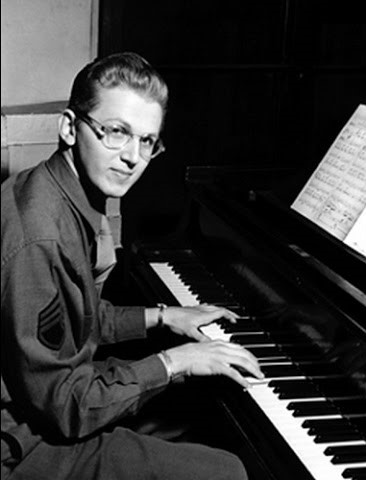
    On this Veterans Day, here’s a pleasant discovery: Mel Powell’s “Homage to Debussy.”

    Powell served with (and played with) Glenn Miller during World War II. He also collaborated with Benny Goodman, Raymond Scott, and Django Reinhardt, among others. Hearing Goodman perform for the first time is what shifted his focus, for a period, from classical music to jazz. After the war, he wound up writing music for movies and cartoons, including Tom and Jerry.

    Muscular dystrophy effectively ended his career as a traveling musician. Instead, he returned to his classical roots, studying composition at Yale with Paul Hindemith. His early works were conceived in a neoclassical style. Gradually, however, he began to push into atonality and serialism. He taught at Mannes College of Music and Queens College, in New York, then succeeded Hindemith as chair of the Yale composition faculty. There, he also directed one of the country’s first electronic music studios. But he never completely turned his back on jazz.

    Powell was living in California, where he had served as provost and professor of music at CalArts, when he was awarded the Pulitzer Prize for Music in 1990. The honored work, “Duplicates: A Concerto for Two Pianos and Orchestra,” was inspired by a conversation he had over four decades earlier, while serving in the U.S. Army Air Force .

    “… I was in Paris and met an old musician who knew Debussy and would regale us with anecdotes. I’ve forgotten most of the stories, but one thing he told me has come back to me frequently over the years. It was about a time he and Debussy were having a glass of wine at the Chat Noir, and Debussy said: ‘Do you know what the perfect music would be? A perpetual cadenza. It would be like a chain of gold coins, each like the other, but different enough to claim independence.’ I’ve never forgotten that. And that became my goal for ‘Duplicates.’”

    Sadly, there doesn’t appear to be an audio file of the work posted online.

    Powell died in 1998, at the age of 75. He was married to Martha Scott, an actress probably best-remembered for playing Charlton Heston’s mother in both “The Ten Commandments” and “Ben-Hur.” She also played Emily in the original Broadway production of “Our Town” and in the film version, opposite William Holden.

    We may not have access to “Duplicates,” but there’s certainly plenty of Powell to enjoy, when following the links below:

    “The Earl” (1941)

    Art Clokey’s “Gumbasia” (1955), which employs a cut from Powell’s “Thigamigig”

    Goodman and Powell in 1976

    From “The Return of Mel Powell” (1987)

    Sonatina for Piano (1952)

    “Filigree Settings for String Quartet” (1959)

    “Three Synthesizer Settings” (1979/1980)

    “Recitative and Toccata Percossa” (1951) introduced and performed by harpsichordist Mahan Esfahani
  • Remembering Ennio Morricone Maestro Forever

    Remembering Ennio Morricone Maestro Forever

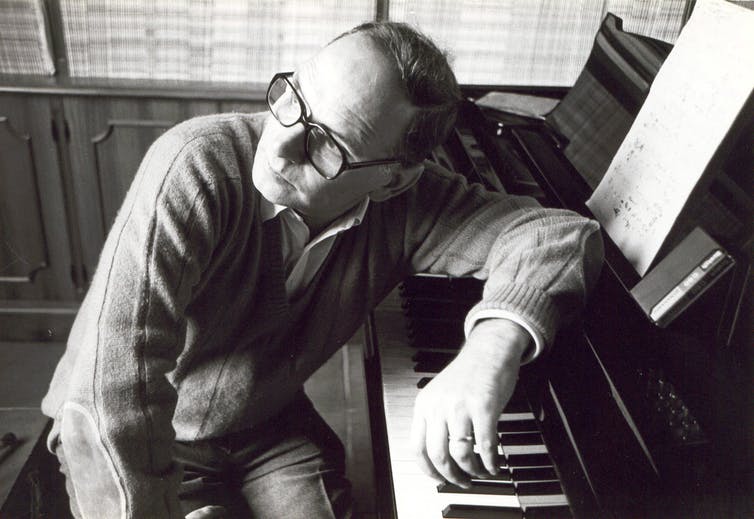
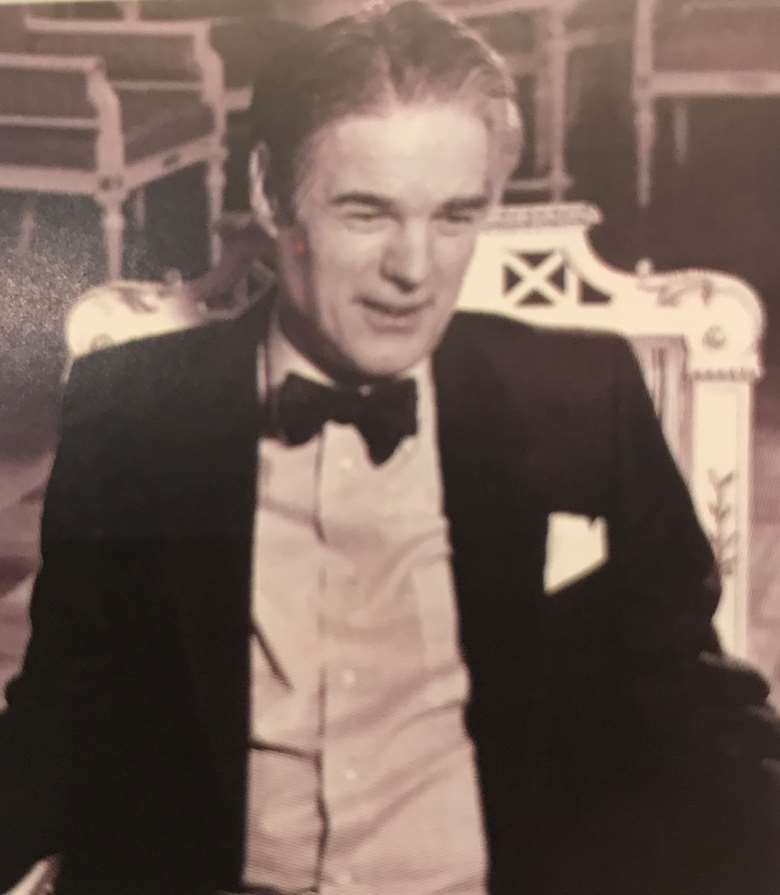
    This is the first Ennio Morricone birthday we celebrate without the Maestro. Morricone died in July at the age of 91. The untouchable who touched us all. Mi manchi, Morricone.

  • Robert Layton Gramophone Critic Passes Away

    Robert Layton Gramophone Critic Passes Away

    Another of the stable of truly great “Gramophone” critics is gone. Robert Layton was erudite, insightful, authoritative, articulate, and accessible in a kind of balance, I am sorry to say, that is no longer common. Layton’s name may also be familiar from his contributions to the “Penguin Guide,” the music-collector’s bible, updated annually. Layton’s involvement with the guide began in 1968.

    His was an especially prominent voice in the field of Nordic music. His advocacy of Northern composers was extensive, with a particular emphasis on the life and works of Jean Sibelius, Edvard Grieg, and Franz Berwald.

    In 1980, Layton pranked Stanley Sadie, editor of “Grove’s Dictionary of Music and Musicians,” by including a bio of a wholly fictitious Danish composer he’d concocted. Not sure how I feel about that, but he certainly possessed the expertise to convincingly pull it off!

    His observations were both absorbing and enriching. He contributed greatly to the expansion of my musical knowledge.

    Layton was 90 years-old. R.I.P.

    https://www.gramophone.co.uk/classical-music-news/article/the-musicologist-critic-and-gramophone-reviewer-robert-layton-has-died

    For Robert Layton:

  • Historical YouTube Classical Music Wishlist

    Historical YouTube Classical Music Wishlist

    One of this page’s followers, Jim Barclay Jr, has introduced to me the idea of Historical YouTube. This magical – though unfortunately wholly fictional – website would allow one to watch videos captured during any era of music history.

    The concept was introduced in the comments section under last week’s Carl Ditters von Dittersdorf birthday post, where Jim remarked it would be near the top of his personal list to be able to witness an actual performance by the string quartet made up of Dittersdorf, Joseph Haydn, Mozart, and Jan Křtitel Vaňhal. He then added a piano recital by Chopin or Liszt.

    I too would be eager to hear Liszt. I expanded the roster to include the premiere of “The Rite of Spring,” notorious for having sparked one of classical music’s greatest riots.

    Simon Mauer offered the legendary December 1808 marathon that introduced not only Beethoven’s 5th & 6th Symphonies, but also the 4th Piano Concerto, the Choral Fantasy, selections from the Mass in C, and more – an endurance test that left teeth chattering over a span of over four hours.

    It was not long after that Jim added a Schubertiade, one of those informal literary-musical salons at which a number of Schubert’s works were first heard. This was eagerly seconded by Simon.

    It was then suggested this might be a good idea for an expanded post – a contest, of sorts. So now I’m throwing it open to all of you. What storied classical music events would you most want to see on Historical YouTube™?

  • Nordic Soul Autumn Sounds Langgaard Rautavaara

    Nordic Soul Autumn Sounds Langgaard Rautavaara

    This Sunday night on “The Lost Chord,” it’s autumn in the North countries, as well as in the Nordic soul. We’ll test your limits on gratuitous vowels, with music by Danish composer Rued Langgaard and Finnish master Einojuhani Rautavaara.

    Langgaard lived from 1893 to 1952. Despite a promising start – born to musical parents, a prodigious childhood, meetings with major conductors, and a symphony performed by the Berlin Philharmonic – his personal and creative eccentricities worked against him.

    Perpetually out of step with the times, and particularly with the musical tastes of his countrymen, performances of his works were scarce. He found himself ignored by the musical establishment, with the result that his music really only started to be recognized in the 1960s – 16 years after the composer’s death.

    Langgaard was 46 by the time he managed to obtain a permanent job, as an organist at the cathedral in Ribe. It was the oldest town in Denmark, and situated far, far from Copenhagen, the center of Danish musical life. He would die in Ribe at the age of 59.

    He wrote 16 symphonies. The fourth of those bears the subtitle “Fall of the Leaf.” Beyond a simple evocation of autumnal nature, complete with thunderstorms, wind and rain, the symphony is one of moods related to, or symbolized, by autumn. The composer originally called the work “Nature and Thoughts.”

    Rautavaara, Finland’s grand old man of music, died in 2016 at the age of 87. He studied at the Sibelius Academy in Helsinki, under Aare Merikanto, before receiving a scholarship to attend the Juilliard School. Among his teachers in the United States were Vincent Persichetti, Roger Sessions and Aaron Copland. He himself taught for extended periods at the Sibelius Academy.

    As a composer, he wrote eight symphonies, 14 concertos, and nine operas, as well as choral, chamber and instrumental music. His most famous piece is probably his “Cantus Arcticus,” for taped bird song and orchestra.

    Early on, Rautavaara experimented with serialism (though he was never a strictly serial composer), but in the 1960s, he left all that behind. His mature style is frequently one of austere beauty, marked by lyricism and even luminosity. His later works often bear something of a mystical stamp.

    We’ll be listening to music composed in 1999, titled “Autumn Gardens,” Rautavaara’s meditation on beauty in nature and the transience of life.

    That’s “Fall of the Leif,” autumnal meditations from the North, this Sunday night at 10:00 EST, on WWFM – The Classical Network and wwfm.org.

Tag Cloud

Aaron Copland (93) Beethoven (95) Composer (114) Film Music (137) Film Score (143) Film Scores (255) Halloween (94) John Williams (195) KWAX (229) Leonard Bernstein (103) Marlboro Music Festival (125) Movie Music (152) Mozart (88) Opera (208) Philadelphia Orchestra (89) Picture Perfect (174) Princeton Symphony Orchestra (108) Radio (88) Ross Amico (244) Roy's Tie-Dye Sci-Fi Corner (290) The Classical Network (101) The Lost Chord (268) Vaughan Williams (103) WPRB (396) WWFM (881)

DON’T MISS A BEAT

Receive a weekly digest every Sunday at noon by signing up here


RECENT POSTS