Category: Daily Dispatch

  • Cendrillon Streaming Free From The Met

    Cendrillon Streaming Free From The Met

    If you missed it in June, you’ve got a second chance. The Met is streaming Jules Massenet’s “Cendrillon” for 24 hours, beginning this evening at 6:00 EDT.

    While I concede that Massenet may not be at the top of every opera-lover’s wish list, this production is a gem, and not to be missed.

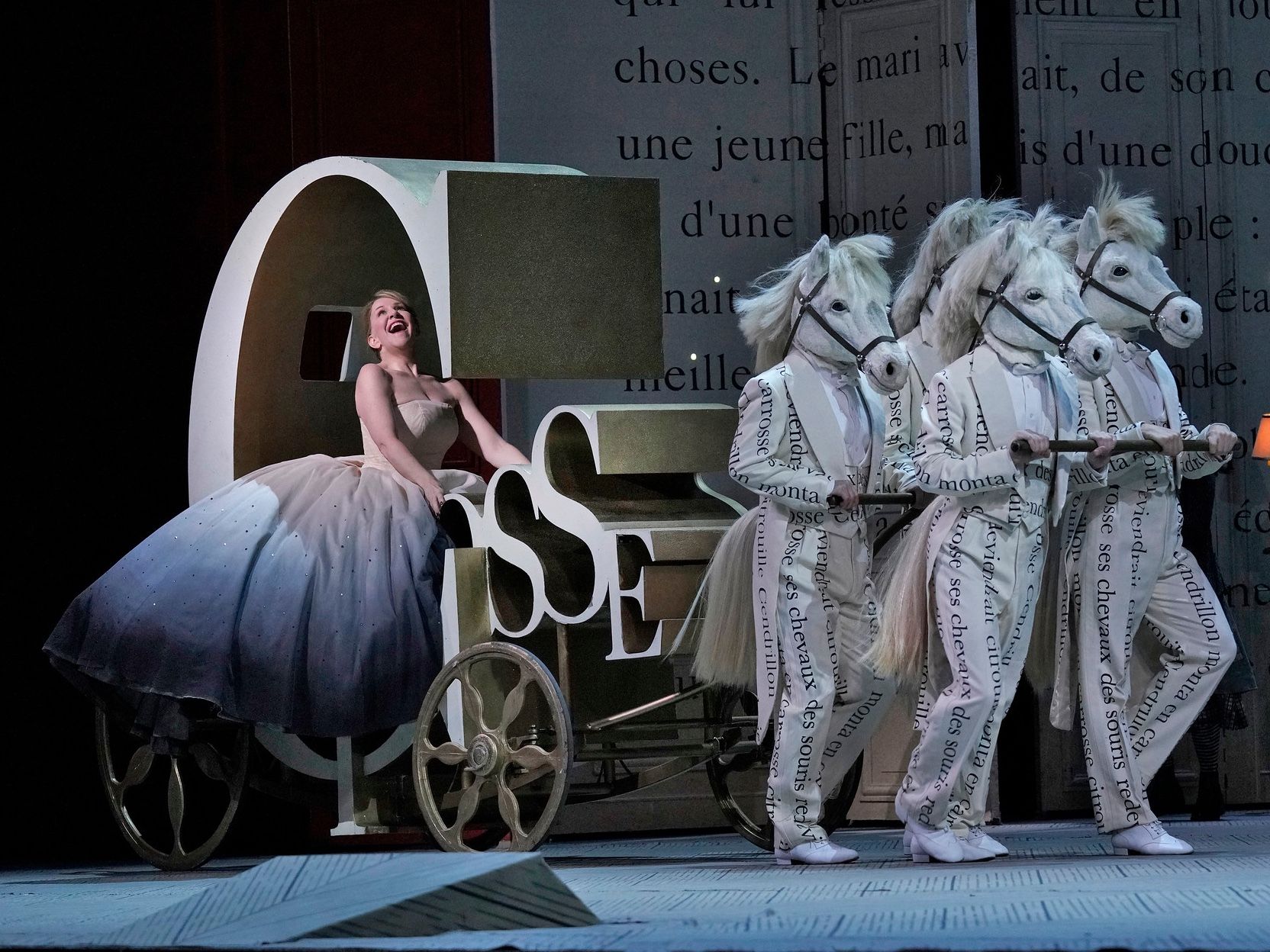
    Massenet’s Cinderella springs from the page, with literal writing on the wall and a team-and-carriage rendered in typeset. Also, a playfully-imagined gallery of fairy tale grotesques in the supporting cast. There is a charm to Laurent Pelly’s staging that I find particularly refreshing, in an era when the thinking seems to be that everything has to trend toward the dark.

    If you’re a fan of classic children’s book illustrations, don’t miss this one. With Joyce DiDonato in the title role – and Stephanie Blythe as the wicked stepmother – it’s difficult to resist.

    To learn more, visit metopera.org.

  • Bernard Herrmann Bio A Heart at Fire’s Center Review

    Bernard Herrmann Bio A Heart at Fire’s Center Review

    A few days ago, I finished my second reading of Steven C. Smith’s Bernard Herrmann biography, “A Heart at Fire’s Center.” This return engagement, after nearly thirty years, was prompted by Smith’s recent bio of film composer Max Steiner.

    First of all, if you’re a Bernard Herrmann fan or a classic movie buff, and for some reason you haven’t gotten around to it, the book is self-recommending. But if yours is a more casual interest, and you are looking for a good read, I would suggest you pick up the Steiner bio first.

    Not that both books are not well-written, but the layout of the Steiner is more easily digestible. It looks less “dense,” for one thing, with more welcoming fonts, distinguishing narrative and lengthier quoted passages. Also, it’s organized into shorter chapters, with a shrewdly-crafted teaser at the end of each, drawing you into the next. I do much of my reading in bed, and while I could generally get through a chapter of Steiner before beginning to nod, I found the longer form of the Herrmann a bit more challenging. Not that you can’t put it down mid-chapter, but I’m an anal reader.

    I should add that I’m also a slow reader, and if I feel I am not in the proper mindset to get everything out of a book, I will put it down until I know I am alert. Again, this is no reflection on the quality of the book. Smith proves himself to be a fine and engaging writer in both volumes, though it is possible, and hardly surprising, that he’s become even better over three decades.

    I did find more errors in the Herrmann book than I did in the Steiner. I own the original, hardcover edition of “A Heart at Fire’s Center,” from 1991, and not the paperback reissue from 2002, so these may have been corrected. Perhaps the layout has been tweaked, as well. In any case, I don’t want to suggest that it is a shoddy piece of work. It is not!

    The other reason I recommend reading the Steiner biography first is simply that Steiner was an all-around nicer guy. The man was not without his flaws – I have a hard time forgetting one particular act of domestic violence, though I can understand the circumstances that made him susceptible to it – but he comes across, for the most part, both anecdotally and through his own writings, as a happy, playful personality. Not without his stresses and complications, certainly, but loving his work and doing whatever he could to help others.

    Herrmann, on the other hand, was extremely high maintenance. EXTREMELY. There is not a person who knew him for any length of time – and too often that could mean only a few seconds – that was not the focus of insult and verbal abuse. Cumulatively, we are made to realize that this was an unfortunate defense mechanism (Herrmann is not wholly unsympathetic), and that once he blew his stack or became more comfortable, he would often warm up considerably – provided the object of the initial tirade hadn’t already withered away. Herrmann behaved like this with friend and foe alike, and then he wondered why nobody wanted to be around him.

    This is particularly sad, since Bernard Herrmann was possibly the greatest genius at film scoring that ever was. Composers like Max Steiner were monumentally important in establishing the form, pioneering the techniques, and really thinking about the art behind the craft. But Herrmann grasped that music could function on a much deeper level – as more than music, almost. He looked beyond a leitmotivic approach inherited from Wagner – and embraced by Steiner, Korngold, and others – to ponder, probe, and push the boundaries of film itself. He understood not only that music could help the pace of a picture, playing with an audience’s sense of time, he also grasped the psychological depths a score could attain, lending an almost subliminal dimension to the storytelling. He was a master of nuance and tension, and his orchestrations were the most experimental in Hollywood. From “Citizen Kane” to “Taxi Driver,” Herrmann was the king.

    Is he my favorite film composer? No. I admit, on an average day, Korngold and John Williams are more my style. But do I respect Herrmann’s art and marvel at everything he touched? Oh yes. Yes, I do.

    My biggest qualm with the book, and this cannot be changed, is the subject himself. It’s simply exhausting to read account after account of Herrmann blowing his stack and making things worse and worse for himself, as he alienates employers, colleagues, friends, and wives. It’s a horrible flaw in a great artist.

    As a composer, he was always spot-on. His contributions enhanced the films of Orson Welles, Alfred Hitchcock, Ray Harryhausen, Francois Truffaut, Brian DePalma, Martin Scorsese, and many others. Before that, he was a master of music for radio drama (as music director at CBS), and later, he pursued sidelines as a concert conductor (really his dream) and a recording artist.

    Readers with an interest in classical music are also offered glimpses into the broad and unusual repertoire he introduced to American audiences through his radio broadcasts (he was particularly fond of English music), his performances with some of the great symphony orchestras, his relationships and correspondence with Charles Ives, Leopold Stokowski, and John Barbirolli, among others, and the creation of his own concert works, especially his opera, “Wuthering Heights.”

    Herrmann was a man who was suspicious of everything. He certainly didn’t suffer fools. But his hair trigger could be appalling. It’s interesting that so many of those who found themselves at Ground Zero later admitted that Herrmann’s reactions, while extreme, were often not without merit. In artistic and professional matters, he was usually right. A good many of those interviewed even manage to retain a genuine affection for the man. They just couldn’t stand to be around him.

    Remarkably, the Steiner biography does not simply follow the same ground, which makes both volumes worth reading. The composers were different enough, both as people and as artists, and their experiences largely varied, so that both books are absolutely recommended. Smith does a great job of bringing both subjects to life. But if you want to dip a toe in, I’d say start with Steiner.

    Above all, when you watch the movies, pay attention to the music. Composers are not always in total control of what makes it to the screen or how it’s used, but Herrmann was luckier – and more demanding – than most. He also insisted on doing everything himself, from orchestrations to recording. He and Steiner were both dynamos, and, like Steiner, Herrmann lived mostly for his work.

    I must add, for as prickly as he could be around people, Herrmann had infinite patience for animals, and he loved them all. He kept one of his old cars just because the neighborhood squirrels had made it their home. For this alone, I would forgive him everything.


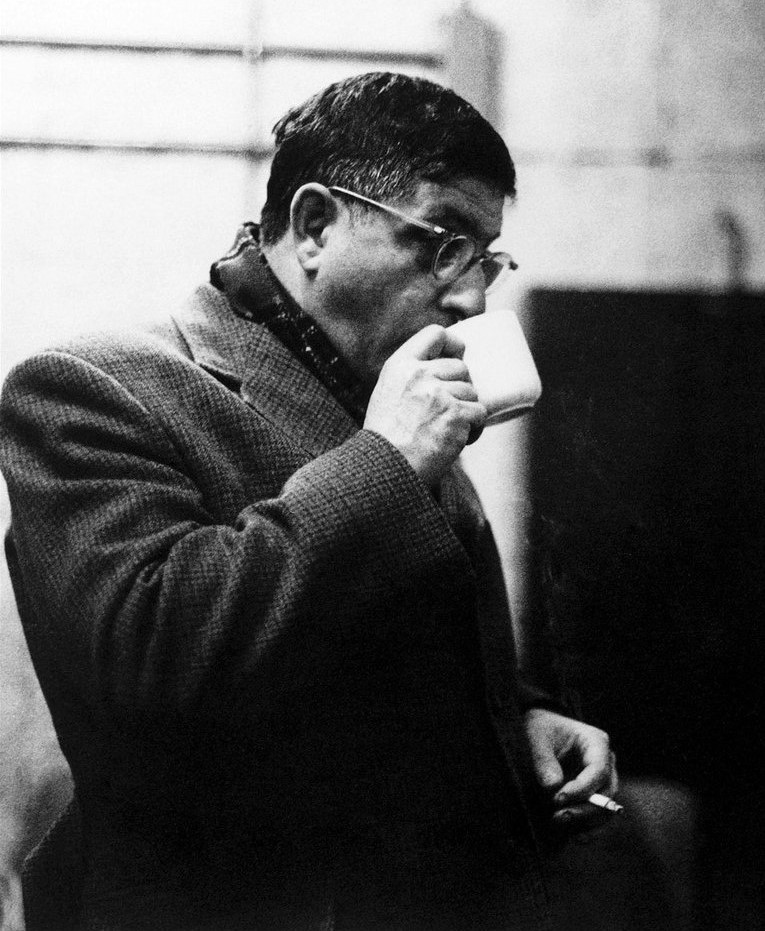
    PHOTOS: Two sides of Herrmann, with two editions of his biography (paperback at top)
  • Journey to the Far Side of the Sun Review

    Journey to the Far Side of the Sun Review

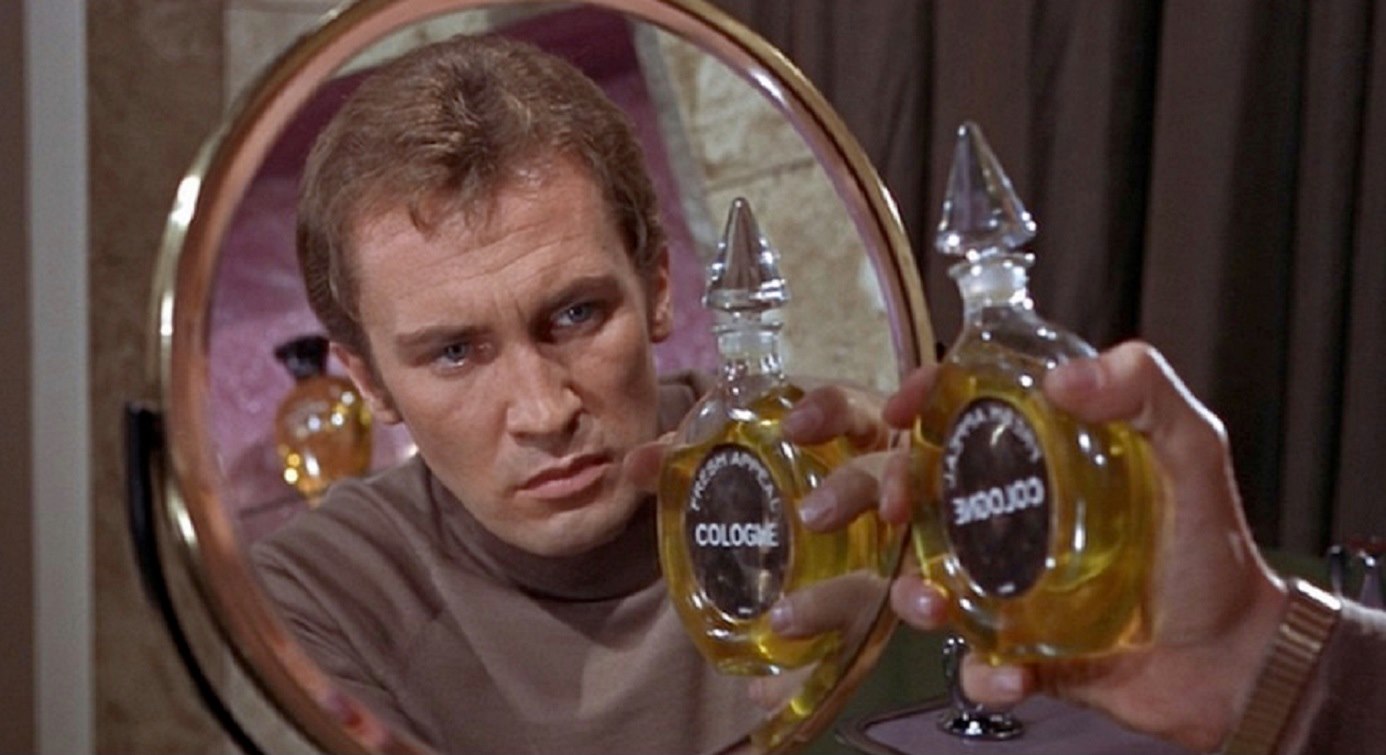
    Remember the classic Marx Brothers mirror routine from “Duck Soup?” Expand that to an hour and forty minutes, and you’ve got “Journey to the Far Side of the Sun” (1969). Okay, maybe without the laughs.

    Roy Bjellquist and I will talk ourselves blue over Gerry Anderson’s big-screen debut, on the next Roy’s Tie-Dye Sci-Fi Corner. Anderson made his fortune creating futuristic television series, such as “Thunderbirds,” “Captain Scarlet,” and “Space: 1999.”

    Deliberately-paced, but with captivating special effects and groovy production design, Anderson’s “Journey” is never boring. It can, however, be a little WTF. Sure, the entire premise is like something you came up with as a teenager, when feeling your way into your first philosophical discussions with a close friend. But the execution is diverting and certainly spectacular.

    What if there was a parallel Earth, hidden from our view, on the far side of the sun? And what if we were to travel there? What would we find? To tell more would be to give it all away. We’ll save that for tomorrow night!

    Relive that dorm room experience. Leave a comment and join the conversation. Roy’s Tie-Dye Sci-Fi Corner live-streams on Facebook, this Friday evening at 7:00 EDT.

    https://www.facebook.com/roystiedyescificorner/


    PHOTO: Something stinks here… and it ain’t the cologne!

  • Helena Munktell Swedish Composer Rediscovered

    Helena Munktell Swedish Composer Rediscovered

    I’ve long since passed the point where I’ll be able to listen to all of the music in my collection. In choosing “something for the ride” this morning, my eyes fell upon the spine of a CD that’s never been off the shelf, of works by Helena Munktell (1852-1919).

    Munktell was born in Grycksbo, Dalarna County, Sweden. She studied music – including piano, voice, and composition – first at the Stockholm Conservatory, then privately, in Vienna, with Julius Epstein. After that, it was off to Paris for further polish with Benjamin Godard and Vincent d’Indy. Munktell would go on to became a member of the Royal Swedish Academy of Music and co-founder of the Swedish Society of Composers.

    Clearly, she adored her childhood home. Coniferous forests, rustic dances, and summer nights inform her “Suite dalecarlienne” (translated as the “Dala Suite”). The work was first performed in Paris in 1910. Its four movements: “Sunday in the Village,” “Lake Siljan,” “Rustic Dances,” and “Summer Night… The Dance Grows Quicker.”

    Me, I’m charmed by just about anything that’s folk-inflected. If I were on the air right now, I would have no hesitation in playing this during the dinner hour.

    https://www.youtube.com/watch?v=cI9eRqAIOvM

    But perhaps charm isn’t your thing, in which case “Breaking Waves” is more dynamic:

    https://www.youtube.com/watch?v=lAM5BKIZLWs

    There’s also a piece about Walpurgis Night (“Walpurgisfire”), which isn’t as wild as I had hoped. (I concede that the fault is mine, since overindulgence was not her aim.) It would be Munktell’s final composition – evocative, impressionistic, and six years after Stravinsky had already opened up both barrels of vernal savagery in “The Rite of Spring.”

    https://www.youtube.com/watch?v=Du-AW2OPZOw

    The compositions may not be world-beaters, but they are agreeable, and I am curious to hear more, especially a piece (not on the disc) called “Old Coffee-O Name-Day Show.” I like coffee!

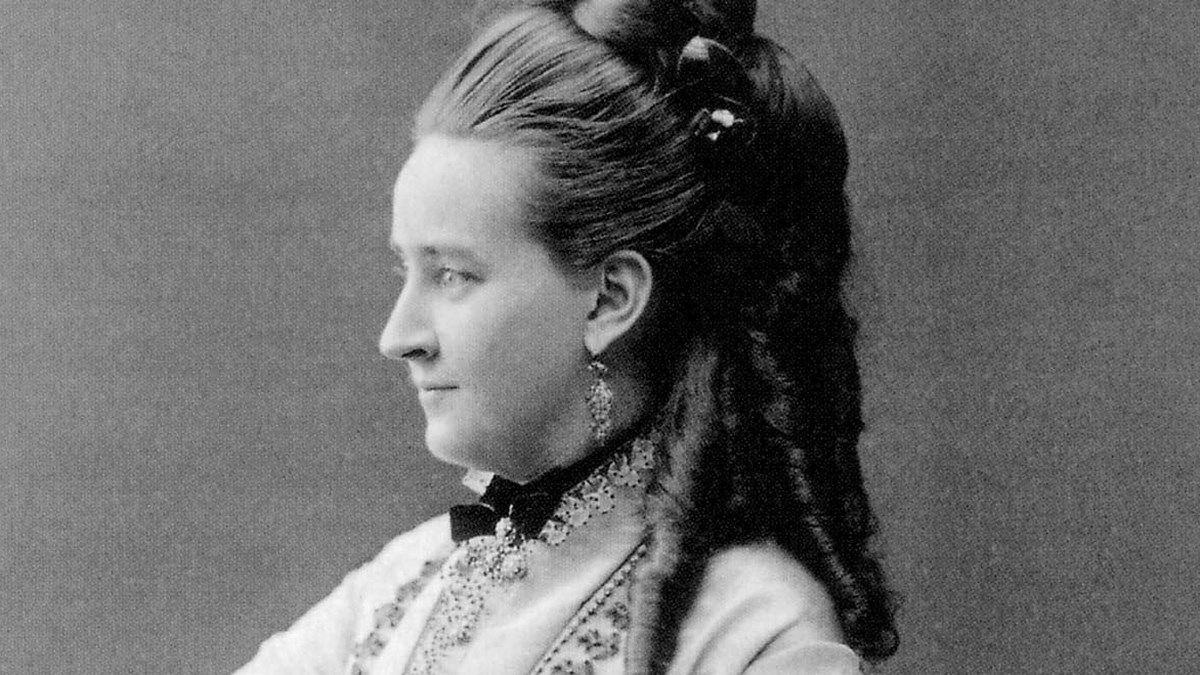
    Munktell was the youngest of nine children. Her sister (the second-youngest), Emma Josepha Sparre, was a painter, and evidently also touched by the home of her childhood, despite her fatigued expression in the self-portrait below. One of her many canvases, “From the Manor Park at Grycksbo,” adorns the CD booklet.

    Here someone has put together a slideshow of Sparre’s works, presented to music by Ole Bull:


    Clockwise from top: Sisters Helena Munktell and Emma Josepha Sparre (self-portrait, “Resting by the Easel,” 1890), along with a CD of Munktell’s works, illustrated by Sparre painting

  • Dvořák’s Symphony No. 8: A Celebration of Life

    Dvořák’s Symphony No. 8: A Celebration of Life

    This is one of those works that just makes you feel like it’s great to be alive.

    Antonin Dvořák composed his Symphony No. 8 over two months, from the end of August to the beginning of November, in happy seclusion at his country home of Vysoká, in 1889. The symphony is his most bucolic, cheery, and lyrical, steeped in the Bohemian folk song he adored.

    Dvořák himself conducted its first performance, at the National Theater in Prague, in 1890. He then took it to Frankfurt and Cambridge, where he was awarded an honorary doctorate. The symphony became a great favorite in England. In fact, it was published there, by the London firm of Novello, after the usual disagreements with Simrock, Dvořák’s regular publisher. Simrock preferred shorter, snappier works and insisted on marketing them in German. Dvořák, a proud Bohemian, found this increasingly annoying. Not incidentally, Simrock had also low-balled him on the price (offering one thousand marks, as opposed to the three thousand marks he had paid for the Symphony No. 7).

    In 1893, Dvořák was in America, as director of the National Conservatory of Music in New York, when he brought his new symphony to the World’s Columbian Exposition. At the time, the symphony was promoted as his Fourth. It was only in the 1950s, with the publication of Dvořák’s earlier works in the form, that the symphonies were renumbered, which is why there are now nine Dvořák symphonies, as opposed to five. At the world’s fair, Dvořák conducted his Eighth with an expanded Chicago Symphony Orchestra. According to the Chicago Tribune, the performance was met with enthusiasm, marked by “tremendous outbursts of applause.”

    The composer claimed that in its writing the melodies simply poured out of him. Here’s my favorite recording of the piece, made with the Columbia Symphony Orchestra, assembled specifically for the great Bruno Walter.

    Všechno nejlepší k narozeninám! Happy birthday, Dvořák!


    PHOTO: Composer and family, relaxing at Vysoká

Tag Cloud

Aaron Copland (93) Beethoven (95) Composer (114) Film Music (137) Film Score (143) Film Scores (255) Halloween (94) John Williams (195) KWAX (229) Leonard Bernstein (103) Marlboro Music Festival (125) Movie Music (152) Mozart (88) Opera (208) Philadelphia Orchestra (89) Picture Perfect (174) Princeton Symphony Orchestra (108) Radio (88) Ross Amico (244) Roy's Tie-Dye Sci-Fi Corner (290) The Classical Network (101) The Lost Chord (268) Vaughan Williams (103) WPRB (396) WWFM (881)

DON’T MISS A BEAT

Receive a weekly digest every Sunday at noon by signing up here


RECENT POSTS