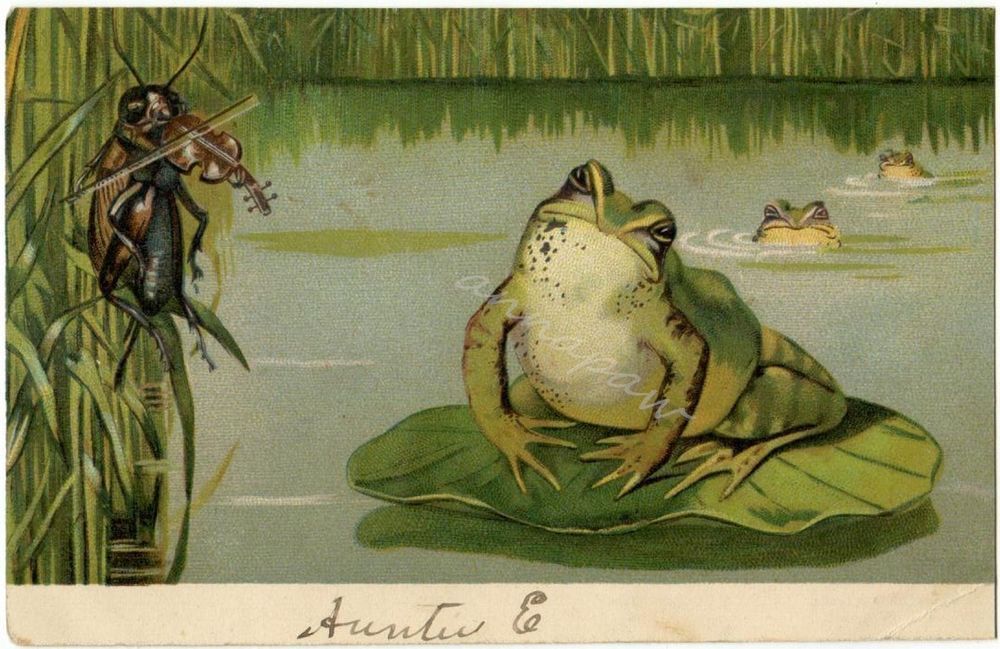
Technically still a week away from the start of autumn, but the days are shortening, temperatures are crisp this morning, and the crickets are already finding their way in.
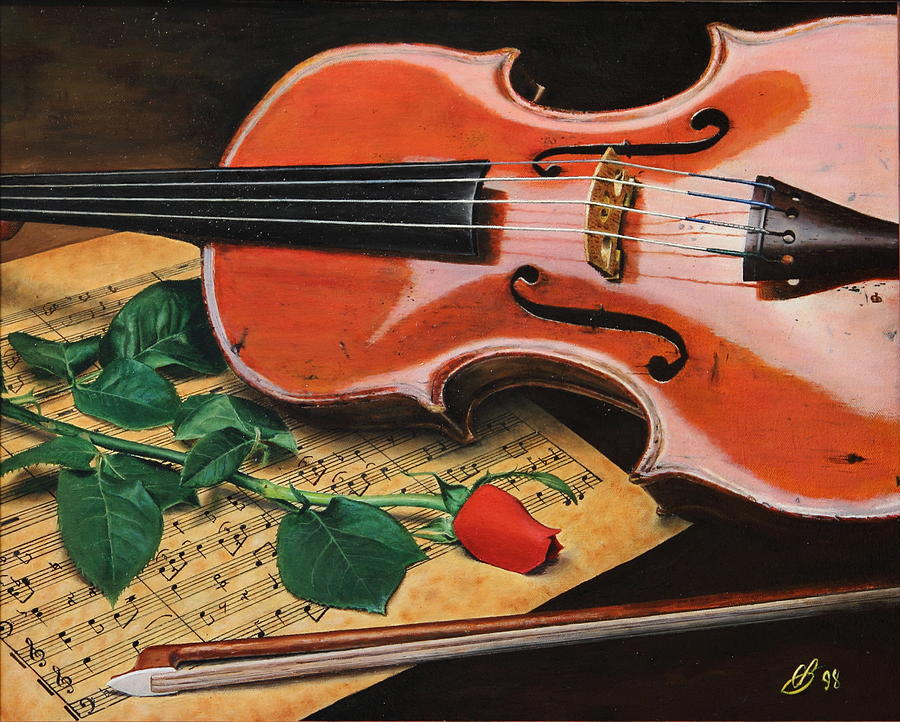
Here is “Valse Septembre” by Felix Godin, really the nom de plume of a less continental-sounding Herbert Albert Brown. The work, a light waltz composed in 1909, gained notoriety for its inclusion in the White Star Line Songbook. This is the volume that was drawn upon by Wallace Henry Hartley and his eight-member band – the band that “played on,” as the RMS Titanic slipped beneath the icy waters of the North Atlantic on April 15, 1912.
The White Star Line repertoire included 341 items, including light overtures, intermezzi, waltzes, marches, sacred music, and potpourris. Here’s the complete menu:
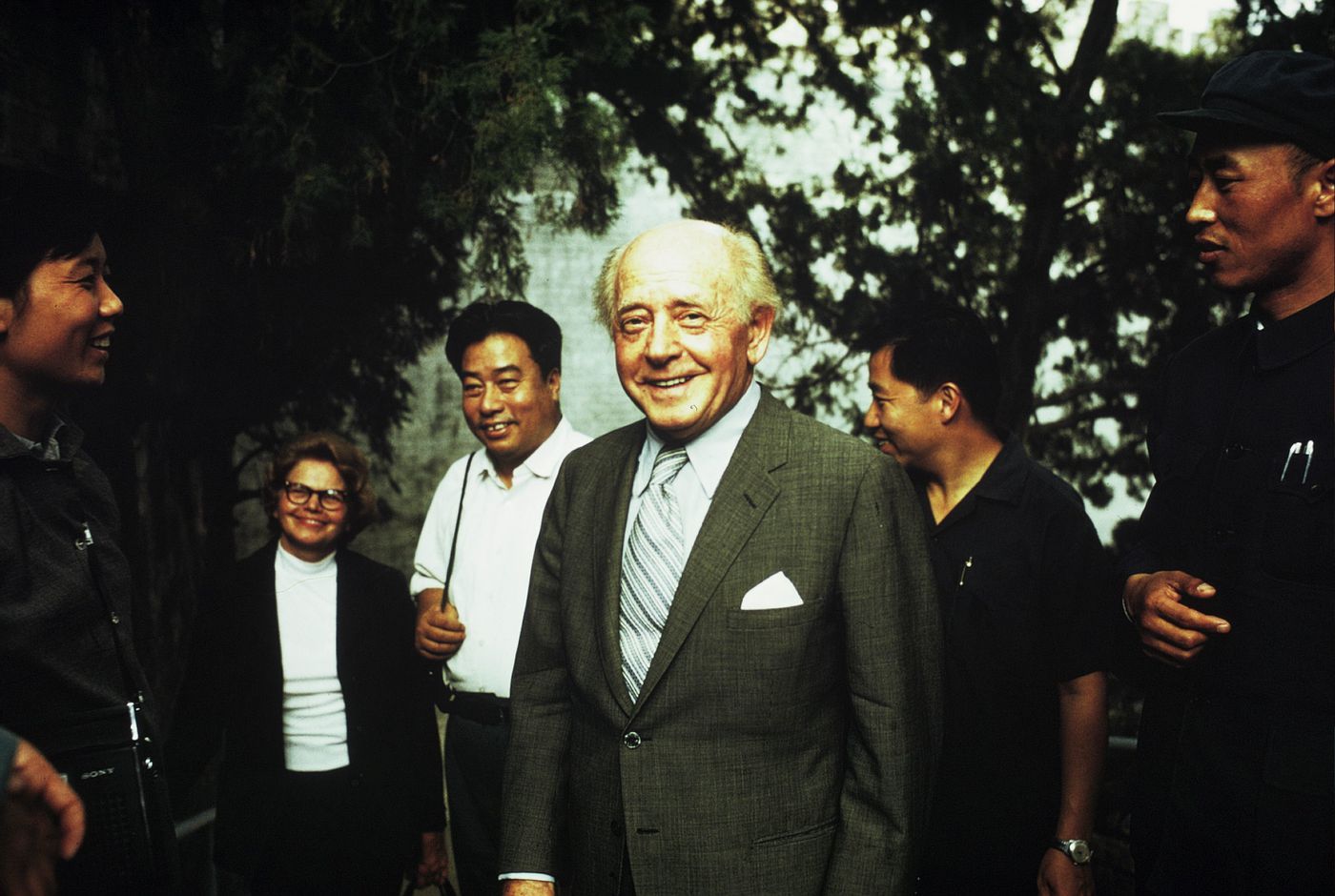
When Eugene Ormandy took the Philadelphia Orchestra to China in September of 1973, he was sure to include, alongside Mozart and Brahms, some music from the American Heartland.
Roy Harris (1898-1979) was born in a log cabin, in Lincoln County, Oklahoma, on Lincoln’s birthday. If that doesn’t imbue a composer with a sense of destiny, I don’t know what will. Harris went on to became one of our great American symphonists. In particular, his Symphony No. 3 of 1939 has been much beloved and frequently performed. Unfortunately, we don’t hear all that much of his music anymore. And that’s a damned shame.
Philadelphia would be the first American orchestra to perform in China (the London and Vienna Philharmonic Orchestras had appeared earlier the same year), having received an invitation in response to Nixon’s historic visit in 1972. According to first-hand accounts, audience reactions to the performances were difficult to decipher. On the street, people were curious, but stand-offish. Red banners and likenesses of Mao, Lenin, and Stalin festooned Tiananmen Square. The local orchestra played Western music (Beethoven), but only in rehearsal, for training purposes. In summer, musicians pruned trees.
Here are some interesting, balanced impressions, from a diary kept by one of the Philadelphians:
In all, the orchestra played six concerts. This was the trip on which Philadelphia performed the notorious “Yellow River Concerto,” a piano concerto written by committee and overseen by Madame Mao herself. Interesting that a country that did its damnedest to suppress decadent Western influence would shamelessly pilfer from the Western Romantics. As an encore, the pianist played a set of variations on “Home on the Range,” apparently a concession to Nixon. According to the diarist, Madame Mao did not care for “The Pines of Rome.” Mao himself was a no-show.
Also included on the programs were “The Stars and Stripes Forever” and the “Chinese Worker’s March.” Again, the Beijing audience seemed impassive. Performances were received with more enthusiasm in Shanghai.
While I haven’t been able to locate any recordings of the Chinese concerts, here’s Ormandy and the Philadelphians playing Harris in Russia in 1958. Additional American offerings included Samuel Barber’s “Adagio for Strings” and George Gershwin’s “An American in Paris,” which were played alongside Igor Stravinsky’s “The Firebird.” You can hear the tepid applause in Russia, when following the link:
If you’re interested in hearing the “Yellow River Concerto,” there are a number of performances posted on YouTube. However, the audio for the Philadelphia/Ormandy album, with Daniel Epstein – which I’ve got somewhere in my own collection – for some reason has not been posted online. If you’ve got a sweet tooth, by all means, feel free to explore. Me, I’d rather not risk a trip to the dentist’s office in time of COVID.
This Sunday night on “The Lost Chord,” it’s an hour of high adventure and satisfied bloodlust, as we listen to musical evocations of Odysseus’ homeward journey.
We’ll hear Ernst Boehe’s symphonic poem “Departure and Shipwreck,” from his cycle “From Odysseus’ Voyages” (1903-05), and Benjamin Britten’s radio play “The Rescue of Penelope” (1943), narrated by Dame Janet Baker.
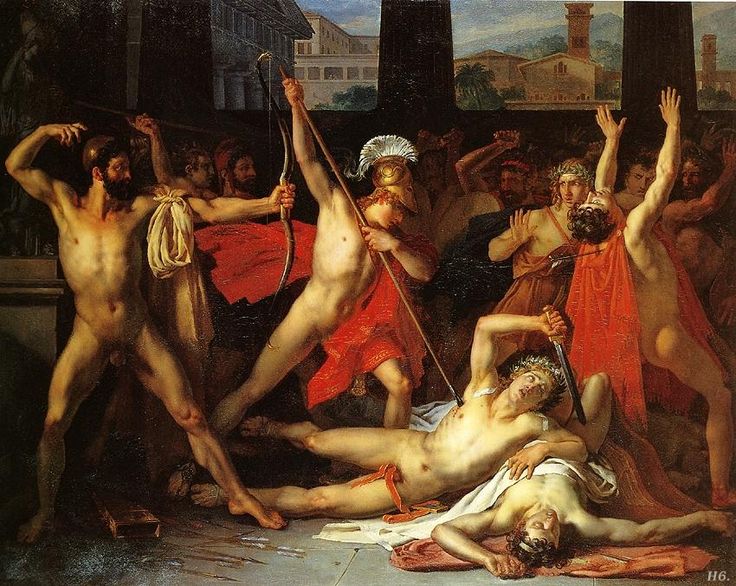
Odysseus, of course, is one of the heroes of the Trojan War, waylaid time and again, on his return, by Poseidon and the frailties of his own men. It takes him ten years to find his way back to Ithaca. When he gets there, he finds his wife beset by boorish suitors all vying for her hand and his throne.
What happens next pushes all the same buttons that are still pushed whenever Sylvester Stallone or Arnold Schwarzenegger apply the camouflage, strap on the bandoliers, and sheathe the big knives. Along the way, there’s also some meaningful father-son bonding. Leave it to Homer, who always knew how to lend a little class to the classics.
Odysseus strings his bow, for “Home Sweet Homer,” this Sunday night at 10:00 EDT, on WWFM – The Classical Network and at wwfm.org.
“The Slaughter of the Suitors by Odysseus and Telemachus” (1812), by Louis-Vincent-Léon Pallière
What’s in name? This week’s Classic Ross Amico crossword takes a look at musical nicknames.
To fill out the puzzle, follow the link and select “solve online” at the bottom of the page. You’ll then be able to type directly into the squares. Once you feel you’ve exhausted the puzzle, you’ll find the solutions by clicking on “Answer Key PDF.”
I don’t care what you call me; just don’t call me late for supper.
There are some who seem to think I was inordinately cheery when discussing “Journey to the Far Side of the Sun” (1969), Gerry Anderson’s meditation on the existence of an alternate Earth. But what’s not to find amusing? Be forewarned, Roy and I “spoil” everything (as we generally do), though apparently gleefully so.
Roy’s Tie-Dye Sci-Fi Corner live-streams on Facebook every Friday and Sunday at 7 pm EDT.
“Journey to the Far Side of the Sun” kicks off a Gerry Anderson weekend, as Roy will also host a “Space: 1999” love feast tomorrow night, Sunday, September 13 – a date fans recognize as “Breakaway Day.” (For the rest of us, that’s the day the moon is blown out of orbit.) As with last week’s “Star Trek” celebration, viewers are invited to join him via Zoom to discuss their own experiences with and impressions of the show.
There will also be a special drawing for “Space: 1999” memorabilia – storyboards, a script, and an actual prop.