
Six months into COVID: I was shooting for Rimsky-Korsakov, but wound up at Mussorgsky.
Category: Daily Dispatch
-
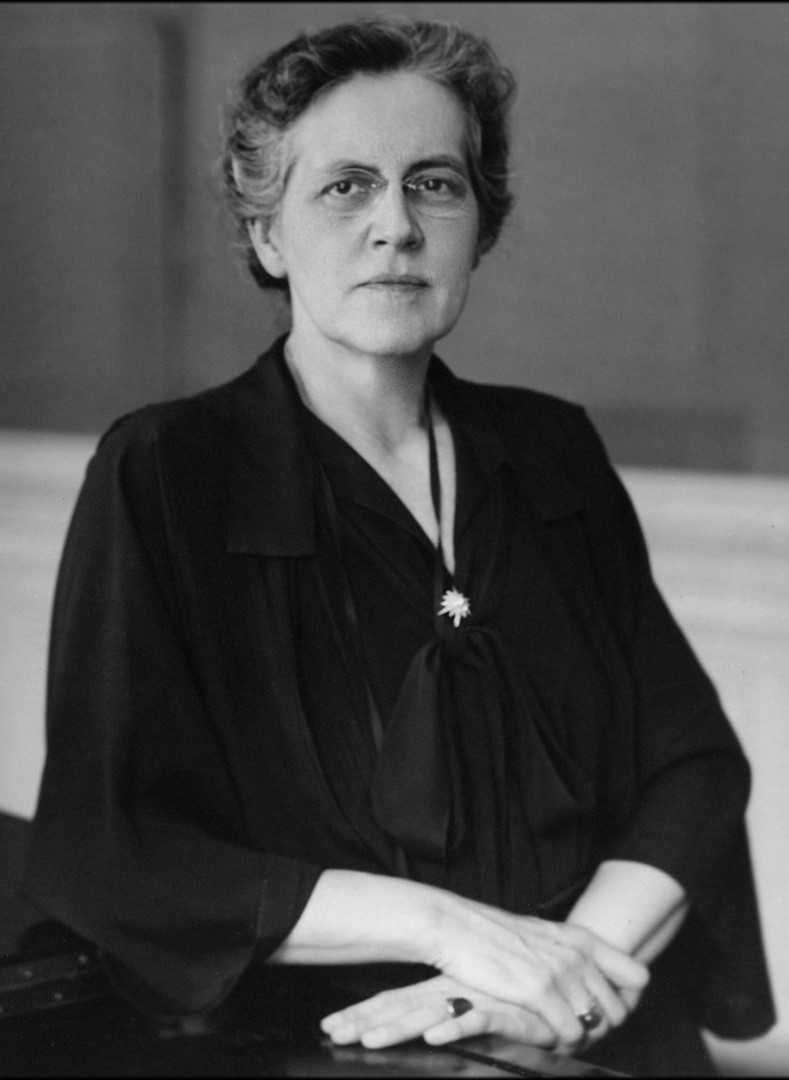
Nadia Boulanger: Influential Music Teacher
Nadia Boulanger (1887-1979) has been described as the most influential teacher since Socrates.
Her students included everyone from Dinu Lipatti to Igor Markevitch, from Aaron Copland to Elliott Carter, from Astor Piazzolla to Philip Glass, from Michel Legrand to Quincy Jones, from Leonard Bernstein to “What Makes It Great?” radio host Rob Kapilow.
Her influence on American music, in particular, has been incalculable. Hopefuls flocked to her American Conservatory at Fontainebleau, where she accepted applicants from all backgrounds, provided they were determined to learn. It was Virgil Thomson who quipped, “She was a one-woman graduate school, so powerful and permeating that legend credits every United States town with two things: a five and dime and a Boulanger pupil.” The five and dimes may have faded, but not so the legacy of the “Boulangerie.”
This summer, Boulanger was to have been the focus of “Nadia Boulanger and Her World,” a two-week celebration of her music and influence, at the Bard Music Festival, held on the campus of Bard College in upstate New York, since sensibly postponed to next year, because of COVID concerns. The concerts, talks, and panels will examine not only Boulanger’s own contributions, but also those of her sister, the tragically short-lived composer Lili Boulanger, and representative works by her innumerable students and contemporaries.*
In the meantime, I stumbled across this fascinating documentary a few months back. It’s full of great stuff – first-hand accounts, historical footage, and terrific insights. Bernstein is interviewed in French, beginning around the 7-minute mark:
Beneath those grey hairs and pince-nez lurked an iron will that brooked no nonsense, yet Boulanger was surprisingly accepting, astonishingly objective, and generally dead-on in her assessments. When asked if a hierarchy could be established among composers – Beethoven being more important than Max Bruch, for instance – she suggests the pointlessness of such comparisons, stating it is like comparing the Himalayas to Montmartre.
She accepts the philosophical breadth of her pupils as a matter of course: “It’s very different to confront a work you don’t know yet, or a work in which you have to recognize some worth, while secretly saying to yourself, ‘that’s a trend I would never follow.’ That’s a matter of personal taste. Cannot culture allow us to go beyond personal taste and see the beauty of an object? I may not want to buy it, but I can see that it’s beautiful.”
Clearly, she was an extraordinary person. Happy birthday, Nadia Boulanger!
- There’s always something interesting going on at Bard. Check out the Bard Music Festival “Rediscoveries” series, featuring underplayed works by classic Black composers on the same programs with beloved masterpieces for string orchestra by Tchaikovsky and Bartók, now streaming on Saturdays:
https://fishercenter.bard.edu/bmf/
Fisher Center at Bard
-
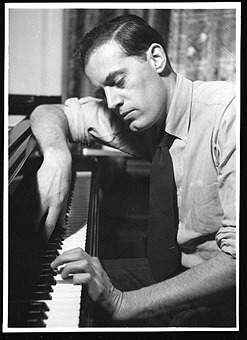
Richard Arnell Rediscovered Neglected Composer
Certainly, you all know by now how enthusiastic I am about unusual, neglected, and worthwhile repertoire. Here’s a composer who is so neglected, he didn’t even turn up in my birthday references for today – or at any rate, those I checked – Richard Arnell (1917-2009), known to his friends as Tony.
A few years ago, when WPRB 103.3 FM still had five hours a day devoted to classical music, I hosted a marathon tribute to Arnell on the occasion of the 100th anniversary of his birth. To this end, I had the support of two of the composer’s younger friends – Patrick Jonathan, who now makes his home in Malaysia, and Warren Cohen, who is music director of the MusicaNova Orchestra, based in Phoenix, Arizona. Both of them were very generous with their time, sharing anecdotes, recordings, and, in the case of Patrick, historic documents. As luck would have it, Cohen actually makes his home in New Jersey, just about hour away. So he was able to drive down and join me for an in-studio interview.
If you missed it, here’s a link to our conversation. MusicaNova is a fascinating organization whose mission it is to present “the greatest music you’ve never heard – yet.” In fact, Cohen has conducted first American performances of a number of Arnell’s major works. The sound file includes a MusicaNova performance of Arnell’s Symphony No. 5 – subtitled “The Gorilla” (!) – and Cohen’s gorgeous arrangement for string orchestra, sanctioned by the composer, of the “Elegy” from Arnell’s String Quartet No. 3.
Learn more about this neglected English master, who was championed by Beecham, Stokowski, and Bernard Herrmann, by listening here:
Happy birthday, Tony Arnell!
-
Titanic’s Waltz September Song
Technically still a week away from the start of autumn, but the days are shortening, temperatures are crisp this morning, and the crickets are already finding their way in.
Here is “Valse Septembre” by Felix Godin, really the nom de plume of a less continental-sounding Herbert Albert Brown. The work, a light waltz composed in 1909, gained notoriety for its inclusion in the White Star Line Songbook. This is the volume that was drawn upon by Wallace Henry Hartley and his eight-member band – the band that “played on,” as the RMS Titanic slipped beneath the icy waters of the North Atlantic on April 15, 1912.
So maybe spring’s not all it’s cracked up to be.
https://www.youtube.com/watch?v=cGuII1Hkpc8
The White Star Line repertoire included 341 items, including light overtures, intermezzi, waltzes, marches, sacred music, and potpourris. Here’s the complete menu:
https://www.encyclopedia-titanica.org/white-star-line-repertoire.html
-
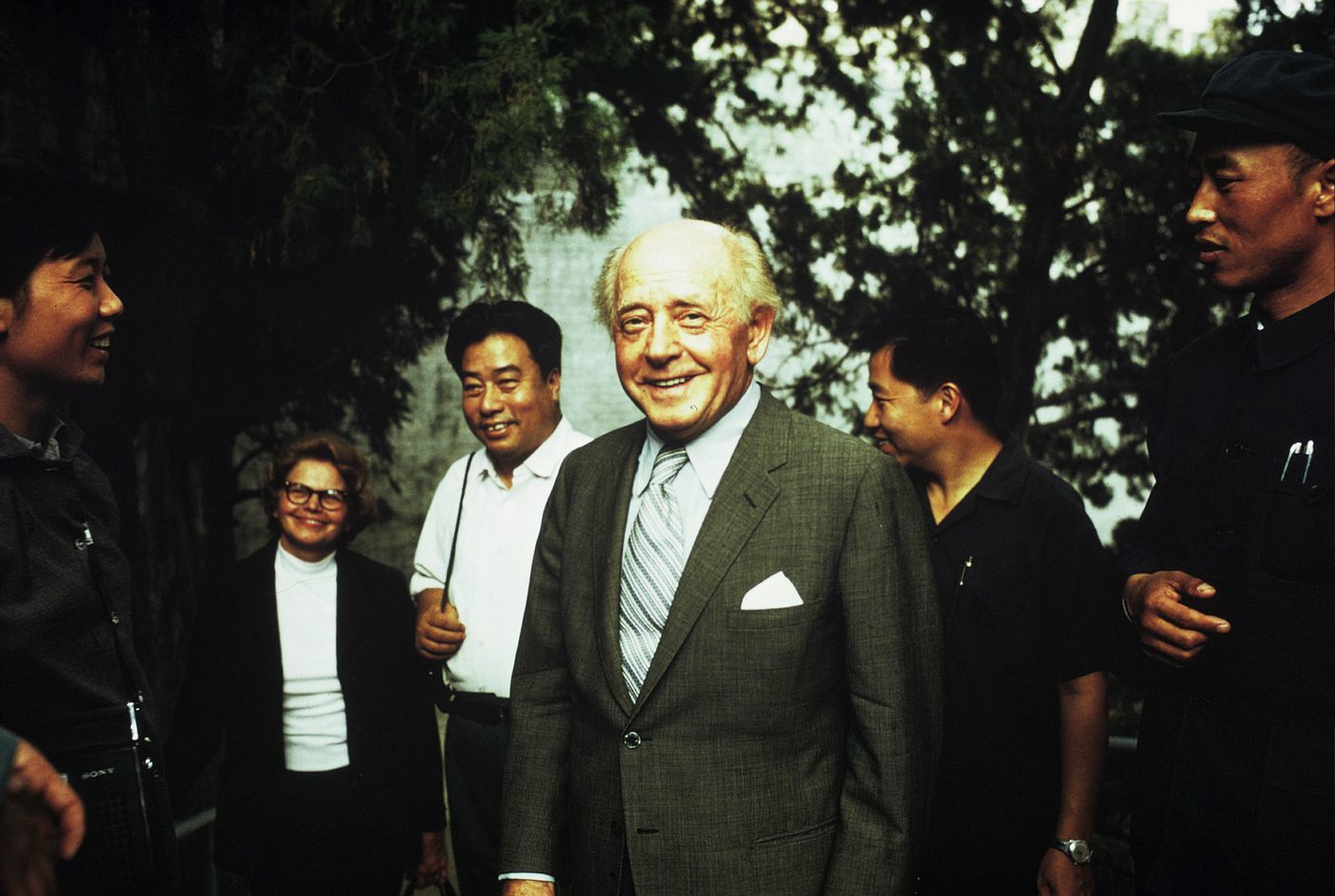
Ormandy, China, and Forgotten American Music
When Eugene Ormandy took the Philadelphia Orchestra to China in September of 1973, he was sure to include, alongside Mozart and Brahms, some music from the American Heartland.
Roy Harris (1898-1979) was born in a log cabin, in Lincoln County, Oklahoma, on Lincoln’s birthday. If that doesn’t imbue a composer with a sense of destiny, I don’t know what will. Harris went on to became one of our great American symphonists. In particular, his Symphony No. 3 of 1939 has been much beloved and frequently performed. Unfortunately, we don’t hear all that much of his music anymore. And that’s a damned shame.
Philadelphia would be the first American orchestra to perform in China (the London and Vienna Philharmonic Orchestras had appeared earlier the same year), having received an invitation in response to Nixon’s historic visit in 1972. According to first-hand accounts, audience reactions to the performances were difficult to decipher. On the street, people were curious, but stand-offish. Red banners and likenesses of Mao, Lenin, and Stalin festooned Tiananmen Square. The local orchestra played Western music (Beethoven), but only in rehearsal, for training purposes. In summer, musicians pruned trees.
Here are some interesting, balanced impressions, from a diary kept by one of the Philadelphians:
https://www.inquirer.com/arts/philadelphia-orchestra-china-tour-1973-mao-beijing-20190509.html
In all, the orchestra played six concerts. This was the trip on which Philadelphia performed the notorious “Yellow River Concerto,” a piano concerto written by committee and overseen by Madame Mao herself. Interesting that a country that did its damnedest to suppress decadent Western influence would shamelessly pilfer from the Western Romantics. As an encore, the pianist played a set of variations on “Home on the Range,” apparently a concession to Nixon. According to the diarist, Madame Mao did not care for “The Pines of Rome.” Mao himself was a no-show.
Also included on the programs were “The Stars and Stripes Forever” and the “Chinese Worker’s March.” Again, the Beijing audience seemed impassive. Performances were received with more enthusiasm in Shanghai.
While I haven’t been able to locate any recordings of the Chinese concerts, here’s Ormandy and the Philadelphians playing Harris in Russia in 1958. Additional American offerings included Samuel Barber’s “Adagio for Strings” and George Gershwin’s “An American in Paris,” which were played alongside Igor Stravinsky’s “The Firebird.” You can hear the tepid applause in Russia, when following the link:
If you’re interested in hearing the “Yellow River Concerto,” there are a number of performances posted on YouTube. However, the audio for the Philadelphia/Ormandy album, with Daniel Epstein – which I’ve got somewhere in my own collection – for some reason has not been posted online. If you’ve got a sweet tooth, by all means, feel free to explore. Me, I’d rather not risk a trip to the dentist’s office in time of COVID.
Tag Cloud
Aaron Copland (94) Beethoven (95) Composer (114) Film Music (152) Film Score (143) Film Scores (255) Halloween (107) John Williams (198) KWAX (233) Leonard Bernstein (105) Marlboro Music Festival (125) Movie Music (167) Mozart (91) Opera (220) Philadelphia Orchestra (91) Picture Perfect (174) Princeton Symphony Orchestra (110) Radio (90) Ross Amico (244) Roy's Tie-Dye Sci-Fi Corner (290) The Classical Network (101) The Lost Chord (269) Vaughan Williams (107) WPRB (397) WWFM (881)