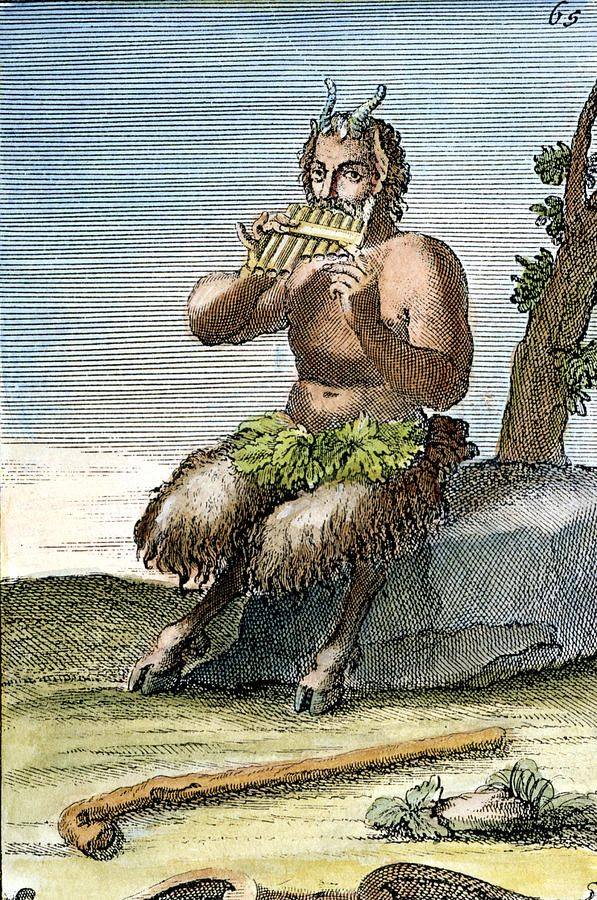
It’s all about classical myths in classical music, in this week’s Classic Ross Amico crossword.
To fill out the puzzle, follow the link and select “solve online” at the bottom of the page. You’ll then be able to type directly into the squares. Once you feel you’ve exhausted the puzzle, you’ll find the solutions by clicking on “Answer Key PDF.”
Strap on your thinking cap and your goat leggings, and then head on over here:
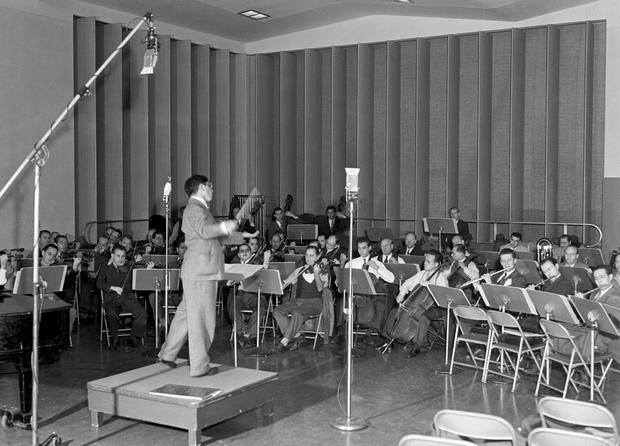
“Concert programs on the radio should not be run from a box-office standpoint. The two things have nothing to do with one another. Radio’s artistic function, as I see it, is to expose to listeners the literature of music.”
Due to connectivity issues, last night’s scheduled discussion about the NBC miniseries “The Martian Chronicles” has been rescheduled for tomorrow night (Sunday) at 7 pm EDT – which means our conversation about “Robinson Crusoe on Mars” will have to wait until Friday, August 28.
Barring any more technical difficulties, Roy’s Tie-Dye Sci-Fi Corner is live-streamed on Facebook every Friday and Sunday evening at 7:00 EDT.
It’s Friday afternoon! Nearly time for another Classic Ross Amico double feature.
First, at 6:00 EDT, all that glitters is not gold, as we listen to music from movies inspired by novels set during the Gilded Age (post-Civil War to around the start of World War I), including selections from “The Heiress” (Aaron Copland), after Henry James, “The Age of Innocence” (Elmer Bernstein), after Edith Wharton, “The Magnificent Ambersons” (Bernard Herrmann), after Booth Tarkington, and “Mr. Skeffington” (Franz Waxman), after Elizabeth von Arnim. That’s on “Picture Perfect,” on WWFM – The Classical Network and wwfm.org.
Then, at 7:00 EDT, Daniel Day Lewis is conspicuously absent, as we depart the Age of Gold for the Red Planet and Ray Bradbury’s “The Martian Chronicles.” Rock Hudson leads an all-star cast in this NBC miniseries, produced in 1979, through the magic of no-budget special effects and quasi-disco interludes. There’s plenty of talent on-hand, both in front of and behind the cameras, but somehow it all just doesn’t hang together. That’s my opinion, anyway. Roy Bjellquist and I will talk about it tonight, live-streamed on Facebook, on the next Roy’s Tie-Dye Sci-Fi Corner:
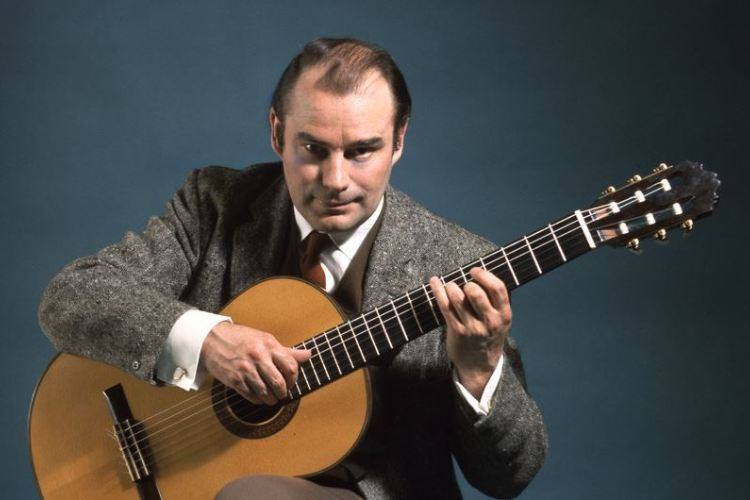
The classical music world is left unstrung. One of the foremost guitarists of his generation, Julian Bream, has died.
Bream, who was essentially self-taught on his instrument, was an acknowledged master of over 400 years of repertoire. Not content to live in the past, he also commissioned new works from – or had them written for him by – Sir Malcolm Arnold, Sir Richard Rodney Bennett, Leo Brouwer, Hans Werner Henze, Sir Peter Maxwell Davies, Toru Takemitsu, Sir Michael Tippett, and Sir William Walton, to name but a few.
He set up his own consort, with which he revived music of the Tudor era and made many recordings on the lute. His services as a lutenist were employed for the premiere of Benjamin Britten’s “Gloriana,” written to celebrate the coronation of Elizabeth II. Bream subsequently arranged the opera’s courtly dances for the instrument, which he then recorded. In turn, Britten composed several other works for Bream, including at least one milestone of the 20th century classical guitar repertoire, his “Nocturnal, after John Dowland.”
In a valedictory comment, quoted by the BBC, Bream offered, “I devoted my life to music for a reason, and the reason wasn’t because I wanted to get on or make money, but to try to fulfil myself and also to give people pleasure. That’s been my credo.”
Julian Bream was 87 years-old.
Twin titans of the guitar, Bream and John Williams (not to be confused with the film composer), in concert:
Bream attempts to woo Stravinsky with the lute:
“Nocturnal, after John Dowland”:
Charming documentary, “Julian Bream: My Life in Music”: