Category: Daily Dispatch

  • Starcrash John Barry & Bond’s B-Movie Secret

    Starcrash John Barry & Bond’s B-Movie Secret

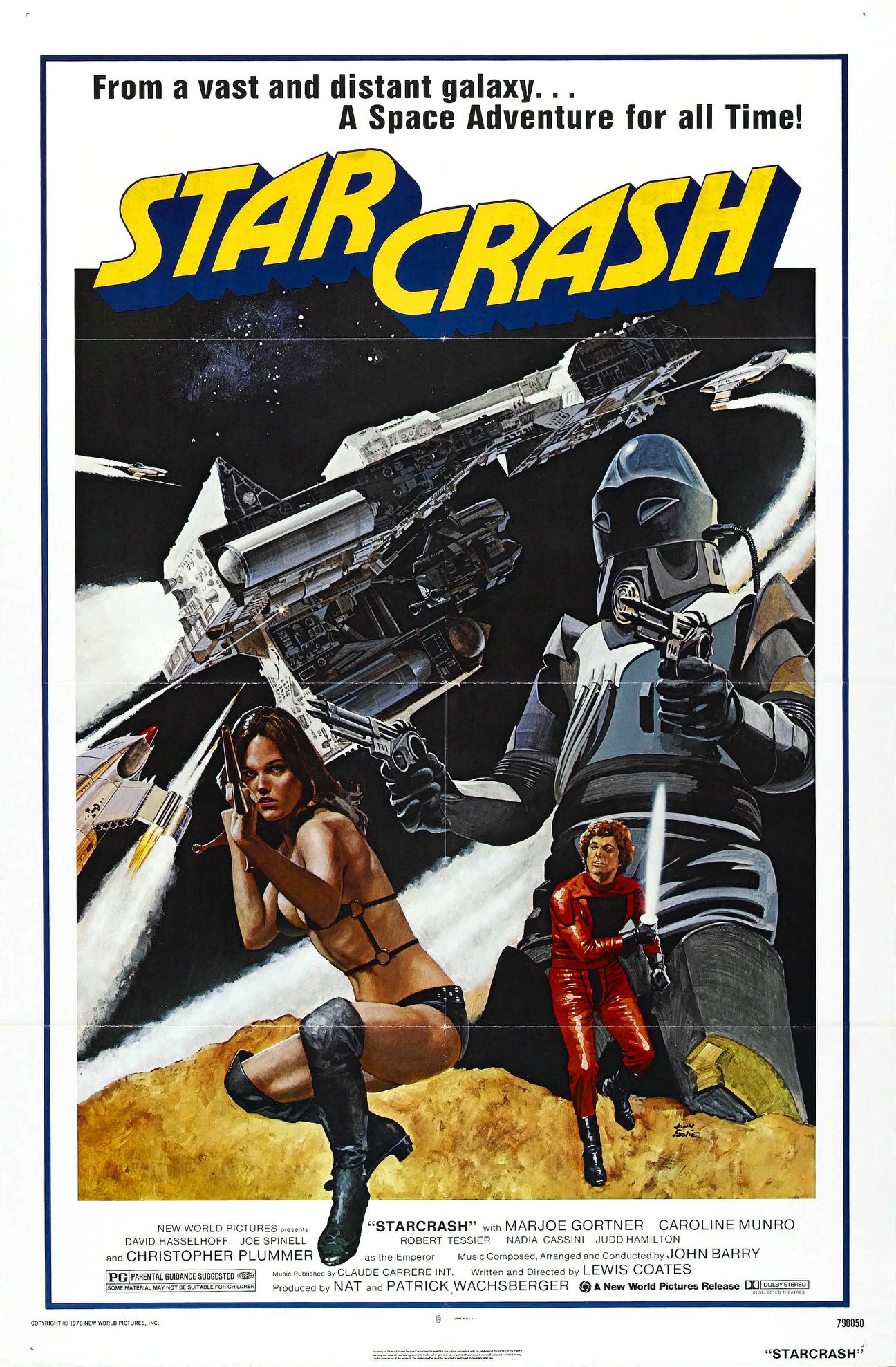
    How did John Barry, longtime composer for James Bond and already the recipient of three Academy Awards (two for “Born Free” and one for “The Lion in Winter”), come to write the music for “Starcrash?”

    That’s among the topics that Roy Bjellquist and I will address this evening, as we dissect every aspect of this opportunistic B-movie, hastily assembled in Italy to surf the coattails of “Star Wars.”

    I’ll be guest co-host on “Roy’s Tie-Dye Sci-Fi Corner.” We’ll offer insights into how a movie that features the talents of Barry, Joe Spinell (Willie Cicci from “The Godfather”), and Christopher Plummer could be so blooming bad – and yet so guiltily entertaining.

    Even if you don’t know the movie, or think you don’t care, if you’ve got any nostalgia for the pop culture of the ‘60s and ‘70s, you won’t want to miss our commentary, which will be sure to touch on Dario Argento, James Bond, Ray Harryhausen, Lou Ferrigno, Lite-Brite, and “Baby, Baby, Fallin’ in Love.”

    It would be a sin to miss our reflections on Sinbad, or Caroline Munro’s space bikini, or David Hasselhoff’s eyeliner. I hope you’ll join us for “Roy’s Tie-Dye Sci-Fi Corner,” tonight (Sunday) at 7 p.m. EDT, live-streamed on his Facebook page.

    https://www.facebook.com/roytiediescificorner/?tn-str=k*F

  • Persian Polyphony on The Lost Chord

    Persian Polyphony on The Lost Chord

    You might say I’m on a Seemorgh diet. I see ‘Morgh, and I play it!

    This Sunday night on “The Lost Chord,” I hope you’ll join me for an hour of Persian polyphonic music – music written by Persian (or Iranian) composers, based on Persian folk and classical melodies, but written specifically for western instruments.

    We’ll hear two works by Behzad Ranjbaran, recorded in 1994 for the Delos label. I had heard Ranjbaran’s lyrical Piano Concerto at a concert of the Philadelphia Orchestra some time ago, but it did not prepare me for the beauty and opulence of his “Persian Trilogy.”

    Ranjbaran, born in Tehran in 1955, is currently on the faculty of the Juilliard School. Many of his works are influenced by Persian culture and literature. “The Persian Trilogy” was inspired by the “Shahnameh,” the national epic of 11th century poet Ferdowski.

    We’ll hear two of the three pieces, including “Seven Passages,” about the hero Rostam, who undergoes seven trials along the path to rescue the Persian king Kavus; and “Seemorgh,” about the mythical bird that raises the abandoned hero Zaal, who is able to summon her in times of crisis.

    Ranjbaran proves himself a master orchestrator. If you enjoy the music of Rimsky-Korsakov, Debussy, Paul Dukas, or Ottorino Respighi, I think you’ll really enjoy his “Persian Trilogy.”

    We’ll also hear music by Reza Vali, born in Ghazvin in 1952. Vali, currently on the faculty of Carnegie Mellon University, has been called the “Iranian Béla Bartók” for his ability to successfully meld native folk elements with established western classical forms. His “Folk Song (Set No. 9)” is composed for the combination of flute and cello. The flutist switches between various instruments of the flute family, and the cellist plays tuned crystal glass and tom-toms. As you’ll hear, the musicians are also required at various points to sing and whistle.

    I hope you’ll join me for “Roses of Persia,” a bouquet of Persian polyphonic music, this Sunday night at 10:00 EDT, on WWFM – The Classical Networkand wwfm.org.

  • June Weddings Crossword COVID Style & Tunes

    June Weddings Crossword COVID Style & Tunes

    ‘Tis the season. It’s all about June weddings in time of COVID, in today’s Classic Ross Amico crossword.

    To fill out the puzzle, follow the link and select “solve online” at the bottom of the page. You’ll then be able to type directly into the squares. Once you feel you’ve exhausted the puzzle, you’ll find the solutions by clicking on “Answer Key PDF.”

    Try your luck with these June Zoom Wedding Tunes!

    https://www.armoredpenguin.com/crossword/Data/2020.06/0706/07062246.898.html

  • Princeton Festival Streams Free Music & Opera Online

    Princeton Festival Streams Free Music & Opera Online

    The Princeton Festival is picking up a good head of steam, heading into its first weekend.

    The festival’s 2020 public performance season was canceled over valid concerns about the coronavirus pandemic. But in its place, as something of a stay-at-home stop-gap, we now have “Virtually Yours,” a free online series of live and recorded performances of instrumental and vocal music, musical theater, opera, and poetry, along with educational presentations, streamed daily throughout the month of June.

    Today, enjoy a recital by organist Matt Middleton, performing on the Aeolian-Skinner organ of Princeton University Chapel. The program was original presented in 2013, and includes works by Liszt, Mendelssohn, Schumann, Karg-Elert (after Wagner), Rheinberger, and Reubke.

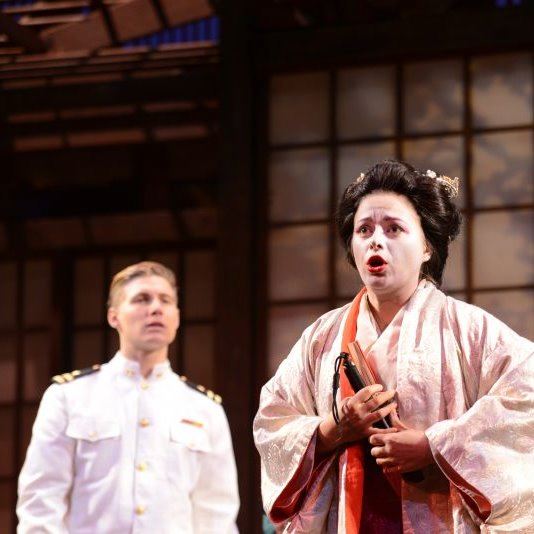
    Then tomorrow, stream the first of four Sunday operas from the Princeton Festival archive. Puccini’s “Madama Butterfly” will begin at 1 p.m. EDT.

    Mozart’s “The Marriage of Figaro” will follow on June 14; John Adams’ “Nixon in China” will be offered on June 21; and Wagner’s “The Flying Dutchman” will conclude the series on June 28.

    These performances will be streamed ONCE, beginning at 1 PM, SHARP, so be there, or be square! Princeton’s opera productions are uniformly fabulous, so do yourself a favor and definitely check them out.

    As a bonus, I am very happy to report that the Festival will be streaming Rachmaninoff’s rarely-seen, one-act opera “Francesca da Rimini” on Tuesday, June 23. This is a souvenir of the 2012 festival and was originally presented on a double-bill with Puccini’s “Gianni Schicchi.” Again, it’s very much worth seeing.

    Of course, the Princeton Festival isn’t just about opera. The New York jazz and swing band Fleur Seule will lend a touch of elegance to a special Latin-themed concert to be presented next Saturday at 5 p.m.; a live musical theater revue will take place on June 20 at 8 p.m.; and a dozen poets from around the world will share some of their work on June 22.

    Don’t forget, several of the events will air exclusively on WWFM – The Classical Network, including concerts of the Princeton Festival Baroque Orchestra and pianist Rachel Cheung 張緯晴. These programs will be broadcast on Fridays at 8 p.m. and can be heard locally at 89.1 FM, or anywhere online at wwfm.org.

    All other events stream free from the Princeton Festival website. This week’s past offerings are still available, so you might want to set aside a little time this weekend to binge!

    Check out the complete schedule and register for email notifications of upcoming events at princetonfestival.org.
  • South American Film Scores Rózsa & Morricone

    South American Film Scores Rózsa & Morricone

    If you are a Miklós Rózsa fan, you’ll want to join me for this week’s “Picture Perfect,” as I dig deep into the archive for two contrasting scores to movies set in South America.

    Rózsa, who is probably best remembered for his work on Biblical and historical epics (he won his third Academy Award for “Ben Hur” in 1959) provides a lush symphonic tapestry for “Green Fire” (1954), starring Stewart Granger and Grace Kelly. Rózsa piles on the MGM gloss, for a conflict between love and lust for emeralds in the jungles of Colombia.

    Then we’ll hear perhaps Rózsa’s most unusual venture, “Crisis” (1950). “Crisis” stars Cary Grant and Jose Ferrer in the story of a brain surgeon who must weigh ethical considerations when faced with saving the life of a dictator who oppresses the people of an unnamed banana republic. Unusual for a composer who likes to swing for the fences, Rózsa set himself the limitations of writing for solo guitar.

    MGM must have felt it had scored a major coup when securing famed Brazilian composer Heitor Villa-Lobos to supply music for “Green Mansions” (1959). The big screen adaptation of W.H. Hudson’s novel, set in the rainforests of southeastern Venezuela, stars Audrey Hepburn as Rima the Bird Girl. Unfortunately, the studio deemed what Villa-Lobos produced unusable, since the composer had begun writing based on his impressions of the novel, rather than wait for the completed film. MGM house composer Bronislau Kaper was brought in to salvage what he could.

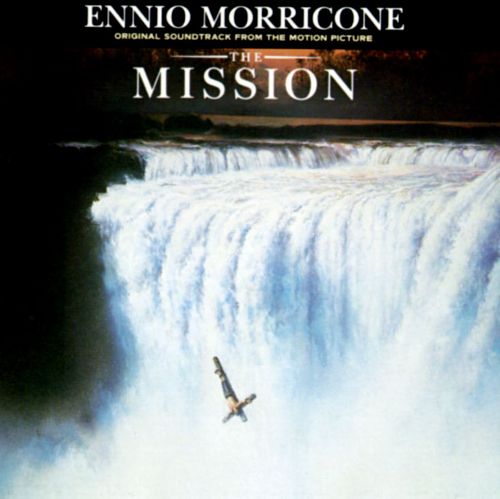
    Finally, we’ll turn to one of Ennio Morricone’s best-loved scores – that for “The Mission” (1986). “The Mission” stars Jeremy Irons, as a Jesuit priest who penetrates the South American jungle to convert the native Guarani to Christianity, and Robert DeNiro, as a reformed slave hunter. The lovely and moving “Gabriel’s Oboe” became a recognizable hit, thanks in particular to its use by figure skaters and Aer Lingus.

    This is the score for which Morricone believed he should have won the Oscar.

    I hope you’ll join me for these South American adventures this week, on “Picture Perfect” – music for the movies – this Friday evening at 6:00 EDT, on WWFM – The Classical Network and wwfm.org.

Tag Cloud

Aaron Copland (93) Beethoven (95) Composer (114) Film Music (137) Film Score (143) Film Scores (255) Halloween (94) John Williams (195) KWAX (229) Leonard Bernstein (103) Marlboro Music Festival (125) Movie Music (152) Mozart (88) Opera (208) Philadelphia Orchestra (89) Picture Perfect (174) Princeton Symphony Orchestra (108) Radio (88) Ross Amico (244) Roy's Tie-Dye Sci-Fi Corner (290) The Classical Network (101) The Lost Chord (268) Vaughan Williams (103) WPRB (396) WWFM (881)

DON’T MISS A BEAT

Receive a weekly digest every Sunday at noon by signing up here


RECENT POSTS