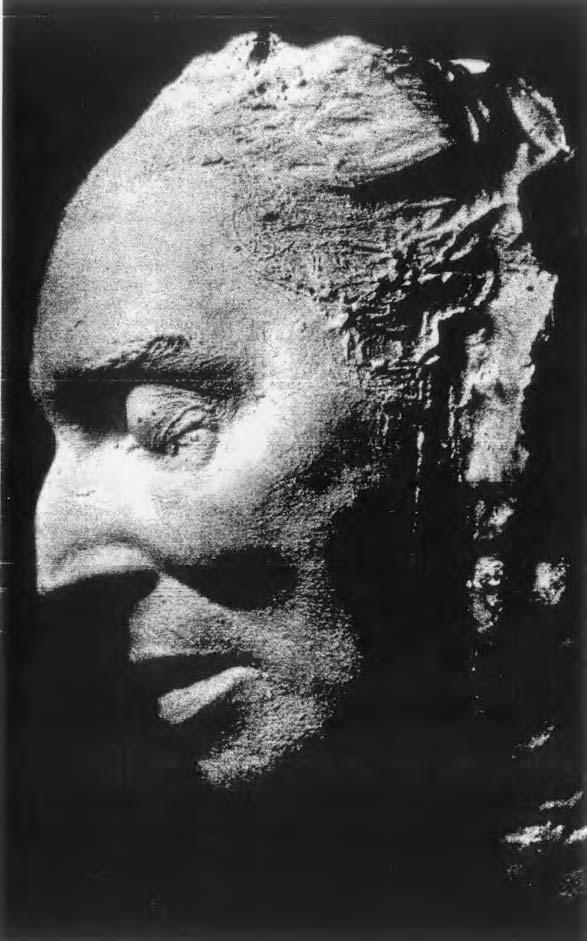
As you probably know by now, many in the music industry are not engaging in regular business today – Blackout Tuesday – as a way of honoring the memory of George Floyd, and acknowledging the need for reflection, accountability, and change.
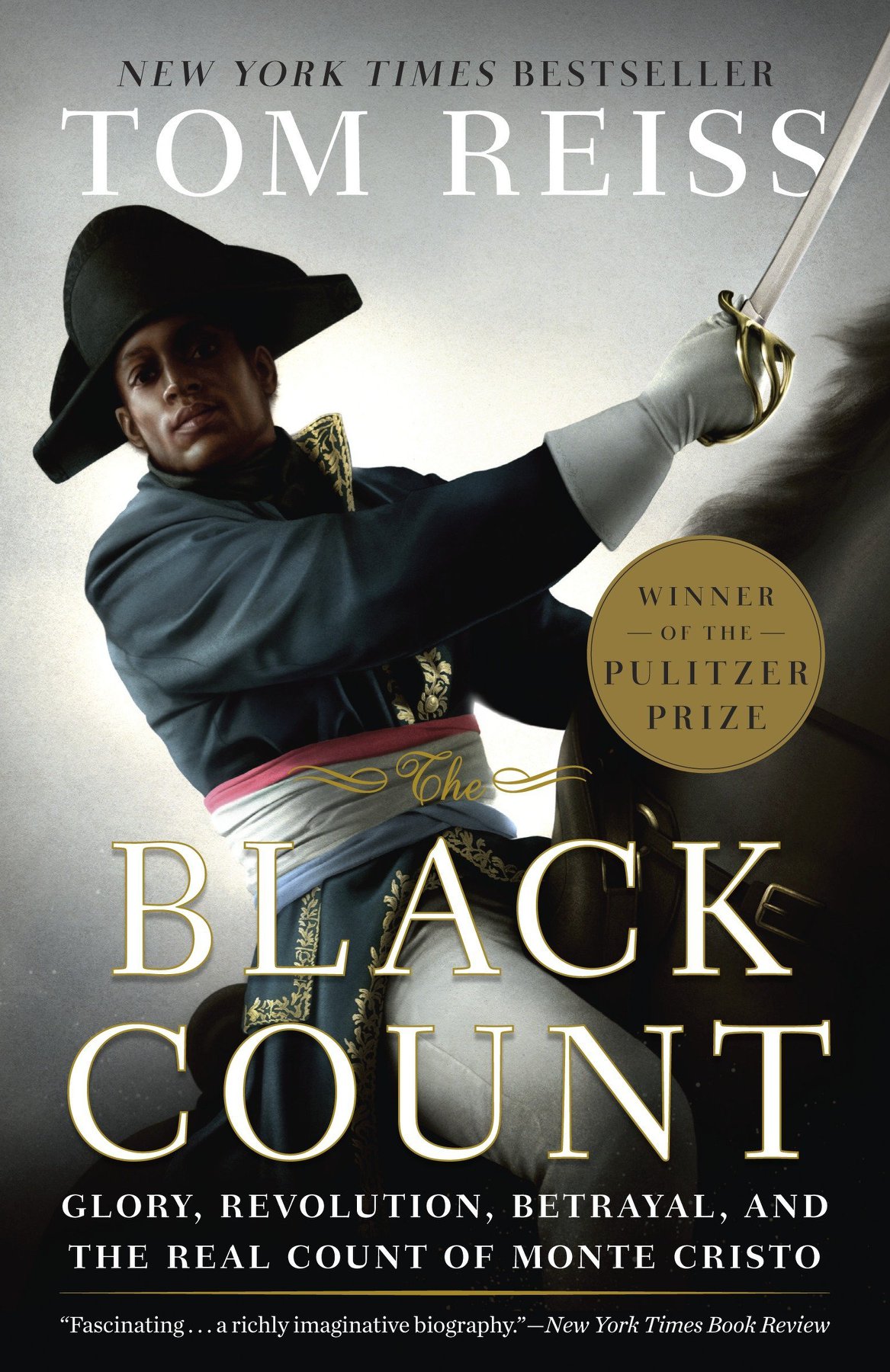
Of course, I’m not working anyway, nor I suspect are many, thanks to COVID. However, and totally by coincidence, I just happened to finish reading a biography of Alex Dumas. So I will do my small part, I hope, by drawing attention to his story.
Alex Dumas is not be confused with the writer, his son, author of “The Three Musketeers.” Nor his grandson, known for “Camille,” which became the basis for Verdi’s “La traviata.” No, I’m speaking of General Alex Dumas, who served with distinction in revolutionary France.
Dumas was born in the French colony of Saint-Domingue, a world of sugar cane plantations and black slavery. His father was a French nobleman, and a notorious wastrel, who fathered Alex with an enslaved woman of African descent. There were other children, as well, whom Alex’s father thought nothing of selling into slavery.
But he took a special interest in Alex, who was quick-witted, handsome, and athletic, and he brought him back to France to acknowledge him as his son. There, Alex was given a classical education, as he sharpened his skills as a gentleman, an equestrian, and a master swordsman.
Before long, he was serving in the army, where he quickly distinguished himself for his intelligence, strength, and daring. Somehow, miraculously, he survived the irrational mob violence of the Reign of Terror and wound up as one of Napoleon’s top generals. He was instrumental in the liberation of the Italian provinces from Austria, and he rode with Napoleon in Egypt, where French soldiers died senselessly by the tens of thousands.
Interestingly, among Dumas’ colleagues, early on, was Joseph Boulogne, Chevalier de Saint-Georges. Sometimes identified as “The Black Mozart,” Saint-Georges was renowned for his skill on the violin, but also respected for his mastery of the sword. The two men were friends, and had parallel histories. (Saint-Georges was also mixed-race, born in the French colony of Guadeloupe.) Early in their respective careers, they fought side by side.
However, at some point, when Saint-Georges was called out by the authorities for an illegal transaction involving some horses, he attempted to deflect the blame onto Dumas. This was a serious matter, and although Dumas was able to clear himself, it fell upon his honor to redress the slander with a duel.
Despite his own prowess with the blade, Saint-Georges must have been sweating bullets. When he learned that Dumas was down with an illness, he seized the advantage to make an impromptu visit to his home. There, he did his best to make light of the whole affair, proclaiming his undying affection for his friend, and even embracing him in his bed. Dumas understood Saint-George’s game, but he was willing to let it go.
In reading Dumas’ story, what was most revelatory to me, as an American living in the 21st century, is just how liberal France’s laws were. For all the social and political unrest in France during that time, it was possible for a person of color not only to earn or be granted his or her freedom from slavery, but also to rise to a level of social acceptance and even respect. Even in pre-revolutionary Saint-Domingue (now Haiti), those of African descent were hosting balls and attending theater and opera alongside whites, and adorning themselves in the latest fashions from Paris. Furthermore, if a slave ever set foot in France, he or she was instantly declared free.
Already under the monarchy, the country had legal protections for slaves – albeit in a roundabout way, since Louis XVI issued certain laws for slaveholders; it was the lawyers who exploited loopholes in the king’s decrees. Many cases were decided in favor of people of color, in some instances even to the extent of ending their enslavement. Ultimately, France became the first European nation to outlaw slavery. Socially and under the law, blacks and those of mixed-race parentage were finally regarded as equals. They were educated and served alongside whites at every level of society. Of course, that doesn’t mean that racism did not exist. All in all, however, it seems to have been a remarkably enlightened society, if we can overlook an unhealthy obsession with the guillotine.
Sadly, it was Napoleon who would be the cause of Alex Dumas’ downfall. A slippery megalomaniac with a lust for absolute power (which he achieved under the guise of égalité and fraternité), Napoleon consolidated his strength by shoring up relations with the country’s more conservative elements, and rolling back all the laws that had allowed blacks equal standing. No longer could they serve with white troops, let alone command them; no longer were they afforded mixed-race education. In short, everything was done so that, without special dispensation, those of African descent were no longer welcome on French soil.
Furthermore, France reasserted itself In the New World by taking military action against liberated slaves in its colonies. The freedom and hope that France had sacrificed so much to attain was undone astonishingly quickly by the ambitions of a lone tyrant. Of course, economics made it all palatable. France had too much tied up in the sugar trade.
Having read my share of Alexandre Dumas’ historical adventures and some of his travelogues, I found it fascinating that so many of his villains are imbued with the despicable characteristics of his own grandfather – Alex’s father – and his ruthless great uncles, slaveholders all. It’s all right there, in “The Count of Monte Cristo.” So reprehensible was the general’s father that it’s hardly surprising that young Alex would opt to assume his mother’s surname as his own.
Alex Dumas once fought three duels in one day, a feat fictionalized by his son, when he ascribed it to the neophyte D’Artagnan in “The Three Musketeers.” Equally, there are unfortunate parallels in his father’s life and adventures to those that beset Edmond Dantès, the future Monte Cristo.
What I didn’t anticipate is how powerfully striking it would be to realize, especially in light of current events, that Alex Dumas’ experiences and the rise and fall of equality in France are not remote occurrences in the recesses of European history, but unsettlingly reflective of – and still very much alive in – the modern world. We are standing at the other end of a continuum, and we are still dealing with Napoleon’s legacy.
It’s frustrating that what began as such an enlightened model could backslide so badly that it set race relations in France and the world behind 150 years. While things have certainly improved in recent decades, we are still grappling with the legacy of slavery, racial hatred, injustice, and roiling outrage. The trappings may be different, but for better or worse people are still people. Human foibles remain constant, and there are still politicians who will do anything to hang on to power.
What kind of compartmentalization and rationalization it must take to regard a fellow human being, someone who has done nothing wrong, as less-than-human. The book’s other great achievement is in how effectively it humanizes Dumas, the greater to throw into harsh relief the racial injustices he suffered toward the end of his life. He was an idealist, honorable, loyal, and committed to the country he served. Would that the same could be said of Napoleon and his spiritual heirs.
Tom Reiss’ “The Black Count” received a Pulitzer Prize for Biography in 2013