Category: Daily Dispatch

  • Raritan River Music Fest Goes Online

    Raritan River Music Fest Goes Online

    Most of the world’s summer music festivals have already thrown in the towel, but for one of the most local, the show must go on. This year’s Raritan River Music Festival concerts will continue, though perhaps not wholly as planned.

    Now in its 31st year, Raritan River Music has built a loyal following with its series of May concerts presented by a variety of professional musicians and ensembles at historic venues throughout – and adjacent to – New Jersey’s Raritan Valley.

    The venues may be closed, but the performances will take place as scheduled.

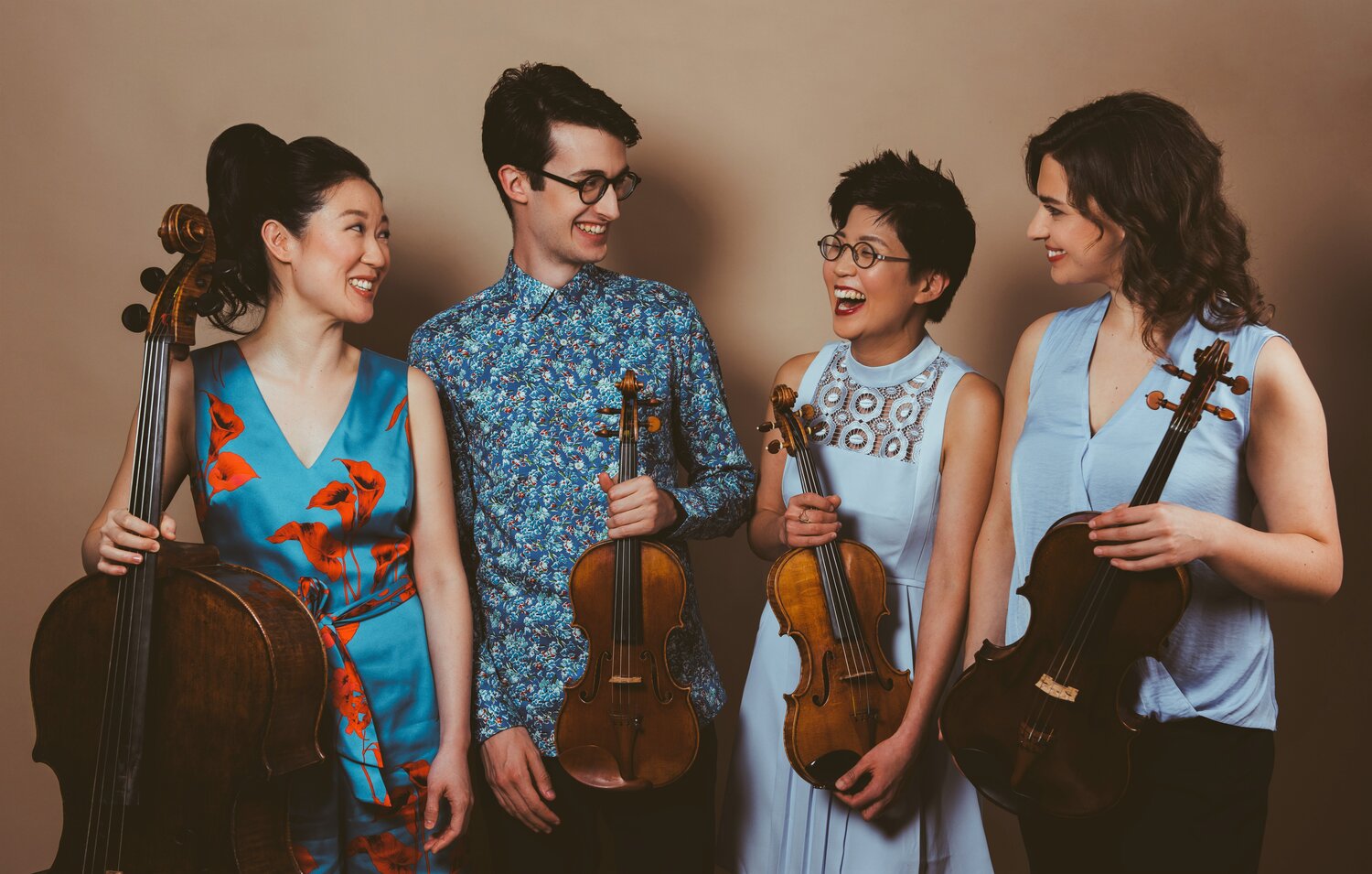
    The festival will open tonight with the Argus Quartet, performing music by Bach, Fanny Mendelssohn, and Christopher Theofanidis, including the New Jersey premiere of Theofanidis’ “Conference of the Birds.”

    Next Saturday, the Newman & Oltman Duo will be joined by Cuban guitarist Rene Izquierdo for “A la Cubana: A Century of Music from the Pearl of Antilles.”

    On May 16, the instrumental and vocal ensemble Meridionalis will present “Selva Musical/Transatlantic Baroque: Music of Spain and the New World,” featuring selections spanning the mid-1500s – a generation after Columbus sailed – through the Baroque.

    On May 23, the Philadelphia Flute Quartet will celebrate the 100th anniversary of the 19th Amendment, with a program which will include works by award-winning American women composers and the New Jersey premiere of “Hidden River” by Eric Sessler.

    The concerts will be streamed FREE, Saturday evenings at 7:30 p.m. EDT. If you enjoy them, please consider showing your support and helping to defray the costs by leaving a donation at the Raritan River Music website. Your generosity will help to secure the continuance of the festival in happier times ahead.

    The Raritan River Music Festival was founded in 1989 by Michael Newman and Laura Oltman, of the Newman & Oltman Guitar Duo. The couple have strong ties to the area, making their home in lower Warren County along the Delaware River.

    Newman is on the faculties of Mannes College of Music, in New York City, and The College of New Jersey. Oltman teaches at Princeton University and Lafayette College in Easton, PA. The duo co-founded the New York Guitar Seminar at Mannes. They have served as ensemble-in-residence there since 1987.

    In reference to pulling together the technological threads to make this year’s Raritan River Music Festival possible, Newman writes, “It has been all-consuming for the past month, learning about audio engineering, video production, live streaming, etc., etc. But we were committed to making it happen, to pay the performers we had invited to play on the festival, and to bring the festival directly to all the friends and fans of the festival, many who have been attending every year for the past 31 years.”

    The events will include introductions and discussions with participants and composers, live chats and Q&As, and of course plenty of great music-making.

    The concerts will be streamed at Raritan’s homepage, http://www.RaritanRiverMusic.org, where you can also learn more about the organization and the upcoming concerts.

    Follow Oltman’s advice in her recorded intro: open up a cold one and enjoy chamber music performances, Saturday evenings in May, from the resilient Raritan River Music Festival.


    Newman & Oltman’s new recording of “El Libro de los Seres Imaginarios/The Book of Imaginary Beings,” by Cuban master Leo Brouwer, written specifically for the duo and given its world premiere at last year’s festival, is available now, on the MusicMasters label.


    PHOTO: The Argus Quartet will perform, virtually, at the Raritan River Music Festival, tonight at 7:30 p.m.

  • Kurosawa Film Music WWFM Friday

    Kurosawa Film Music WWFM Friday

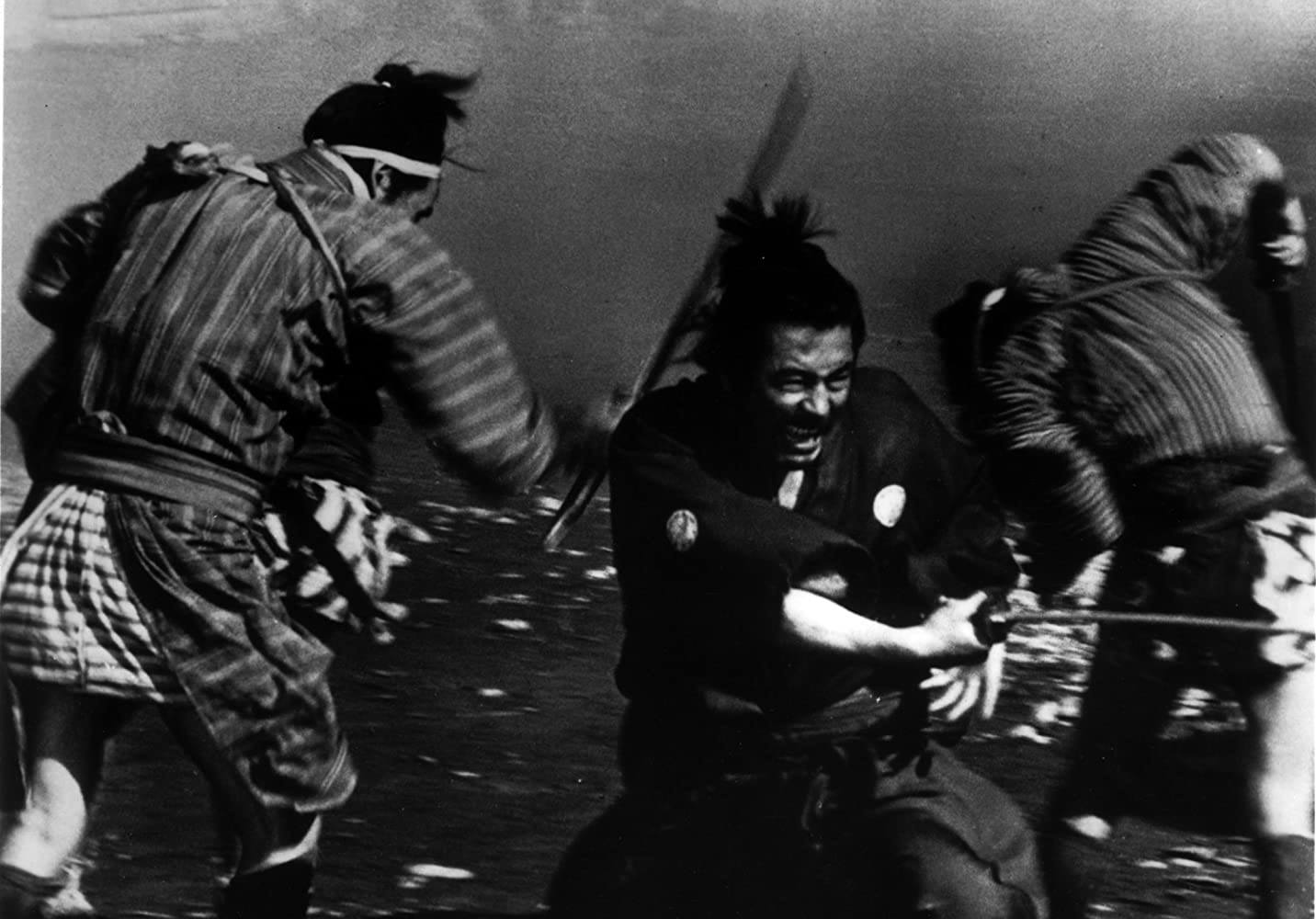
    Carve out some time for music from the films of Akira Kurosawa, on “Picture Perfect,” this Friday evening at 6:00 EDT, on WWFM – The Classical Network and wwfm.org.

  • Haydn Wood’s Joyful May Day Overture

    Haydn Wood’s Joyful May Day Overture

    “A May Day Overture” by Haydn Wood

  • Kurosawa Samurai Film Music Mifune’s Centenary

    Kurosawa Samurai Film Music Mifune’s Centenary

    Nothing says May Day like samurai movies!

    This week on “Picture Perfect,” in this, the centenary of the birth of Toshiro Mifune (born April 1, 1920), it’s music from the films of Akira Kurosawa.

    We’ll hear selections from three classic historical adventures:

    “Seven Samurai” (1954) is a 3 1/2 hour epic on a deceptively simple premise: a party of ronin band together to defend a farmers’ village against invading brigands. Of course, that capsule synopsis doesn’t begin to hint at what a marvelous achievement it really is. “Seven Samurai” is regularly included on short lists of the greatest films of all time. It was remade in the United States as “The Magnificent Seven.” And though “The Magnificent Seven” enjoys great popularity, a terrific cast, and an unforgettable score, it stands only knee-high to the original, with music by Fumio Hayazaka.

    “Seven Samurai” may have been Kurosawa’s first, full-out samurai film, but it was not his first crack at jidaigeki (literally “period drama”). Already, a samurai features as one of the characters in his earlier, international break-out hit, “Rashomon” (1950). In this instance, the discovery of a murdered samurai leads to a series of courtroom-style examinations, during which everyone present at the killing gives his or her own account of what transpired – including (through a medium) the murdered man himself! The conflicting testimonies reveal the slippery subjectivity of what we ordinarily accept as “truth.” The film, the first from Japan to receive wide exposure abroad, had such an impact that the term “Rashomon effect” entered the English language.

    Kurosawa had great respect not only for American movies, but also Western classical music. This led him, on occasion, to request of his composers that they emulate certain well-known pieces. In the case of “Rashomon,” Hayazaka was encouraged, during one of the segments, to channel Ravel’s “Bolero.” “Rashomon” was remade as, among other things, “The Outrage,” a middling western starring Paul Newman.

    Masura Sato sought out Hayazaka as a teacher on the merits of his music for “Rashomon.” Following his master’s early death from tuberculosis at the age of 41, Sato stepped in to fill the void and became Kurosawa’s new composer of choice. Sato would score eight of Kurosawa’s films (his first, a completion of Hayazaka’s score for “Record of a Living Being”). He too could be called upon to conjure the spirit of Western composers, with the ghost of Verdi hovering over “Throne of Blood,” Haydn and Brahms coloring “Red Beard,” and in the case of “Yojimbo” (1961), Franz Liszt lending attitude to masterless samurai Mifune, who wanders into a remote town and sets about playing two rival families off one another to his own profit.

    “Yojimbo” provided the basis for the first of Sergio Leone’s spaghetti westerns, “A Fistful of Dollars.” What’s interesting about that is not only Leone’s scene-by-scene reliance on the original, but also Leone’s composer, Ennio Morricone, emulating Sato’s goofy juxtapositions and funky orchestrations. Kurosawa himself was inspired by the western tropes of John Ford movies and the pulp fiction of Dashiell Hammett.

    As a bonus, we’ll hear just a little music from one of my least favorite Kurosawa films (beside “Rhapsody in August”), “Dodes’kaden” (1970). “Dodes’kaden” marked a break with Kurosawa’s classic style. For one thing, it was his first film shot in color – truly lurid Technicolor – and the first made after his break with Mifune. The title can be translated, roughly, as “clickety-clack,” the sound of an imaginary trolley car in the fantasy world of a mentally-challenged boy who literally lives in a dump. Though it earned an Academy Award nomination for Best Foreign Film, its commercial failure drove Kurosawa into a deep depression, even to the point of attempted suicide.

    For as much as I personally dislike the film, the composer of its soundtrack, Toru Takemitsu is regarded as one of Japan’s most important classical concert composers. Interestingly, like Sato, Takemitsu was a protégé of Kurosawa’s friend and frequent colleague, Fumio Hayazaka.

    It will be three-quarters Mifune, and more than fifty-percent samurai, on “Picture Perfect,” music for the movies. We’ll have you runnin’ for the ronin, this Friday evening at 6:00 EDT, on WWFM – The Classical Network and at wwfm.org.

  • Happy May Day Music Crumhorns and Fife

    Happy May Day Music Crumhorns and Fife

    Happy May Day!

    “Now is the Month of Maying”

    On crumhorns, multitracked

    Barney Fife

Tag Cloud

Aaron Copland (93) Beethoven (95) Composer (114) Film Music (137) Film Score (143) Film Scores (255) Halloween (94) John Williams (195) KWAX (229) Leonard Bernstein (103) Marlboro Music Festival (125) Movie Music (152) Mozart (88) Opera (208) Philadelphia Orchestra (89) Picture Perfect (174) Princeton Symphony Orchestra (108) Radio (88) Ross Amico (244) Roy's Tie-Dye Sci-Fi Corner (290) The Classical Network (101) The Lost Chord (268) Vaughan Williams (103) WPRB (396) WWFM (881)

DON’T MISS A BEAT

Receive a weekly digest every Sunday at noon by signing up here


RECENT POSTS