Category: Daily Dispatch

  • Memorial Day Crossword Remember & Reflect

    Memorial Day Crossword Remember & Reflect

    Americans tend to regard Memorial Day as the unofficial start of summer. But the holiday isn’t really about burgers, beaches, and beer.

    Lockdown allows us an unusual opportunity for reflection. Take some time this weekend to appreciate the sacrifice of those who gave their lives for the greater good. Our freedom and security have been purchased and maintained at an exorbitant cost.

    Memorial Day is the theme of this week’s Classic Ross Amico crossword. Test your knowledge of war songs, commemorative works, and composers who served.

    To fill out the puzzle, follow the link and select “solve online” at the bottom of the page. You’ll then be able to type directly into the squares. Once you feel you’ve exhausted the puzzle, you’ll find the solutions by clicking on “Answer Key PDF.”

    https://www.armoredpenguin.com/crossword/Data/2020.05/2405/24055522.558.html

  • Backstage with James Morris at Opera

    Backstage with James Morris at Opera

    Stop me if I told you this before.

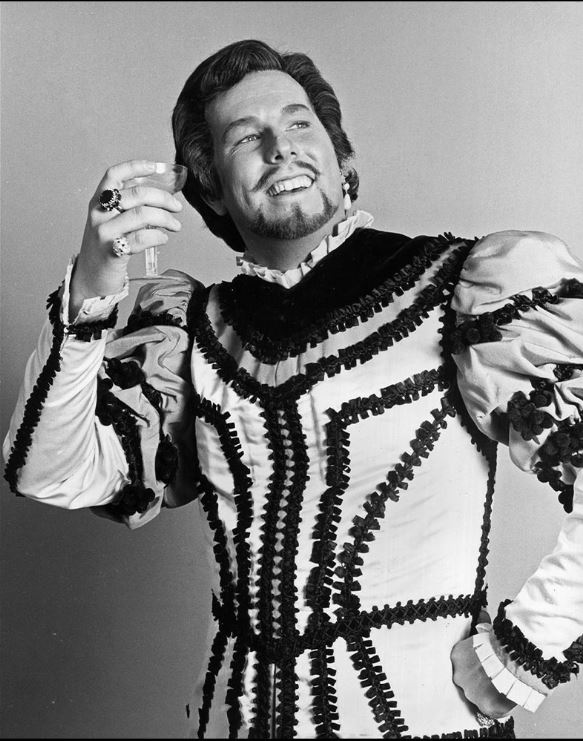
    Last night, I watched the first act of the Met stream of “Don Giovanni,” a performance from 1978, with Joan Sutherland, Julia Varady, Huguette Tourangeau, Gabriel Bacquier as Leporello, and a 31 year-old James Morris as the Don. I would have never thought that Morris’ voice could ever have been so supple. I became familiar with him only later, from his more ponderous roles, especially Wotan.

    I actually had the opportunity to work with him once, at the old Opera Company of Philadelphia (since rebranded Opera Philadelphia). He played the Count in a production of “The Marriage of Figaro,” during the brief window in which I was employed as an assistant stage manager. Really, I was more of a glorified gofer, without the glory, but I did get to wear a headset backstage and cue the singers when it was time for them to make their entrances, or to have a union laborer shatter a flower pot in a barrel. I was very green, and you had to be a total self-starter. The extent of my direction would be “Go and find me a sword,” or “We need you to rent a truck,” and that was that. It could be a little stressful.

    At first, Morris was flattered that I was awed by his presence, having just watched him in the PBS “Ring” broadcast (he even signed my copy of “Das Rheingold”), but later, he started to get a little annoyed when things didn’t always go as smoothly as they did at the Met. In particular, I don’t think he was happy with my entrance cues. I had to wait, with my hand up in a “get ready” position, until I received clearance from the stage manager, through my headset, so that I could give the go-ahead. (Well, I did delay a little bit on the flower pots, because it got a bigger laugh from the audience if they would shatter a beat later than expected.)

    Morris would stand there and look at me, with his hand on a plywood door, and finally, when he couldn’t take it anymore, in exasperation, he would jump the cue. I’d tell the stage manager, the stage manager would mutter to himself, and he’d make a note in the score to cue the entrance a few bars earlier. But it never seemed early enough for Morris.

    Also, I remember one night, just as he was going down on his knee for his big moment, in the second of silence before “Contessa, perdono,” somebody’s watch beeped in the wings. He was livid. His adorable wife, Susan Quittmeyer, who sang Cherubino, was forever smoothing his feathers and sending me out for the balm of coffee.

    My favorite memory is when, in rehearsal, they asked me to stand in as a super. I was to be one of the Count’s servants, and I got to do a scene with Morris. This led to some moments of unintentional hilarity, since I really didn’t know what was expected of me, and I would repeatedly miss my marks (which, to be fair, were not indicated). Morris would laugh and guide me into place.

    I only worked there for three weeks, the duration of a single production, since the job only paid a hundred dollars a week, and they expected you to be available at all hours. There were morning, afternoon, and evening rehearsals. Obviously, that was unsustainable for someone in his early 20s. I’m glad I had the experience, though. I wonder if it’s how George Plimpton felt when he played for the Detroit Lions or stepped in to the percussion section of the New York Philharmonic?

    It was also during that production that I was late for rehearsal once, and nearly knocked Charles Dutoit on his can in the Academy green room. (Dutoit was guesting that week with the Philadelphia Orchestra.)

    I’ve got some other juicy stories of backstage goings-on with some of the other singers, but I think it’s probably best, from a legal standpoint, if I wait until everyone is dead.

    It’s a rainy day, and I’m up for Act II. The Met “Don Giovanni” streams free, through about 6:00 tonight, at metopera.org

  • Magnificent Seven Elmer Bernstein Scores

    Magnificent Seven Elmer Bernstein Scores

    Chris (Brynner): You forget one thing. We took a contract.
    Vin (McQueen): It’s sure not the kind any court would enforce.
    Chris: That’s just the kind you’ve got to keep.

    This week on “Picture Perfect,” saddle up with seven magnificent western film scores by Elmer Bernstein – including selections from “The Comancheros,” “The Shootist,” “The Sons of Katie Elder,” “True Grit,” “Wild Wild West,” “The Hallelujah Trail,” and of course “The Magnificent Seven.”

    One never had to worry about social distancing in the Old West. It’s high-spirited music for wide-open spaces, this Friday evening at 6:00 EDT, on WWFM – The Classical Network and wwfm.org.

  • Elmer Bernstein Western Film Scores

    Elmer Bernstein Western Film Scores

    “Fill your hands, you son of a b****!”

    Western film scores of Elmer Bernstein, on “Picture Perfect,” music for the movies, this Friday evening at 6:00 EDT, on WWFM – The Classical Network and wwfm.org.

  • Wagner’s Birthday A “Parsifal” Pilgrimage

    Wagner’s Birthday A “Parsifal” Pilgrimage

    Happy birthday, Richard Wagner!

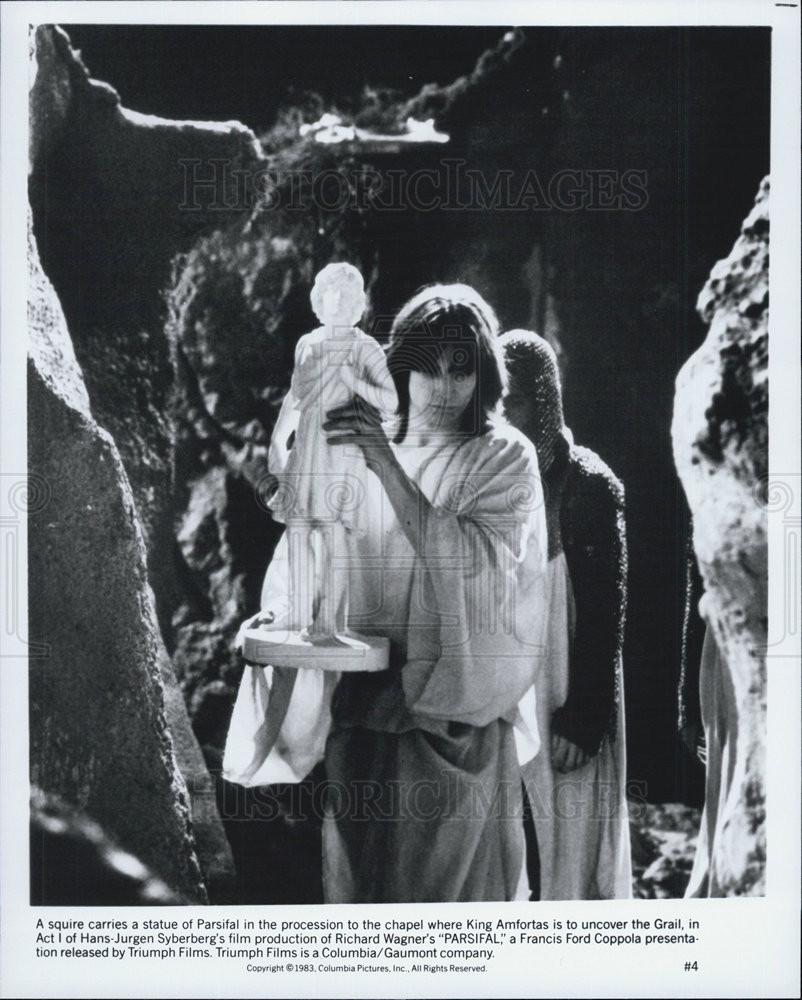
    It was sometime around 1983 or ’84 that my best buddy from high school and I determined to catch a screening of Hans-Jürgen Syberberg’s “Parsifal” at Lehigh University. Neither of us knew much about the opera at that point, but we both loved the film “Excalibur” and were at the very least familiar with the mystical prelude Wagner had composed.

    As my friend climbed into the car, he commented, “I think we’re in for a real treat. Listen to this!” Then he read to me the synopsis from Kobbé’s or Milton Cross or the equivalent. When he reached the part where Parsifal snatches Klingsor’s spear out of midair, destroying his power, we were both like, “Whoaaa.” We were ready for some serious action!

    When we arrived, we learned that the film was being presented in an auditorium with a raked floor. I remember it was raked, because at some point during the showing, an empty bottle of spirits rolled down past our feet, clanking against the chair legs as it went.

    The film was presented the old-fashioned way, on a projector, pre-digital, so periodically the tail leader would run out and the lights would have to be switched on, so that the reels could be changed. Along the way, there were also a few technical difficulties, significantly padding the film’s already four-hour-plus running time.

    Anyway, it was excruciating – which is to say, we enjoyed ourselves mightily. There was so much to laugh at and groan through. The actor who played Klingsor was totally out of shape. When he raised his spear, he must have had an aneurysm or something, because instead of hurling it like a javelin, as described in Kobbé, he simply tumbled into a ravine. We were especially amused by the revelation toward the end that the entire production was supposed to have taken place inside a gigantic bust of Wagner.

    Otherwise, Syberberg’s was a fairly straightforward interpretation, though curiously he chose to have actors stand in for the singers on the film’s soundtrack, a decision I can’t say made it any less silly. Oh yeah, there was also a passage, just before the “bust” revelation, that had knights proceeding down a long stone hallway, lined with swastika flags (???). Obviously, this was a work of genius.

    By the time it finally ended, and someone switched on the lights for probably the sixth or seventh time, we staggered out of the building, wearing conspiratorial grins, only to discover a fog had rolled in. It was now ludicrously late. Driving back on Route 22 was like crossing the North Sea in a dragon boat.

    When I arrived home, it was around 2:00 in the morning, and my mother was on pins and needles. What happened? What had we gotten up to? I shared a mercifully abridged account of our Wagnerian adventure. We were not dead in a ditch. Nor were we rotting in a police cell. We were merely watching “Parsifal.”

    Why is this film, presented by Francis Ford Coppola, not available on DVD???

    https://www.youtube.com/watch?v=Mic_EOGOTzE

Tag Cloud

Aaron Copland (94) Beethoven (95) Composer (114) Film Music (152) Film Score (143) Film Scores (255) Halloween (107) John Williams (198) KWAX (233) Leonard Bernstein (105) Marlboro Music Festival (125) Movie Music (167) Mozart (91) Opera (221) Philadelphia Orchestra (91) Picture Perfect (174) Princeton Symphony Orchestra (110) Radio (90) Ross Amico (244) Roy's Tie-Dye Sci-Fi Corner (290) The Classical Network (101) The Lost Chord (269) Vaughan Williams (107) WPRB (397) WWFM (881)

DON’T MISS A BEAT

Receive a weekly digest every Sunday at noon by signing up here


RECENT POSTS