Category: Daily Dispatch

  • Summer Music Festivals COVID-19 Challenges Discussed

    Summer Music Festivals COVID-19 Challenges Discussed

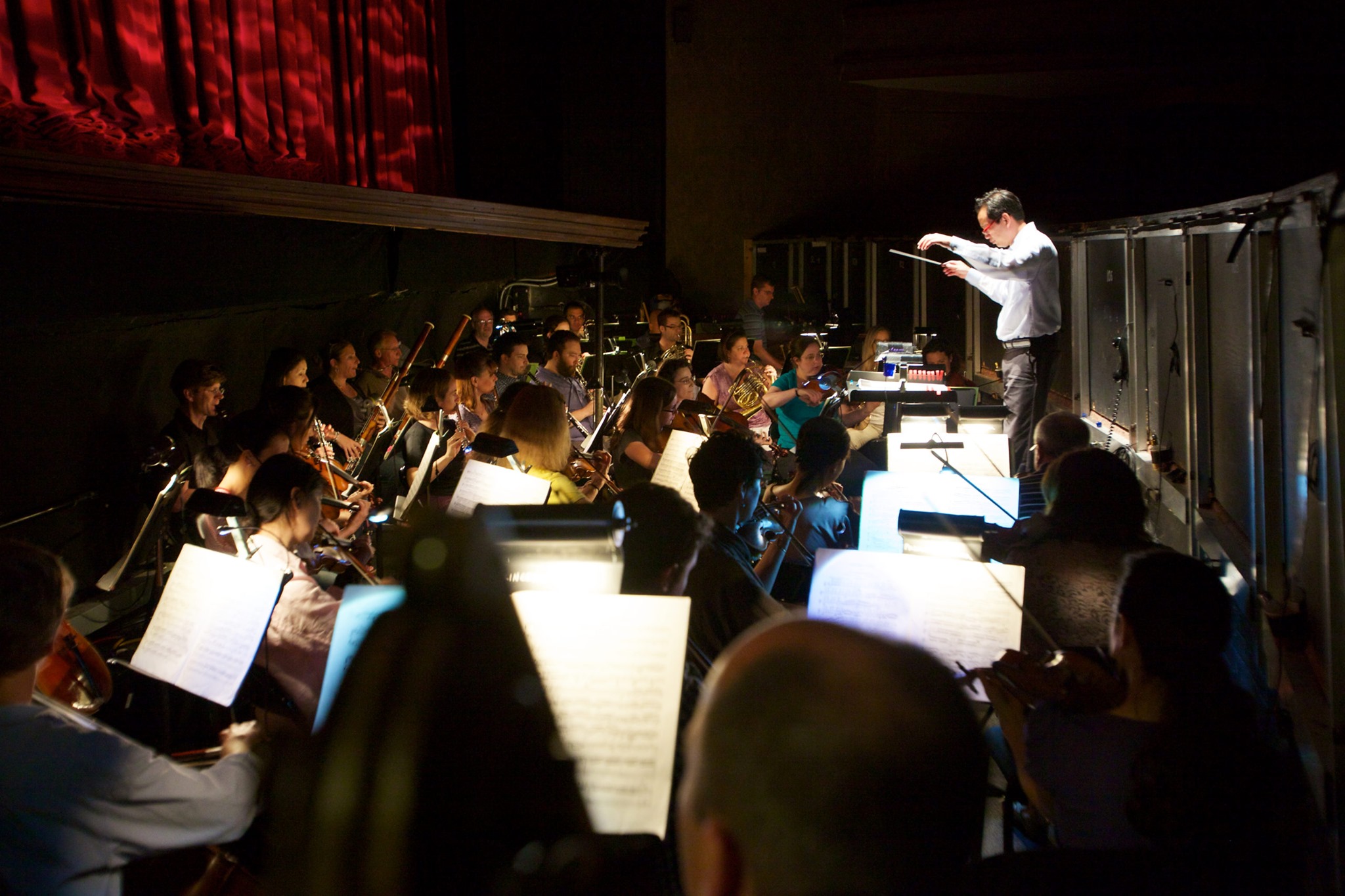
    The Princeton Festival Executive and Artistic Director Richard Tang Yuk will be among the featured guests tonight on “A Tempo,” as host Rachel Katz will take a look at some of the tough decisions and creative solutions being weighed by organizers of this year’s summer music festivals in the face of COVID-19.

    Also commenting will be Opera Steamboat Artistic Director Andres Cladera and Aspen Music Festival and School President and CEO Alan Fletcher.

    “A Tempo” airs tonight at 7 p.m. EDT, on WWFM – The Classical Network and wwfm.org.


    Don’t forget to join Rachel also for “On a Positive Note,” a recently-instituted, daily, six-minute segment that spotlights musicians who are finding ways to share performances and lift spirits during this time of near-global isolation.

    “On a Positive Note” can be heard weekdays at 10 a.m. and 5 p.m. EDT, also on WWFM The Classical Network and wwfm.org.

  • Miklós Rózsa A Golden Age Film Score Genius

    Miklós Rózsa A Golden Age Film Score Genius

    Happy birthday, Miklós Rózsa (1907-1995)!

    Can you spare ten minutes to soak up some Golden Age greatness? Check out this wonderful medley of some of his classic film scores.

    I had a blast picking out the films without looking at the images. I own recordings of all of them, of course. (What? No “Lust for Life???”)

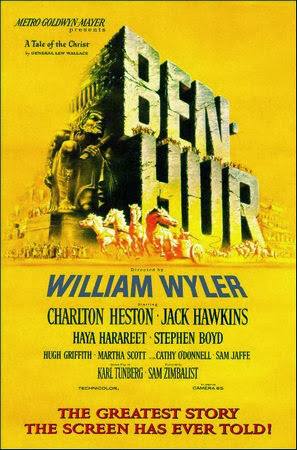
    Rózsa conducts the Pittsburgh Symphony in a suite from “Ben-Hur”:

    Jascha Heifetz plays the Violin Concerto (subsequently adapted for use in “The Private Life of Sherlock Holmes”):

    They don’t make ‘em like Miklós anymore.

  • Warner Bros Classic Hollywood Cartoon

    Warner Bros Classic Hollywood Cartoon

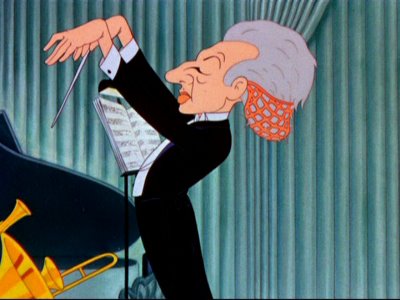
    I always loved when Warner Brothers took a break from Bugs Bunny to do these types of one-offs. This one’s a dream for classic movie buffs – with another lampoon of Leopold Stokowski outside of the famous “LEOPOLD!” episode. He’s introduced by Bing Crosby at around the 3:30 mark.

    http://www.youtube.com/watch?v=xOFG_qmoH8I&t=0m16s

    You might have to pause it in order to get some of the group shots. If you still think you missed some of the references, somebody else with a lot of time on his hands has done a breakdown.

    https://www.listal.com/list/cartoon-verzions-classic-hollywood-stars

    Garbo as the cigarette girl is hilarious.

  • Leopold Stokowski Birthday Carnegie Hall & More

    Leopold Stokowski Birthday Carnegie Hall & More

    LEOPOLD! HAPPY BIRTHDAY!!

    Has anyone seen the film “Carnegie Hall?” Sure, it sports a corny plot about a young American pianist who turns the classical music world on its ear by becoming a jazz artist. Of course, the debut of his “avant garde” concerto (with Harry James as soloist) seems positively quaint from today’s perspective, as I’m sure it would have been even in 1947.

    The main draw is the parade of real-life classical music superstars, including Jascha Heifetz, Gregor Piatigorsky, Arthur Rubinstein, Lily Pons, Rise Stevens, Jan Peerce, Ezio Pinza, Bruno Walter and Fritz Reiner, among others, all of whom get to perform.

    The film was directed by Edgar G. Ulmer, who emerged from the German Expressionist movement (he claimed to have worked on “Metropolis” and “M”) to direct atmospheric Hollywood films like “The Black Cat” and “Detour.”

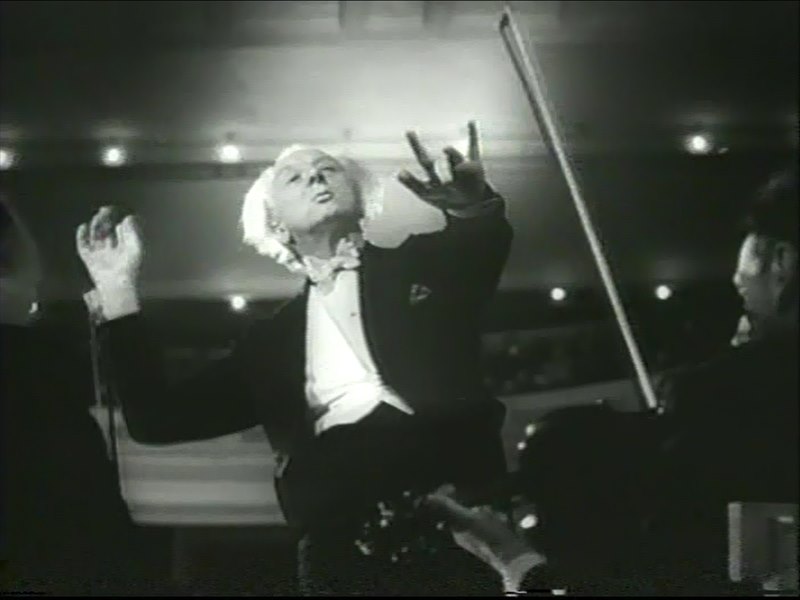
    That experience obviously prepared him for this showcase of Leopold Stokowski, who in the film’s best sequence conducts a movement from Tchaikovsky’s Symphony No. 5. The camera angles are striking, the lighting dramatic, and Stoky’s hair just keeps getting bigger and bigger.

    While we’re at it, here’s Stoky conducting his own transcription of music by Johann Sebastian Bach at the age of 90.

    And since the comments section is bound to be filled with shouts of “LEOPOLD…”

    That’s some hare!

  • Sherlock Holmes Movie Music Scores

    Sherlock Holmes Movie Music Scores

    The game is afoot! This week on “Picture Perfect,” it’s an hour of music from movies inspired by the world’s greatest detective.

    “Sherlock Holmes” (2009) features Robert Downey Jr. and Jude Law, in Michael Ritchie’s post-“Matrix” take on the master detective. While some of the film adaptations over the years may have glossed over the character’s physicality, Ritchie’s revisionist Holmes perhaps errs a mite too far in the other direction. Hans Zimmer wrote the music, he too going against received wisdom, and in the process coming up with one of his more interesting scores, if only for the quirky instrumentation, which includes a Hungarian cimbalom, accordion, fiddles and a broken pub piano.

    Perhaps it’s unfair to put Zimmer up against an old pro like Miklós Rózsa. Rózsa wrote the music for Billy Wilder’s melancholy portrait of the great detective, “The Private Life of Sherlock Holmes” (1970). Wilder requested that the composer adapt his lovely Violin Concerto for the project, a recording of which the director had listened to repeatedly during the writing of the screenplay. Rózsa and Wilder had previously collaborated on “Double Indemnity” and “The Lost Weekend.”

    The Sherlock Holmes comedy, “Without a Clue” (1988), represents a missed opportunity of sorts. The hope had been for Sean Connery to play Watson opposite Michael Caine’s Holmes, a longed-for reunion between the two who had worked so well together in “The Man Who Would Be King.” In the end, it was Ben Kingsley who assumed the role.

    The fun conceit that sets “Without a Clue” apart is that Holmes is the fictional creation of mastermind Watson, who in reality is the gifted crime-solver. Through necessity, Watson hires a second-rate actor to play the role of Holmes. Of course, the actor turns out to be a bumbling idiot. Henry Mancini provides the British Light Music style score, with a nod to Edmund White’s “Puffin’ Billy” (familiar stateside as the theme to “Captain Kangaroo”).

    Finally, the Steven Spielberg-produced “Young Sherlock Holmes” (1985) offers a conjectural origins story, including Holmes and Watson’s first meeting as teenagers (ignoring the particulars laid out by Arthur Conan Doyle in his stories, with Watson already a war veteran who had served in Afghanistan). It’s all for fun, though it’s unfortunate the filmmakers felt the need to interject ‘80s-style special effects, rather than simply trust in the inherent magic of the subject matter. “Young Sherlock Holmes” features the first photorealistic, fully computer-generated character (a stained glass knight). Also, some Indiana Jones B-movie antics involving an Egyptian cult seem especially out of place.

    Interestingly, the film’s screenwriter, Chris Columbus, went on to direct the first two Harry Potter films. By my recollection, “Young Sherlock Holmes,” with its boarding school setting, has some of that same feel.

    The music, by Bruce Broughton, is certainly buoyant and beautiful, in the best John Williams tradition. Broughton scored a handful of big screen hits, notably “Silverado” and “Tombstone,” though arguably it is in the medium of television that he’s made his greatest impact. Thus far, his work has been recognized with a record 10 Grammy Awards.

    It’s elementary, my dear Watson. Join me for “Picture Perfect,” this Friday evening at 6:00 EDT, on WWFM – The Classical Network and wwfm.org.
Tag Cloud

Aaron Copland (93) Beethoven (95) Composer (114) Film Music (137) Film Score (143) Film Scores (255) Halloween (94) John Williams (195) KWAX (229) Leonard Bernstein (103) Marlboro Music Festival (125) Movie Music (152) Mozart (88) Opera (208) Philadelphia Orchestra (89) Picture Perfect (174) Princeton Symphony Orchestra (108) Radio (88) Ross Amico (244) Roy's Tie-Dye Sci-Fi Corner (290) The Classical Network (101) The Lost Chord (268) Vaughan Williams (103) WPRB (396) WWFM (881)

DON’T MISS A BEAT

Receive a weekly digest every Sunday at noon by signing up here


RECENT POSTS