Category: Daily Dispatch

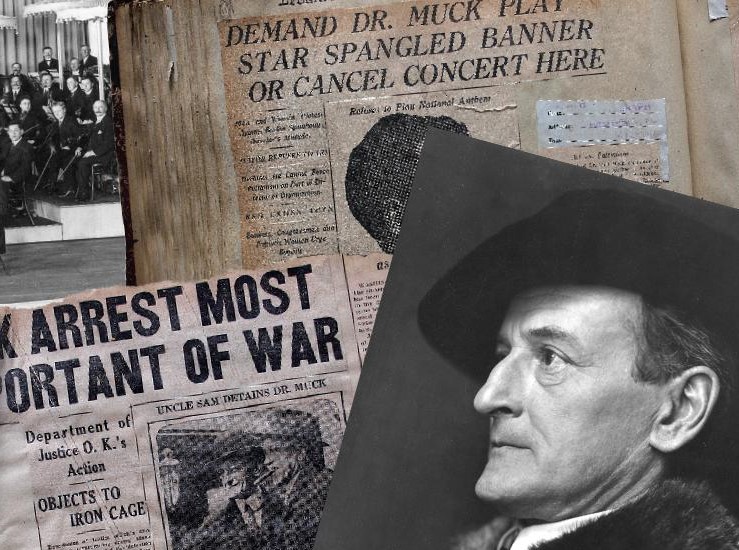
  • Karl Muck Patriotism Gone Wrong in Boston

    Karl Muck Patriotism Gone Wrong in Boston

    Here’s a fascinating article about exacting conductor Karl Muck, which I posted in the comments section as an afterthought to one of my posts yesterday, about Muck’s Bayreuth recording of selections from Wagner’s “Parsifal.”

    Muck served as music director of the Boston Symphony Orchestra during the first two decades of the 20th century. He, more than any other, was responsible for establishing the orchestra as a world-class ensemble.

    By happenstance, Muck was born in Darmstadt, but his family lived in Switzerland since 1867. Muck himself held Swiss citizenship since 1880. Nonetheless, he was hounded by jingoistic factions of Boston society, a press that fomented anti-German sentiment, and overzealous federal agents who weren’t about to let him off the hook (despite the fact that he had earlier been cleared of any wrongdoing by the FBI).

    Muck ended his American years in an internment camp in Georgia, set up for those suspected of being dangerous alien enemies to the United States. Other Boston musicians were fired because of their German or Austrian origins. Muck was one of the lucky ones. In some areas of the country, suspects were actually being lynched in the streets.

    Muck’s house and bank account were seized by the U.S. government. In 1928, nine years after his delayed release and deportation, he received a partial return of his assets.

    The article is a sobering look at a time when legal rights and due process were suspended in order to preserve an illusion of national security. As is all too often the case, the true enemies of the people were those who pushed “The Star-Spangled Banner” at the expense of facts and basic human decency.
    https://www3.bostonglobe.com/magazine/2017/11/02/the-muck-affair/QczxAVe0i2EJZpLPGEKR9H/story.html?arc404=true

  • Mozart’s Sistine Chapel Secret The Miserere Story

    Mozart’s Sistine Chapel Secret The Miserere Story

    You can thank Wolfgang Amadeus Mozart for what we are about to receive.

    It was on this date in 1770 – 250 years ago – that Mozart and his father attended a Holy Week service at the Vatican. There, they encountered for the first time Gregorio Allegri’s haunting “Miserere.”

    Allegri composed his setting of Psalm 51 (50) in the 1630s. The piece was intended for exclusive performance in the Sistine Chapel, as part of the Tenebrae service of Holy Wednesday and Good Friday.

    The work is conceived for two choirs, one intoning a simple chant, and the other, spatially separated, providing ornamentation. The effect of a stratospheric top C makes the “Miserere” one of the most enthralling works in the choral literature of the late Renaissance.

    The Vatican, realizing it had a good thing, forbade performance of the piece or copies of the score to be circulated outside its walls, under threat of excommunication.

    It was the 14 year-old Mozart who in effect liberated the piece, copying it down from memory and handing it off to author and music historian Charles Burney, who published it without delay.

    Mozart was summoned before the Pope, and rather than being excommunicated, he was showered with praise for his feat of musical genius. The ban on the “Miserere” was lifted.


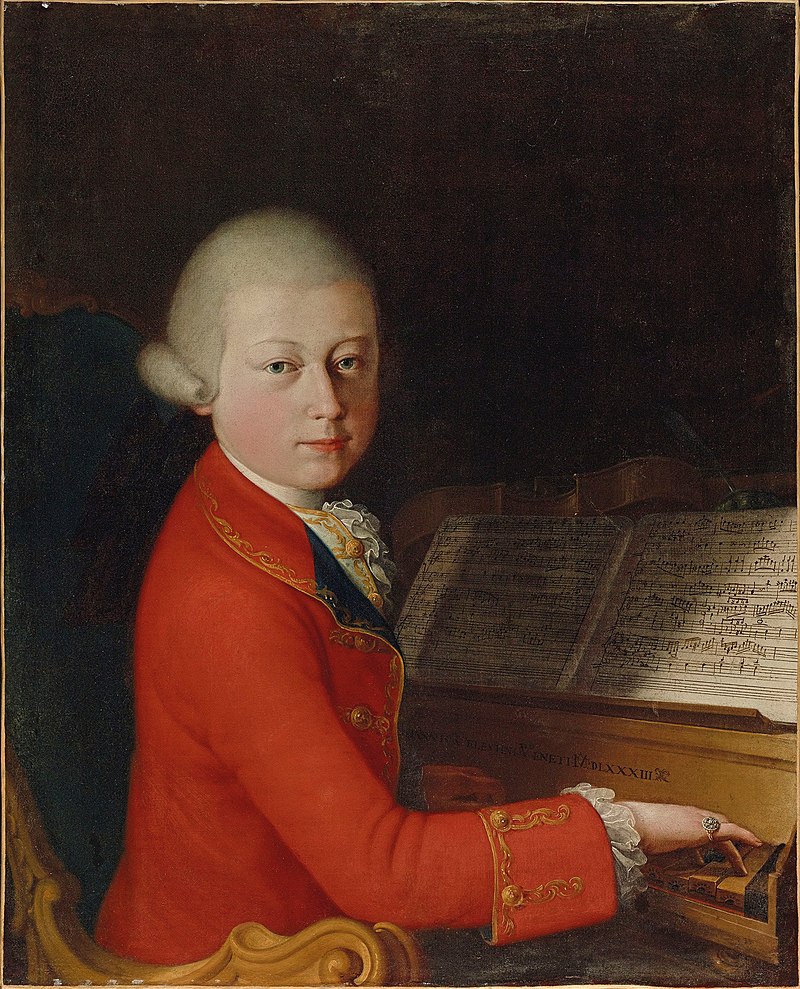
    Portrait of Mozart, attributed to Giambettino Cignaroli, completed just before the composer’s 14th birthday

  • Stokowski Conducts Wagner’s Parsifal

    Stokowski Conducts Wagner’s Parsifal

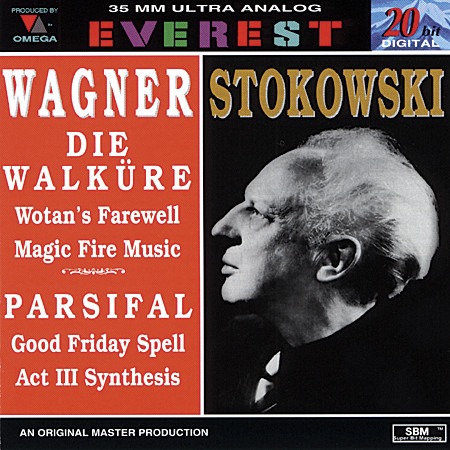
    Leopold Stokowski conducts the “Good Friday Spell” from Wagner’s “Parsifal.”

  • Karl Muck Parsifal Bells

    Karl Muck Parsifal Bells

    Karl Muck was the target of anti-German sentiment during his time as music director of the Boston Symphony Orchestra, which, unfortunately, happened to coincide with the First World War. Be that as it may, he was held in the highest regard by fellow musicians and thought by many to be one of Wagner’s finest interpreters.

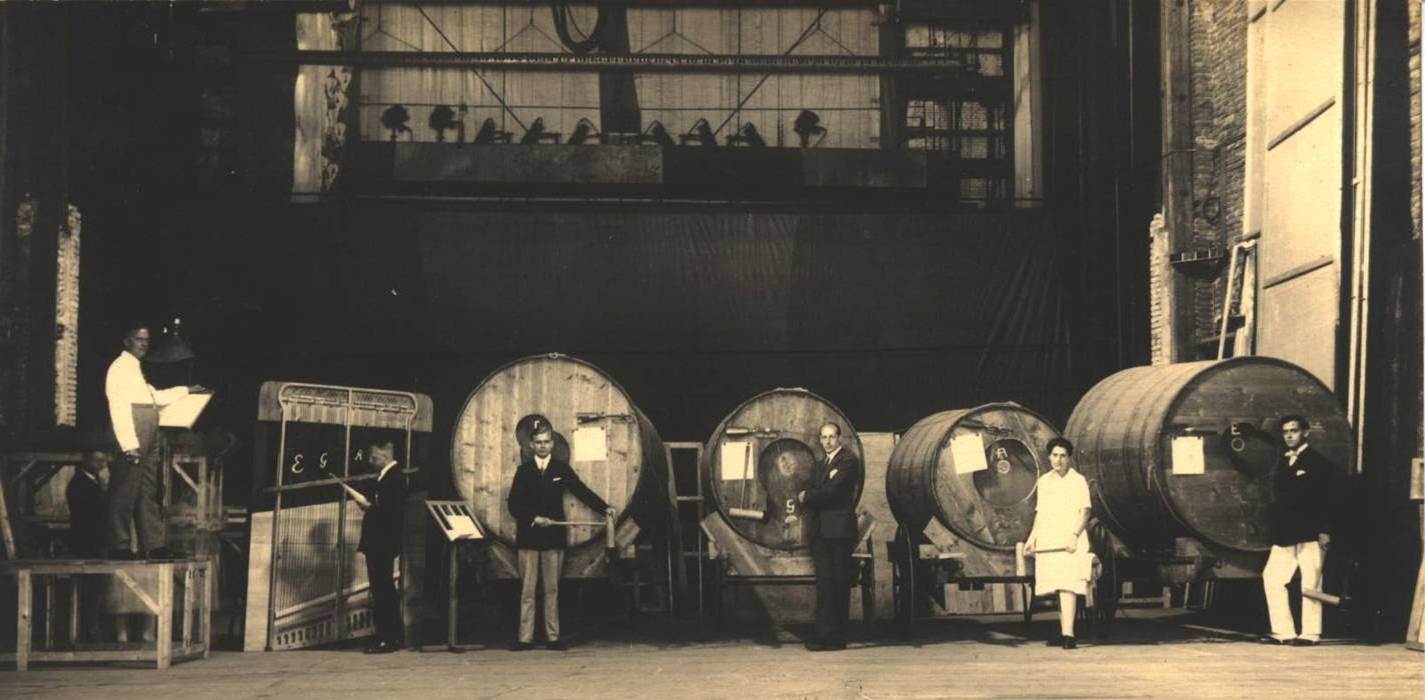
    Here’s a fascinating 1927 recording of the Transformation Music and Grail Scene from Act III of “Parsifal,” made at the Festspielhaus in Bayreuth. The recording employs the original bells designed by Wagner, which would be melted down by the Nazis for ammunition during World War II. So this is a rare opportunity to experience “Parsifal” as Wagner actually knew it. (The bells begin at 5:57.)

    Muck had been associated with the Bayreuth Festival since 1892. He became its principal conductor in 1903. Between 1901 and 1930, he conducted “Parsifal” at Bayreuth 14 times.


    PHOTO: Metal canisters used to produce Bayreuth bell sounds from the 1880s to about 1929.

    https://www.monsalvat.no/parsifal-bells.htm

  • Joan of Arc on Film Music

    Joan of Arc on Film Music

    Seven centuries ago, a humble peasant girl was able to convince Charles de Valois (soon King Charles VII) that she had been chosen by God to lead a French army against English forces during the Hundred Years’ War. With no military training, she achieved a momentous victory at the city of Orléans. She was later captured, tried for heresy, and burned at the stake at the age of 19.

    The story of Joan of Arc has been treated numerous times on film. This week on “Picture Perfect,” we’ll hear music from some of those.

    Carl Theodor Dreyer’s silent classic “The Passion of Joan of Arc” (1928) is justly celebrated as a landmark of world cinema. The film features a legendary performance by Maria Falconetti. Falconetti’s portrayal is unusually nuanced and cumulatively heartbreaking. Richard Einhorn composed “Voices of Light,” an original work, in 1994, to accompany the film. The recording includes contributions by Anonymous 4.

    Earlier, in 1983, conductor and composer Ole Schmidt provided his own score to “The Passion of Joan of Arc.” Interestingly, Schmidt was born the same year the film was released. He also held the distinction of sharing Dreyer’s Danish nationality.

    Luc Besson directed the “The Messenger: The Story of Joan of Arc” (1999), featuring his then wife, Milla Jovovich, as the Maid of Orléans. The starry supporting cast includes John Malkovich, Faye Dunaway, and Dustin Hoffman (donning an Obi-Wan Kenobi robe). The composer was Éric Serra. The score is primarily orchestral, but incorporates synthesized effects.

    Finally, we’ll turn to Otto Preminger’s “Saint Joan” (1957), based on the play by George Bernard Shaw. Graham Greene wrote the screenplay. Newcomer Jean Seberg is Joan, somewhat out of her element alongside veteran actors John Gielgud, Anton Walbrook and Felix Aylmer. Also, would you believe Richard Widmark as Charles VII?

    Unfortunately, “Saint Joan” was immolated by the critics. Mischa Spoliansky composed the lovely score. You can sample some of it here, along with the film’s main title sequence, designed by the legendary Saul Bass:

    I hope you’ll join me for music for movies about Joan of Arc this week, on “Picture Perfect.” Feel the burn, this Friday evening at 6:00 EDT, on WWFM – The Classical Network and wwfm.org.

Tag Cloud

Aaron Copland (93) Beethoven (95) Composer (114) Film Music (137) Film Score (143) Film Scores (255) Halloween (94) John Williams (195) KWAX (229) Leonard Bernstein (103) Marlboro Music Festival (125) Movie Music (152) Mozart (88) Opera (208) Philadelphia Orchestra (89) Picture Perfect (174) Princeton Symphony Orchestra (108) Radio (88) Ross Amico (244) Roy's Tie-Dye Sci-Fi Corner (290) The Classical Network (101) The Lost Chord (268) Vaughan Williams (103) WPRB (396) WWFM (881)

DON’T MISS A BEAT

Receive a weekly digest every Sunday at noon by signing up here


RECENT POSTS