Happy birthday, Władziu Valentino Liberace.
Liberace and Virgil Fox(!) play “Tea for Two” on “The Mike Douglas Show.” One only wonders what was going through the head of Ben Gazzara, waiting in the wings.

Happy birthday, Władziu Valentino Liberace.
Liberace and Virgil Fox(!) play “Tea for Two” on “The Mike Douglas Show.” One only wonders what was going through the head of Ben Gazzara, waiting in the wings.

In contrition for all the hours we mindlessly stream music from our ephemeral digital devices, let us spare a thought for Emile Berliner. On this date in 1888, at the Franklin Institute in Philadelphia, Berliner gave the first public demonstration of his new invention, the flat gramophone disk.
Berliner founded the United States Gramophone Company in 1894, the Gramophone Company in London, in 1897, Deutsche Grammophon in Hanover, in 1898, Berliner Gram-o-phone Company of Canada in Montreal in 1899 (chartered in 1904), and, with Eldridge Johnson, Victor Talking Machine Company in 1901.
He was also instrumental in the development of the microphone and its application to telephone technology. Predictably, there was a great legal battle with Thomas Edison over the legitimacy of his patent. (The United States Court of Appeal sided with Edison.) Berliner was awarded his first patent for the gramophone in 1887.
In 1929, Berliner was awarded the Franklin Medal for his life work in successful invention. Earlier, he was honored by the Franklin Institute with a Scott Medal for the development of the gramophone. I mention these mostly because of the local connection. Clearly his influence and honors extend well beyond Philadelphia!
https://www.fi.edu/case-files/emile-berliner
Berliner’s birthday anniversary is on Wednesday. You can learn a little more about him here:
https://en.wikipedia.org/wiki/Emile_Berliner
Brush up on your French with this demonstration of Berliner gramophones:
Berliner gramophone playing “By the Sycamore Tree.”
Tribute to Berliner:
A brief history of the gramophone:
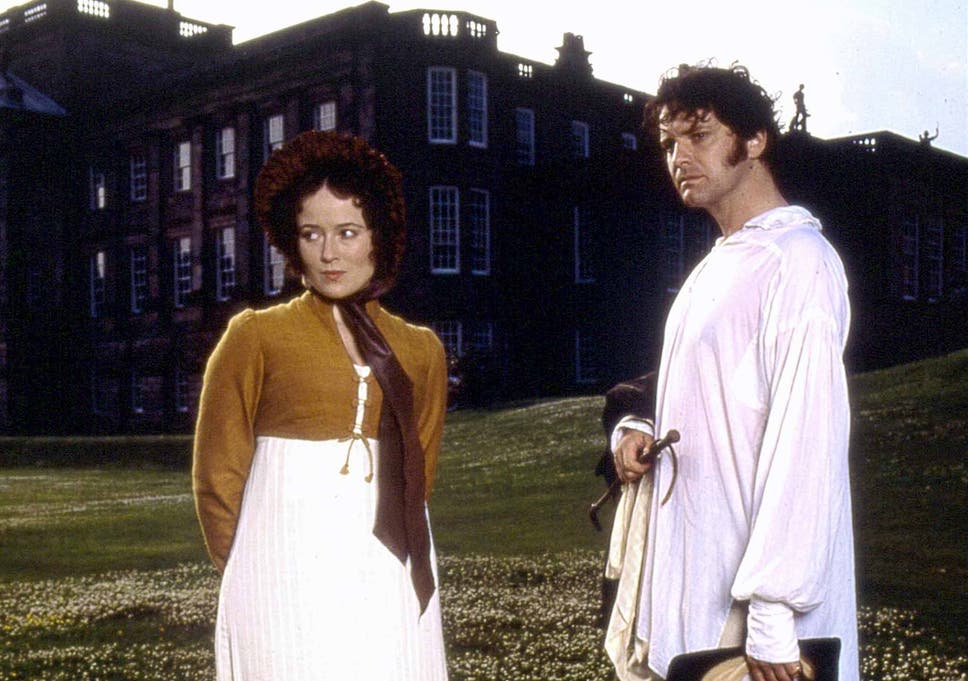
Mr. Darcy beats the heat. It’s an all-Jane Austen “Picture Perfect,” this Friday at 6:00 EDT, on WWFM – The Classical Network and wwfm.org.
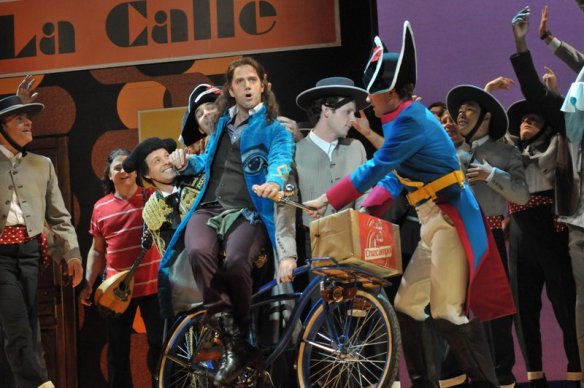
Opera Philadelphia will continue its “Digital Festival O” series with a free stream of its Shoko Kambara-designed, Pedro Almodóvar-style production of Rossini’s “The Barber of Seville.” I reserve judgment, but the production does look divertingly wacky, with an Elvis-impersonating Don Basilio and abundant chicken imagery(!). The opera will drop tonight at 8 p.m. EDT, and will be available on-demand through June 29. A “Show Before the Show” segment will stream at 7:00.
Here’s the trailer from 2014: https://www.youtube.com/watch?v=wowTcPBp-ZQ
If you’re in the mood for something a little closer to home, and certainly more serious, Daniel Bernard Roumain’s “We Shall Not Be Moved” is available for streaming through August 31. On the run after a series of tragic events, five North Philadelphia teens seek refuge in a condemned West Philly house that once served as headquarters for the black liberation group MOVE. 35 years-ago this week, a standoff with Philadelphia police ended with a neighborhood in flames and 11 people dead. The Opera Philadelphia premiere combines spoken word, contemporary movement, video projection, and a surprisingly versatile score.
Here’s a clip from “We Shall Not Be Moved”: https://www.youtube.com/watch?v=5IRHA6cxsD4
You’ll find more information on Opera Philadelphia’s “Digital Festival O,” including a complete line-up, at the organization’s website, operaphila.org.
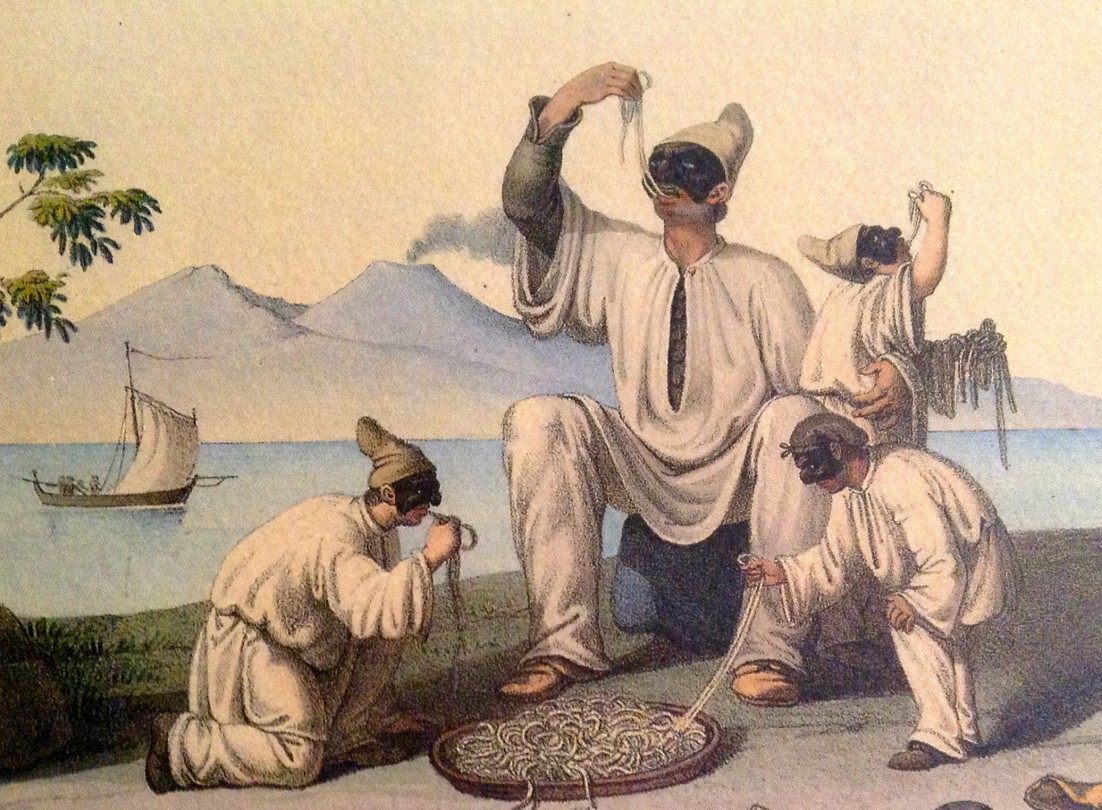
Stravinsky’s commedia dell’arte scamp is 100 years-old.
“Pulcinella” was given its first performance on this date in 1920. The ballet was commissioned by Sergei Diaghilev and given its premiere, at the Paris Opera, by the Ballets Russes. Leonide Massine provided both the libretto and the choreography. The sets were designed by Pablo Picasso.
For years, it was thought that the raw material for Stravinsky’s score, based on manuscripts of the 18th century, derived from the quill of Giovanni Pergolesi. However, over time, scholarship has revealed that many of the original pieces were actually the work of Pergolesi contemporaries, composers such as Domenico Gallo and Unico Wilhelm von Wassenaer.
The idea of arranging Pergolesi’s music was the idea of conductor Ernest Ansermet, who conducted the ballet’s premiere. Stravinsky was resistant at first, but closer acquaintance with the original scores unlocked their possibilities. Stravinsky’s arrangements honored the spirit of the past, but also imbued it with a modern sensibility, employing a distinctly 20th century syntax. It is one of the composer’s most playful, exuberant scores.
“‘Pulcinella’ was… the epiphany through which the whole of my late work became possible,” he later wrote. “It was a backward look, of course—the first of many love affairs in that direction—but it was a look in the mirror, too.”
It would be the first of Stravinsky’s innumerable interactions with historical music and forms and the birth of a style that would soon be identified as “neoclassical.”
The popular suite, shorn of the complete ballet vocal music, was giving its first performance in Boston, two years later, with Pierre Monteux conducting.
“Pergolesi” themes also inform the spin-off chamber works “Suite d’après des thèmes, fragments et morceaux de Giambattista Pergolesi,” for violin and piano (1925), and the “Suite Italienne,” for cello or violin and piano (1932-33). Any way you slice it, the music is a delight.
“Pulcinella” (complete):
http://www.youtube.com/watch?v=lD6dRSKLjlU&t=0m7s
The suite, part of a complete concert performed (without conductor) by the Orpheus Chamber Orchestra:
http://www.youtube.com/watch?v=H5ZpCA4pRtM&t=8m24s
Cellist Heinrich Schiff and the “Suite Italienne”:
Aaron Copland (94) Beethoven (95) Composer (114) Film Music (152) Film Score (143) Film Scores (255) Halloween (107) John Williams (198) KWAX (233) Leonard Bernstein (105) Marlboro Music Festival (125) Movie Music (167) Mozart (91) Opera (221) Philadelphia Orchestra (91) Picture Perfect (174) Princeton Symphony Orchestra (110) Radio (90) Ross Amico (244) Roy's Tie-Dye Sci-Fi Corner (290) The Classical Network (101) The Lost Chord (269) Vaughan Williams (107) WPRB (397) WWFM (881)