Category: Daily Dispatch

  • Mirella Freni Soprano Dies at 84

    Mirella Freni Soprano Dies at 84

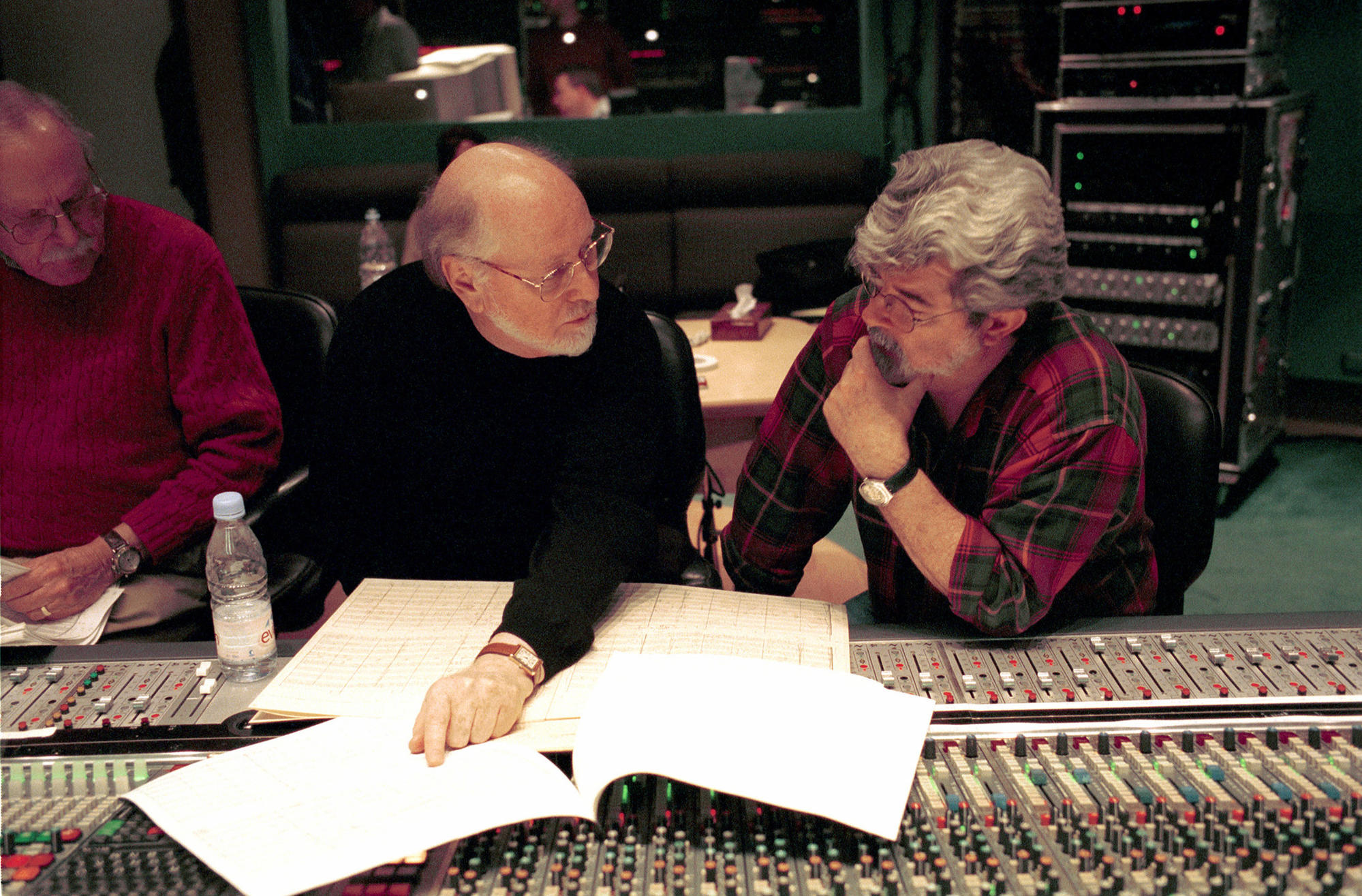
    Golden Era soprano Mirella Freni has died. A childhood friend of Luciano Pavarotti, the two actually shared the same wet nurse, as both their mothers worked in a cigarette factory. The children even sometimes wore identical clothing. Later, of course, they would be teamed in the opera house and on recordings.

    Freni won acclaim early with her radiant singing as Mimi, Micaëla, Nanetta, and Susanna. By the early ‘70s, she began tackling some of the heavier roles, such as Desdemona and Aida. Even so, she was realistic about how much stress her voice could handle, and she selected her roles carefully.

    In the early ‘80s, she married Bulgarian bass Nicolai Ghiaurov, her second husband. He encouraged her to expand her repertoire to include Russian roles. She went on to become a notable Tatyana in Tchaikovsky’s “Eugene Onegin.”

    Freni was 84 years-old. In an afternoon in which I’ll also remember Leontyne Price and Cesare Siepi on their birthdays (to say nothing of film composer Jerry Goldsmith, on his), I’ll celebrate Freni’s artistry, from 4 to 7 p.m. EST, on WWFM – The Classical Network and wwfm.org.

  • Oscar Music Special Webcast

    Oscar Music Special Webcast

    Can’t get enough of Oscar? A reminder that Friday’s “Picture Perfect” Oscar Party has been posted early as a special webcast for Academy Awards weekend. Enjoy three hours of classic film scores and all five of this year’s nominees for Best Original Score. There’s also an “in memoriam” for Kirk Douglas (more to come on February 21) and even a John Williams medley. It’s the very thing to while away a Sunday afternoon, as you await the big ceremony. Listen online at WWFM – The Classical Network. Follow the link and click on one of the three “Listen” buttons to begin the show!

    https://www.wwfm.org/post/picture-perfect-february-7-oscar-party-2020

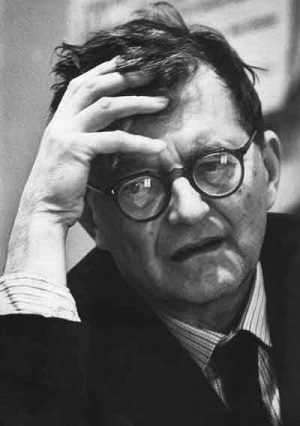
  • Shostakovich Plays Shostakovich

    Shostakovich Plays Shostakovich

    Last week, in promoting “The Lost Chord,” I wound up executing a shameless bait-and-switch, tying Shostakovich to the Super Bowl by emphasizing his rabid enthusiasm for football (albeit of the international variety).

    This week, I contemplate a sequel. To coincide with the Academy Awards, I could just as easily spin the composer’s ties to the cinema, first as a house pianist who eked out a living with his improvisations, then later as a composer of over two dozen original film scores.

    Admittedly, both of these angles, football and the movies, would make for interesting shows in themselves. Unfortunately, neither topic has anything to do with tonight’s program.

    Rather the focus, once again, will be on a 5-CD boxed set, “Shostakovich Plays Shostakovich,” issued on the Melodiya label, made up of Russian state recordings set down largely between 1946 and 1958, with the composer at the keyboard.

    As I mentioned the last time, Shostakovich was a fabulous pianist, who began serious studies at the age of 9. He continued, formally, at the Petrograd Conservatory, upon his acceptance there, at the age of 13. Once he began to receive international attention for his original compositions, for works such as his Symphony No. 1, written when he was only 19, his principal focus began to shift. He did, however, continue to perform and record his own music.

    The documents in this box are riveting, not only for the musicianship they enshrine, but also because of their biographical fascination and their sense of history.

    By way of example, we’ll hear a harrowing account of the Piano Trio No. 2 in E minor. Given its premiere only months after the liberation of Leningrad, the trio predates Shostakovich’s String Quartet No. 8. Both share in common a kind of inexorable, klezmer-inflected danse macabre.

    Shostakovich always felt a special kinship with the Jewish people. Furthermore, the trio is dedicated to his friend, Ivan Sollertinsky, artistic director of the Leningrad Philharmonic, who was an enthusiast of the music of Gustav Mahler. Sollertinsky died of a heart attack in Siberia, following his evacuation during the Siege of Leningrad.

    In 1947, Shostakovich sat down in front of the microphones to record the work, with violinist David Oistrakh and cellist Miloš Sádlo.

    On a lighter note, “Children’s Notebook” is a collection of trifles (March, Waltz, Sad Tale, Merry Tale, The Bear, The Clockwork Doll, and Birthday). However, they certainly take on added interest when introduced by the composer, as they will be tonight.

    The hour will open with the Concertino for Two Pianos – performed by Shostakovich and his son, Maxim – and conclude with the Piano Concerto No. 2, written for Maxim’s 19th birthday. Maxim introduced the concerto at his graduation from the Moscow Conservatory. Here, Shostakovich himself performs at the conservatory’s Grand Hall, at fever pitch, with the Moscow Radio Symphony conducted by Alexander Gauk.

    In America, artists play with authority. In Soviet Russia, authorities play with you! Shostakovich gets all keyed up, on “Black and White and Red Redux,” this Sunday night at 10:00 EST, on WWFM – The Classical Network and wwfm.org.
  • Happy 88th Birthday John Williams

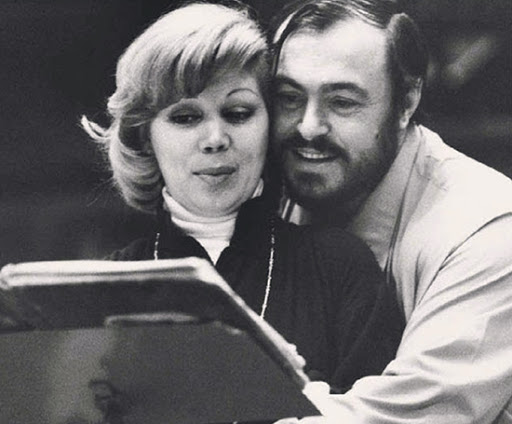
    Happy 88th Birthday John Williams

    John Williams is 88 today. Happy Birthday, Maestro, and thanks for everything. You, more than anyone else, introduced me to a wider world of music.

  • Why I Still Watch the Oscars Nostalgia & Movies

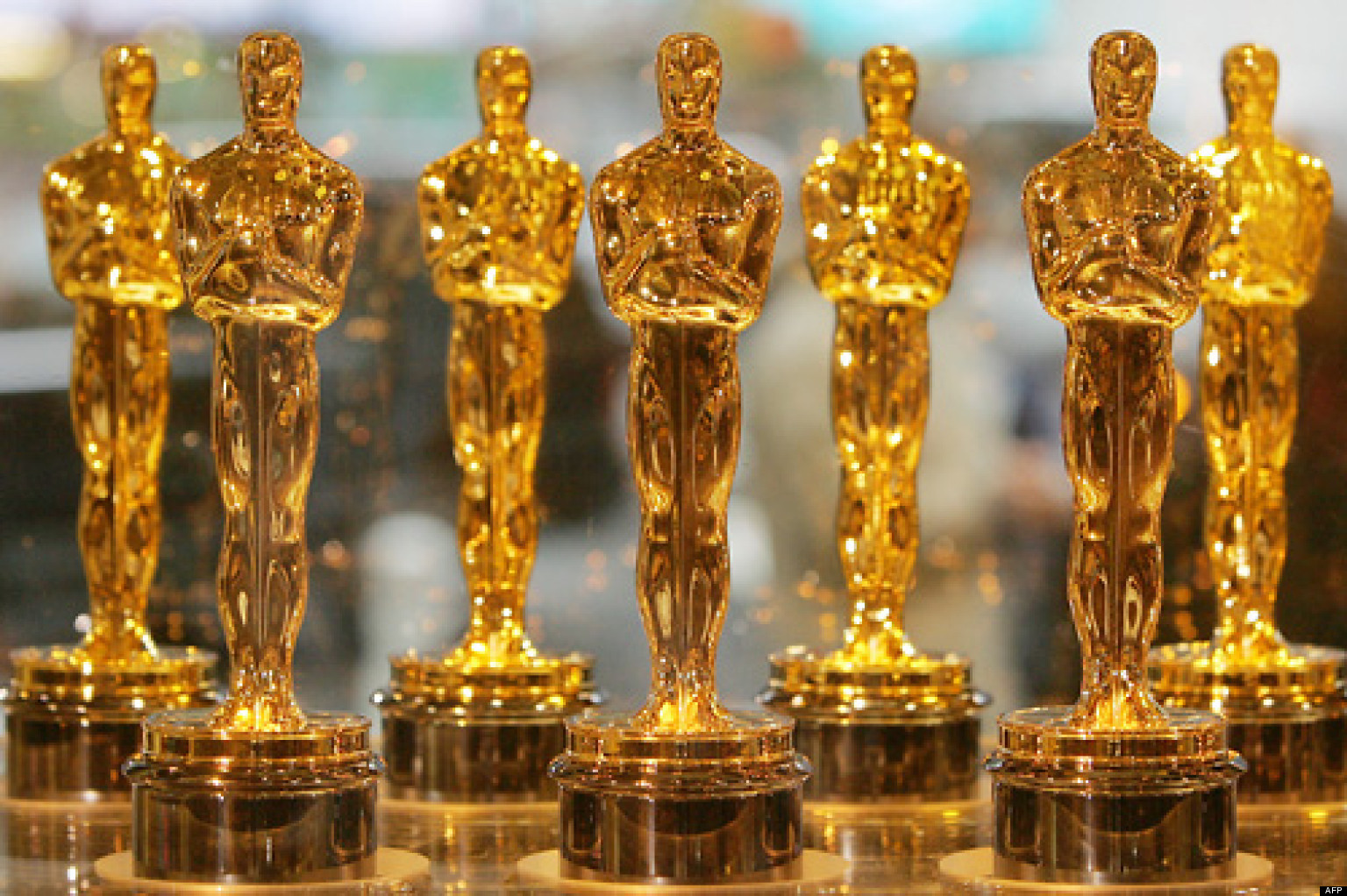
    I don’t know why I keep watching the Academy Awards. The truth is, just about everyone I really like in the entertainment industry is either retired or dead. But every once in a while, a film will come along, like “The Artist” or “The Shape of Water,” that will seize onto my retro sensibility. Or Morricone will finally get an Oscar.

    At any rate, watching the Academy Awards has been a life-long tradition that goes back to my childhood, when the family would gather in the living room and feast like guests of Petronius as screen legend after screen legend would take the podium. And the film score nominees were like something out of a second Golden Age.

    Sure, there was ample tedium, embarrassing production numbers that bloated the ceremony to eyelid-drooping proportions. You could watch “The Irishman” in the amount of time it would take to get to Best Picture. But it was worth it for the classic film montages and the “In Memoriam” segment.

    And yes, there could be a few squirmy episodes of collective self-congratulation and maybe an eye-rolling political digression or two. But it’s the Oscars. When you flip on the tube, you’re giving Hollywood its night.

    It’s like going to the circus. Does anyone even like the circus? And yet once you’re there, the impressions are overwhelming. It’s nostalgic. You may want to rant the whole time, but you can’t look away.

    So I’ll be there on Sunday night, as I have been for decades, anesthetizing myself with a platter of viands, hoping to see Joe Pesci pick up another Oscar and hating “Joker” (which I still haven’t seen), all the while reflecting on the superstars and better movies of my youth.

    Everything about the Academy Awards is like going to the movies anyway. They’re a construct. They’re fantasy. And every once in a while, just maybe, if I’m lucky, there’s still something worth seeing.

Tag Cloud

Aaron Copland (93) Beethoven (95) Composer (114) Film Music (137) Film Score (143) Film Scores (255) Halloween (94) John Williams (195) KWAX (229) Leonard Bernstein (103) Marlboro Music Festival (125) Movie Music (152) Mozart (88) Opera (208) Philadelphia Orchestra (89) Picture Perfect (174) Princeton Symphony Orchestra (108) Radio (88) Ross Amico (244) Roy's Tie-Dye Sci-Fi Corner (290) The Classical Network (101) The Lost Chord (268) Vaughan Williams (103) WPRB (396) WWFM (881)

DON’T MISS A BEAT

Receive a weekly digest every Sunday at noon by signing up here


RECENT POSTS