Category: Daily Dispatch

  • Shostakovich McQueen Webcasts Are Here

    Shostakovich McQueen Webcasts Are Here

    My weekend shows, “Bustin’ Out of the Joint” (on “Picture Perfect”) and “Black and White and Red All Over” (on “The Lost Chord”), are now posted as webcasts. Not bad! Only four hours late this time.

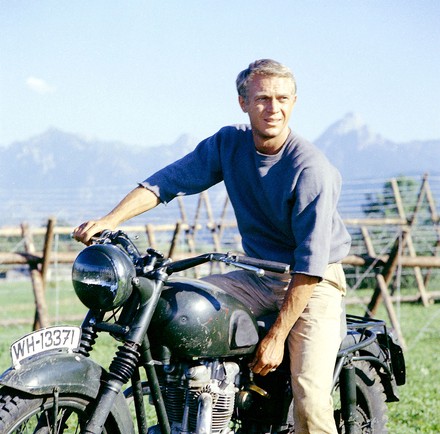
    At any rate, if you missed the Shostakovich show because of the Super Bowl, or can’t get enough of Steve McQueen jumping over barbed wire on a motorcycle, you’ve just been handed a gift. Or a file baked in a cake. Select the show you want, and click on the “Listen” button.

    Picture Perfect:

    https://www.wwfm.org/programs/picture-perfect-ross-amico

    The Lost Chord:

    https://www.wwfm.org/programs/lost-chord-ross-amico

  • Mendelssohn, Isbin & More on The Classical Network

    Mendelssohn, Isbin & More on The Classical Network

    Sure, we’ll have plenty of Mendelssohn today on The Classical Network, on his birthday. We’ll also pay tribute to Palestrina and hear a wacky concerto by Johann Georg Abrechtsberger, who was a teacher of Beethoven. Where Albrechtsberger got the idea he should be writing concertos for Jew’s harp – you know, Snoopy’s favorite instrument – is anybody’s guess. Those concertos also include a solo part for the mandora, a kind of lute popular in the late 18th and early 19th centuries.

    While we’re on the subject of unbowed strings, at the heart of today’s program will be an interview with Sharon Isbin. Isbin, of course, is one of the great guitarists of our time. She’ll be talking about her new album, of music by Boccherini, Castelnuovo-Tedesco, Turina, and Vivaldi, on the Cedille Records label, “Souvenirs of Spain and Italy,” made with the Pacifica Quartet.

    Isbin will perform on a gala benefit concert for JCC Thurnauer School of Music, at Bergen County Academies Auditorium, in Hackensack, NJ, this Sunday at 4 p.m. Our conversation will take place this afternoon around 5:00.

    Whether you’ve the munchies for Mendelssohn, a palate for Palestrina, or a craving for Castelnuovo-Tedesco, you’ll want to bring your appetite, from 4 to 7 p.m. EST, to WWFM – The Classical Network and wwfm.org.

  • Rethinking Mendelssohn’s Influence on Music History

    Rethinking Mendelssohn’s Influence on Music History

    I am starting to get just a little bit tired of hearing that if Felix Mendelssohn had never lived, music history would not have turned out any differently. He’s second-rate, he’s sentimental, he’s an academician, blah blah blah. When are these pompous idiots going to open their ears and acknowledge the fact that he was only one of the most influential composers of the 19th century? Especially in Germany, England and America, did any serious musician escape his sway?

    Mendelssohn was essentially adopted as England’s national composer. Figures from William Sterndale Bennett through Sir Arthur Sullivan gleefully played in his shadow. In fact, Mendelssohn was the hottest composer in England since Handel. Such a stranglehold did Handel and Mendelssohn have on English concertgoers’ affections that, in Germany, England was mocked as “Das Land ohne Musik” – The Land without Music. The best English composers were all German.

    But if the Germans were to be at all honest with themselves, they would have realized that all the best German composers were also followers of Mendelssohn. What about Wagner, you say, surely one of the most progressive composers who ever lived? There’s plenty of Mendelssohn in early Wagner. Ditto for Richard Strauss. As for the “second rank,” the more conservative school, just about everyone emulated Mendelssohn.

    Of himself, of course, Mendelssohn was one of the most astonishing of musical prodigies. He composed two of the most enduring masterpieces in the repertoire, the overture to a “Midsummer Night’s Dream” and the Octet for Strings, at 16 and 17 respectively. In terms of maturity and polish, these were certainly on a par with anything written by the teenaged Mozart.

    Yes, Mendelssohn was a traditionalist. He structured his music on foundations laid in the past. Even so, he cautiously ventured into the mists of Romanticism. Occasionally, he even subverted expectations, in works like his famous Violin Concerto. Furthermore, he was respectful, if not kind, to everyone, even those of whose music he disapproved.

    As a conductor, there’s no question he was one of the most influential musicians in Europe, if not the world. For twelve years, he led the Leipzig Gewandhaus Orchestra, an ensemble full of players who went on to distinction in their own right. He was admired for the precision of his performances. He was also the one who essentially drew up the blueprint for modern orchestras in developing a musical “canon.” He gave important premieres of music by his contemporaries, while also reviving works of Bach, Mozart, and Beethoven.

    In particular, he is credited with resuscitating the reputation of Johann Sebastian Bach, not only through his resurrection of the “St. Matthew Passion,” but in overseeing an edition of Bach’s organ works, along with an edition of Handel’s oratorios, both of which were published in England.

    So music history would have been quite different if not for Mendelssohn, thank you very much. He may not have been the most seismic of innovators, but there’s something to be said for being a master of one’s craft.

    Mendelssohn died in Leipzig, after a series of strokes, at the age of 38. Did he live up to his potential? Who among us is really qualified to judge? How much is one man expected to accomplish, anyway?

    No radio station in the world is going to devote a full day to Mendelssohn’s music. Since the death of Victoria, I don’t think Mendelssohn has ever really been fashionable, except perhaps at weddings. But who doesn’t love the overture to “A Midsummer Night’s Dream,” the Octet for Strings, the “Hebrides Overture,” the “Italian” Symphony, or the Violin Concerto in E minor?

    Morton Feldman once said, “The people you think are radicals might really be conservative. The people who you think are conservative might really be radical.”

    I don’t know that I would ever go so far as to label Mendelssohn a radical, but he most certainly did change the world, and those of us who love music would have been a lot poorer without him.

    Happy birthday, Felix Mendelssohn! Felix the burn, from 4 to 7 p.m. EST on WWFM – The Classical Network and wwfm.org.


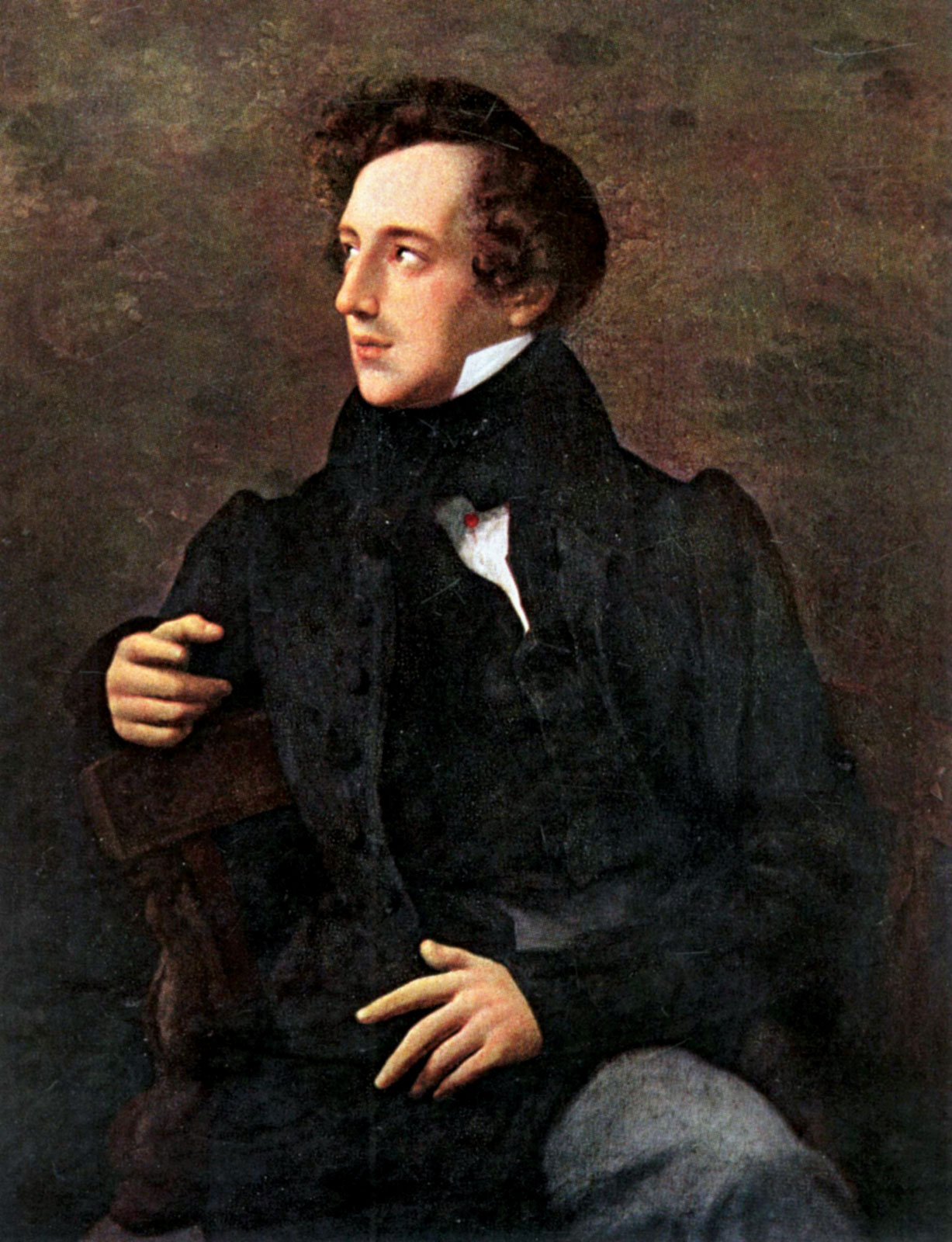
    PHOTO: Another view of Mendelssohn
  • Shostakovich: Football, Stalin & Piano

    Shostakovich: Football, Stalin & Piano

    Of the great composers, none enjoyed football more than Dmitri Shostakovich. Russian football, that is. On one occasion he even invited the entire Leningrad Dynamo over to his apartment for dinner.

    This Sunday night on “The Lost Chord,” following the Super Bowl, tune in for selections from a 5-CD boxed set, on the Melodiya label, of Russian state recordings of Shostakovich performing his own music.

    Admittedly, emphasizing Shostakovich’s rabid enthusiasm for football is something of a bait-and-switch. The show just happens to air on Super Sunday and has nothing at all to do with the sport. However, Shostakovich really did love football (i.e. soccer) and all kinds of sports and games of chance. You can read more about it by following this link.

    https://www.themoscowtimes.com/2019/08/18/dmitri-shostakovich-football-fanatic-a66908

    Concerning the show itself, Shostakovich was a fabulous pianist, who, early on, eked out a living with his improvisations at a local cinema. He began serious studies at the age of 9, and continued, formally, at the Petrograd Conservatory, upon his acceptance there, at the age of 13. Once he began to receive international attention for his original compositions, for works such as his Symphony No. 1, written when he was only 19, his principal focus began to shift. He did, however, continue to perform and record his own music.

    The documents in this Melodiya set, “Shostakovich Plays Shostakovich,” are riveting, not only for the musicianship they enshrine, but also on account of their biographical fascination and their sense of history.

    Perhaps no Shostakovich recording is imbued with a greater sense of time and place than a 1954 performance of his Symphony No. 10. An arrangement, for piano four-hands, was played by the composer at his apartment with his close friend and neighbor Mieczyslaw Weinberg.

    Weinberg found himself in a very precarious situation only the year before. He was arrested on a charge of “Jewish bourgeois nationalism,” in connection with the so-called Doctor’s Plot, at the command of Stalin himself, on the pretense that Jewish doctors were planning to assassinate Soviet officials. Weinberg’s father-in-law had been implicated, and killed. Shostakovich attempted to intercede on his friend’s behalf, but it was only with the sudden and fortuitous death of Stalin in 1953 that Weinberg was officially rehabilitated, and released.

    In a piece of living history, these two artists sit down to perform on Shostakovich’s home piano. This is music that was claimed, in Solomon Volkov’s “Testimony,” Shostakovich’s alleged memoir, to be about Stalin and the Stalin years.

    The pianos used in some of these recordings may be a little rough around the edges, but they only lend to the neurotic intensity of the music-making. It’s also a kind of window into what it must have been like to have been a musician in Soviet Russia, between 1946 and 1958, commandeering whatever means of expression you could lay your hands on.

    I hope you’ll join me for “Black and White and Red All Over.” Shostakovich tickles the keys, this Sunday night at 10:00 EST, on WWFM – The Classical Network and wwfm.org.


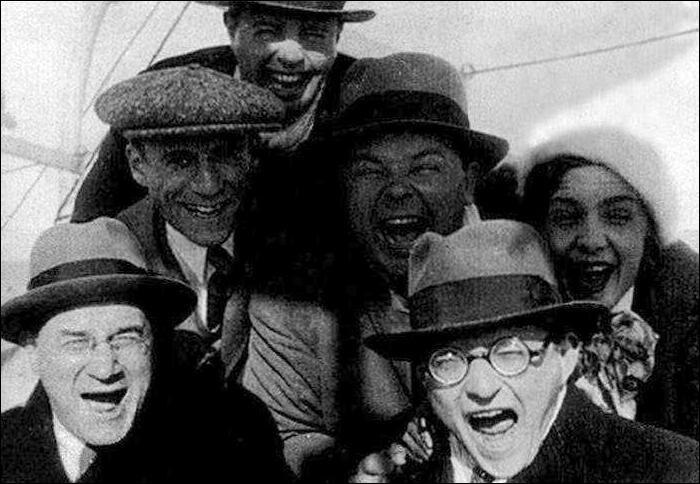
    PHOTO: Shostakovich (lower right), with fellow Soviet football fans

  • Remembering Peter Serkin Rebel Pianist

    Remembering Peter Serkin Rebel Pianist

    I am stunned to learn of the death of Peter Serkin. As the confluence of two dizzyingly talented musical tributaries (his father was Rudolf Serkin, and his mother was the daughter of Adolf Busch), it couldn’t have been easy to make his own way.

    Yet he proved himself early, both as a graduate of the Curtis Institute of Music and as a brilliant participant in the Marlboro Music Festival. I recently broadcast a jaw-dropping recording he made at age of 16 of Busoni’s “Fantasia contrappuntistica.” By then, he had already been performing in public for four years. At 19, he was recognized with a special Grammy Award.

    But it was the ‘60s, so Serkin decided he didn’t want to play anymore. He dropped out, traveled to India, and moved to Mexico. He always did follow his own path. It was when he overheard music of Bach being played on a neighbor’s radio, one Sunday morning, that he finally came to grips with who he was.

    When he returned to the concert stage, not only could he play Bach and Beethoven with the best of them, he also pushed deep into contemporary territory. He was a champion of the works of Stefan Wolpe, and Toru Takemitsu, Charles Wuorinen, and Peter Lieberson all wrote pieces for him. He also became one of the founders of the new music ensemble Tashi.

    Over a career that spanned six decades, Serkin didn’t just emerge from the shadows of his father and grandfather, he established himself as a formidable artist in his own right, one with a distinctive and inimitable profile.

    R.I.P. Peter Serkin. To me, you’ll always be the Easy Rider of classical pianists.

    https://www.nytimes.com/2020/02/01/arts/music/peter-serkin-dead.html


    Serkins fils and père play Schubert:
    https://www.youtube.com/watch?v=wlD9haP7g0g

    Serkin, 16, and Richard Goode, 20, play Busoni:

    Serkin plays Leon Kirchner:

    Tashi, from Messiaen’s “Quartet for the End of Time”:

    Serkin plays the “Goldberg Variations”:

Tag Cloud

Aaron Copland (93) Beethoven (95) Composer (114) Film Music (137) Film Score (143) Film Scores (255) Halloween (94) John Williams (195) KWAX (229) Leonard Bernstein (103) Marlboro Music Festival (125) Movie Music (152) Mozart (88) Opera (208) Philadelphia Orchestra (89) Picture Perfect (174) Princeton Symphony Orchestra (108) Radio (88) Ross Amico (244) Roy's Tie-Dye Sci-Fi Corner (290) The Classical Network (101) The Lost Chord (268) Vaughan Williams (103) WPRB (396) WWFM (881)

DON’T MISS A BEAT

Receive a weekly digest every Sunday at noon by signing up here


RECENT POSTS