Category: Daily Dispatch

  • Poulenc vs. Fauré: A Musical Feud

    Poulenc vs. Fauré: A Musical Feud

    Francis Poulenc once described Gabriel Fauré’s music as physically unbearable. Florent Schmitt, who studied with Fauré, hated Poulenc’s Sextet for Piano and Winds. At its premiere, he described it as wandering and vulgar.

    Turnabout is fair play, on this week’s “Music from Marlboro.”

    Poulenc labored over his Sextet for the better part of a decade. He began work on the composition in 1931, when he was in his early 30s. Then he subjected it to a complete overhaul, so that he came to regard it as a completely different piece. In 1939, with Europe on the brink of war, Poulenc extensively revised it again. The sextet reached its definitive form, with France under Nazi occupation, in 1940.

    The outer movements are frantic, but at the work’s core is the soul of the composer, jovial, wistful, and altogether irresistible. Some have regarded it as an affectionate parody of the 18th century divertimento. (It is described by the composer as a divertissement.) In particular, it seems to inhabit a world not all that far from Mozart’s slow movements.

    We’ll hear Poulenc’s reviled Sextet, performed at the Marlboro Music Festival in 2015, by flutist Marina Piccinini, oboist Mark Lynch, clarinetist Narek Arutyunian, bassoonist Brad Balliett, hornist Lauren Hunt, and pianist Zoltan Fejérvári.

    Then we’ll turn to music by Poulenc’s musical nemesis. Fauré completed his Piano Quartet No. 2 in G minor in 1887, when he was 42, just about a year older than Poulenc was when his Sextet reached its definitive form.

    The work may come as something as a surprise to anyone expecting the fairly chaste atmosphere of the Requiem, begun around the same time. In contrast to the Elysian serenity conjured in his great choral opus, the quartet is passionate and personal. The evocative slow movement, which the composer described as “a vague reverie,” was inspired by the memory of evening bells at the village of Cadirac, in the south of France, which he knew as a child.

    The quartet was performed at Marlboro in 2001, by pianist Gilbert Kalish, violinist Catherine Cho, violist Melissa Reardon, and cellist Raman Ramakrishnan.

    While it’s true that, as a young man, Poulenc had a violent reaction to Fauré’s music, it is one that became tempered with experience. “I hated Fauré until I was 30 and then I realized that he was a very great composer. So I made an effort with myself and began to admire him. It’s an attitude I’ve maintained and built on, but physically it is for me an unbearable kind of music, what can I do about it?”

    Um, and things were going so well, until that last little bit…

    It’s an uneasy truce, on the next “Music from Marlboro,” this Wednesday evening at 6:00 EST, on WWFM – The Classical Network and wwfm.org.

    Marlboro School of Music and Festival: Official Page

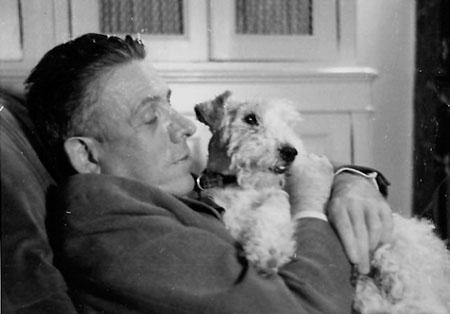
    Poulenc: The more I listen to Fauré, the more I love my dog

  • Classical Music’s Birthday Shadows

    Classical Music’s Birthday Shadows

    As I am still sweeping up the crumbs from Mozart’s birthday cake, my thoughts light upon poor Edouard Lalo. Lalo was born on Mozart’s birthday in 1823. Chances are, if you were to stop by the Lalo residence on any January 27, you would find him sitting all alone with his party favors.

    This afternoon on The Classical Network, I thought we’d take a few hours to salute those who have lost classical music’s greatest popularity contests. In addition to Lalo, we’ll hear works by Modest Mussorgsky (born on Bach’s birthday, March 21, in 1839) and Zoltán Kodály (born on Beethoven’s birthday, December 16, in 1882) – all worthy composers, who have no hope of ever emerging from the shadows of Olympus.

    To fill in around the edges, we may also hear from Juan Crisóstomo Arriaga – described (facetiously?) as “The Spanish Mozart” – born February 27, 1806, François-Adrien Boieldieu, born December 16, 1775, and Rodion Shchedrin, born December 16, 1932.

    All were quite adept at their craft. Some were even historically important. Their only sins were not being Bach, Mozart or Beethoven – compounded by the fact that they happened to share their birthdays. Mediocrities everywhere, I absolve you!

    First, on today’s Noontime Concert, you’ll find nothing mediocre about flutist Carol Wincenc. She’s been delighting audiences with her musicianship for five decades. Among the composers with whom she has worked directly are Aaron Copland, Olivier Messiaen, and Philip Glass. She has also had music written specifically for her by Christopher Rouse, Henryk Górecki, Lukas Foss, Thea Musgrave, and Joan Tower.

    Wincenc’s 50th Anniversary Celebration took place at the Morgan Library and Museum on November 12. The program opened with Claude Debussy’s “Syrinx” for solo flute and included two world premieres – Wincenc commissions – by composers Jake Heggie and Pierre Jalbert. Heggie and Jalbert were on hand to offer commentary. Oh yeah, and there was also a flute quartet by MOZART!

    You’ll have a chance to hear this concert this afternoon. All in all, there’s much to celebrate, from 12 to 4 p.m. EST, on WWFM – The Classical Network and wwfm.org.

  • WWFM Thanks You Classical Music Supporters

    WWFM Thanks You Classical Music Supporters

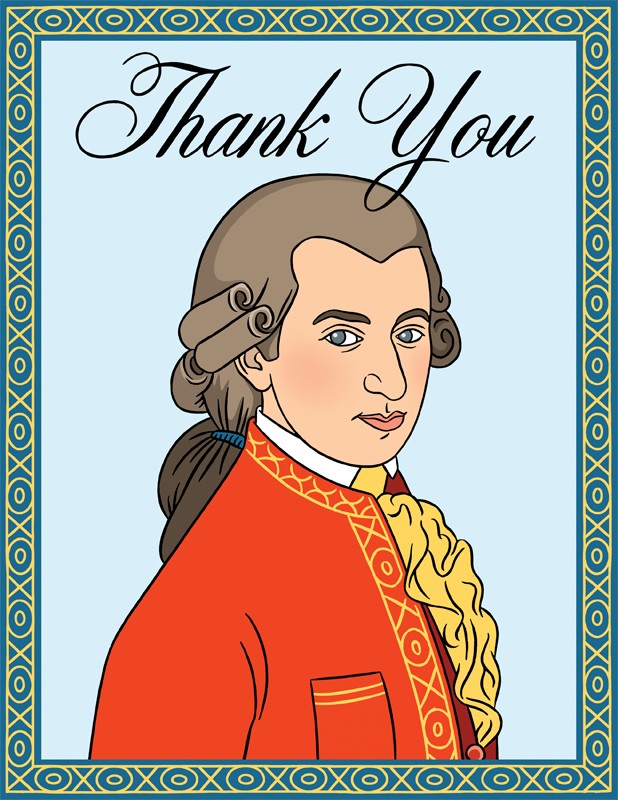
    It was a pretty tiring day yesterday. You know, after listening to all that Mozart. (Too many notes!) But it would be rude of me, now that my powdered wig is at the cleaners, not to at least take up my quill and scratch out a belated thank you note for your continued support of WWFM – The Classical Network and wwfm.org. You are the strings in our fiddles. You are the buckles on our shoes. Your generous patronage lends extra lift to our mincing minuets. Sirs and Madams, we are your most obedient servants.

  • Mozart Anniversary Broadcast on WWFM

    Mozart Anniversary Broadcast on WWFM

    Mozart, take me away!

    I’m getting ready to hit the air waves with more Mozart – an assortment of symphonies, concertos, operas, orchestral, choral, vocal, chamber and instrumental music – in honor of the 264th anniversary of his birth.

    Along the way, we’ll hear selections performed by violinist Jaap Schröder and hornist Barry Tuckwell, both recently deceased, and a recording of Christopher Hogwood playing a clavichord that once actually belonged to the composer.

    If you enjoy the programming, please support it, with your contribution at 1-888-232-1212 or online at wwfm.org.

    As an added incentive, this time around we’re offering, among our thank you gifts, a 2-CD set, “Quiet Time: The Music of Mozart,” available for your donation of $60.

    At 7:30 tonight, I’ll be manning the board for a special broadcast of Westminster Choir’s Homecoming Concert, coming your way live from Princeton University’s Richardson Auditorium. David Osenberg will be your host for that. Then I’ll be back, following the concert, with more music until 10:00 EST.

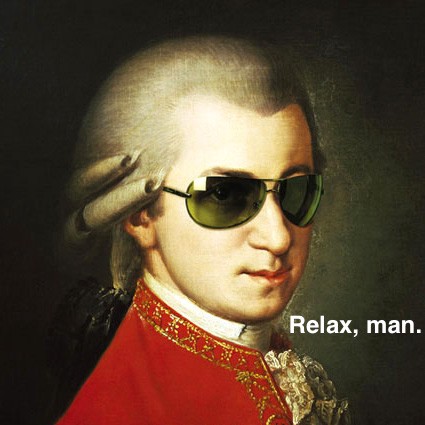
    Forget your cares with Wolfgang. Grab your shades and join the Wolf Pack, on WWFM – The Classical Network and wwfm.org. Thank you for your support!

  • Mozart’s Humanity Celebrate His Birthday on WWFM

    Mozart’s Humanity Celebrate His Birthday on WWFM

    There’s a lot of art in Mozart. But also a lot of humanity.

    Join us today on The Classical Network, as we celebrate the 264th anniversary of the birth of Johannes Chrysostomus Wolfgangus Theophilus Mozart – better known as Wolfgang Amadeus Mozart.

    Current events got you down? Take the long view. This music from over two centuries ago still has the ability to touch our hearts, soothe our minds, and reach into our souls. Mozart’s music reflects what is best in Man.

    Tune in for a broad sampling of his extraordinary output, including symphonies, concertos, operas, orchestral, choral, vocal, chamber and instrumental music. If you enjoy it, please support it, with your contribution at wwfm.org.

    While you’re at it, pick up a thank you gift. Of course, we’ve a broad array of music-oriented loot. This time around, we’re adding a 2-CD set of Mozart adagios. This is the perfect collection to insulate yourself from the cares of the world.

    The saying goes that the best things in life are free, but it sure does cost money for us to bring you the music. We’ve been able to hang in there for 37 years, thanks to the generosity and perspicacity of listeners just like you.

    Please call us at 1-888-232-1212, or make your donation online at wwfm.org. Thank you for your continued support of WWFM – The Classical Network!


    FUN FACT: Mozart signed his name “Amadeus” only a few times in his life, when he was playing around in letters written in a kind of mock Latin. In fact, “Amadè,” “Amadé,” or simply “Amade” were his preference (“Amadeo” in Italy). He was fairly cavalier in the placement of the accent. It was only on his death certificate that the form “Amadeus” took root. His widow, Constanze, picked up on it and used it in her appeal to the Emperor for a pension (ultimately successful), citing Mozart’s contributions. As her late husband became increasingly venerated, “Amadeus” became the standard.

    Of course, we can be as pedantic as we like. But nothing changes the transcendent quality of the music and its enduring ability to elevate our mood.

    Find peace with Mozart on WWFM The Classical Network.

Tag Cloud

Aaron Copland (93) Beethoven (95) Composer (114) Film Music (137) Film Score (143) Film Scores (255) Halloween (94) John Williams (195) KWAX (229) Leonard Bernstein (103) Marlboro Music Festival (125) Movie Music (152) Mozart (88) Opera (208) Philadelphia Orchestra (89) Picture Perfect (174) Princeton Symphony Orchestra (108) Radio (88) Ross Amico (244) Roy's Tie-Dye Sci-Fi Corner (290) The Classical Network (101) The Lost Chord (268) Vaughan Williams (103) WPRB (396) WWFM (881)

DON’T MISS A BEAT

Receive a weekly digest every Sunday at noon by signing up here


RECENT POSTS