Category: Daily Dispatch

  • Dvořák, Black Music, & America

    Dvořák, Black Music, & America

    On this date in 1894, Antonin Dvořák, then serving as director of the newly-established National Conservatory of Music in New York, presented a concert of African-American choral music at Madison Square Garden.

    The event, which also featured at least some of Rossini’s “Stabat Mater,” was given to benefit the New York Herald Tribune’s Free Clothing Fund. The program was performed by members of St. Philip’s Colored Choir, with the participation of vocal soloists Sissieretta Jones and Harry T. Burleigh.

    Jones was a graduate of the New England Conservatory, a soprano equally at home in the singing of grand opera, light opera, and popular music. She wound up touring internationally and sang for four consecutive U.S. presidents. One critic dubbed her “The Black Patti” – a reference to Italian singer Adelina Patti – an epithet that Jones, a modest woman, disliked.

    However, given the limited opportunities for black singers at the time, ultimately she decided to capitalize on the association, founding the Black Patti Troubadours, a successful revue that ran for 20 years. By 1895, she had become the best-known and highest-paid African-American performer.

    As for Burleigh, American art music might have developed very differently without him. Born in Erie, PA, in 1866, he was accepted into the National Conservatory, a progressive institution for the time. On Dvořák’s insistence, students were not to be discriminated against on the basis of ethnicity.

    There, he studied with, among others, Rubin Goldmark, the hidebound pedagogue who would later give lessons to Aaron Copland and George Gershwin. He also played double-bass and timpani in the school’s orchestra, which Dvořák conducted.

    One day, the story goes, while seated at his desk, Dvořák overheard the most soulful, plaintive air being sung in an adjacent corridor. He was transfixed. This was his first exposure to the African-American spiritual, and it had the force of an epiphany. Thereafter, Burleigh was a regular guest at the Dvořák home.

    Reflecting on his own debt to the folk idioms of his native land, for his part in the development of a Czech national sound, Dvořák was eager to share his impressions with American composers, and to encourage them to embrace this unique and neglected resource.

    “I am now satisfied that the future music of this country must be founded upon what are called negro melodies,” he wrote. “This must be the real foundation of any serious and original school of composition to be developed in the United States. When I first came here last year I was impressed with this idea and it has developed into a settled conviction. These beautiful and varied themes are the product of the soil. They are American.”

    This was quite the pronouncement for 1893.

    African-American spirituals, of course, would profoundly influence Dvořák’s “New World” Symphony. Interestingly, another Dvorak pupil, William Arms Fisher, was responsible for transforming the work’s famous Largo into the neo-spiritual “Goin’ Home.” Since the symphony was intended, in part, as instructional, an attempt to lead American composers by example, Burleigh’s significance becomes inescapable.

    Burleigh himself went on to a distinguished career as a composer and arranger. Not only did he popularize a great many spirituals, he also wrote hundreds of original songs. Isn’t it ironic that one of the great, unsung figures in American music wound up changing the course of our music through singing?

    Here’s one of the works that received its premiere on that 1894 Madison Square Garden concert – Dvořák’s arrangement of Stephen Foster’s “Old Folks at Home.”

    Burleigh’s setting of “Goin’ Home”

    Sissieretta Jones:


    CLOCKWISE FROM LEFT: Dvořák (doing his best Sean Connery impression), Burleigh, and Jones
  • Aladdin’s Cave Classical Delights Today

    Aladdin’s Cave Classical Delights Today

    Open sesame!

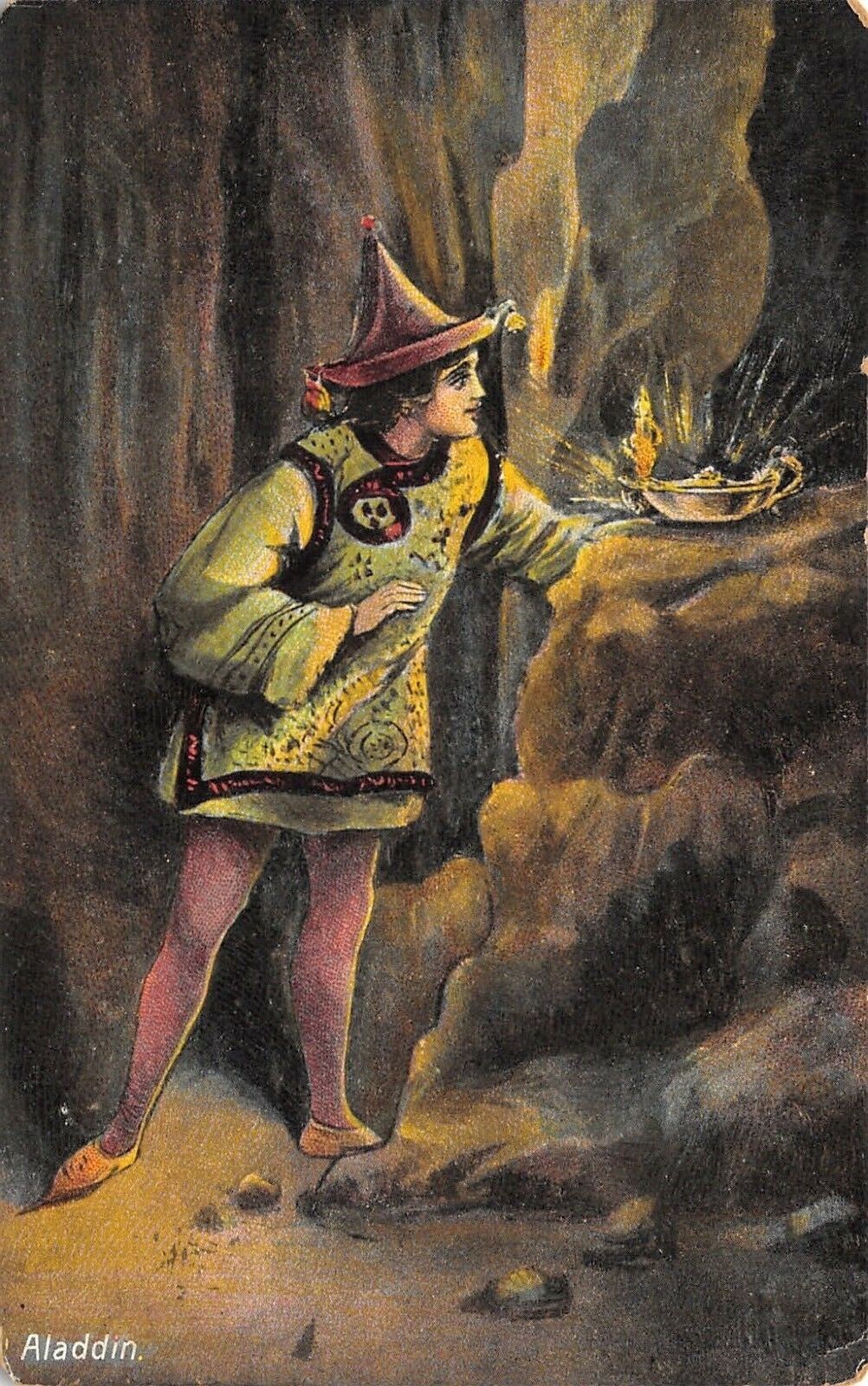
    It’s an Aladdin’s cave of delights this afternoon on The Classical Network.

    At 4:00, we’ll have two works inspired by the famous fairy story from the Arabian Nights, both of them by Scandinavian composers. They’ll highlight an hour of music for the young and the young at heart, including Benjamin Britten’s “Simple Symphony,” in a recording conducted by Princeton alumnus Gilbert Levine, on his birthday. We’ll also hear birthday celebrant Myung-Whun Chung conduct Carl Nielsen’s “Aladdin Suite.”

    The 5:00 hour will bring a Romantic symphony by Charles Tournemire. In addition, we’ll mark the anniversaries of the births of French composers Claude Balbastre and Henri Dutilleux.

    Then we’re off to Tuscany on “Music from Marlboro” at 6:00, with a guitar quintet by Luigi Boccherini and the string sextet “Souvenir de Florence” by Peter Ilych Tchaikovsky.

    The musical riches are piled high, from 4 to 6 p.m. EST. Your wish is our command, on WWFM – The Classical Network and wwfm.org.

  • Westminster Choir Celebrates 100 Years

    Westminster Choir Celebrates 100 Years

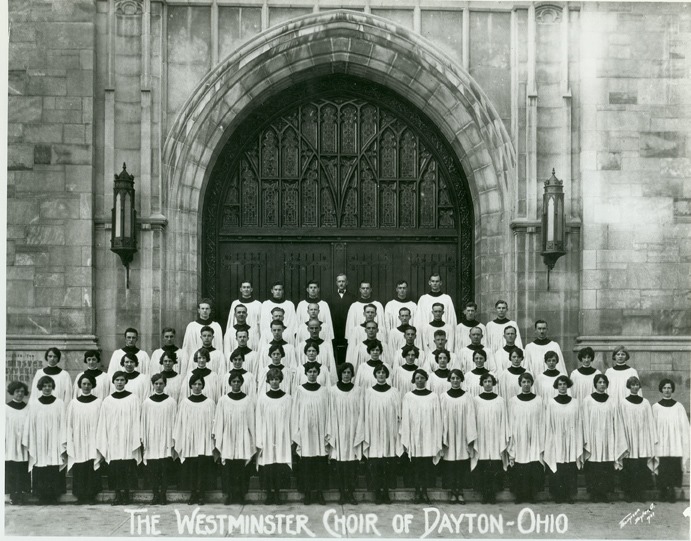
    Every year at this time, Westminster Choir returns, following an extensive tour, to reunite with the Princeton community through its annual Homecoming Concert. What makes this year stand apart is that the choir really is going home.

    To mark the 100th anniversary of the founding of the ensemble, in addition to its tour of the western United States – with stops in Seattle, Boise, Salt Lake City, and Garden Grove and La Jolla, California – and its traditional concert at Princeton University’s Richardson Auditorium, the choir will travel to Westminster Presbyterian Church, in Dayton, Ohio, where it was founded in 1920.

    That pilgrimage will take place in April. The same program, presented under the title “Appear and Inspire,” will be sung at Richardson Auditorium, on Monday, January 27, at 7:30 p.m. Westminster’s director of choral activities, Joe Miller, will conduct.

    If you can’t make it to the hall, the concert will be simulcast over WWFM – The Classical Network at 89.1 FM and online at wwfm.org.

    Learn more about it, including a condensed history of the choir, the foundation of Westminster Choir College, and some of its very impressive credentials, in my article in this week’s U.S. 1 Newspaper – PrincetonInfo, out today.

    https://princetoninfo.com/westminster-choir-celebrates-100-years/

  • Tuscan Dreams: Boccherini & Tchaikovsky at Marlboro

    Tuscan Dreams: Boccherini & Tchaikovsky at Marlboro

    On this week’s “Music from Marlboro,” we’ll take a trip to Tuscany. Book yourself a room with a view, via works of Luigi Boccherini and Peter Ilych Tchaikovsky.

    Though Boccherini was born in Lucca in 1743, by the time he was 14 he was already working alongside his father as a cellist at the court theater in Vienna. He and his father made several trips to Vienna, and Boccherini made his debut as a composer there at 17.

    Following his father’s death, he left Lucca for Paris. There, he found some success and his works began to be published. It was the Spanish ambassador who invited him to Madrid in 1768. Soon he was in the employ of the infante, Don Luis, at the intrigue-ridden court of Charles III. Boccherini would die in Madrid, after a series of misfortunes, in 1805. It was Mussolini (!) who had his remains repatriated for burial in his hometown. A Tuscan son interred under the Tuscan sun.

    In all, Boccherini composed 30 symphonies, 12 cello concertos, and an enormous quantity of chamber music. Above and beyond the “celebrated minuet,” there are over 100 string quintets, nearly 100 string quartets, and 12 guitar quintets.

    We’ll get a taste of this “Haydn of the Mediterranean,” with a performance of his genial Guitar Quintet No. 5 in D major, G. 449. This may have been the piece that annoyed the Prince of Asturias (later Charles IV), because of the repetitive nature of his violin part, which he demanded that the composer change. Boccherini responded by doubling down and actually expanding it, which infuriated his patron and led to his immediate dismissal.

    The quintet was recorded at Marlboro in 1979 by guitarist David Starobin, violinists Pina Carmirelli and Joseph Genualdi, violist Philipp Naegele, and cellist Marcy Rosen.

    Tchaikovsky, obviously, was not a Tuscan native. He was 50 years-old when he composed his Sextet for Strings in D minor in the summer of 1890. He called the piece “Souvenir de Florence” because he had sketched one of its principal themes – the one that would evolve into the work’s slow movement – while abroad in the city of Dante and Cellini, where he was at work on his opera “The Queen of Spades.”

    We’ll hear his musical souvenir performed at the 1989 Marlboro Music Festival, by violinists Ivan Chan and Marcia Weinfeld Goode, violists Pierre Lenert and Judith Busbridge, and cellists Katja Linfield and David Soyer.

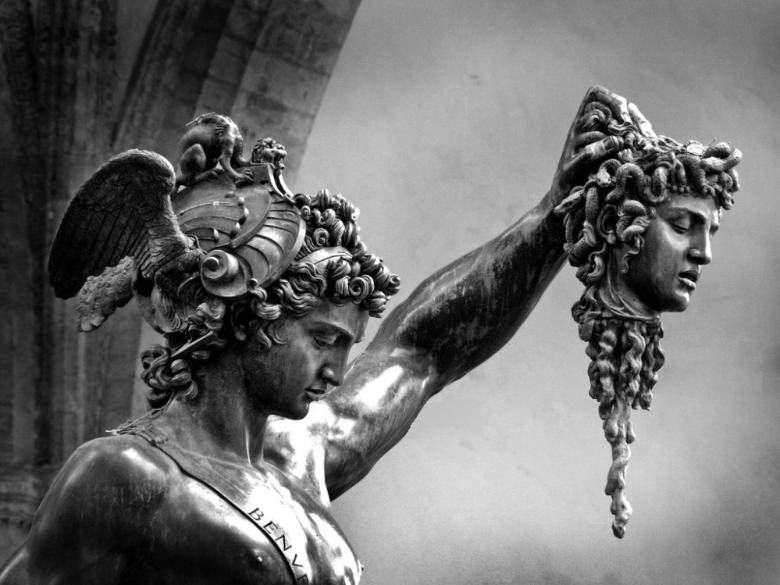
    It’s hard not to lose your head over the quality of the music-making. Pour yourself a nice Chianti. All the eggs will be Florentine, on this week’s “Music from Marlboro,” this Wednesday evening at 6:00 EST, on WWFM – The Classical Network.

    Marlboro School of Music and Festival: Official Page

  • Ashkenazy Retires Legacy Broadcast Today

    Ashkenazy Retires Legacy Broadcast Today

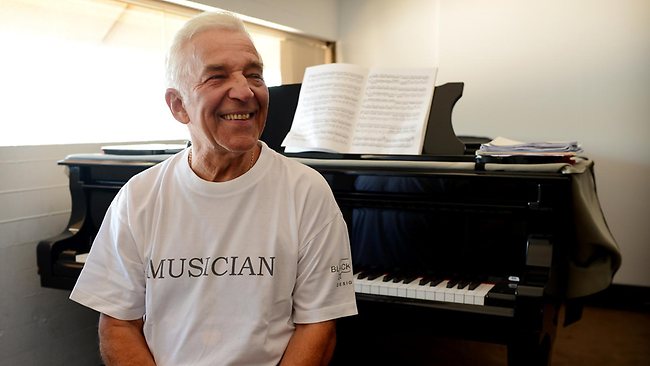
    I don’t think I’m exaggerating when I say the music world was stunned by the news on January 17 that Vladimir Ashkenazy is now retired, effective immediately. The announcement came with no advance notice. There will be no farewell tour, and all engagements for 2020 have been cancelled.

    This afternoon on The Classical Network, we’ll celebrate the legacy of this superb and beloved artist, with nearly three hours of his recordings.

    Ashkenazy, who is indisputably one of the greatest pianists of his time – which is to say, of the past half century – is also a conductor of merit. We’ll hear him in both capacities, performing music by Beethoven, Boris Blacher, André Previn, Jean Sibelius, and of course Sergei Rachmaninoff.

    First, on today’s Noontime Concert, rising musicians of Philadelphia’s Astral Artists will perform Johannes Brahms’ String Sextet No. 2 in G major and Sibelius’ String Quartet in D minor “Voces Intimae.”

    After that, it’s all-Ashkenazy. The music-making will Rach your world, between 12 and 4 p.m. EST, on WWFM – The Classical Network and wwfm.org.

Tag Cloud

Aaron Copland (93) Beethoven (95) Composer (114) Film Music (137) Film Score (143) Film Scores (255) Halloween (94) John Williams (195) KWAX (229) Leonard Bernstein (103) Marlboro Music Festival (125) Movie Music (152) Mozart (88) Opera (208) Philadelphia Orchestra (89) Picture Perfect (174) Princeton Symphony Orchestra (108) Radio (88) Ross Amico (244) Roy's Tie-Dye Sci-Fi Corner (290) The Classical Network (101) The Lost Chord (268) Vaughan Williams (103) WPRB (396) WWFM (881)

DON’T MISS A BEAT

Receive a weekly digest every Sunday at noon by signing up here


RECENT POSTS