Category: Daily Dispatch

  • Barry Tuckwell Legendary Hornist Dies at 88

    Barry Tuckwell Legendary Hornist Dies at 88

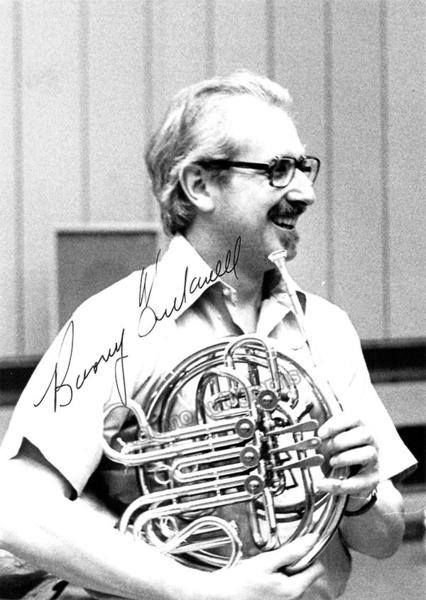
    Legendary hornist Barry Tuckwell has died. Tuckwell was principal horn of the London Symphony Orchestra and a widely recorded soloist.

    Born in Melbourne in 1931, he didn’t discover the horn until the age of 13. Following lackluster studies on the piano, organ and violin, he embraced the instrument as if it were love at first sight. Within six months, he was playing professionally. In two years, he was appointed principal horn with the Melbourne Symphony Orchestra. Soon after, he became principal of the Sydney Symphony.

    When Dennis Brain was killed in an automobile accident in 1957, Tuckwell became, incontestably, Britain’s foremost hornist at the age of 24. He had been appointed first horn with the London Symphony Orchestra in 1955, playing alongside other rising young players Neville Marriner and Gervase de Peyer. He remained with the LSO for 13 years.

    Following his departure, he became one of the rare hornists to make a career as a soloist. He would be nominated for a Grammy Award three times.

    His farewell appearance was in Oliver Knussen’s Horn Concerto, a piece written for him, with the Baltimore Symphony Orchestra, in 1997. By that time, he had already established a parallel career as a conductor.

    Tuckwell left behind over 50 recordings. His repertoire spanned the Baroque to the present, including acclaimed recordings of Mozart and Strauss and many contemporary composers.

    He cited Tommy Dorsey as a principal influence. On one occasion, he recollected, he was approached by an awestruck Japanese fan, who stammered, “You, God of Horn.” Thereafter, Tuckwell wryly appended the letters GoH to his personal email.

    Tuckwell died yesterday at the age of 88.

    https://www.abc.net.au/classic/read-and-watch/news/vale-barry-tuckwell/11876484
  • Classical Music Highlights Today on The Classical Network

    Classical Music Highlights Today on The Classical Network

    Ever wonder where I got the signature tune for “Picture Perfect?” Tune in to The Classical Network this afternoon to enjoy “Theater Set” by Elie Siegmeister, on his birthday. Siegmeister arranged music from his only film score, for the Gary Cooper-Rita Hayworth film “They Came to Cordura” (1959) into this concert suite, performed by Howard Hanson and the Eastman-Rochester Orchestra.

    We’ll also celebrate composer Aaron Jay Kernis, born in Philadelphia sixty years ago today. And to fill in around the edges, we’ll hear works by honorary Philadelphians Jennifer Higdon and Robert Moran.

    Two notable pianists were also born on this date. Ruth Slenczynksa will perform music by Robert Schumann, and Malcolm Frager will be the soloist in Richard Strauss’ “Burleske.”

    At 6:00, it’s another “Music from Marlboro.” The focus this week with be on former co-director of the Marlboro Music School and Festival, Richard Goode. Goode will participate in chamber music by Ferruccio Busoni and Johannes Brahms.

    You might say a Goode time is guaranteed, when you tune in today, between 4 and 7 p.m. EST, on WWFM – The Classical Network and wwfm.org.

  • Richard Goode: Marlboro Music Spotlight

    Richard Goode: Marlboro Music Spotlight

    If it’s Goode, you know it’s got to be great.

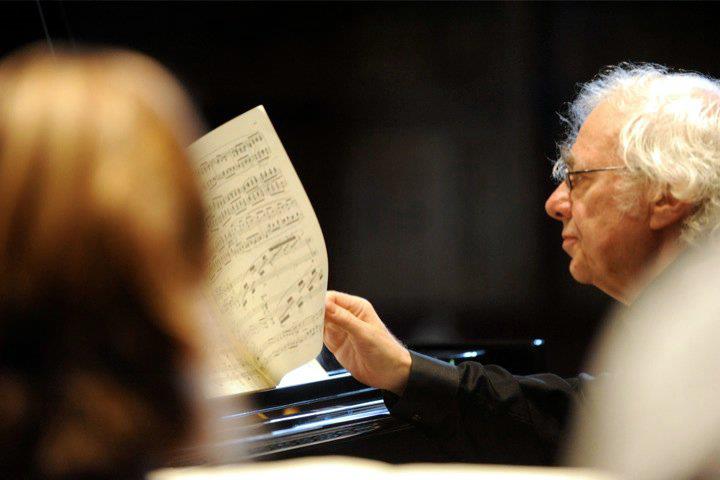
    On this week’s “Music from Marlboro,” we’ll celebrate pianist Richard Goode. Goode served as co-artistic director (with Mitsuko Uchida) of the Marlboro Music School and Festival, from 1999 to 2013. On and off, he’s been part of the fabric of Marlboro since he was 14 years-old.

    We’ll sample his artistry in outstanding performances of music by Ferruccio Busoni and Johannes Brahms.

    Inspired in part by Bach’s “Art of the Fugue,” Busoni composed his “Fantasia contrappuntistica” for solo piano in a flurry of inspiration in 1910. His arrangement for two pianos followed. I think you’ll agree, there’s no substitute for its thrilling antiphonal effects.

    The work is built into one continuous span, but subdivided into twelve parts – a prelude and variations on the Bach chorale “Ehre sei Gott in der Höhe” (“Glory to God in the Highest”) – capped by a quadruple fugue. The laws of counterpoint are rigorously applied, in a manner that would have made even Max Reger smile.

    The work was composed during a whirlwind tour of the United States. Busoni was especially proud of his ability to make every note of the fugue “sound.”

    We’ll hear it performed on a Marlboro spin-off recording from 1964, with Richard Goode and Peter Serkin, making musical mincemeat of this vertiginous knuckle-buster. Goode was only 20 years-old at the time – and Serkin was 16!

    Bach was also an important source of inspiration for Johannes Brahms. Following the death of his mother, the composer was discovered by one of his friends, weeping over the keyboard as he played through works by the Baroque master.

    Also stemming from his loss was Brahms’ Horn Trio in E flat major, Op. 40. The horn, which takes the place of the cello in the traditional configuration of the piano trio, was a highly unusual choice for chamber music, but one which must have recalled for Brahms the lessons he had taken as a child.

    Fortuitously, the instrument also has rustic associations. It was during a walk in the Black Forest that the composer first “heard” the trio’s opening theme. While the work is a celebration of nature, and in the last movement, perhaps even the hunt, the tempo marking of the third movement adagio is characterized as “slow and sad.” Brahms uncovers a well of emotion in the quotation of a German funeral melody, “Wer nur den lieben Gott läßt walten” (“If thou but suffer God to guide thee”).

    Demonstrating the kind of continuity that makes Marlboro shine among summer music festivals, we’ll again hear Richard Goode, this time in middle age, joining hornist Marie-Luise Neunecker and violinist Mark Steinberg, in 1989.

    We’ve never had it so Goode, on the next “Music from Marlboro,” this Wednesday evening at 6:00 EST, on WWFM – The Classical Network and wwfm.org.

    Marlboro School of Music and Festival: Official Page


    FOR THE GREATER GOODE: Richard Goode at Marlboro in 2011

  • Rainy Day English & New Music on WWFM

    Rainy Day English & New Music on WWFM

    With rain in the forecast, it promises to be a soggy afternoon, perhaps redolent of a day in the British Isles. Anglophile that I am, I’ll be reaching for the low-hanging fruit, on The Classical Network, and present an afternoon of English music.

    We’ll hear Ralph Vaughan Williams’s Symphony No. 8, with its quirky instrumentation, the ballet “Pineapple Poll,” after melodies of Sir Arthur Sullivan, and the oratorio “Nebuchadnezzar” by Sir George Dyson. There will also be a piano concerto by Malcolm Williamson, a perpetual outsider, born in Australia, who became Master of the Queen’s Music.

    First, on today’s Noontime Concert, it’s another program featuring musicians from Network for New Music . Presented under the unifying theme of “Masters of Minimalism,” we’ll hear Gerald Levinson’s “Bronze Music,” John Adams’ “Road Movies,” Hannah Lash’s “C,” and Evan Ziporyn’s “Air = Water.”

    NNM’s mission is to perform new musical works of the highest quality by a diverse array of established and emerging composers; to strengthen the new music community in the Philadelphia region; and to build support for new music by engaging in artistic and institutional collaborations and educational activities.

    Founded in 1984, Network for New Music has presented more than 650 works by living composers (of which over 150 they have commissioned) and recorded four CDs for the Albany and Innova labels. The ensemble has held an ongoing residency at Haverford College since 2007.

    This Sunday at 3 p.m., NNM will present a special program, “The Poet’s Mind,” at Philadelphia’s Settlement Music School Mary Louise Curtis Branch, 416 Queen Street. Guest artists, soprano Ah Young Hong and mezzo-soprano Maren Montalbano, will join NNM musicians to perform György Kurtág’s “Kafka Fragments,” the world premiere of Philip Maneval’s “The Poet’s Songbook,” a new work by June Violet Aino, also inspired by Kafka, and music by Florence Price. For more information and a complete schedule, look online at networkfornewmusic.org.

    I’m not sure, exactly, that air = water, but there will be plenty of water on the air waves, with Network for New Music and music from the British Isles, this afternoon from 12 to 4 p.m. EST, on WWFM – The Classical Network and wwfm.org.

  • Graupner, Bach, and a Baroque Birthday!

    Graupner, Bach, and a Baroque Birthday!

    A show of hands! How many of you are familiar with the name Christoph Graupner?

    I thought so.

    Join me today on The Classical Network, on Graupner’s birthday, as I share music by this neglected master. Despite the fact that Graupner is now little more than a footnote in music history, he was highly regarded in his day. In fact, he was offered the cantorate in Leipzig (where he had studied with Johann Kuhnau).

    Finances were particularly rocky in Graupner’s Darmstadt. The opera house was closed, court musicians were not being paid. Musical opportunities were withering. Even so, Graupner’s patron insisted he be held to his contract.

    In the end, things worked out for the best. Graupner’s back salary was paid in full, and he was given a substantial raise into the bargain. As for the cantorate? It went to Johann Sebastian Bach.

    Of course, the first choice for the position had been George Philipp Telemann. But Telemann also decided to remain where he was – in his case Hamburg – after he too was promised more money.

    Graupner graciously wrote Bach a glowing recommendation. Like so many forgotten figures of the Baroque, his recognition once again received a substantial boost with the rise of the authenticity movement, and a nice cross-section of his own music is now available in recordings.

    It’s also the birthday of Graupner contemporary Gottfried Heinrich Stölzel. Again, you may not know the name, but if you’re a Bach fan, there’s a good chance you know at least some of his music. He is the composer of “Bist du bei mir,” long attributed to Bach because of its inclusion in one of Anna Magdalena Bach’s notebooks

    Like Bach, Stölzel wrote a ton of church music, including a crushing number of cantatas. Unlike Bach, he also wrote operas – 18 of them. In fact, “Bist du bei mir” was originally written for the opera “Diomedes.” Now we hear it at weddings.

    Don’t forget, Monday on The Classical Network also means “Bach at One.” As stated right in the title of the program, that will come your way at 1 p.m. EST.

    I’ll be along at 4. If Baroque is not really your thing, I’ll also have music by Vasily Kalinnikov, a too short-lived Russian Romantic composer, and Richard Addinsell – he of “Warsaw Concerto” fame.

    It’s nice to be known for something. Don’t forget to join me in remembering, from 4 to 7 p.m. EST, on WWFM – The Classical Network and wwfm.org.


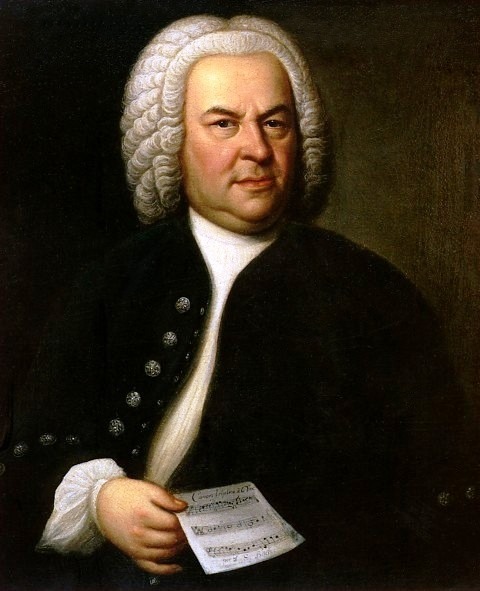
    Catch the Baroque wave (in both wig and music): clockwise from left, Bach, Graupner and Stölzel

Tag Cloud

Aaron Copland (93) Beethoven (95) Composer (114) Film Music (137) Film Score (143) Film Scores (255) Halloween (94) John Williams (195) KWAX (229) Leonard Bernstein (103) Marlboro Music Festival (125) Movie Music (152) Mozart (88) Opera (208) Philadelphia Orchestra (89) Picture Perfect (174) Princeton Symphony Orchestra (108) Radio (88) Ross Amico (244) Roy's Tie-Dye Sci-Fi Corner (290) The Classical Network (101) The Lost Chord (268) Vaughan Williams (103) WPRB (396) WWFM (881)

DON’T MISS A BEAT

Receive a weekly digest every Sunday at noon by signing up here


RECENT POSTS