Category: Daily Dispatch

  • Mozart at Marlboro: An Oasis of Musical Sanity

    Mozart at Marlboro: An Oasis of Musical Sanity

    With the world hurtling toward destruction, we’ll do our best to offer an oasis of sanity on the next “Music from Marlboro.”

    Find solace in Wolfgang’s Amadeus Mozart’s Piano Trio in B flat major, K. 502. The composer took evident pleasure in writing for the combination of violin, cello and piano. For one thing, these works provided him opportunities to connect with fellow musicians as a performer. He even regarded some as party pieces.

    K. 502 was written when Mozart was 30 years-old and at the peak of his powers. It was composed in 1786, the year of the premiere of “The Marriage of Figaro.” Like the opera, Mozart’s trio subverts a kind of class stratification, elevating the stringed instruments, formerly relegated to supporting roles, so that they attain equal footing with the piano. This egalitarian gesture allows for a kind of civilized discourse between friends.

    We’ll hear it performed at the Marlboro Music Festival in 1968, by violinist Jaime Laredo, cellist Madeline Foley, and pianist Rudolf Serkin.

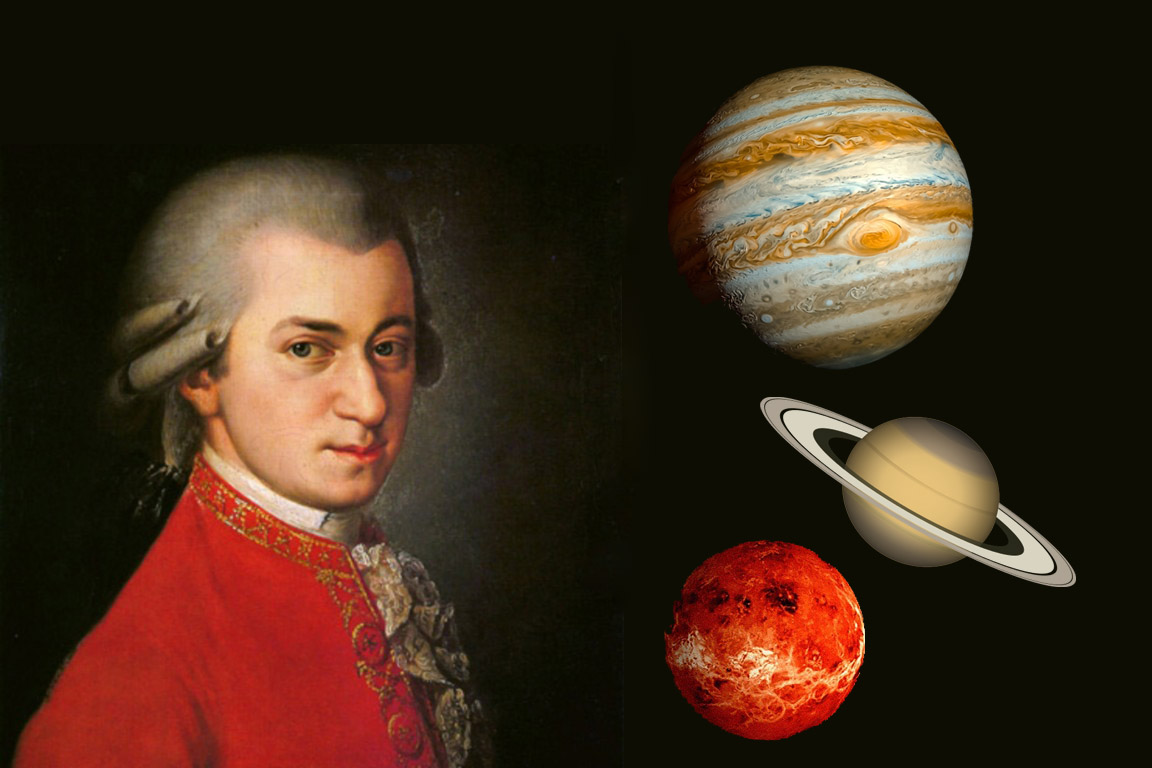
    Then Mozart reaches for the stars, both figuratively and by association. It was probably nowhere in the composer’s thoughts that his Symphony No. 41, composed in 1788, would bear the subtitle “Jupiter.” Like most nicknames, the sobriquet was bestowed by others. That said, it could hardly be more appropriate, as this is one of Mozart’s most Olympian works. It turned out to be his final symphony – and what a way to go!

    The fugato passages of the finale, with the effortless interweaving of no less than five harmonious themes, is breathtaking in its ambition and scale. The spirit of indomitable optimism is just the thing we need right now.

    We’ll hear it performed by the Marlboro Festival Orchestra in 1967, conducted by a 90 year-old Pablo Casals.

    Music may not be a cure-all, but it sure does serve to remind us that there is still beauty in the world and something noble in humanity. Would that everyone could tap into that largeness of spirit and aspire to something greater.

    It’s Mozart for sanity, on the next “Music from Marlboro,” this Wednesday evening at 6:00 EST, on WWFM – The Classical Network and wwfm.org.

    Marlboro School of Music and Festival: Official Page
  • Mediterranean Musical Escape on The Classical Network

    Mediterranean Musical Escape on The Classical Network

    The holidays are over. Time for a vacation!

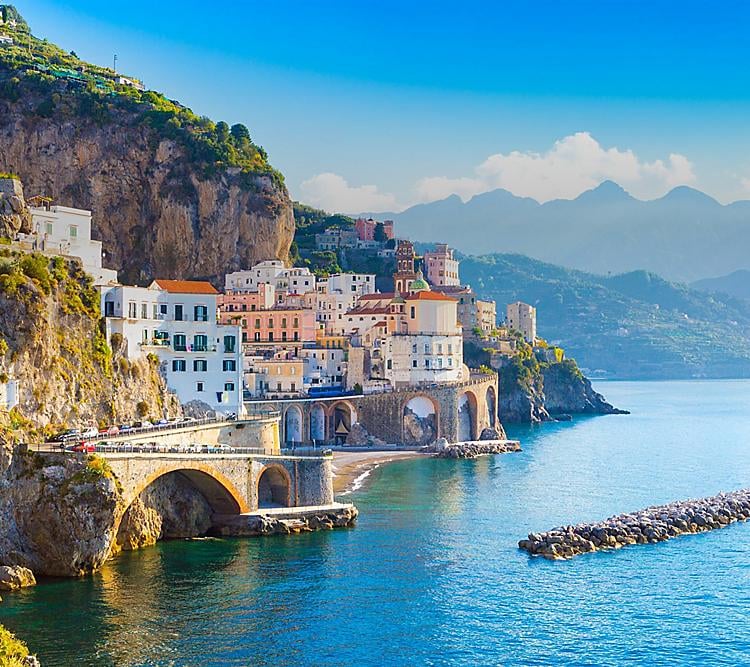
    This afternoon on The Classical Network, we’ll get away from it all with a musical escape to the Mediterranean.

    On today’s Noontime Concert, the Alba Consort will present “Renaissance Reborn,” early music from Mediterranean France, Spain, Italy, Turkey and Armenia, with contributions from the Sephardic tradition and works from Venice, from a vibrant era when East met West. Also featured will be variations on a Machaut viralei by contemporary composer Leonard Lehrman.

    The program was performed on the Midtown Concerts series, presented in part by Gotham Early Music Scene (or GEMS). These free lunchtime concerts take place on Thursdays at 1:15 p.m., at St. Bartholomew’s Church, 325 Park Avenue, in New York City.

    GEMS is a non-profit corporation that supports and promotes artists and organizations in New York City devoted to early music – music of the Middle Ages, Renaissance, Baroque, and early Classical periods. For more information about the St. Bart’s concerts and other GEMS’ events, look online at gemsny.org.

    Then, following today’s concert broadcast, we’ll linger in the region with music inspired by the Mediterranean and works by composers from adjacent lands.

    I hope you’ll join me for some musical souvenirs from a cruise around the Mediterranean, this afternoon from 12 to 4 p.m. EST, on WWFM – The Classical Network and wwfm.org.

  • Classical Birthdays Kim, Scriabin & More!

    Classical Birthdays Kim, Scriabin & More!

    You won’t need a pick or a shovel when you join me this afternoon on The Classical Network. The streets are paved with gold! Prepare yourself for a mother lode of birthdays.

    Former Princeton resident Earl Kim was born on this date 100 years ago. Kim was born in California to Korean immigrant parents in 1920. He began piano studies at the age of 10. As his focus shifted to composition, he received instruction from Arnold Schoenberg, Ernest Bloch and Roger Sessions.

    Following service in WWII, Kim taught at Princeton University from 1952 to 1967. In 1967, he left for Harvard, where he remained until his retirement in 1990. Kim died of lung cancer in 1998.

    His music has frequently been described as romantic in disposition, but make no mistake, his Violin Concerto, written for Itzhak Perlman in 1979, sports a modernist veneer. If you’re unfamiliar with it, fear not – just go with it. I think you’ll find it rewarding.

    We’ll also celebrate the anniversaries of the births of Baroque oboist and composer Giuseppe Sammartini; pianist-composers Henri Herz, Franz Xaver Scharwenka and Alexander Scriabin; German Romantic master Max Bruch; Respighi teacher Giuseppe Martucci; one-hit wonder Vittorio Monti (of “Csárdás” fame); and conductor Maurice Abravanel. That’s a lot of cake!

    We’ll put a great big candle on it in the form of a recording made by the Bach Aria Group, founded by another Princeton resident, born 106 years ago today, William H. Scheide.

    There’s gold in them thar hills! Gallop on over to the Ponderosa, from 4 to 7 p.m. EST, for a Birthday Bonanza, on WWFM – The Classical Network and wwfm.org.

  • Neglected Norwegian Composers on The Lost Chord

    Neglected Norwegian Composers on The Lost Chord

    A Norse is a Norse, of course, or course…

    This Sunday night on “The Lost Chord,” we’ll make hay with music by a couple of Norwegian composers.

    Halfdan Cleve (1879-1951) received unusually strict musical training. His father was an organist, who saddled his son with nothing but Bach until he was 16! The young Cleve then cantered to Germany, where he plowed through studies with the Scharwenka brothers, Philipp and Franz Xaver. The latter, a pupil of Franz Liszt, was regarded as one of the great thoroughbred keyboard virtuosos of his day.

    Cleve became widely recognized as a composer and pianist, but his own popularity flagged after World War I. He reacted against the rise of modernism by doubling down, in the mane, on his pedigree, celebrating the Norwegian countryside and its folk idioms in his music. His Violin Sonata of 1919 was foaled of this approach.

    Eyvind Alnaes (1872-1932), however, was a horse of a different color. Known, if at all, for his art songs – some of which were recorded by Kirsten Flagstad and Feodor Chaliapin – Alnaes’ musical language is less overtly “Norwegian” and more reactive to sugar cubes. His Piano Concerto of 1919 shadows Brahms and Tchaikovsky, and overtakes Rachmaninoff’s Piano Concerto No. 4, not completed until seven years later. Could Alnaes have been the rock in Rach’s shoe?

    Ladies and gentlemen, place your bets! The garland goes to “Dark Horse Norsemen” – works by neglected Norwegian composers – this Sunday night at 10:00 EST, on WWFM – The Classical Network and wwfm.org.


    Flagstad sings Alnaes:

    Chaliapin:

Tag Cloud

Aaron Copland (93) Beethoven (95) Composer (114) Film Music (137) Film Score (143) Film Scores (255) Halloween (94) John Williams (195) KWAX (229) Leonard Bernstein (103) Marlboro Music Festival (125) Movie Music (152) Mozart (88) Opera (208) Philadelphia Orchestra (89) Picture Perfect (174) Princeton Symphony Orchestra (108) Radio (88) Ross Amico (244) Roy's Tie-Dye Sci-Fi Corner (290) The Classical Network (101) The Lost Chord (268) Vaughan Williams (103) WPRB (396) WWFM (881)

DON’T MISS A BEAT

Receive a weekly digest every Sunday at noon by signing up here


RECENT POSTS