Category: Daily Dispatch

  • Franz Waxman’s Hilarious New Year’s Party Piece

    Franz Waxman’s Hilarious New Year’s Party Piece

    Franz Waxman, of course, was one of the great film composers. His music can be heard in “The Bride of Frankenstein,” “Rebecca,” “The Philadelphia Story,” “Sunset Boulevard,” “A Place in the Sun,” “Rear Window,” “Peyton Place,” “The Spirit of St. Louis,” and dozens of others.

    It was customary that Waxman and his family would get together with their neighbors, the Jascha Heifetzes, to welcome the new year with an evening of chamber music. Other guests on these occasions would include violist William Primrose and cellist Gregor Piatigorsky.

    Mainstream classical fare would dominate the festivities until the countdown to midnight. With the turn of the year, the musical selections would become a bit more frivolous.

    Waxman composed his “Auld Lang Syne Variations” in 1947, for one such gathering. This party piece sends up the traditional New Year’s anthem in the styles of several well-known composers.

    Feel free to play along and test your musical knowledge. You’ll find further clues in the work’s subtitles, listed below the video. One can only imagine Heifetz stepping out in “Chaconne a Son Gout.”

    Happy New Year!
  • Remembering Sir David Willcocks at 100

    Remembering Sir David Willcocks at 100

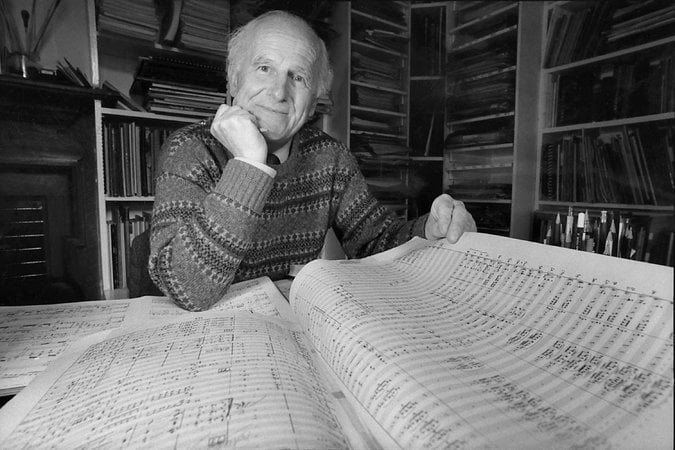
    Today would have been the 100th birthday of Sir David Willcocks.

    Willcocks, one of Britain’s premiere choral directors, died in 2015 at the age of 95. He is especially identified with his tenure as director of music at King’s College, Cambridge, where he served from 1957 to 1974. He was also director of the Royal College of Music.

    Willcocks conducted the Choir of King’s College on its annual Christmas Eve broadcasts of Nine Lessons and Carols and made countless records. His recording of Allegri’s “Miserere” is a notable landmark. He was also renowned for his performances of Bach masterworks. His interpretation of Fauré’s Requiem is regarded by some as definitive.

    In 1981, he presided over the music at the wedding of Prince Charles and Lady Diana. The event was observed by a global television audience of 750 million. Earlier, in 1968, he achieved notoriety when he led the London Bach Choir on the Rolling Stones’ “You Can’t Always Get What You Want.”

    Join me this afternoon as we sample the artistry of Sir David Willcocks. Of course, this guarantees music by Ralph Vaughan Williams (if not the Stones). We’ll also remember composers Josef Bohuslav Foerster and Dmitri Kabalevsky on the anniversary of their births.

    It turns out you really can get what you want. Lift up your voices, from 4 to 7 p.m. EST, on WWFM – The Classical Network and wwfm.org.

  • Tippett & Tomlinson New Year’s Music

    Tippett & Tomlinson New Year’s Music

    This Sunday night on “The Lost Chord,” we’ll have contrasting works for the New Year by two English composers whose surnames begin with “T.”

    Sir Michael Tippett’s fifth and final opera is an especially abstruse one, even by Tippett standards. Composed on his own libretto, “New Year” is set in Terror Town, an imaginary city that exists “somewhere today.” The dramatis personae includes such diverse characters as a child psychiatrist, her Rastafarian foster brother, a shaman, and three time-travelers from the future – or, as Tippett specifies, “nowhere tomorrow.”

    The orchestral suite opens and closes with music for the arrival and departure of a spaceship, represented electronically, on New Year’s Eve. Other striking touches include the use of saxophones, and, at the work’s climax, a quotation of “Auld Lang Syne,” pitted against a rather turbulent backdrop.

    “New Year” was first performed at Houston Grand Opera in 1989, with the British premiere taking place at Glyndebourne the following year. The opera was not well received. The wholly reimagined suite was commissioned by the San Francisco Symphony in 1990. Tippett noted that the primary metaphor of the opera is dance. Hey, man, whatever.

    The balance of the program will be devoted to works by a composer of a very different sensibility – master of British Light Music, Ernest Tomlinson. It is Tomlinson’s tongue-in-cheek assertion that the melody of “Auld Lang Syne” underlies most of the world’s great masterpieces. He goes on to support his thesis with no less than 152 examples in his dizzyingly clever “Fantasia on ‘Auld Lang Syne.’”

    We’ll conclude with a waltz from Tomlinson’s “Cinderella,” someone else who clearly understands the transformative power of 12.

    The kettle is on. Turn over a new leaf and join me for a cuppa, with “’T’ Time” – welcoming the New Year with music by Tippett and Tomlinson – this Sunday night at 10:00 EST, on WWFM – The Classical Network and wwfm.org.

  • Broadway Legend Jerry Herman Dies at 88

    Broadway Legend Jerry Herman Dies at 88

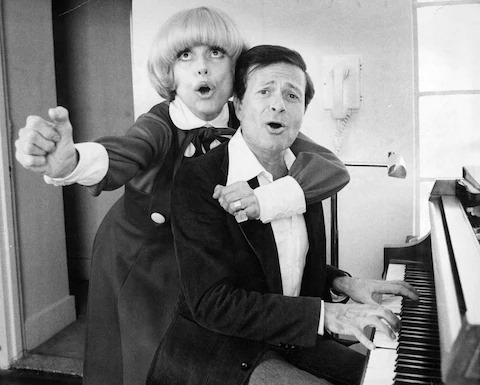
    Broadway legend Jerry Herman has died. Herman wrote the music and lyrics for “Mame,” “Hello, Dolly!,” and “La Cage aux Folles.” He was nominated for the Tony five times and won twice. He was also the recipient of a special Tony for Lifetime Achievement in the Theatre, in 2009. In 2010, he became a Kennedy Center honoree. Herman died on Thursday at the age of 88.

    George Hearn sings “I Am What I Am”:

    Jerry Herman talks about his career.


    PHOTO: With Carol Channing, who died in January

  • Peter Schreier, Celebrated Tenor, Dies at 84

    Peter Schreier, Celebrated Tenor, Dies at 84

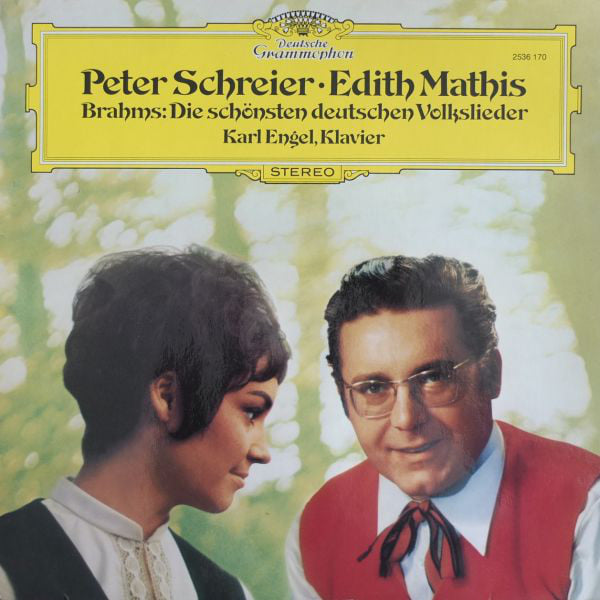
    The great tenor Peter Schreier has died.

    Schreier was born in Saxony in 1935. Though he continued to live in East Germany under Communist rule, he yet managed to achieve international success. He was especially praised for his lieder singing, though was also lauded for his work in some of the world’s great opera houses, where he appeared in works from Mozart to Wagner. Reportedly, Hans Pfitzner’s “Palestrina” was a particular favorite.

    Schreier died on Christmas Day, a notable coincidence, considering he sang so much Christmas music throughout his career, beginning as a boy chorister in the Dresden Kreuzchor. When his voice broke at the age of 16, he continued to pursue his dream of becoming a tenor. He was especially desirous to tackle the Evangelist roles in the oratorios of Johann Sebastian Bach. At the time of his death, Schreier – who had also become a noted conductor – was 84 years-old.

    We’ll remember him this afternoon on The Classical Network, by way of some of his recordings, alongside those of pianist Abbey Simon and chorus master Laszlo Heltay, both of whom we also lost within the past week. In addition, we’ll celebrate musical humorist Anna Russell and pianist, composer, and mordant wit Oscar Levant, on the anniversary of their births.

    At 6:00, it’s another “Picture Perfect,” music for the movies. This week, with the turn of the year only days away, the theme is change and the passage of time.

    Of course, the more things change, the more they stay the same. The parade of musical artistry continues, from 4 to 7 p.m. EST, on WWFM – The Classical Network and wwfm.org.


    Schreier sings Peter Cornelius’ Christmas song, “The Kings,” from his Kreuzchor days:

    Schreier sings Schubert’s “Ständchen” (Serenade):

    Schreier conducts Bach’s “Christmas Oratorio”:

Tag Cloud

Aaron Copland (93) Beethoven (95) Composer (114) Film Music (137) Film Score (143) Film Scores (255) Halloween (94) John Williams (195) KWAX (229) Leonard Bernstein (103) Marlboro Music Festival (125) Movie Music (152) Mozart (88) Opera (208) Philadelphia Orchestra (89) Picture Perfect (174) Princeton Symphony Orchestra (108) Radio (88) Ross Amico (244) Roy's Tie-Dye Sci-Fi Corner (290) The Classical Network (101) The Lost Chord (268) Vaughan Williams (103) WPRB (396) WWFM (881)

DON’T MISS A BEAT

Receive a weekly digest every Sunday at noon by signing up here


RECENT POSTS