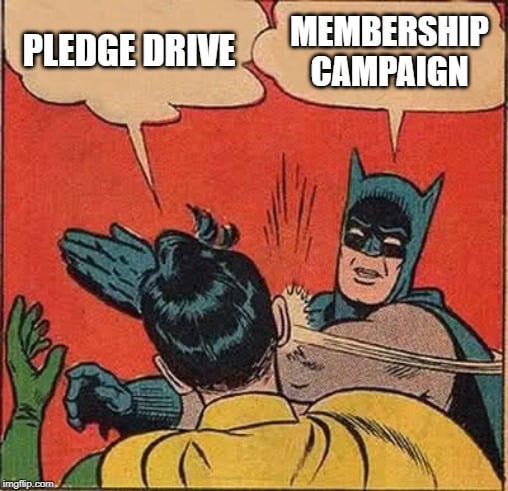
The Dynamic Duo, Michael Kownacky and I, are on the air right now, and we’re trying to vacuum up the remaining dollars of an unfulfilled challenge. Make us look good – call now (BEFORE 1 PM)! Your contribution will be doubled when you make a commitment at 1-888-232-1212 or online at wwfm.org. Thank you for your support of WWFM – The Classical Network!
Category: Daily Dispatch
-

Warm Up Winter with Classical Music Donations
As the temperatures plummet, make our mercury rise!
Wrap yourself in a blanket and join us today on The Classical Network as we start striking our flints. We’ll do our best to keep you glowing with musical selections calibrated to warm the heart. In turn, we’re hoping that you’ll reciprocate by contributing a little fuel of your own.
Cocoa and hot cider are all well and good, but what we’re really looking for is kindling for this furnace that allows us to generate a perpetual bouillabaisse of the world’s great music. Like the taste of our cooking? Do we fill your home, car or workplace with delectable intimations of comfort and satisfaction? It is only made possible thanks to financial gifts from generous listeners like you. Please consider calling us right now at 1-888-232-1212, or donating online at wwfm.org.
We’ve really tried to space out our fundraising this year, so that you’re not besieged by nonstop talk. After all, it is the music that unites us. We hope that in between these special membership dates you’ve been able to enjoy some truly substantial programming – that you have been able to catch up with some old musical friends, been exposed to something new, and been moved by the music in perhaps unexpected ways.
We at The Classical Network try to cover the broadest possible spectrum of classical music. Much of it you are unlikely to encounter anywhere else. Certainly, you won’t find it in such profusion on any other full-time, professional radio station. It’s a luxury from which we all benefit, thanks to the relative autonomy granted WWFM’s hosts. We select our own music; we put together our own programs. We pride ourselves in keeping it lively, while still honoring the canon and all the great music that got us passionate about this exciting and ever-expanding art form in the first place.
So put on your flannels and get ready to enjoy a cozy afternoon. Get to know our hosts and more about our mission. Most of all, enjoy the music. But please do so by becoming a member in good standing.
You can follow our progress by checking the membership thermometer on our website. Every donation makes our mercury rise.
Let’s make it a tropical heatwave. Call us now at 1-888-232-1212, or contribute online at wwfm.org.
Our sincere thanks to YOU for supporting WWFM – The Classical Network. YOU are what makes us great.
-
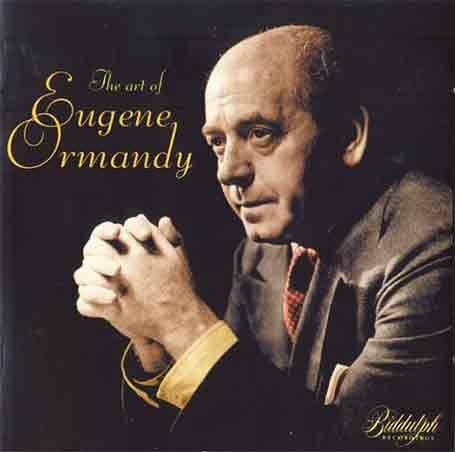
Ormandy’s Lost American Gems Barber Persichetti Vincent
It’s not so much that I am out of ideas, but it is mighty convenient that I had so much material left over from last week’s show, consisting of rarely-heard recordings of American music performed by Eugene Ormandy and the Philadelphia Orchestra.
This Sunday night on “The Lost Chord,” I reach for the already conveniently stacked CDs to cue up three more gems.
Samuel Barber was born in West Chester, Pa., not far from Philly, in 1910. He attended Philadelphia’s Curtis Institute of Music and had his first orchestral work, the “School for Scandal Overture,” performed by the Philadelphia Orchestra in 1931, when he was 21 years-old.
His “First Essay for Orchestra” was sent to Arturo Toscanini in the same mail as his “Adagio for Strings.” Toscanini performed both works with the NBC Symphony in 1938, but it was Eugene Ormandy who made the first recording of the “Essay,” with the Philadelphians, in 1940.
Vincent Persichetti was born in Philadelphia in 1915, and he died there in 1987. In between, he attended Combs College of Music, the Curtis Institute (where he studied conducting with Fritz Reiner) and the Philadelphia Conservatory. He taught at Combs and the Philly Conservatory. Then he received an invitation from William Schuman (some of whose music we heard last week) to take up a professorship at Juilliard.
Persichetti was one of our great composers, but to this day he remains underappreciated, more respected than loved. His Symphony No 4 of 1951 must be one of his most immediately attractive works.
Finally, John Vincent may be the most undeservedly neglected composer in Ormandy’s entire discography. Ormandy described his recording of Vincent’s Symphony in D (“A Festival Piece in One Movement”) as “one of the best we have ever done,” and the piece itself as “one of the finest compositions created by an American composer in the past decade.” The 1954 work sounds at times like Sibelius gone to the rodeo, but my, is it good stuff!
I hope you’ll join me for “All-American Ormandy II,” rarely-heard recordings of Barber, Persichetti and Vincent, on “The Lost Chord,” this Sunday night at 10 ET, with a repeat Wednesday evening at 6; or that you’ll listen to it later as a webcast at wwfm.org.
To help get you in the mood, here’s an in-depth interview with Persichetti by Bruce Duffie:
-
Ormandy’s Lost American Legacy
Eugene Ormandy, of course, was born in Hungary. His birth name was Jenő Blau. But he became a naturalized American citizen in 1927 and directed the Philadelphia Orchestra for 44 years.
In that capacity, he championed much contemporary music and works by his adopted countrymen –facts frequently forgotten next to his legacy as a superb interpreter of the 19th century classics.
In fact, much of his American legacy has dropped out of print. In the late 1990s, Albany Records briefly attempted to rectify the situation by reissuing some of Ormandy’s recordings of lesser-heard American music. In the event, the series only reached three discs, but each of them is a treasure.
This Sunday night on “The Lost Chord,” we’ll hear two works by Pulitzer Prize-winners, both of whose music has sadly fallen out of fashion. The first is William Schuman, the very first recipient of the Pulitzer Prize for Music in 1943, for his “Cantata No. 2, ‘A Free Song.’” At the height of his fame, Schuman was also President of Lincoln Center.
We’ll hear music he composed in 1955, called “Credendum – Article of Faith,” which was written in response to the first ever commission by the U.S. government for a symphonic work.
Norman Dello Joio was the recipient of the Pulitzer in 1957 for his “Meditations on Ecclesiastes.” The concert suite from “Air Power” was adapted from 22 individual scores he composed for the CBS television series, about the history of aviation, which aired from November 1956 through spring of 1957. Its individual sections underscore the early days of flight, with its barnstormers and daredevils, followed by those of air battles and war scenes.
I hope you’ll join me for these rarely heard recordings of American music, conducted by Eugene Ormandy. That’s “All-American Ormandy,” tonight at 10 ET, with a repeat Wednesday evening at 6; or listen to it later as a webcast at wwfm.org.
-
Veterans Day Remembrance on The Classical Network
November 11. On the 11th hour of the 11th day of the 11th month in 1918 (Paris time), the Armistice went into effect that formalized Allied victory and the end of WWI.
In 1954, at the urging of U.S. veterans, Armistice Day was renamed Veterans Day. Though the intent of the holiday is frequently confused with that of Memorial Day, Veterans Day is a time to honor all military veterans, not just those who died in service to their country.
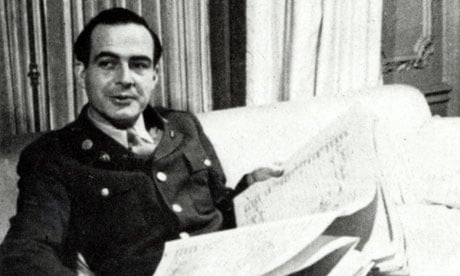
This afternoon on The Classical Network, we’ll honor several composers who served – including Samuel Barber, whose Second Symphony and “Commando March” were dedicated to the U.S. Army Air Forces – alongside other musical salutes.
We’ll also celebrate conductors Ernest Ansermet and Vernon Handley on their birthdays and remember Werner Andreas Albert, who died yesterday at the age of 84.
In addition, there will be a Cello Sonata in E-flat major by Bernhard Romberg, born on this date in 1767, performed by the late Anner Bylsma.
Join me on this 11th day of the 11th month, from 1600 to 1900 (4 to 7 p.m. EST), on WWFM – The Classical Network and wwfm.org.
PHOTOS: (counterclockwise from top) Corporal Samuel Barber, U.S. Army Air Force; John Philip Sousa in his Marine Band uniform; Sergeant Romeo Cascarino conducting an Army orchestra; and William Grant Still, U.S. Navy
Tag Cloud
Aaron Copland (93) Beethoven (95) Composer (114) Film Music (137) Film Score (143) Film Scores (255) Halloween (94) John Williams (195) KWAX (229) Leonard Bernstein (103) Marlboro Music Festival (125) Movie Music (152) Mozart (88) Opera (208) Philadelphia Orchestra (89) Picture Perfect (174) Princeton Symphony Orchestra (108) Radio (88) Ross Amico (244) Roy's Tie-Dye Sci-Fi Corner (290) The Classical Network (101) The Lost Chord (268) Vaughan Williams (103) WPRB (396) WWFM (881)