Category: Daily Dispatch

  • Rachmaninoff Rarities: Lost Chord Broadcast

    Rachmaninoff Rarities: Lost Chord Broadcast

    Don’t fear the Reaper!

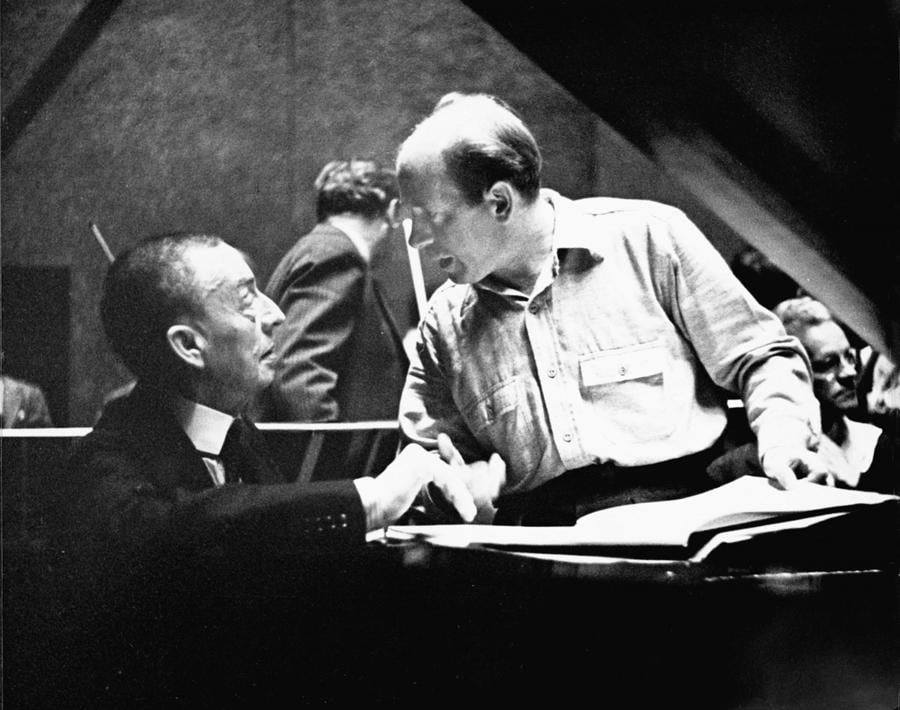
    This Sunday night on “The Lost Chord,” listen in for historic recordings of Sergei Rachmaninoff, including a newly discovered demo of his “Symphonic Dances,” with the composer playing, humming, and singing at Eugene Ormandy’s piano in 1940.

    Ormandy will introduce “Isle of the Dead” and conduct a special memorial performance with the Philadelphia Orchestra, given only days after Rachmaninoff’s death in 1943.

    And the pianist will make a meal out of the Ukrainian folk song, “Bublichki,” or “Bagels,” at a party in 1942.

    That’s “Rach of Ages” – Sergei Rachmaninoff in rare, vintage recordings. I’ll present a random harvest, this Sunday night at 10:00 EST, on WWFM – The Classical Network and wwfm.org.


    Some rare home movies, with a personal reminiscence by Alexander Greiner, manager of the concert and artist department at Steinway & Sons from 1928 to 1958.

    https://www.youtube.com/watch?time_continue=506&v=QB6-gT-dt18&feature=emb_logo


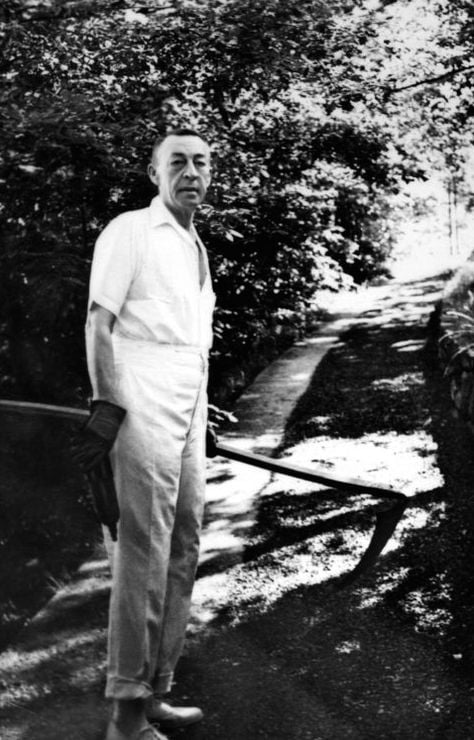
    LIFE OF THE PARTY: Depending on the source, Igor Stravinsky described him as either “six-foot-six of Russian gloom” or “a six-and-a-half foot scowl.”

  • Rachmaninoff Rediscovered on The Lost Chord

    Rachmaninoff Rediscovered on The Lost Chord

    This Sunday night on “The Lost Chord,” get a piece of the Rach!

    It’s an hour of historic recordings of Sergei Rachmaninoff.

    We’ll hear Rachmaninoff play his own “Symphonic Dances” in a newly rediscovered, fly-on-the-wall recording, captured surreptitiously at the home of Eugene Ormandy in 1940. Then Ormandy will introduce – and conduct – the Philadelphia Orchestra, in a special memorial performance of “Isle of the Dead,” given only days after the composer’s death, in 1943.

    We’ll round out the hour with a literal party piece – as Rachmaninoff tosses off the Ukrainian folk song, “Bublichki,” or “Bagels,” in 1942.

    These recordings are part of a 3-CD boxed set, issued by Marston Records, the record label of industry legend Ward Marston. Now based in West Chester, PA (he was born in Philadelphia in 1952), Marston is one of classical music’s most revered audio engineers. Incredibly, he has been blind since birth.

    Marston’s work in restoration and conservation of historic audio has been both miraculous and rapturously received. His acclaimed remasterings have appeared on the Andante, Biddulph, Naxos, Pearl, RCA, and Romophone labels. For more information and a complete catalogue of Marston Records releases, look online at marstonrecords.com.

    Then join me for an hour of Sergei Rachmaninoff in vintage recordings. That’s “Rach of Ages,” this Sunday night at 10:00 EST, on WWFM – The Classical Network and wwfm.org.

  • Avant-Garde Yardwork Sounds Penderecki Crumb Stockhausen Cage

    Avant-Garde Yardwork Sounds Penderecki Crumb Stockhausen Cage

    Saturday. Turn your yardwork into avant-garde work.

    Karlheinz Stockhausen, “Herbtsmusik” (“Autumn Music”):

    George Crumb, “Eleven Echoes of Autumn”:

    Krzysztof Penderecki, “ De natura sonoris No. 2” (“On the nature of things”):

    John Cage, from “The Seasons”:


    PHOTOS (counterclockwise from top): Penderecki, Crumb, Stockhausen and Cage

  • Writers on Film Fact vs Fiction

    Writers on Film Fact vs Fiction

    Words on the printed page captivate us so completely that it’s natural to assume that the lives of writers must be rich, full of incident, and very dramatic indeed. Surely that is sometimes the case. Who among us could keep up with a Byron or a Pushkin or a Poe?

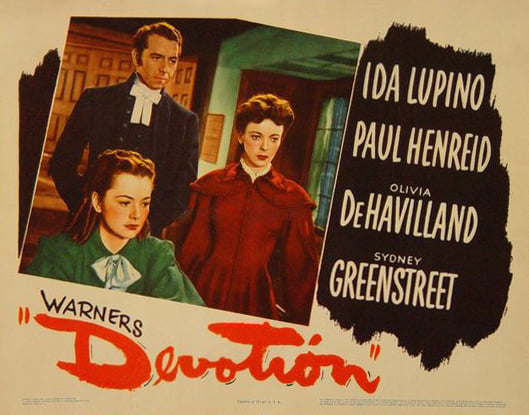
    Yet even with the most outlandish writers, Hollywood, for some reason, often feels the need to fabricate. How else to explain “Devotion” (1943), Warner Brothers’ salute to the Brontës? Then again, the temptation must be strong to characterize the sisters who penned “Jane Eyre” and “Wuthering Heights” as tortured Romantics.

    Ida Lupino plays Emily, the creator of Cathy and Heathcliff, and Olivia de Havilland, Charlotte, who conceived Jane and Rochester. Nancy Coleman is their sister Anne, who wrote “The Tenant of Wildfell Hall,” and Arthur Kennedy, their dissolute brother Branwell. The film also features Sidney Greenstreet as William Makepeace Thackeray, Paul Henreid as an Irish priest, and – well, you get the idea. The casting, at times, strains credibility.

    However, the music by Erich Wolfgang Korngold is up to the composer’s usual high standard. Korngold himself became so enamored of one of its themes that he recycled it for use in the first movement of his Violin Concerto.

    The behind-the-scenes drama on “Devotion” is nearly as colorful as anything that made it to the screen. De Havilland had originally been cast to play Emily, and her real-life sister, Joan Fontaine, was to play Charlotte. De Havilland and Fontaine had an uneasy relationship, at best, their entire lives. At times they competed for the same men (Howard Hughes) and the same roles (Melanie in “Gone With the Wind” and the “second Mrs. De Winter” in Alfred Hitchcock’s “Rebecca”). In 1942, they were both in contention for the Academy Award for Best Actress. Fontaine won. De Havilland wouldn’t win her first Oscar until 1946. To say that the two were competitive is putting it mildly.

    Fortunately for everyone on the set, an offer had come through for Fontaine to play Charlotte Brontë’s most famous creation, Jane Eyre, opposite Orson Welles’ Rochester, over at 20th Century Fox. So De Havilland assumed the part vacated by Fontaine.

    After shooting wrapped, “Devotion” actually sat on the shelf for three years, as De Havilland successfully sued Warner Brothers to terminate her contract without her having to make up the six months she had been kept on “suspension.” Until then, actors under contract to the major studios had been considered suspended between jobs, thereby extending their obligation to their employers, so that, for instance, a seven year contract was spread out over a much longer period, fulfilled only during the time an actor was actually working. The legal victory became informally known as the De Havilland Law.

    In addition to Korngold’s take on the Brontës, we’ll have music from movies inspired by Iris Murdoch (“Iris,” with music by James Horner), the Bard of Avon (“Shakespeare in Love,” with an Academy Award-winning score by Stephen Warbeck), and Samuel Clemens (“The Adventures of Mark Twain,” by Max Steiner).

    I hope you’ll join me for real-life writers who appeared as characters in the movies, on “Picture Perfect,” this Friday evening at 6:00 EST, on WWFM – The Classical Network at wwfm.org.
  • Herbert Chappell Three Tenors Dawn of the Dead

    Herbert Chappell Three Tenors Dawn of the Dead

    The composer and producer Herbert Chappell has died. Chappell had his fingers in a lot of pies. For television, he wrote music for “The Pallisers” and “Paddington Bear.” He also worked in feature films in the ‘60s, ‘70s and ‘80s.

    He achieved a popular and critical success with his documentary “African Sanctus,” which follows composer David Fanshawe on his quest to write and record his most famous work. The piece juxtaposes the Latin Mass with traditional African music.

    Without doubt, however, Chappell’s greatest coup was the deal he cut on behalf of Decca records for his production of the first “Three Tenors” telecast. No one, not even the tenors themselves, anticipated its staggering success. This led to some resentment on behalf of the artists, who had taken their cut upfront. (Luciano Pavarotti, a Decca artist, was able to renegotiate his contract for an additional $1.5 million.)

    Let’s just say that Herbert Chappell was not your stereotypical starving artist.

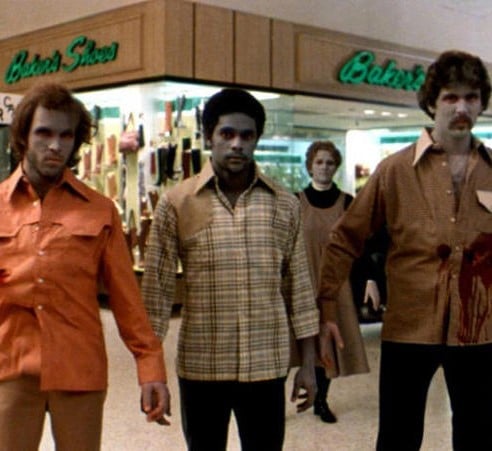
    To include in my “31 Days of Halloween” posts, I was hoping to locate an online audio file of Chappell’s “Boy Wizard,” an overture clearly inspired by Harry Potter. Instead, I came up with countless videos of “The Gonk,” which achieved cult status thanks to its use in George A. Romero’s “Dawn of the Dead.”

    More recently the music has been used to sell Newcastle Brown Ale:

    https://www.ispot.tv/ad/7I07/newcastle-brown-ale-great-times

    Herbert Chappell was 85 years-old.


    A more complete biography:

    http://www.musicsalesclassical.com/composer/short-bio/herbert-chappell

    “The Gonk:”

    A little more substantial, Chappell’s “Caribbean Concerto” for guitar and orchestra:


    PHOTOS: (counterclockwise from top) Chappell, the Three Tenors, and three zombies

Tag Cloud

Aaron Copland (93) Beethoven (95) Composer (114) Film Music (137) Film Score (143) Film Scores (255) Halloween (94) John Williams (195) KWAX (229) Leonard Bernstein (103) Marlboro Music Festival (125) Movie Music (152) Mozart (88) Opera (208) Philadelphia Orchestra (89) Picture Perfect (174) Princeton Symphony Orchestra (108) Radio (88) Ross Amico (244) Roy's Tie-Dye Sci-Fi Corner (290) The Classical Network (101) The Lost Chord (268) Vaughan Williams (103) WPRB (396) WWFM (881)

DON’T MISS A BEAT

Receive a weekly digest every Sunday at noon by signing up here


RECENT POSTS