Category: Daily Dispatch

  • Radiohead’s Muse Princeton Composer Celebrates

    Radiohead’s Muse Princeton Composer Celebrates

    “I was a crummy student. I never really did what my teachers told me.”

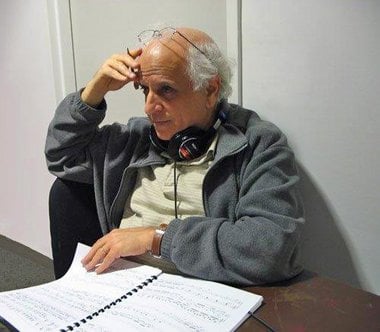
    That independent streak has served Paul Lansky well. Lansky was on the faculty of Princeton University from 1969 to 2014. He chaired the music department there for nine years, from 1991 to 2000.

    A French hornist who became a pioneering composer of computer music, he caught the ear of the experimental rock band Radiohead and formed a fruitful association with guitarist David Starobin. Starobin’s Bridge Records, Inc. continues to document Lansky’s post-electronic works for standard acoustic instruments.

    When he retired from Princeton after 45 years of service, it was never Lansky’s plan to stop composing. In fact, he remains as busy as ever, with the past few years being a remarkably fertile period.

    Some of his recent music will be heard on a special tribute concert, to be presented in honor of his 75th birthday, at Princeton’s Richardson Auditorium, in Alexander Hall, on Sunday at 3 p.m.

    Read more about it in my article in this week’s U.S. 1 Newspaper – PrincetonInfo, out today. It’s the first time I ever used the word “fart” in print.

    https://princetoninfo.com/a-composer-celebrates-with-wit-and-human-touch/

  • Horszowski, Pizzetti, and a Forgotten Generation

    Horszowski, Pizzetti, and a Forgotten Generation

    One of the greatest pianists of his generation serves a forgotten master of “la generazione dell’Ottanta” on this week’s “Music from Marlboro.”

    But what generation is that, exactly?

    Mieczyslaw Horszowski had one of the longest careers of any performing artist. A pupil of Theodor Leschetizky, who studied with Carl Czerny, who was a pupil of Beethoven, Horszowski played Beethoven’s Piano Concerto No. 1 in public for the first time in 1901.

    His first teacher was his mother, who herself had studied with Karol Mikuli, a pupil of Frederic Chopin. So Horszowski’s artistry was forged at the intersection of two great traditions.

    He may have been small of stature, even in maturity, standing barely five feet tall – his limited reach ruled out some of the more virtuosic repertoire – but his performance history was more diverse than his discography might suggest.

    Horszowski joined the faculty of the Curtis Institute of Music in 1942 and remained there for over 50 years, giving his final lesson only a week before his death in 1993, one month shy of his 101st birthday. Among his pupils were Murray Perahia, Richard Goode, Peter Serkin and Cecile Licad.

    He was distinguished by lineage, longevity and legacy, then. However, what made him truly exceptional as a performer was his ability to bring out the poetry in anything he touched. That certainly proves to be the case in his performance of the Piano Trio in A by Ildebrando Pizzetti, a romantic gem that somehow rolled off the musical map.

    A contemporary of Ottorino Respighi, Alfredo Casella and Gian Francesco Malipiero, Pizzetti lived from 1880 to 1968. Collectively, they formed the so-called “Generation of the Eighties.” These artists of the post-Puccini era made their mark in the concert halls, as opposed to the opera houses – certainly a change of pace for Italy.

    Pizzetti was probably best-known as an associate of Gabrielle d’Annunzio, providing incidental music for d’Annunzio’s plays, setting his libretto for the tragedy “Fedra,” and writing a musical setpiece for the silent film classic “Cabiria” (after a d’Annunzio screenplay).

    The Piano Trio in A, written in 1925, is one of Pizzetti’s most autobiographical pieces. The work reflects the unexpected joy the composer felt at finding love again with the woman who would become his second wife (she’s represented by the violin; he by the cello), following the untimely death of his first. There is plenty of drama, lyricism and warmth throughout the 30-minute piece, which is very seldom performed.

    Horszowski played it at the Marlboro Music Festival in 1968, with violinist Pina Carmirelli and cellist Leslie Parnas.

    As if that isn’t enticement enough, the hour will begin with Horszowski and the Marlboro Festival Orchestra conducted by Felix Galimir in 1982 – the pianist a mere 90 years-old at the time – in the Keyboard Concerto No. 7 in G minor, BWV 1058, by Johann Sebastian Bach.

    All hail Horszowski! Mieczyslaw Horszowski plays Bach and Pizzetti on the next “Music from Marlboro,” this Wednesday evening at 6:00 EST, on WWFM – The Classical Network and wwfm.org.

    Marlboro School of Music and Festival: Official Page


    PHOTO: Mieczyslaw Horszowski (center) with Marlboro co-founder Rudolf Serkin and an up-and-coming Ruth Laredo
  • Autumn Music on The Classical Network

    Autumn Music on The Classical Network

    Now that we’ve changed the clocks, we’re officially in deep autumn – whether the temperatures happen to agree or not.

    Join me this afternoon on The Classical Network, as we finally get around to giving the season its due. We’ll hear the Symphony No. 10, “Zur Herbstzeit” (“To Autumn Time),” by Joachim Raff; “Poema autunnale” for violin and orchestra by Ottorini Respighi;” “The Seasons” by Alexander Glazunov;” “Fall of the Leaf” by Gerald Finzi; the “Sinfonia di Caccia” by Leopold Mozart; “November Woods” by Sir Arnold Bax; “Autumn Crocus” by Billy Mayerl; the Symphony No. 4, “Fall of the Leaf,” by Rued Langgaard; and “Autumn Gardens” by Einojuhani Rautavaara.

    Today’s Noontime Concert will be a comparatively brief one. John Mark Rozendaal and Adam Young will perform works for two violas da gamba by Tobias Hume and Johannes Schenck. The program, “Poeticall Musicke,” was presented as part of the Midtown Concerts series at the chapel of St. Bartholomew’s Church, 325 Park Avenue in New York City. Free concerts are held at St. Bart’s every Thursday at 1:15 p.m. For more information and a complete schedule, visit the website of Gotham Early Music Scene, gemsny.org.

    Find a dry place and enjoy a nice hot cup of something. It’s autumn. Be good to yourself. Tune in today, from 12 to 4 p.m. EST, to WWFM – The Classical Network and wwfm.org.

  • Carl Tausig: Liszt’s Mischievous Genius

    Carl Tausig: Liszt’s Mischievous Genius

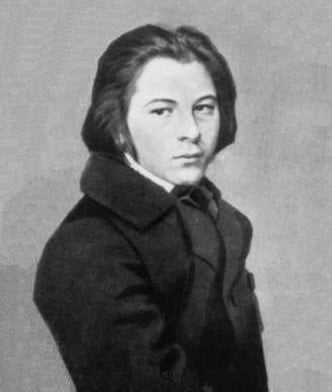
    Carl Tausig was the supremely talented, though impish protégé of Franz Liszt. Some say that he was Liszt’s greatest pupil.

    Tausig joined Liszt in Weimar at the age of 14. Energetic to a fault, he got up to all sorts of mischief, including sawing the ends off piano keys in order to make the instrument more challenging to play. He also hocked the original, unpublished manuscript of Liszt’s “A Faust Symphony,” an entire year’s labor, for a mere pittance. (Fortunately, Liszt was able to retrieve it.)

    Tausig then joined Richard Wagner in his political exile in Switzerland, where the boy’s boisterous behavior caused the operatic master his own share of distress. There must have been something exceptionally endearing in his personality, since he was always quickly forgiven.

    At a birthday celebration for the young pianist, Liszt predicted, with a twinkle in his eye, that Tausig would become either a great blockhead or a great master.

    Regrettably, his career was cut short. He died of typhoid fever, aged only 29 years.

    I’ll celebrate this mercurial pianist, born on this date in 1841, with recordings of some of his original music and transcriptions, this afternoon between 4 and 7 p.m. EST, on WWFM – The Classical Network and wwfm.org.


    Tausig, the merry prankster (left), and Wagner, looking vexed

  • Watch Cleveland Institute of Music’s The Juniper Tree

    If you missed both live streams, the Cleveland Institute of Music’s Sunday night performance of the Philip Glass-Robert Moran opera, “The Juniper Tree,” has been add to the first, both now posted to CIM’s Facebook page. You can watch by clicking on the play button below.

    I mentioned my concern that the peripheral action on the side balcony would not be visible to a single, stationary camera in the back of the hall, but happily that is not the case. However, I do recommend you read the brief synopsis in the program book before viewing.

    Here’s a link to the printed program, with synopsis and introductory comments by Robert Moran:

    https://www.cim.edu/sites/default/files/inline-files/The%20Juniper%20Tree_0.pdf?fbclid=IwAR3RkD78c2smjNhFq_HeKueh33G-1VyMHIoILOiyp5PiOnOBZO9seEpzVzo

Tag Cloud

Aaron Copland (93) Beethoven (95) Composer (114) Film Music (137) Film Score (143) Film Scores (255) Halloween (94) John Williams (195) KWAX (229) Leonard Bernstein (103) Marlboro Music Festival (125) Movie Music (152) Mozart (88) Opera (208) Philadelphia Orchestra (89) Picture Perfect (174) Princeton Symphony Orchestra (108) Radio (88) Ross Amico (244) Roy's Tie-Dye Sci-Fi Corner (290) The Classical Network (101) The Lost Chord (268) Vaughan Williams (103) WPRB (396) WWFM (881)

DON’T MISS A BEAT

Receive a weekly digest every Sunday at noon by signing up here


RECENT POSTS