Category: Daily Dispatch

  • Wassenaer vs Dittersdorf Birthday Name Game

    Wassenaer vs Dittersdorf Birthday Name Game

    Today’s Birthday Challenge:

    Whose name is more fun to say, Unico Wilhelm van Wassenaer or Carl Ditters von Dittersdorf?

    Wassenaer (1692-1766), the Dutch nobleman who composed his six “Concerti Armonici” on a whim, refused to have them published, until a couple of his friends twisted his arm. Wassenaer would condone it, barely, but only if his name was in no way connected with the material. Instead, the concertos would be attributed to violinist Carlo Ricciotti, who played in their first private performance, and dedicated to Wassenaer’s friend, Count Willem Bentick. A rumor circulate that the collection was actually the work of Giovanni Pergolesi, which is why, in 1920, a movement of the Concerto Armonico No. 2 wound up being used in Stravinsky’s ballet “Pulcinella” (allegedly on Pergolesi themes).

    Here’s how it sounds in the original:

    “…[T]hese concertos were published against my wishes,” Wassenaer wrote. “Some of them are tolerable, some middling, others wretched. Had they not been published, I would perhaps have corrected the mistakes in them, but other business has left me no leisure to amuse myself with them, and I would have caused their editor offence.”

    Dittersdorf (1739-1799) was one of the closest friends of Franz Joseph Haydn.

    He played first violin in a superstar string quartet that also included Haydn (second violin), Mozart (viola) and Dittersdorf pupil Jan Křtitel Vaňhal – a.k.a. Johann Baptist Wanhal (cello). Imagine being a fly on a wall at those performances, or even rehearsals! (Though wet blanket Michael Kelly, the Irish tenor who created Don Basilio and Don Curzio in Mozart’s “The Marriage of Figaro,” claimed the ensemble played well enough, but was nothing exceptional.)

    Among Dittersdorf’s enormous output, which includes some 120 numbered symphonies (it’s possible he may have composed 90 more), are twelve programmatic works inspired by Ovid’s “Metamorphoses.”

    Personally, I find more enjoyment in his chamber music. Here is his String Quartet No. 3 in G major.

    I’d never actually juxtaposed them before today, but of the two composers’ names, I’d have to say, it just tickles me to say “Carl Ditters von Dittersdorf.” How’s about you?

    Happy birthday, boys!


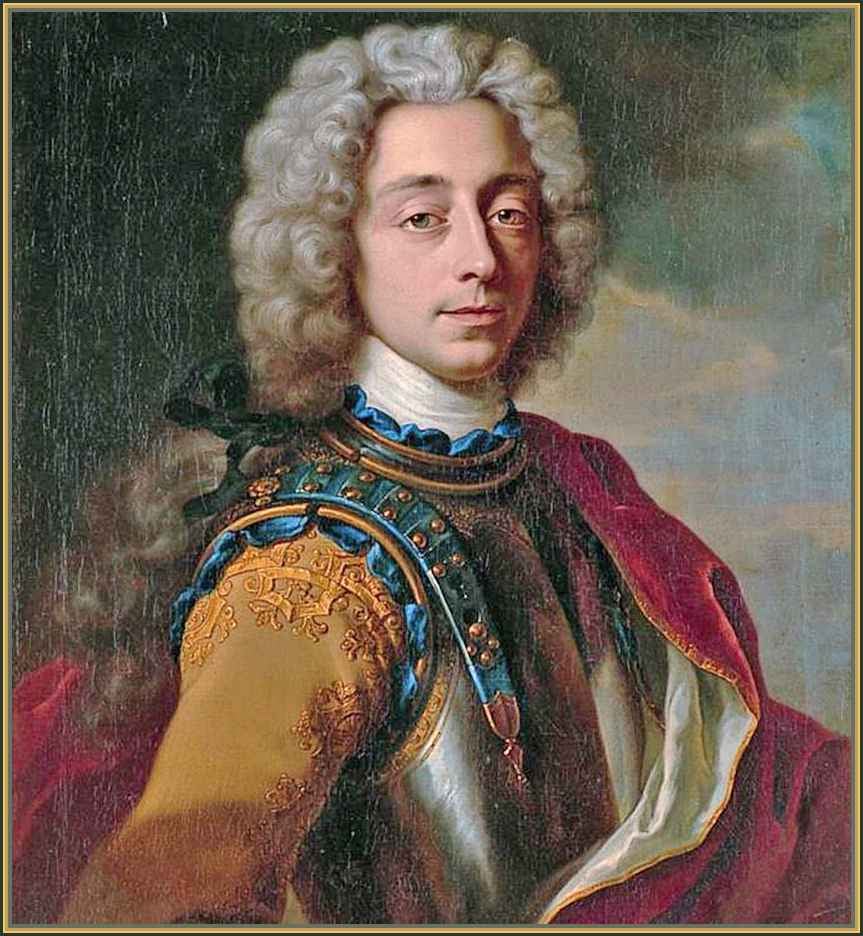
    PICTURED: Supercilious Wassenaer (left) and super-silly Dittersdorf
  • Wassenaer vs Dittersdorf Name Game

    Wassenaer vs Dittersdorf Name Game

    Today’s Birthday Challenge:

    Whose name is more fun to say, Unico Wilhelm van Wassenaer or Carl Ditters von Dittersdorf?

    Wassenaer (1692-1766), the Dutch nobleman who composed his six “Concerti Armonici” on a whim, refused to have them published, until a couple of his friends twisted his arm. Wassenaer would condone it, barely, but only if his name was in no way connected with the material. Instead, the concertos would be attributed to violinist Carlo Ricciotti, who played in their first private performance, and dedicated to Wassenaer’s friend, Count Willem Bentick. A rumor circulated that the collection was actually the work of Giovanni Pergolesi, which is why, in 1920, a movement of the Concerto Armonico No. 2 wound up being used in Stravinsky’s ballet “Pulcinella” (allegedly on Pergolesi themes).

    Here’s how it sounds in the original:

    “…[T]hese concertos were published against my wishes,” Wassenaer wrote. “Some of them are tolerable, some middling, others wretched. Had they not been published, I would perhaps have corrected the mistakes in them, but other business has left me no leisure to amuse myself with them, and I would have caused their editor offence.”

    Dittersdorf (1739-1799) was one of the closest friends of Franz Joseph Haydn.

    He played first violin in a superstar string quartet that also included Haydn (second violin), Mozart (viola) and Dittersdorf pupil Jan Křtitel Vaňhal – a.k.a. Johann Baptist Wanhal (cello). Imagine being a fly on a wall at those performances, or even rehearsals! (Though wet blanket Michael Kelly, the Irish tenor who created Don Basilio and Don Curzio in Mozart’s “The Marriage of Figaro,” claimed the ensemble played well enough, but was nothing exceptional.)

    Among Dittersdorf’s enormous output, which includes some 120 numbered symphonies (it’s possible he may have composed 90 more), are twelve programmatic works inspired by Ovid’s “Metamorphoses.”

    Personally, I find more enjoyment in his chamber music. Here is his String Quartet No. 3 in G major.

    I’d never actually juxtaposed them before today, but of the two composers’ names, I’d have to say, it just tickles me to say “Carl Ditters von Dittersdorf.” How’s about you?

    Happy birthday, boys!


    PICTURED: Supercilious Wassenaer (left) and super-silly Dittersdorf
  • Ann Crumb Broadway Star Dies at 69

    Ann Crumb Broadway Star Dies at 69

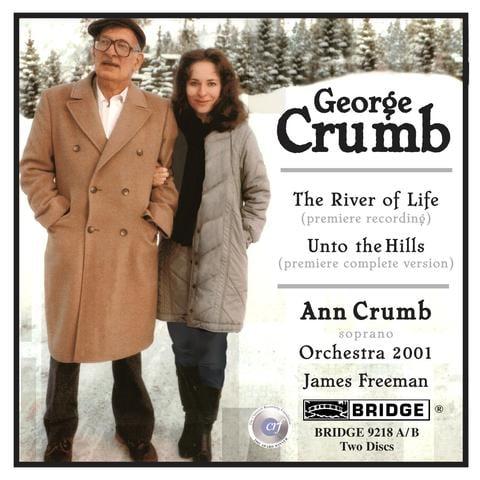
    Broadway actress Ann Crumb has died. The daughter of Pulitzer Prize winning composer George Crumb – who turned 90 on October 24th – Ann created the role of Rose Vibert in both the London and Broadway productions of Andrew Lloyd Webber’s “Aspects of Love” and earned a Tony nomination for her performance in the title role of “Anna Karenina.”

    She was both an inspiration and advocate for her father’s late series of masterpieces, collectively known as “American Songbook,” for which the composer drew on fondly-recollected musical material from his West Virginia boyhood. Ann introduced a number of these song cycles in concert, with Orchestra 2001, and recorded them for Bridge Records, Inc.

    She was a lovely person, very much involved in animal rescue and adoption. Ann Crumb was 69 years-old.

    I’ll remember her today, among my musical offerings, between 4 and 6 p.m. EDT, on WWFM – The Classical Network and wwfm.org.

    http://www.playbill.com/article/ann-crumb-musical-theatre-star-of-aspects-of-love-and-anna-karenina-dies-at-69

  • Lives of the Saints Classic Film Scores

    Lives of the Saints Classic Film Scores

    This week on “Picture Perfect,” on this November 1st, the saints go marching in.

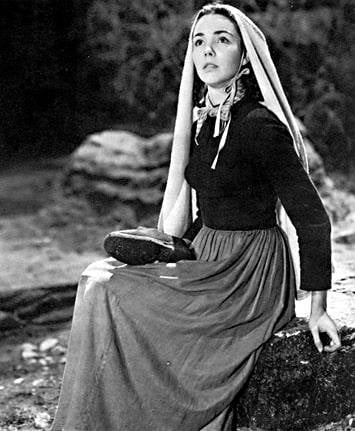
    We’ll hear a suite from “The Song of Bernadette” (1943), one of Jennifer Jones’ finest hours. Jones was honored with an Academy Award for her performance. The film was nominated in 12 categories. Franz Werfel’s novel relates the story of Bernadette Soubirous, a Lourdes peasant prone to visions of the Blessed Virgin Mary.

    Igor Stravinsky made several attempts to break into Hollywood film scoring, but he couldn’t keep up with the relentless schedule. He took a crack at the “Apparition of the Virgin” scene, but then had second thoughts. The project went to Alfred Newman, who won his third of nine Oscars. Stravinsky’s music was recycled in the second movement of his “Symphony in Three Movements.”

    The life of Joan of Arc has been translated to film many times. In the case of “Saint Joan” (1957), Otto Preminger adapted the play by George Bernard Shaw. Newcomer Jean Seberg was cast in the title role. Her inexperience brought her in for a sound critical drubbing. Even an old hand like screenwriter Graham Greene was not immune to critical barbs for the liberties he took in reworking Shaw’s play. Despite all that, the score, by Russian-born English composer Mischa Spoliansky, is lovely.

    By contrast, the film of “A Man for All Seasons” (1966), after the play of Robert Bolt, was lavishly praised, especially Paul Scofield’s performance as Sir Thomas More, for which he received an Academy Award for Best Actor. The film was the recipient of six Oscars in all, including that for Best Picture. The period-inflected score is by Georges Delerue.

    Henryk Sienkiewicz’s international bestseller, “Quo Vadis,” incorporates into its narrative Saints Peter and Paul, but the truly interesting characters are the cynical Petronius, who really knows how to throw a party, and the quite mad Nero, who plays the lyre, even as Rome burns.

    Miklós Rózsa’s score has been much-lauded for its attempt at historical authenticity – allegedly it incorporates early Greek, Hebrew and Sicilian melodies – though its popularity has been eclipsed, somewhat, by Rózsa’s “Ben-Hur” and “King of Kings.” “Quo Vadis” is really the film in which Rózsa lays out the blueprint for a decade or more of big screen piety. Bernard Herrmann called it “the score of a lifetime.”

    I hope you’ll join me for “Lives of the Saints,” on this All Saints’ Day, on “Picture Perfect,” music for the movies, this Friday evening at 6:00 EDT, on WWFM – The Classical Network and wwfm.org.


    PHOTO: Jennifer Jones and the Lourdes’ prayer

Tag Cloud

Aaron Copland (93) Beethoven (95) Composer (114) Film Music (137) Film Score (143) Film Scores (255) Halloween (94) John Williams (195) KWAX (229) Leonard Bernstein (103) Marlboro Music Festival (125) Movie Music (152) Mozart (88) Opera (208) Philadelphia Orchestra (89) Picture Perfect (174) Princeton Symphony Orchestra (108) Radio (88) Ross Amico (244) Roy's Tie-Dye Sci-Fi Corner (290) The Classical Network (101) The Lost Chord (268) Vaughan Williams (103) WPRB (396) WWFM (881)

DON’T MISS A BEAT

Receive a weekly digest every Sunday at noon by signing up here


RECENT POSTS