Category: Daily Dispatch

  • Rosh Hashanah ’80s Vibe on The Lost Chord

    Rosh Hashanah ’80s Vibe on The Lost Chord

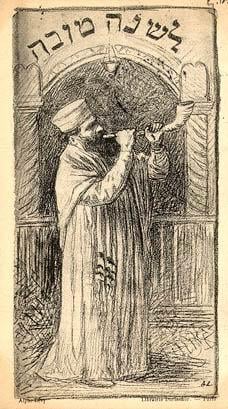
    Shana Tova! Are you ready for the ‘80s?

    This Sunday night on “The Lost Chord,” to coincide with Rosh Hashana, the Jewish New Year, we welcome 5780, and greet the High Holidays with two complementary works.

    Jacob Weinberg’s String Quartet, Op. 55, of 1950, falls into three movements: “Rosh Hashana,” “Yom Kippur” and “Sukkot.” “Yom Kippur” is based on the cantorial chant “Kol Nidre.” (You know, the same one famously employed by Max Bruch.)

    Ernest Bloch’s “Israel Symphony,” composed between 1912 and 1917, is more like an orchestral rhapsody, with its three sections – “Prayer in the Desert,” “Yom Kippur” and “Succoth” – played continuously and capped by parts for four vocal soloists.

    Sukkot, which follows Yom Kippur by only five days, is the harvest festival, during which temporary dwellings (or sukkot) are erected to commemorate the Jews’ 40 years wandering in the desert after the Exodus from Egypt. In modern times, these are decorated with fruits and vines. In contrast to the austerity and fasting of Yom Kippur, Sukkot is a celebration of life and abundance. But in ancient Israel, it was a solemn affair, with sacrifices offered at the temple.

    The High Holidays are a period of reflection, ten days of awe and repentance, culminating in Yom Kippur, the Day of Atonement.

    I hope you’ll join me in welcoming 5780, on “Totally Awesome,” this Sunday night at 10:00 EDT, on WWFM – The Classical Network and wwfm.org.

  • Sleepless Week Apes Deadlines and Local Music

    Sleepless Week Apes Deadlines and Local Music

    What a week it’s been! It’s getting so that a guy can’t simply procrastinate and push a deadline on a newspaper article. This week, I was late because I had no choice. (Of course, the fact that the would-be subject was incommunicado in New Mexico didn’t help.)

    On top of this, my radio shifts, my volunteer work, and certain personal obligations, I knew I had to push myself if I was ever going to get the new Planet of the Apes boxed set on to “Picture Perfect.” Even getting four or five hours sleep on three consecutive nights, there was not enough time in the day. The “Apes” show was recorded and in the can only by around 1:00 on Friday afternoon. (Deadline for weekend shows is Thursday.)

    That in itself might not be enough to draw sympathetic tears, but when I produce new material for “Picture Perfect” and “The Lost Chord,” I do not get paid. The only way I receive compensation for all my hard work is if the shows have an underwriter. And I’ve been working without an underwriter for over a year. Which is why, from time to time, you may dimly recollect having once or twice previously heard a show. I’m pretty good at disguising leftovers, but in a pinch and at the end of a long week, sometimes I just have to dole out a rerun.

    With my schedule, If I’m to produce a new show for free, I really have to be enthusiastic about it.

    How can you help? You can message me with any suggestions for potential underwriters.

    Also, in connection to my newspaper work, if you have any ideas for really interesting, music-related stories with a local slant, please let me know. The local slant is important. U.S. 1 (based in Princeton) prefers to emphasize a community angle. While the story can certainly tie in with your favorite organization’s upcoming concert, the hook should be something that inspires community interest.

    That said, if they’re planning an important or unique concert, a profile of the organization, performer or conductor may be enough. But if they’ve been profiled recently, please don’t be disappointed if I can’t get the go-ahead to do the story, and they wind up as a listing in the arts calendar.

    Again, please feel free to message me with any leads or suggestions. Thank you for your help in keeping Classic Ross Amico solvent (if sleepless).

  • Planet of the Apes Box Set Soundtrack Review

    Planet of the Apes Box Set Soundtrack Review

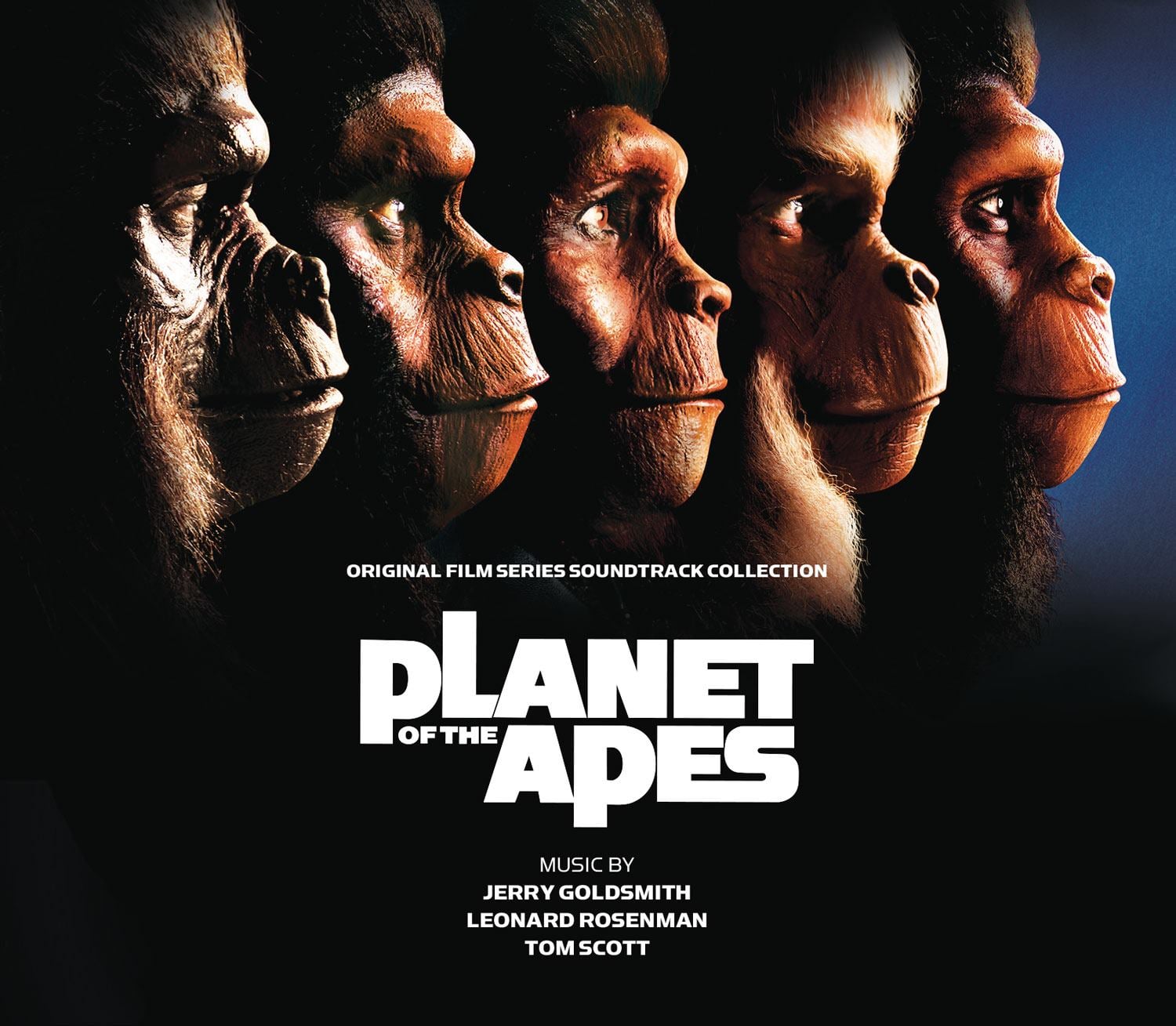
    I was all set to crow to you guys when this set arrived in the mail the other week. All five scores for the original “Planet of the Apes” movies, newly restored and remastered, on CD!

    But then I felt sick reading about and looking at images of the rainforest in flames, and under the circumstances I thought it would be a little crass.

    Upon further reflection, however, I’ve come to realize that nothing could be more appropriate, as human civilization is playing out just as the “Apes” movies forecast. The “Apes” movies were all thinly veiled allegories about all the ways humans are idiots – violent, acquisitive, xenophobic, racist, and irredeemably destructive.

    Our demise is inevitable – but at least for now, we have this lovingly restored, limited edition boxed set from La-La Land Records.

    This week on “Picture Perfect,” I’ll share the bounty, as we sample music from “Planet of the Apes” (1968),” “Beneath the Planet of the Apes” (1970), “Escape from the Planet of the Apes” (1971), “Conquest of the Planet of the Apes” (1972), and “Battle for the Planet of the Apes” (1973). Composers will include Jerry Goldsmith, Leonard Rosenman, and Tom Scott.

    Has there ever been a more nihilistic series pitched to a family audience? From the era of Flower Power, the Vietnam War, and the Nixon administration, “Planet of the Apes” was the ultimate bad trip. It’s easy to view these films as silly, escapist fare, but half a century later, the themes, subtexts and overarching message of “Planet of the Apes” remain disconcertingly relevant.

    Keep your filthy paws off me, you damn dirty apes! Yes we have no bananas, on “Picture Perfect” – music for the movies – this Friday evening at 6:00 EDT, on WWFM – The Classical Network and wwfm.org.
  • Paul Badura-Skoda Dies at 91

    Paul Badura-Skoda Dies at 91

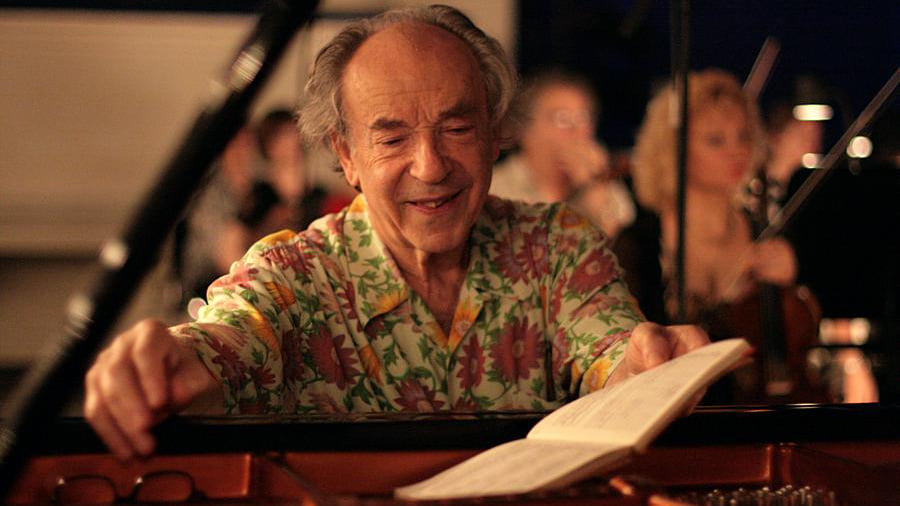
    I am sorry to report, the pianist Paul Badura-Skoda has died, just shy of his 92th birthday. The news comes only a week after his death was rumored on social media. Who would want to perpetrate an internet hoax about the death of a 91 year-old pianist?

    As I had previously confused him with Jörg Demus, another musician with a venerable career, who died in April at the age of 90, here’s a clip of the two playing together, in a selection from Franz Schubert’s Fantasia in F minor.

    Want to live a long life? Take up the piano.

    https://www.gramophone.co.uk/classical-music-news/pianist-paul-badura-skoda-has-died-at-the-age-of-91

  • George Gershwin Life in Music Broadway Jazz

    George Gershwin Life in Music Broadway Jazz

    He began his career as a song plugger on New York’s Tin Pan Alley. He was “discovered” by Al Jolson, who gave him his biggest hit. He composed a string of successful stage musicals with lyrics by his brother, Ira.

    Though he had classical training, he was turned away by both Nadia Boulanger and Maurice Ravel, on the grounds that they didn’t want to spoil his natural voice. He played tennis with Arnold Schoenberg, who also refused him lessons. He kept an autographed photo of Alban Berg in his apartment, next to one of Jack Dempsey.

    His musical, “Of Thee I Sing,” was the first to win a Pulitzer Prize. His opera, “Porgy and Bess,” was a failure at its premiere. His songs graced elegant screen comedies of the 1930s. In the concert hall, he was America’s most authentic voice.

    George Gershwin died of a brain tumor in 1937, at the age of 38. Reportedly, his last words were “Fred Astaire.”

    Here are a couple of fascinating documents, set down in 1926, of Fred and Adele Astaire singing with Gershwin at the piano.

    The Astaires headlined two of Gershwin’s Broadway musicals, “Lady Be Good!” (1924) and “Funny Face” (1927). Adele married in 1932 and retired from show business. Fred later starred in the film musicals “Shall We Dance”(1937) and “A Damsel in Distress” (1937), both at least partially scored by Gershwin.

    Gershwin received his only Academy Award nomination for Best Original Song in 1937, for “They Can’t Take That Away from Me,” from “Shall We Dance.” The nomination was posthumous, as Gershwin had died two months after the film’s release.

    The flame that burns twice as bright burns half as long. Happy birthday, George Gershwin.


    PHOTO (left to right): Fred, George and Ira

Tag Cloud

Aaron Copland (93) Beethoven (95) Composer (114) Film Music (137) Film Score (143) Film Scores (255) Halloween (94) John Williams (195) KWAX (229) Leonard Bernstein (103) Marlboro Music Festival (125) Movie Music (152) Mozart (88) Opera (208) Philadelphia Orchestra (89) Picture Perfect (174) Princeton Symphony Orchestra (108) Radio (88) Ross Amico (244) Roy's Tie-Dye Sci-Fi Corner (290) The Classical Network (101) The Lost Chord (268) Vaughan Williams (103) WPRB (396) WWFM (881)

DON’T MISS A BEAT

Receive a weekly digest every Sunday at noon by signing up here


RECENT POSTS