Category: Daily Dispatch

  • Janáček: Late Bloomer, Ageless Master

    Janáček: Late Bloomer, Ageless Master

    Some people are just late bloomers.

    Take the Czech master, Leoš Janáček. Janáček started out as a fairly unremarkable, albeit wholly capable composer, essentially following in the footsteps of his pioneering countrymen Bedřich Smetana and Antonin Dvořák. But then two things happened: (1) he discovered a way to distill his folkloric interests into a uniquely personal, modern idiom; and (2) he fell in love.

    Yet another overnight success decades in the making, Janáček began churning out masterpiece after masterpiece at an age when most respectable folk were teetering into retirement. His prolific Indian summer is attributable, in part, to his sublimated passion for Kamila Stösslová. Stösslová was a married woman some 38 years the composer’s junior.

    On the next “Music from Marlboro,” we’ll hear a string quartet written under the influence of his muse.

    The composer’s ardent feelings for Stösslová could be said to color both of his surviving quartets. At the time he undertook the first of these, Janáček was 69. (He composed the second, in the year of his death, at the age of 74.) The String Quartet No. 1 was written at white heat in October of 1923. Janáček revised it the following month.

    Subtitled “Kreutzer Sonata,” the work was inspired by Leo Tolstoy’s novella – which in turn takes its name from Beethoven’s famous violin sonata, dedicated to Rodolphe Kreutzer. Tolstoy’s story is a study in ungoverned passions – a triangle (real or imagined) between the first-person narrator, his wife (a pianist), and her perceived lover, a violinist, with whom she plays Beethoven’s sonata. The husband returns from a trip, finds the two dining together, and stabs his wife in a fit of jealous rage.

    Janáček made no attempt to follow a detailed program in the writing of his quartet. Instead, the music is reflective of the characters’ emotional and psychological states. In particular, he sympathizes with the wife.

    The music is heightened by certain “special effects” – harmonics, ostinatos, trills, pizzicatos, and muted passages, with the musicians employing a technique known as “sul ponticello,” playing on the bridges of their instruments, to achieve a kind of eerie quality. In the third movement, there is a veiled allusion to the slow movement of Beethoven’s sonata.

    We’ll hear it performed at the 2009 Marlboro Music Festival, by violinists Tien-Hsin Cindy Wu and Arnold Steinhardt, violist Yura Lee, and cellist Susan Babini.

    Then Antonin Dvořák demonstrates how it used to be done, with his String Sextet in A major, Op. 48. Dvorak’s sextet was composed largely in May of 1878, making it contemporaneous with his first set of “Slavonic Dances.” In fact, the work’s two inner movements bear overtly Czech nationalist titles: Dumka and Furiant.

    In music, dumka (literally, “thought”) signifies a kind of melancholy introspection. A furiant is a rapid and fiery Czech dance.

    The sextet holds an important place in Dvořák’s development. Thanks to a government subsidy, Dvořák was able to concentrate solely on composition, and he was determined to confirm his worth.

    The work was performed at the 2017 Marlboro Music Festival, by violinists Stephen Tavani and Scott St. John, violists Rosalind Ventris and Rebecca Albers, and cellists Alice Yoo and Judith Serkin.

    Happy birthday, Leoš Janáček. We’ll be picking up the Czech this week, on the next “Music from Marlboro,” this Wednesday evening at 6:00 EDT, on WWFM – The Classical Network and wwfm.org.

    Marlboro School of Music and Festival: Official Page


    “Kreutzer Sonata,” René François Xavier Prinet (1901)
  • Gluck The Eccentric Genius of Opera Reform

    Gluck The Eccentric Genius of Opera Reform

    Here comes my annual post on Christoph Willibald Gluck (1714-1787).

    For a man whose surname means “happiness,” he certainly could be a mercurial fellow.

    Once, during an appearance at London’s Haymarket Theatre, Gluck strode onstage, not to sit down at a keyboard or to wow his audience on a stringed instrument. Instead he picked up two sticks and started to play an array of glasses filled with different levels of water – to the accompaniment of symphony orchestra. That’s just the kind of guy he was.

    Another time, when conducting, a double-bassist hit a wrong note, and Gluck got down on the floor and crawled on his hands and knees through the tangle of humanity until he reached the offender and gave him a violent pinch. That too was the kind of guy he was.

    He once had his piano carried out to a field to demonstrate that he enjoyed composing in nature. Perhaps this is just the kind of behavior one should expect from the composer of “Dance of the Blessed Spirits.”

    We are forever hearing about Gluck – if we hear about him at all, that is – as being a reformer, and in truth his influence on the future of opera was incalculable. He shunned floridity for its own sake. Despite his evident love of nature, he was not a sensualist. He rebelled against the superficial effects of “opera seria,” with its showy arias ornamented beyond recognition by star castrati, to arrive at something closer to naturalism.

    With Gluck, words and music bore equal weight. Drama was of the foremost importance. He tossed out the dry recitative to create a more continuous flow in the action. Performers took a back seat to emotional truth. The effect was kind of a chaste grandeur, simplicity at the service of theatrical power. Works like “Orfeo ed Euridice” and “Alceste” were radical for their time.

    Gluck’s influence runs through Mozart to Weber, Berlioz and Wagner. Yet today his works are less frequently performed than those of any of his followers.

    Find out more about Gluck in “Gluck the Reformer” (featuring John Eliot Gardiner, William Christie and others):

    Happy birthday, Gluck. Please don’t pinch me if I got it wrong!


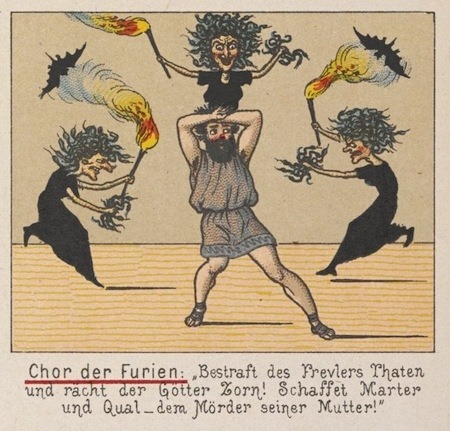
    Chorus of the Furies from “Iphigénie en Tauride” (1778)

  • Stephen Gunzenhauser Steps Down After 40 Years

    Stephen Gunzenhauser Steps Down After 40 Years

    After 40 years, Stephen Gunzenhauser is stepping down as music director of the Lancaster Symphony Orchestra. The conductor has announced that the 2019-2020 season will be his last.

    Gunzenhauser’s name may be a familiar one far beyond his stomping grounds of Pennsylvania and Delaware, thanks to his tireless work on behalf of the Marco Polo and Naxos labels. With over a hundred releases in the current catalogue, Gunzenhauser has recorded works by Ernest Bloch, Antonin Dvořák, Reinhold Gliere, Karl Goldmark, Anton Rubinstein, and many others, carving out a niche for himself by documenting lesser-known repertoire and offering low-cost options to the bigger-named competition, especially at a time when there weren’t many budget alternatives to the “majors.”

    Gunzenhauser worked as an assistant to Igor Markevitch in Monte Carlo and Leopold Stokowski in New York before becoming executive and artistic director of the Wilmington Music School in 1974. Five years later, he was appointed music director of both the Delaware Symphony Orchestra and the Lancaster Symphony. Gunzenhauser led the Delaware Symphony through the end of the 2001-2002 season. He was named principal conductor of the Bogota Philharmonic in 2004.

    Naxos and Marco Polo have sold more than two million copies of his recordings, lending credence to his assertion that he is the fifth most recorded American conductor.

    Gunzenhauser raised the level of the Lancaster Symphony Orchestra from community to professional status. Following his retirement, he plans to focus on the Endless Mountain Music Festival, with which he has been closely involved since its inception in 2006.

    The Lancaster Symphony was founded in 1947. Gunzenhauser is only the second music director in the orchestra’s 72 year history.

    More information about the Lancaster Symphony at lancastersymphony.org.


    Gunzenhauser conducts Anton Rubinstein’s “Ocean” Symphony:

  • Ellis Island History & Lessons for Today

    Ellis Island History & Lessons for Today

    At a time when immigration remains a divisive issue, it’s instructive to look back to political cartoons of the 19th and early 20th centuries, when bomb-toting Bolsheviks seemed poised to take down our democracy, the Chinese were inscrutable back-stabbers, the Jews were bearers of poverty and disease, and the Irish were simian-faced hooligans and drunks. Anxiety about outsiders has always been with us, yet somehow we got over each successive alien group, and the country has plugged along just fine.

    This Sunday night on “The Lost Chord,” we’ll gain a little perspective, courtesy of composer Peter Boyer. From 1892 to 1954, more than 12 million immigrants passed through Ellis Island in search of a better life. More than 40 percent of the U.S. population – over 100 million Americans – can trace their roots to someone who entered this country along that route.

    Boyer’s “Ellis Island: The Dream of America” incorporates texts from testimonials archived as part of the Ellis Island Oral History Project. These are real words of real people telling their own stories. The work is performed by actors, rather than speakers or narrators, who deliver their monologues in the first person. In a powerful epilogue, each of them comes together to recite a stanza from Emma Lazarus’ poem, “The New Colossus.” It’s so effective – and affecting – I get a little choked up just thinking about it.

    You will, too, when you join me for “Spirits of Independence,” this Sunday night at 10:00 EDT, on WWFM – The Classical Network and wwfm.org.

  • WWFM Classical Radio Needs You

    WWFM Classical Radio Needs You

    Classical radio is as delicate as a glass slipper. We at WWFM – The Classical Network have been bringing great music to your community for 37 years, because of engaged listeners just like you.

    Thank you to all of you who participated in The Classical Network’s end-of-the-fiscal-year fundraiser. Unfortunately, we are still a little short of our goal.

    REMEMBER, YOU CAN MAKE YOUR CONTRIBUTION ONLINE AT WWFM.ORG UNTIL 11:59 TONIGHT and still have it count toward this year’s budget.

    Make this a fairy tale ending, won’t you? Work your magic with your donation at wwfm.org.

    The ball ends at midnight. Don’t let us start out 2019-2020 in a pumpkin!

Tag Cloud

Aaron Copland (93) Beethoven (95) Composer (114) Film Music (137) Film Score (143) Film Scores (255) Halloween (94) John Williams (195) KWAX (229) Leonard Bernstein (103) Marlboro Music Festival (125) Movie Music (152) Mozart (88) Opera (208) Philadelphia Orchestra (89) Picture Perfect (174) Princeton Symphony Orchestra (108) Radio (88) Ross Amico (244) Roy's Tie-Dye Sci-Fi Corner (290) The Classical Network (101) The Lost Chord (268) Vaughan Williams (103) WPRB (396) WWFM (881)

DON’T MISS A BEAT

Receive a weekly digest every Sunday at noon by signing up here


RECENT POSTS