
Slow news day. Here’s Michael Torke’s “July.”
Category: Daily Dispatch
-
Vivian Perlis Music Historian Dies at 91
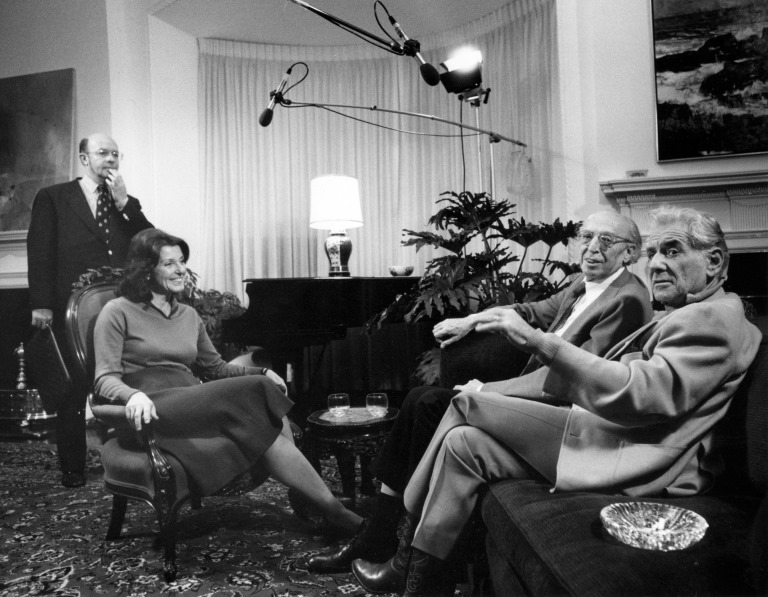
The award winning musicologist and historian Vivian Perlis has died. In her roles as founder and director of Yale University’s Oral History of America, Perlis assembled an invaluable archive of material concerning some of the United States’ greatest artists, immeasurably enhancing the depth and range of our understanding of American music.
One of her notable achievements was collaring Charles Ives’ insurance business partner and documenting his personal reminiscences. This spurred her to do the same with some of Ives’ other acquaintances. A selection of the material was issued as a book, “Charles Ives Remembered.”
She also sat down with Aaron Copland during the final years of his life, and coauthored two highly readable autobiographies, “Copland: 1900-1942” and “Copland: Since 1943.” These were combined in 2013 into “The Complete Copland.”
In 2005, she published “Composers Voices from Ives to Ellington.”
The Oral History of America holds over 2,200 interviews and transcripts, including material on both classical and jazz musicians. Perlis retired from the project in 2010.
At the time of her death, she was 91 years-old.
Perlis, the interviewer, is interviewed!
-

Copland’s Hollywood Struggles & Triumphs
The star-spangled glare of American music doesn’t just end with the Fourth of July fireworks. This week, on “Picture Perfect,” we’ll bask in the pyrotechnic after-glow of Independence Day with an hour of film music by Aaron Copland.
Despite his reputation as the “Dean of American Composers,” and the eventual acceptance into concert halls of his film music classics “Our Town” and “The Red Pony,” Copland’s experiences in Hollywood were not all peaches and cream. After all, if you want to work in the film industry, you’ve got to expect that once in a while somebody’s going to mess with your work, even if you’re a Pulitzer Prize winner.
In particular Copland was not very happy with what they did to his music for “The Heiress.” Carefully-crafted cues were chopped to ribbons, dialed down and rescored without his approval. William Wyler (“Wuthering Heights,” “Friendly Persuasion,” “The Big Country,” “Ben-Hur”) was a brilliant director, but he must have had a tin ear. His films consistently sported some of the best scores of their respective eras, and yet he mostly underappreciated, if not outright disliked, their music.
“The Heiress” was made fresh off of Wyler’s runaway success with “The Best Years of Our Lives.” The film, based on Henry James’ “Washington Square,” was nominated for eight Academy Awards. It won four, including Oscars for Olivia De Havilland and for Copland’s score, which is so strong it manages to maintain its integrity despite all of the studio tinkering.
Wyler insisted Copland work the song “Plaisir d’Amour” into the fabric of his music, which he artfully did in three cues. But that wasn’t good enough. Without Copland’s knowledge, the main title was replaced with a garish arrangement of “Plaisir,” which was also looped in for some of the love music. André Previn, in 1949 already one of Hollywood’s bright young talents, likened the return of Copland’s original thoughts following these interpolations to “suddenly finding a diamond in a can of Heinz beans.”
When Copland’s contribution was recognized by the Academy, it was the only instance up to that time of a score being honored after being shorn of its main title, the part of a score that generally makes the biggest impression. Copland never bothered to collect his award. “The Heiress” would be the last time he would work in Hollywood.
He did compose one more film score, however, for the 1961 independent film, “Something Wild,” which contains some of his most insistently non-commercial music. Occasionally brutal and often thrilling, its character is worlds away from the pastoral tranquility of “Appalachian Spring.” It’s a brilliant piece of work, yet it did not receive a commercial release until 2003.
We’ll sample music from these two underappreciated classics, as well as from the controversial pro-Soviet film “The North Star;” also a bit from the 1939 World’s Fair documentary “The City.”
Extend your holiday weekend with a cold cone of Aaron Copland classics on “Picture Perfect,” music for the movies, this Friday evening at 6:00 EDT, on WWFM – The Classical Network and wwfm.org.
-
Michael Colgrass Pulitzer Winner Dies
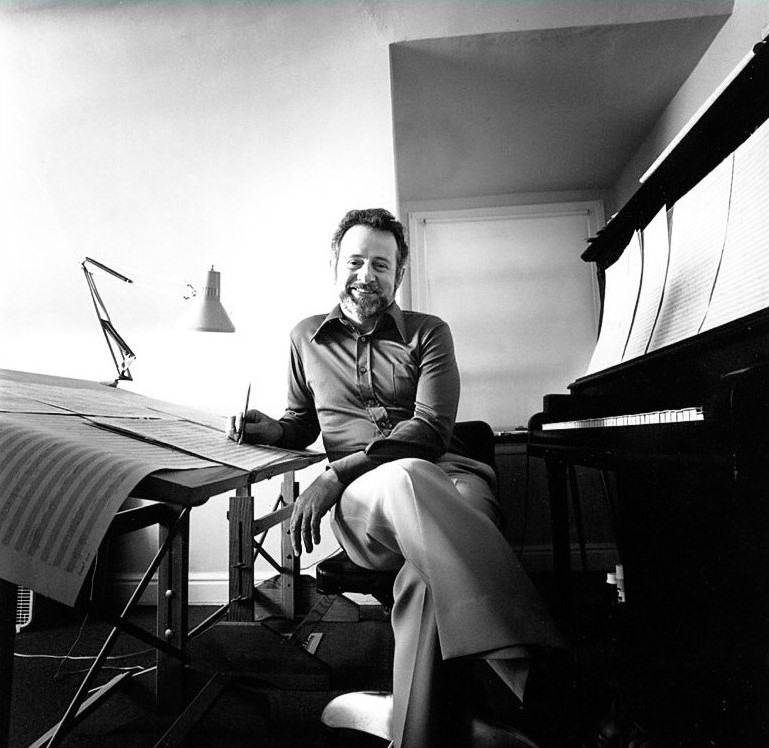
On this Independence Day, I learn of the passing of American-born composer Michael Colgrass. Colgrass, who began his career as a jazz musician, was the recipient of the Pulitzer Prize for Music in 1978 for his work, “Déjà vu.”
“Mr. Colgrass is something of a maverick,” wrote Harold Schonberg for the New York Times. “He will use serial textures, but will mix them with jazz, or outright romanticism, or dissonance à la Ives. He also has evolved a distinct sort of miniature style that is extremely personal and poetic.”
Colgrass made Toronto his home since 1974. He died on Tuesday at the age of 87.
Speaking of déjà vu, here’s a selection from a new release I received in the mail only a couple of weeks ago from the always reliable Boston Modern Orchestra Project (BMOP).
Colgrass’ juxtaposition of old and new puts me in the mind of Schnittke – but without perhaps the lingering sense of queasiness!
An absorbing interview with Colgrass by Bruce Duffie:
http://www.bruceduffie.com/colgrass.html
Colgrass at his most accessible, “Bali:”
-

Americana with Skip Livingston This 4th of July
On this Fourth of July, here’s a little Americana, courtesy of Samuel A. “Skip” Livingston. Livingston, a self-professed admirer of the music of Jerome Moross (composer of “The Big Country”), captures some of that same open-air lyricism on his recent album, “Gentle Winds,” issued on Navona Records, the classical music division of PARMA Recordings.
As a clarinetist in The Blawenburg Band, Livingston has a busy summer ahead. The band will present its annual Independence Day concert at Yardley Community Centre, in Yardley, PA, this afternoon at 4:00. Its lawnchair series at Hopewell Train Station will commence on Monday at 7:30 p.m. On Tuesday, Livingston will direct the Blawenburg Dixieland Band at Mary Jacobs Memorial Library in Rocky Hill. And that’s just the tip of the snow cone.
Find out more about Livingston, the Blawenburg Band, and more, in my article in this week’s edition of U.S. 1 Newspaper – PrincetonInfo.
Tag Cloud
Aaron Copland (93) Beethoven (95) Composer (114) Film Music (137) Film Score (143) Film Scores (255) Halloween (94) John Williams (195) KWAX (229) Leonard Bernstein (103) Marlboro Music Festival (125) Movie Music (152) Mozart (88) Opera (208) Philadelphia Orchestra (89) Picture Perfect (174) Princeton Symphony Orchestra (108) Radio (88) Ross Amico (244) Roy's Tie-Dye Sci-Fi Corner (290) The Classical Network (101) The Lost Chord (268) Vaughan Williams (103) WPRB (396) WWFM (881)