Category: Daily Dispatch

  • Forgotten French Orchestral Masters

    Forgotten French Orchestral Masters

    Vive les orchestrateurs de musique classique français!

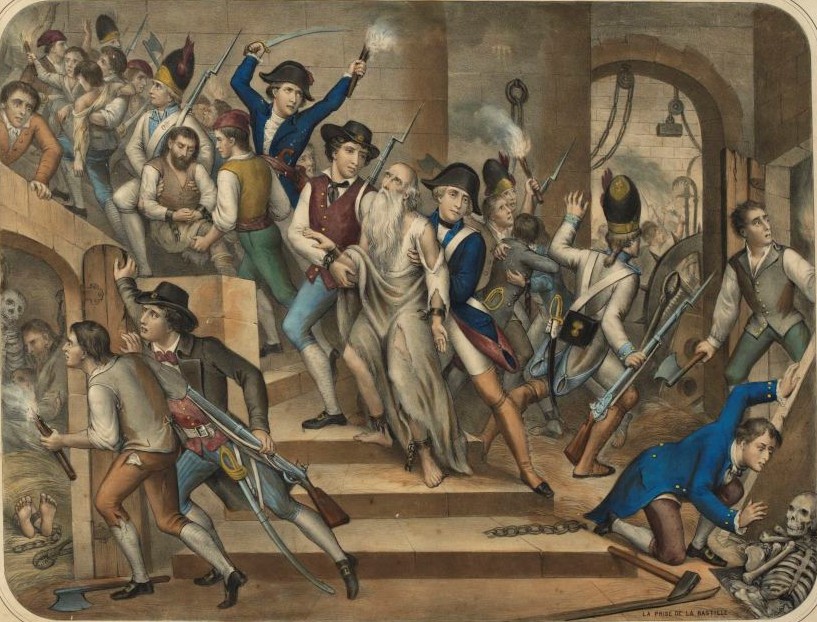
    This Sunday night on “The Lost Chord,” for Bastille Day, enjoy original works by figures who employed their skills as orchestrators in the service of more celebrated French composers.

    Henri Rabaud (1873-1949) was, variously, conductor at the Paris Opéra Comique, director of the Paris Opera, and director of the Paris Conservatory. For a season, he ever led the Boston Symphony Orchestra. Though he wrote several operas and two symphonies, as well as choral, chamber and instrumental music, Rabaud’s own original output is very seldom heard. However, his orchestration of Gabriel Fauré’s charming “Dolly Suite,” originally for piano four-hands, endures. We’ll hear Rabaud’s symphonic poem “La Procession nocturne,” inspired by Nicolas Lenau’s “Faust.”

    André Caplet (1878-1925) directed the Boston Opera from 1910 to 1914. He was gassed while serving in the First World War, which resulted in the pleurisy that plagued him for the remainder of his short life. Caplet died at the age of 44. His harp quintet, “Conte fantastique,” after Edgar Allan Poe’s “The Masque of the Red Death” is occasionally heard. But his tenuous grip on fame is really through his association with another composer, Claude Debussy, for whom he orchestrated “Children’s Corner,” “Clair de lune,” “Le Martyrdom de saint Sébastien” and “La boîte à joujoux.” Tonight we’ll have the opportunity to enjoy Caplet’s lovely Septet for Voices and String Quartet.

    Henri Büsser (1872-1973) acted as secretary to Charles Gounod. He also became a protégé and friend of Jules Massenet. At Debussy’s request, Büsser conducted the fourth performance of “Pélleas and Mélisande” and numerous performances thereafter. He died in Paris less than three weeks shy of his 102nd birthday! Büsser’s own output includes much music for the stage, including 14 operas, a ballet, and incidental music. Yet his name is kept alive principally as the orchestrator of Debussy’s “Petite Suite” and “Printemps.” He’ll be represented tonight by “Andalucia,” an original work for flute, on Spanish themes.

    Charles Koechlin (1867-1950) had many enthusiasms: medieval music, Bach, travel, stereoscopic photography, communism, pantheism, sports. He was especially interested in early film stars (he wrote works in tribute to Ginger Rogers, Douglas Fairbanks, Charles Chaplin, and Lillian Harvey) and the “Jungle Books” of Rudyard Kipling. Despite enjoying an astonishingly prolific career as a composer himself, Koechlin is associated in most people’s minds with his orchestration of Fauré’s “Pélleas and Mélisande.” He also worked as an orchestrator on Debussy’s “Khamma.”

    Koechlin’s series of orchestral works, inspired by Kipling, span most of his creative life. These were composed in a broad array of styles, encompassing impressionism, neo-classicism, polytonality, and even quasi-serialism. We’ll hear the last of his Kipling cycle, “Les Bandar-Log,” ostensibly about a barrel of chattering monkeys, but the term has also come to be used to describe anyone who irresponsibly prattles.

    I hope you’ll join me in liberating these overlooked composers from the Bastille of neglect on “French Connections,” this Sunday night at 10:00 EDT, on WWFM – The Classical Network and wwfm.org.
  • George Butterworth Beyond the Battlefield

    George Butterworth Beyond the Battlefield

    As a classical music radio host of many years, it’s easy to fall back on the same biographical details whenever I come to announce a given composer’s works. This is especially true when the composer’s life contains some particularly lurid or poignant detail.

    But is it really fair to define someone by the manner of his or her death? After all, composers lived rounded lives like the rest of us, full of joys and sorrows. There must be some laughter even in a life weighted with misery, and tears in the make-up of any clown.

    So it was with George Butterworth. If we hear anything at all in the minute or two it takes to set up the broadcast of one of his works, it’s that Butterworth was cut down by a sniper during the Battle of the Somme at the age of 31. Of course, it doesn’t help that his compositions make one’s heart ache from their exquisite beauty.

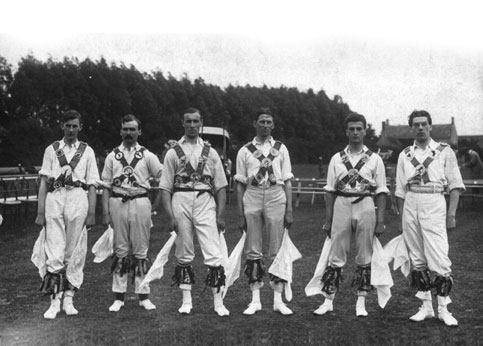
    In reading up on Butterworth in advance of celebrating the anniversary of his birth yesterday, I stumbled across this page and sat transfixed, as I viewed for the first time rare footage of him folk dancing with Cecil Sharp. It put a human face on this composer every bit as poignant as the idea of him being cut down in his prime. It’s especially amusing to see the two men get tangled up in their choreography and then continue on their merry way.

    https://www.warcomposers.co.uk/butterworthbio

    If you’re unfamiliar with Butterworth’s music, here are a few examples. Those inspired by the poems of A.E. Housman are especially poignant.

    The Banks of Green Willow:

    A Shropshire Lad (orchestral rhapsody):

    A Shropshire Lad (song cycle):


    PHOTO: Butterworth the morris dancer (second from left)

  • Napoleonic Wars on the Big Screen

    Napoleonic Wars on the Big Screen

    There is a pithy quote you may have heard to the effect that England and America are two countries divided by a common language. The observation is sharp and spot-on, so naturally it has been attributed to two of the greatest wits of their day, George Bernard Shaw and Oscar Wilde. Yet these attributions are without verifiable foundation. (The closest Wilde ever came in print: “We really have everything in common with America nowadays except, of course, the language.”)

    Similarly, we all know what is meant by “Napoleon complex.” But did you know there is every possibility that Napoleon was not short? Like the commonality of language that divides the English and the Americans (and I know that Shaw and Wilde were Irish), it turns out that there may be some confusion over Napoleon’s actual height on account of two different systems of measurement that happened to use the same terms.

    Be that as it may, this week on “Picture Perfect,” with Bastille Day (July 14) right around the corner, we’ll surge to power on the allegedly diminutive shoulders of Napoleon Bonaparte. The focus will be on the Napoleonic Wars – which is to say, movies set, at least in part, between about 1803 and 1815.

    There is a lot of unlikely casting in these films. The first English language adaptation of Leo Tolstoy’s “War and Peace” (1956) stars Audrey Hepburn, Henry Fonda, and Mel Ferrer, with Herbert Lom as Napoleon. Lom is fine; but Henry Fonda? At least the music is by Nino Rota.

    Stanley Kramer’s “The Pride and the Passion” (1957) is loosely based on the novel “The Gun,” by C.S. Forester. Forester is best known for the nautical adventures of Horatio Hornblower – also set during the Napoleonic Wars.

    The film depicts the story of a British officer (Cary Grant) who is ordered to retrieve a large cannon from Spain. But before he can do so, he must lend assistance to the leader of the Spanish guerillas (Frank Sinatra!) in the transport of the weapon across 600 miles of treacherous ground to reclaim the city of Avila from the French. Further complications arise from their respective feelings for Sinatra’s mistress (Sophia Loren).

    The score is by Trenton-born George Antheil, self-proclaimed “bad boy of music.” Antheil achieved lasting notoriety as the composer of the raucous “Ballet Mécanique” in the 1920s. He would later embrace a more conservative language for his symphonies and for his music for the movies. Antheil composed over 30 film scores. “The Pride and the Passion” would be his last.

    Ridley Scott’s first feature, “The Duellists” (1977), is based on a story by Joseph Conrad. It relates the tale of an obsessive duellist (Harvey Keitel), who takes it as a personal affront when he is arrested by a fellow hussar (Keith Carradine) for crossing swords with the mayor’s nephew, whom he has fatally wounded. This sets the two men in a kind of combative pas de deux, a series of duels that spans the entire Napoleonic era. The sheer beauty of the film is matched by Howard Blake’s haunting score.

    Abel Gance’s “Napoleon” (1927) is widely regarded as one of the towering achievements in all of cinema. I’ve had the good fortune to see it on the big screen twice. However, it was with a new score by Carmine Coppola, the father of Francis Ford Coppola, who financed the film’s revival. The original score was by Arthur Honegger. Honegger was the famed French composer (of Swiss birth), who was one of the members of Les Six, a lose collective of artists that also included Francis Poulenc and Darius Milhaud.

    Gance’s epic was gargantuan at the time I saw it, in the 1980s – about four hours long. A more recent restoration places the film’s running time at 5 ½ hours. That’s still down from a 9 ½ hour version shown in 1927!

    The film is crowned by a celebrated triptych, for which the screen widens to accommodate the simultaneous projection of three reels – an extraordinary innovation for its time. “Napoleon” is full of such touches. Apparently, there had even been a sequence shot in 3-D, which was left on the cutting room floor. If you’re at all interested in the squandered potential of cinema, this is a film which must be seen in the theater.

    I hope you’ll join me for music from big movies set during the Napoleonic Wars. It will be a satisfying show by any measure, this Friday evening at 6:00 EDT, on WWFM – The Classical Network and wwfm.org.
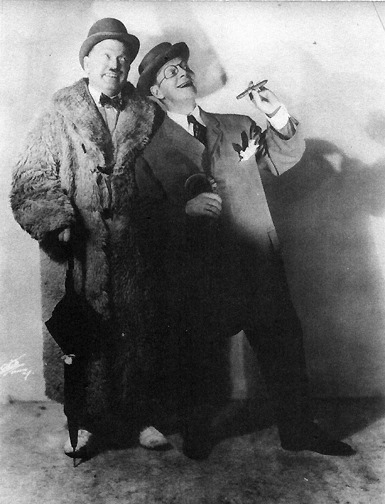

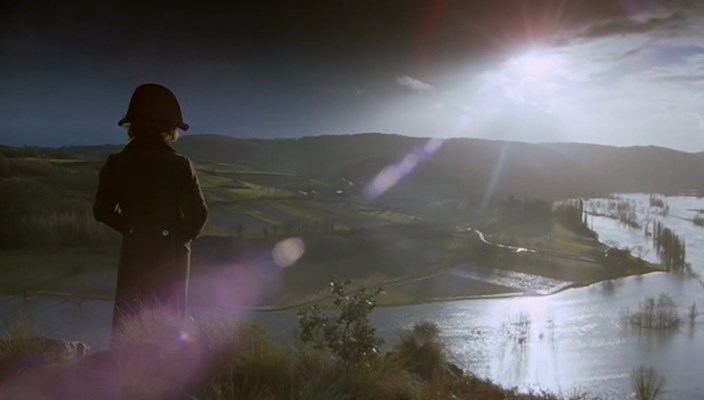
    PHOTO: A brooding Harvey Keitel in the extraordinarily beautiful “The Duellists”

  • Gershwin’s Death & Lost Comedy Duo

    Gershwin’s Death & Lost Comedy Duo

    It was on this date in 1937 that George Gershwin died after undergoing surgery to remove a brain tumor. The composer collapsed on July 9, when he tried to stand up, and slipped into a coma. Needless to say, it was an abrupt and shocking end to one of the most vital figures in American music.

    Here’s footage of Gerswhin playing “I Got Rhythm:”

    Gershwin speaks (a comparative rarity) and plays “Strike Up the Band.”

    The comedians are Clark and McCullough. Bobby Clark was the fast-talking wisecracker and Paul McCullough his laid-back sidekick. Like so many other comedy teams that graced stage and screen in the ‘20s and ‘30s, Clark and McCullough came up through vaudeville, and before that the circus(!).

    The cigar-smoking wise-acre was a real thing back then. Without the titles, I would have pegged the duo for Bert Wheeler and Robert Woolsey. More enduring examples of the stogie-wielding funnyman include George Burns, Milton Berle, and of course Groucho Marx. Groucho had his greasepaint mustache, and Clark had his painted-on glasses.

    Clark and McCullough made about three dozen film shorts and appeared in at least two features (one, “Two Flaming Youths,” with W.C. Fields). Their Broadway hit “The Ramblers” was filmed for Hollywood by Wheeler and Woolsey and released as “The Cuckoos.” Today, they are virtually forgotten.

    Clark and McCullough in “Odor in the Court:”

  • Bora Yoon Premieres Orchestral Work at Princeton

    Bora Yoon Premieres Orchestral Work at Princeton

    When Bora Yoon’s “The Wind of Two Koreas” is performed at Princeton University’s Richardson Auditorium on Saturday, July 20, it will be unique among her body of works.

    Yoon, a doctoral candidate at Princeton University, describes herself as an interdisciplinary composer. Typically her works assimilate classical, electronic, and cross-cultural elements and employ unconventional instruments and technologies. In this instance, however, she will be taking a more traditional approach, though not to the detriment of exploring some of her usual artistic concerns.

    In her first purely orchestral piece, Yoon will continue to draw musical connections to her heritage as an American of Korean descent and all of the paradoxical tensions she finds therein. But she’ll also be measuring herself against the early works of Igor Stravinsky.

    Yoon’s new piece will be heard on a concert that is the public face of this year’s New Jersey Symphony Orchestra Edward T. Cone Composition Institute, which will be held from July 15 through July 20.

    The Cone Institute, now in its sixth year, brings together representatives of the New Jersey Symphony Orchestra and the Princeton University Music Department to offer four emerging composers a unique laboratory experience.

    You can read more about it, Yoon, and the concert, in my article in this week’s U.S. 1 Newspaper – PrincetonInfo, out today.

    https://princetoninfo.com/a-premiere-for-princeton-composers-symphonic-expression/

Tag Cloud

Aaron Copland (93) Beethoven (95) Composer (114) Film Music (137) Film Score (143) Film Scores (255) Halloween (94) John Williams (195) KWAX (229) Leonard Bernstein (103) Marlboro Music Festival (125) Movie Music (152) Mozart (88) Opera (208) Philadelphia Orchestra (89) Picture Perfect (174) Princeton Symphony Orchestra (108) Radio (88) Ross Amico (244) Roy's Tie-Dye Sci-Fi Corner (290) The Classical Network (101) The Lost Chord (268) Vaughan Williams (103) WPRB (396) WWFM (881)

DON’T MISS A BEAT

Receive a weekly digest every Sunday at noon by signing up here


RECENT POSTS