Category: Daily Dispatch

  • Ben Johnston Microtonal Pioneer Dies at 93

    Ben Johnston Microtonal Pioneer Dies at 93

    The pioneering microtonalist Ben Johnston has died at the venerable age of 93. Johnston, born in Macon, GA, in 1926, apprenticed with Harry Partch, whom he assisted in the construction and tuning of one-of-a-kind instruments fashioned from scrap. He then studied at Mills College with Darius Milhaud and, later in New York City, with John Cage. Cage encouraged Johnston to drop the idea of writing for newly created instruments and instead to focus on expanding the potentials and perceptions of more traditional sources.

    Johnston exceeded even Partch in his experiments with “just intonation,” a method of tuning based on the intervals of the harmonic series. For hundreds of years, equal temperament, in which the intervals of the chromatic scale are distorted to create major and minor scales, with the ability to modulate from key to key, has been the standard in Western music.

    However, to get something, you often have to give something up. The compromise of equal temperament is a finite system. Johnston (and Schoenberg before him) realized that by the 20th century the musical resources available through an adherence to equal temperament were on the verge of exhaustion. The exploration of microtones opened up new horizons by allowing for an expandable scale of more than forty divisions to an octave.

    Johnston’s great achievement was to take a radical concept and render it in such a way as to make it comparatively accessible to untutored listeners. The pay-off of his String Quartet No. 10 is the realization that (spoiler alert) the entire thing is constructed on the traditional melody “Danny Boy.” His String Quartet No. 4 is based on “Amazing Grace.”

    I’ll remember Johnston today, among my featured composers, during my afternoon air shift. We’ll also sample from a new release on Bridge Records, Inc., “Sonata Dementia,” consisting of works by Johnston’s mentor, Harry Partch. Satisfy your thirst for unusual music, between 4 and 7 p.m. EDT, on WWFM – The Classical Network and wwfm.org.


    The ensemble Partch performs “Sonata Dementia:”

    Those are some impressive mallets!
  • Cosmic Classics Moonwalk Anniversary

    Cosmic Classics Moonwalk Anniversary

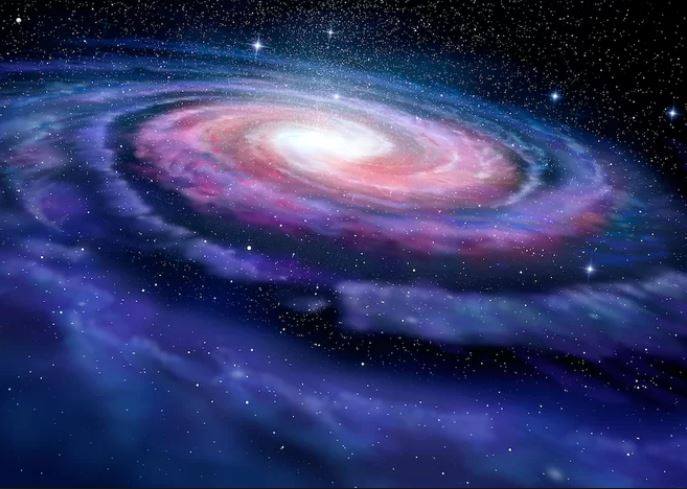
    This Sunday night on “The Lost Chord,” for the 50th anniversary of the first moonwalk, cap your weekend of lunar celebrations with an hour of music inspired by the cosmos.

    When Spanish master Joaquin Rodrigo was in the United States in 1970 to attend the world premiere of his “Concierto Madrigal” at the Hollywood Bowl, he decided to make a side-trip to Houston, where he visited what is now the Johnson Space Center. There, NASA saw to it that the composer, blind since the age of three, was introduced to astronauts and permitted to handle moon rocks.

    The experience left him with a powerful impression, so that when he was commissioned by the Houston Symphony Orchestra several years later to write a piece of music to celebrate the American Bicentennial, his thoughts returned to his friends at NASA and the idea of space exploration. The result was something worlds away – if you’ll pardon the expression – from his popular works for guitar: the symphonic poem “A la busca del más allá” (“In search of the beyond”).

    Another Spaniard inspired by extraterrestrial concerns was Enrique Granados, very well-known for his music for the keyboard. Perhaps Granados’ most unusual work is a concerto-of-sorts for piano, with choruses and organ, “Cant de les estrilles” (“Song of the Stars”). This music was composed as a vehicle for Granados himself and dedicated to the long-lived pianist, Mieczyslaw Horszowski, who died as recently as 1993 – one month shy of his 101st birthday.

    “Song of the Stars” was given its first performance in 1911, on the same program as the premiere of Granados’ enduring piano suite “Goyescas.” However, the manuscript would remain unpublished. Granados died in 1916, only a few years later, on a return trip from the United States, when his ship was torpedoed by a German submarine while crossing the English Channel.

    The manuscript found its way to New York in the 1930s, brought there by the composer’s son, who was lured by businessman and conductor Nathaniel Shilkret with the promise of publication. Legal entanglements ensued, involving other members of the Granados family. A fire in the 1960s was feared to have destroyed the work, and efforts by the family to recover the piece with the assistance of José Iturbi and Alicia de Larrocha came to naught.

    In 1982, Granados’ daughter enlisted the American pianist Douglas Riva to act as the family representative. Finally, an agreement was negotiated with Shilkret’s grandson, and the work was performed again for the first time in nearly 100 years. The unattributed Catalan text is said to be a response to the poetry of Heinrich Heine, about love and the stars, from the perspective of the stars themselves.

    Finally, we’ll round out the hour with music by contemporary Finnish composer Kaija Saariaho. Saariaho evokes both the mythological and astrological in her work for orchestra, “Orion,” from 2002. The piece falls into three movements: “Memento mori,” “Winter Sky,” and “Hunter.”

    Pour yourself some cosmos. Then look to the skies in wonder! Join me for “Creating Space,” this Sunday night at 10:00 EDT, on WWFM – The Classical Network and wwfm.org.

  • Composers at the Beach Part Two

    Composers at the Beach Part Two

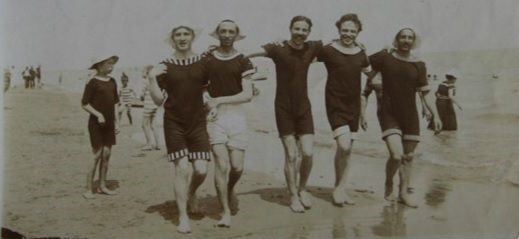
    Great composers hit the beach. (Part 2 of 2)

  • Composers at the Beach Hot Summer Music

    Composers at the Beach Hot Summer Music

    It’s bloomin’ hot! Great composers hit the beach. (Part 1 of 2)

  • Moonwalk Memories Space Movie Music

    Moonwalk Memories Space Movie Music

    Can it really be 50 years since the first moonwalk? Could it ever have happened had it been today? We seem to be worlds away from the spirit of teamwork and optimism that harnessed good old-fashioned American know-how to the kind of integrity, cooperation, and sacrifice – the sense of something greater than oneself – necessary to point the way forward for mankind.

    Be that as it may, this week on “Picture Perfect,” we’ll celebrate Neil Armstrong’s historic “giant leap” with an hour of music from movies about space exploration and the moon.

    We’ll begin with a sop for the conspiracy theorists. “Capricorn One” (1978) runs with the idea – originally formulated with the televised moon landing – that the first manned mission to Mars is a fabrication, filmed on a soundstage. When the actual, unmanned capsule burns up upon re-entry into the earth’s atmosphere, the government attempts a cover-up, and the astronauts are sent scrambling for their lives. This is the film in which O.J. Simpson eats a rattlesnake. The cast also includes Elliot Gould, James Brolin, Sam Waterston, Hal Holbrook, and Karen Black. The music is by Jerry Goldsmith.

    If the moon landing were indeed a hoax, who better to execute it than Stanley Kubrick? (This is an actual theory!) After all, Kubrick had directed “2001: A Space Odyssey” (1968), which was released a little over a year before the flight of Apollo 11.

    For “2001,” under pressure from the studio, Kubrick again engaged his “Spartacus” collaborator, composer Alex North, to provide the music. North did his best to adhere as closely as possible to the temp tracks Kubrick had selected for some scenes, yet deviated enough from Richard and Johann Strauss to maintain his own distinctive musical identity.

    In the end, despite the obvious sensitivity and craftsmanship with which North undertook the project, Kubrick tossed out his entire contribution and stuck with his original choices by classical music masters. Unfortunately, he never bothered to mention it to the composer, who only found out at the film’s premiere. North’s original score remained unpublished until its first commercial release (conducted by Goldsmith) in 1993.

    Princeton’s own Demian Chezelle tackled Neil Armstrong – his personal struggles, and his triumph on the moon – in “First Man” (2018). Ryan Gosling plays Armstrong. The music is by Chezelle’s former Harvard classmate and frequent collaborator, Justin Hurwitz, two-time Academy Award winner for “La La Land.”

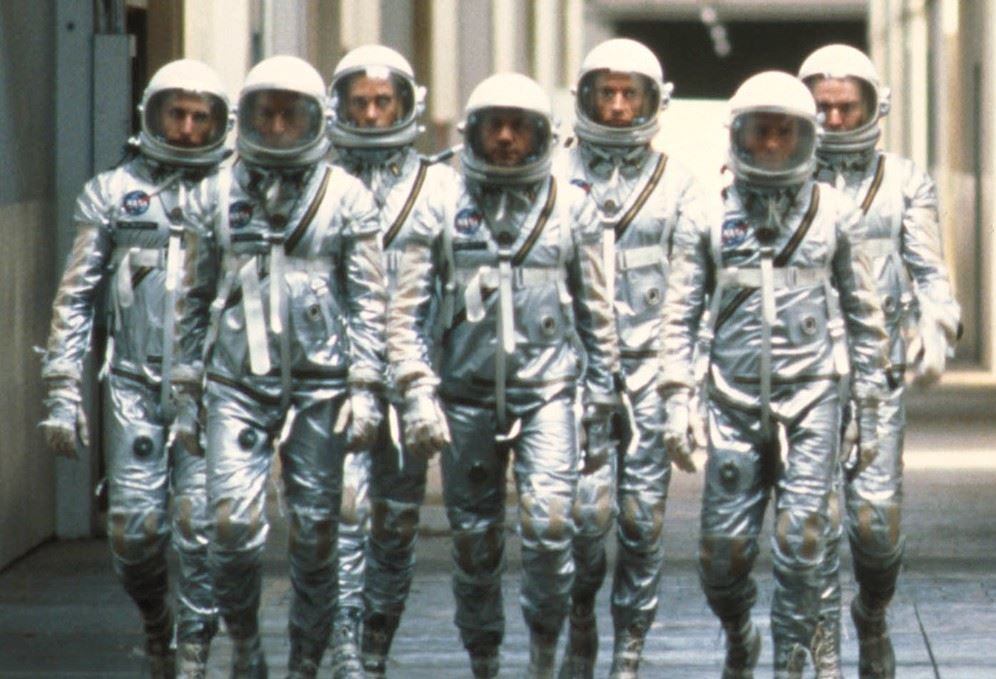
    Finally, Philip Kaufman’s panegyric to the heroic military pilots who helped propel America’s space program, both higher and faster, resulted in one of the best films of the 1980s. “The Right Stuff” (1983) provides an epic, three-hour ride, with a spot-on cast, including Ed Harris, Scott Glenn, Fred Ward, Dennis Quaid, and Sam Shepherd as Chuck Yeager. Though a darling of the critics, somehow the film didn’t quite catch on with audiences, perhaps intimidated by its imposing running time. The music is by Bill Conti, probably best known for his work on “Rocky.”

    Aim high this week, as we look to the moon and beyond, on “Picture Perfect,” music for the movies. This Friday evening at 6:00 EDT, on WWFM – The Classical Network and wwfm.org.

Tag Cloud

Aaron Copland (93) Beethoven (95) Composer (114) Film Music (137) Film Score (143) Film Scores (255) Halloween (94) John Williams (195) KWAX (229) Leonard Bernstein (103) Marlboro Music Festival (125) Movie Music (152) Mozart (88) Opera (208) Philadelphia Orchestra (89) Picture Perfect (174) Princeton Symphony Orchestra (108) Radio (88) Ross Amico (244) Roy's Tie-Dye Sci-Fi Corner (290) The Classical Network (101) The Lost Chord (268) Vaughan Williams (103) WPRB (396) WWFM (881)

DON’T MISS A BEAT

Receive a weekly digest every Sunday at noon by signing up here


RECENT POSTS