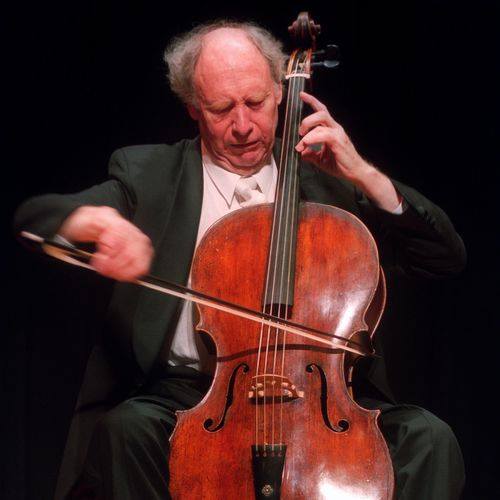
The cellist Anner Bylsma has died. Bylsma, one time principal cellist of the Royal Concertgebouw Orchestra, achieved world fame in the realm of historically informed performance, leaving behind many highly-regarded recordings made with the likes of Frans Brüggen, Gustav Leonhardt, and Jeanne Lamon. Together with his wife, the violinist Vera Beths, he founded the gut string ensemble L’Archibudelli. He was the first to record all six of Bach’s Suites for Unaccompanied Cello on a period instrument. Bylsma was 85 years-old.
Today is the 50th anniversary of the death of American composer Douglas Moore. Does anyone remember him?
Moore was born into an old Long Island family that had lived there since the island’s settling in the 17th century. He attended, among other institutions, Yale University, where he earned two degrees; then he was off to Paris to study with Vincent d’Indy, Ernest Bloch, and Nadia Boulanger (lending credence to Ned Rorem’s famous observation, “Myth credits every American town with two things: A 10-cent store and a Boulanger student”).
Moore went on to serve as president of the National Institute and American Academy of Arts and Letters and director of music at the Cleveland Museum of Art. In 1926, he joined the faculty of Columbia University, where he remained until his retirement in 1962. With Otto Luening and Oliver Daniel, he cofounded the CRI (Composers Recordings, Inc.) label.
In addition to his work in the classical world, he also dabbled in the popular realm. He wrote the Yale fight song, “Goodnight, Harvard.” He also authored two books: “Listening to Music” (1932) and “From Madrigal to Modern Music” (1942).
As a composer, Moore must have seemed, even then, a little old-fashioned. He worked mostly in a Romantic idiom. Though sometimes hinting at American folk song and occasionally popular trends, his works lack the kind of zest evident in, say, Aaron Copland’s distillation of French neoclassicism into his much snappier frontier ballets. On the other hand, Moore enjoyed more success on the operatic stage than Copland ever did.
He collaborated with Stephen Vincent Benet on an adaptation of Benet’s short story, “The Devil and Daniel Webster.” (He would dedicate his Symphony No. 2 to Benet’s memory.) “Giants in the Earth” was the recipient of the Pulitzer Prize for Music in 1951.
But his most enduring and beautiful music might just be that for “The Ballad of Baby Doe,” which was championed and recorded by Beverly Sills.
Also, some may dimly recollect Howard Hanson’s performance of “The Pageant of P.T. Barnum,” part of Hanson’s series of recordings of American music set down with the Eastman-Rochester Orchestra for the Mercury label.
At the time of his death, Moore was 75 years old. Sadly, now, at a half century’s distance, it seems that Moore is less.
Douglas Moore introduces Beverly Sills in “The Willow Song” from “The Ballad of Baby Doe.”
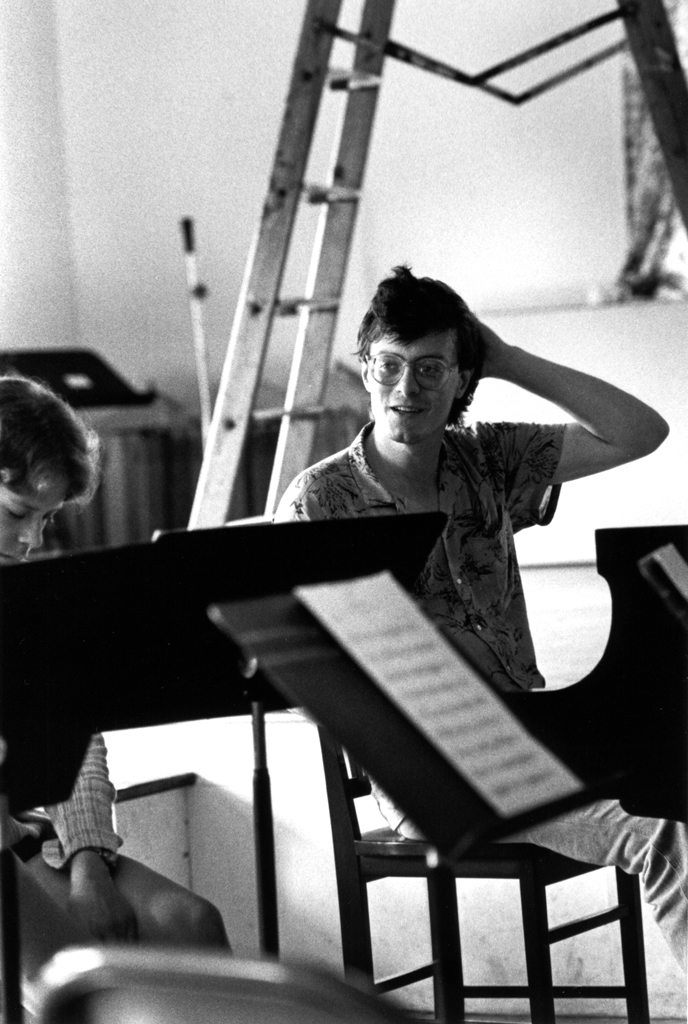
For some reason, I always equate Peter Serkin in my mind with Peter Fonda. Perhaps it’s because he’s like the Easy Rider of pianists. At one point, he even totally dropped out, moving to Mexico and not playing for a couple of years. When he returned, as often as not, he was a kind of countercultural champion of modernist works (he was one of the founders of the new music ensemble Tashi). But he is, after all, his father’s son (sired by legendary pianist Rudolf Serkin), so Bach and Beethoven have been just as important to him as an artist and as a person.
Hard to believe that Peter Serkin is 72 years-old today. On this week’s “Music from Marlboro,” we’ll hear a performance of Mozart’s Concerto for Two Pianos (the Piano Concerto No. 10), KV 365, with Peter, at 15, joined in music-making by his Marlboro co-founding father.
Then we’ll keep our spirits high, as Pablo Casals conducts the Marlboro Festival Orchestra in Franz Schubert’s Symphony No. 5. Schubert was totally under the spell of Mozart at the time of its composition, remarking in his diary, “O Mozart! Immortal Mozart! what countless impressions of a brighter, better life hast thou stamped upon our souls!”
This summer’s Marlboro Music Festival is about to enter its third weekend, with three concerts on the agenda. The festival’s annual town benefit concert will be held on Friday at 8 p.m., featuring music by Schumann, Stravinsky, Mozart, and György Kurtág. Marlboro co-directors Mitsuko Uchida and Jonathan Biss will appear on separate concerts on Saturday and Sunday. Uchida will be the pianist in Schumann’s Piano Quintet on a program which will also feature music by Schoenberg, on Saturday at 8 p.m. Biss will perform Dvořák’s Piano Trio in F minor on a concert which will also include works by Mozart and Marlboro composer-in-residence Jörg Widmann, on Sunday at 2:30 p.m. For complete listings and more information, visit marlboromusic.org.
For today, musicians from the renowned chamber music festival take a break from playing chamber music. It’s a well-orchestrated program on this week’s “Music from Marlboro,” this Wednesday evening at 6:00 EDT, on WWFM – The Classical Network and wwfm.org.
Marlboro School of Music and Festival: Official Page
PHOTO: Young Peter Serkin performs Mozart on today’s broadcast of recordings from the archive of Marlboro Music.
FOR THOSE OF YOU ACCUSTOMED TO ENJOYING WWFM – The Classical Network VIA OUR INTERNET STREAM AT WWFM.ORG:
It’s been brought to my attention by an online listener that he has been unable to connect to our stream. The reason for this is that the electricity is out at the college. We are broadcasting, thanks to a back-up generator, but unfortunately there is no internet. No lights or air conditioning, either. All in all, a sad state of affairs. We apologize for the inconvenience. Hopefully the power — and the streaming — will be back up soon. Thank you for your understanding!
Angel sings sacred songs on today’s Noontime Concert. Countertenor Ryland Angel, that is.
He will be joined by organist Richard Erickson in works by Johann Sebastian Bach, Johann Anastasius Freylinghausen, and Johann Rudolf Ahle, collected in the “Schemellis Gesangbuch.” Georg Christian Schemelli published his songbook in Leipzig in 1736. His son, Christian Friedrich, was a student at the Thomasschule from 1733 to 1735 and later continued his studies at Leipzig University. Bach, of course, served as Thomaskantor from 1723 until his death in 1750.
This concert was recorded at the chapel of Saint Bartholomew’s Church, 325 Park Avenue, in New York City, in October. Free Midtown Concerts are held at St. Bart’s every Thursday at 1:15 p.m. during the regular season, thanks in part to Gotham Early Music Scene, or GEMS. GEMS is a nonprofit organization that promotes and supports artists in New York City devoted to Early Music. You can learn more about Gotham Early Music Scene at gemsny.org.
Following today’s concert broadcast, stick around for one of Anton Bruckner’s spiritually-infused symphonies, with the Vienna Philharmonic conducted by Bruckner pioneer Carl Schuricht.
After last night’s storm, we can use all the help we can get. Put your hands together, between 12 and 4 p.m. EDT, on WWFM – The Classical Network and wwfm.org.