Category: Daily Dispatch

  • Oldest Melody Found Armenian Roots

    Oldest Melody Found Armenian Roots

    Early Music lovers take note. This is one of those items I’ve been sitting on, waiting for a slow news day. Well, that day is upon us – so here, without further ado, is the oldest known notated melody, attributed to ancient ancestors of the Armenians.

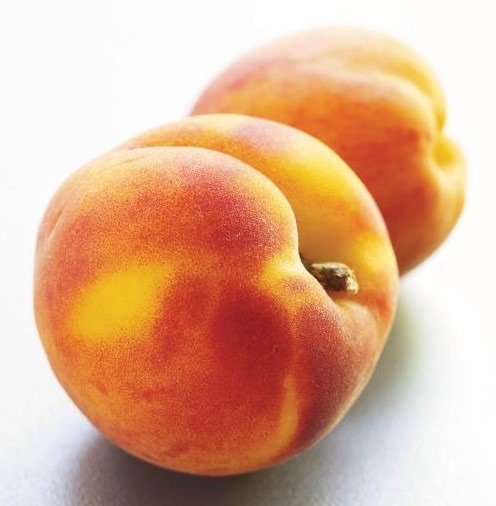
    This 3400 year-old toe-tapper was dedicated to the goddess of orchards. Now pardon me while I enjoy some peaches.

    World’s oldest surviving melody was composed by Armenian ancestors 3400 years ago

  • Australian Outback Film Music

    Australian Outback Film Music

    G’day! This week on “Picture Perfect,” we’re off to the antipodes for an hour of music from films set in the Australian bush.

    Ealing Studios shot several movies there – three independently, and then two in collaboration with MGM. The first was “The Overlanders” (1946), told in semi-documentary style, about a wartime push to evacuate Australia’s Northern Territory, with its 5000 settlers and a million head of cattle, before an anticipated Japanese invasion. The music was by John Ireland. Despite its excellence, it would prove to be his only film score.

    Ealing’s final independent Australian venture was “Bitter Springs” (1950). The film tells the tale of an Australian pioneer family, which encounters problems with the local Aboriginal people when its headstrong patriarch denies access to a watering hole.

    The thematic material was by Ralph Vaughan Williams, who left it to composer and conductor Ernest Irving to arrange and orchestrate what he felt needed for the various cues. Vaughan Williams wrote his friend and colleague to express his pleasure with the finished product. Irving would soon receive the dedication of Vaughan Williams’ Symphony No. 7, the “Sinfonia Antartica” (itself derived from RVW’s film score to Ealing’s “Scott of the Antarctic”).

    Both of these films, “The Overlanders” and “Bitter Springs,” are essentially westerns set in the Australian outback. From a little closer to our own time, we’ll hear music from another film which was unapologetic in its use of American western motifs, “Quigley Down Under” (1990).

    The film starred Tom Selleck as an American cowboy, hired by an Australian rancher, played by Alan Rickman, allegedly to shoot dingoes; however, he soon finds that the rancher’s real purpose is to rid the land of Aborigines – a proposition Quigley naturally rejects, setting up the film’s conflict.

    The score is by Basil Poledouris, a composer who has achieved cult status for his work on films like “Robocop” and especially “Conan the Barbarian,” though he never really seemed to receive the recognition the deserved. He did, however, win an Emmy for his score to “Lonesome Dove.”

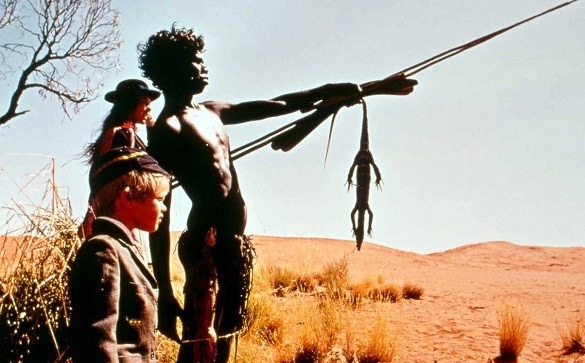
    Finally, we’ll have just a bit from John Barry’s haunting score to Nicholas Roeg’s “Walkabout” (1971), in which two British children find themselves stranded in the bush and survive only through the aid of a young Aborigine.

    We’re heading down under and out back this week, on “Picture Perfect,” music for the movies, this Friday evening at 6:00 EDT, on WWFM – The Classical Network and wwfm.org.

  • Jerome Moross Big Country and Beyond

    Jerome Moross Big Country and Beyond

    It’s a big country.

    When “Porgy and Bess” concluded its New York run in 1935, George Gershwin invited Jerome Moross to join the show, on tour, as a pianist. It was while on a bus trip to Los Angeles to participate in “Porgy’s” west coast premiere that the 23 year-old made a stop in Albuquerque.

    “[A]s we hit the Plains I got so excited,” Moross recollected. “. . .[T]he next day I got to the edge of town and then walked out onto the flat land with a marvelous feeling of being alone in the vastness, with the mountains cutting off the horizon. The whole thing was just too much for me . . . it was marvelous, and I just fell in love with it.”

    The experience served him well, as some of his most famous music, the Academy Award-nominated score for “The Big Country,” enshrines that sense of wide-open excitement in the face of sweeping vistas. Western high-spirits and American jazz color most of Moross’ output, whether for the silver screen, musical theater, or concert hall.

    At home in all forms, Moross composed concert music (including a symphony for Beecham), ballet (“Frankie and Johnny,” with female vocal trio), musical theater (the cult classic “The Golden Apple,” including the evergreen “Lazy Afternoon”), opera (“Sorry, Wrong Number”), and of course classic film scores (his magnum opus, “The Big Country”).

    Happy birthday, Jerome Moross. You tackled everything with exuberance and vitality.


    “The Big Country” (with a young John Williams in the orchestra, on piano):

    “Lazy Afternoon,” sung by Kaye Ballard from the 1954 original cast recording:

    The Sonata in G major for Piano Duet and String Quartet:

  • Barber, Antes, & Copland from Marlboro

    Barber, Antes, & Copland from Marlboro

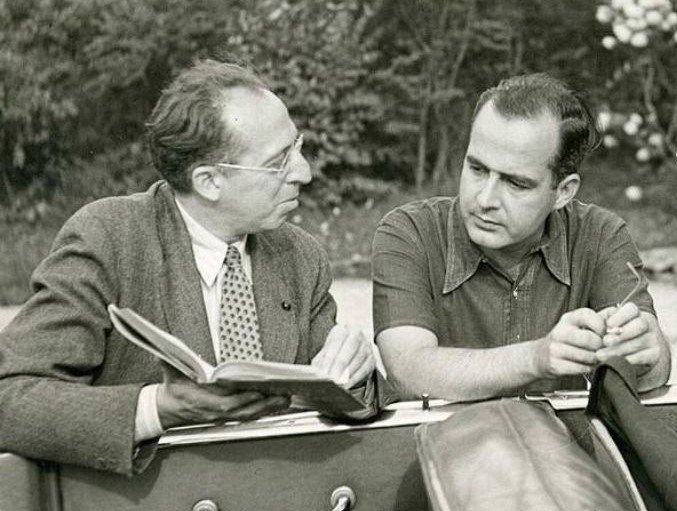
    How many times a summer do we hear Samuel Barber’s “Summer Music?”

    Well, I ask you, then – in whose tomb would you have Grant buried? What color should we paint the White House? It’s summer! Honor your appointment with the Barber, already.

    Barber wrote his wind quintet on a commission from the Chamber Music Society of the Detroit Institute for the Arts in 1953. Unusually, in lieu of a commissioning fee, the composer agreed to accept donations from the audience, with the Chamber Music Society guaranteeing the difference up to $2000. The work is set in one continuous movement, with three subsections discernible within the neoclassical whole.

    On this week’s “Music from Marlboro,” we’ll hear “Summer Music” performed at the 1981 Marlboro Music Festival, by flutist Susan Rotholz, oboist Elaine Douvas, clarinetist Joaquin Valdepeñas, bassoonist Stefanie Przybylska, and hornist Robin Graham.

    Then we’ll turn our attention to American Moravian composer John Antes. Antes, born in Frederick, Montgomery County, PA, in 1740, is credited with being one the first composers born on American soil to write chamber music, and as the creator of perhaps the earliest surviving bowed string instrument made in the American colonies. Antes’ violin, made in 1759, is housed in the Museum of the Moravian Historical Society in Nazareth, PA. A viola, made by Antes in 1764 (again believed to be the earliest surviving of American origin), is housed in the Lititz Moravian Congregation Collection in Lancaster County. Antes created at least seven such instruments.

    In 1752, Antes attended school in Bethlehem, PA. In 1760, he was admitted into the Single Brethren’s choir there. From Bethlehem, he traveled to Herrnhut, Germany, the international center of the Moravians, to prepare for a career as a missionary. In the meantime, he also took up watchmaking. He was ordained a minister in 1769, then set out for Egypt. There, he served as a missionary to the Coptic Church in Grand Cairo. After a largely uneventful decade, he was captured and tortured by followers of Osman Bey.

    During his convalescence, he occupied himself with the composition of three string trios. He also sent a copy of six quartets to Benjamin Franklin, whom he had known in America. The quartets are lost (nice job, Ben), but the trios survive. We’ll hear Antes’ Trio in D minor, from the 1976 Marlboro Music Festival, with violinists Isadore Cohen and Kathleen Lenski, and cellist Timothy Eddy performing.

    We’ll round out the hour with Aaron Copland’s beloved and evergreen Pulitzer Prize winning ballet “Appalachian Spring,” from 1944, in its rarely-heard original version for chamber orchestra, performed by 13 Marlboro musicians in 2006.

    “Appalachian Spring” will be heard this Saturday at 8 p.m., during the fourth weekend of this year’s Marlboro Music Festival – held, as always, on the campus of Marlboro College in Marlboro, VT – alongside works by Alban Berg, Benjamin Britten, and Pulitzer Prize winner Caroline Shaw. Beethoven, Britten, and Dvořák will be performed on Sunday at 2:30 p.m. For details, look online at marlboromusic.org.

    It’s American music for two seasons, and all seasons – with a Moravian palate cleanser from the 18th century – on this week’s “Music from Marlboro,” this Wednesday evening at 6:00 EDT, on WWFM – The Classical Network and wwfm.org.

    Marlboro School of Music and Festival: Official Page


    PHOTO: Music by Aaron Copland and Samuel Barber will be heard on this week’s “Music from Marlboro”
  • Cello Concert on The Classical Network

    Cello Concert on The Classical Network

    There’s always room for cello!

    On today’s Noontime Concert on The Classical Network, join me for a cool and colorful recital by cellist Timotheos Petrin and pianist Chelsea Wang.

    Petrin and Wang will perform sonatas by Valentini, Debussy and Prokofiev, with Gregory Piatigorsky’s arrangement of Stravinsky’s “Suite Italienne” tossed into the mix. Violinist Maria Ioudenitch will make a guest appearance in the world premiere of “Three Consolations” for piano trio, by Estonian-Canadian composer Riho Esko Maimets. The program was presented in February at the Philadelphia’s American Philosophical Society, under the auspices of Astral Artists.

    Then, following the concert broadcast, with temperatures spiking into the mid-90s, we’re off to Russia, where in St. Petersburg the high today is 58. Find refreshment in one of the underplayed symphonies of Alexander Glazunov. It will be lightly dressed by a tangy vinaigrette à la Dmitri Shostakovich. We’ll top it off with a work formulated by Mikhail Glinka while rowing across Lake Maggiore in uncharacteristically raw weather. He was in Italy, on doctor’s orders, for his health.

    Raise high your glasses, from 12 to 4 p.m. EDT. The vodka will be served chilled, on WWFM – The Classical Network and wwfm.org.

Tag Cloud

Aaron Copland (93) Beethoven (95) Composer (114) Film Music (137) Film Score (143) Film Scores (255) Halloween (94) John Williams (195) KWAX (229) Leonard Bernstein (103) Marlboro Music Festival (125) Movie Music (152) Mozart (88) Opera (208) Philadelphia Orchestra (89) Picture Perfect (174) Princeton Symphony Orchestra (108) Radio (88) Ross Amico (244) Roy's Tie-Dye Sci-Fi Corner (290) The Classical Network (101) The Lost Chord (268) Vaughan Williams (103) WPRB (396) WWFM (881)

DON’T MISS A BEAT

Receive a weekly digest every Sunday at noon by signing up here


RECENT POSTS