Category: Daily Dispatch

  • Biber Salzburg’s Brilliant Violinist

    Biber Salzburg’s Brilliant Violinist

    Heinrich Ignaz Franz von Biber had talent – and names – to burn. Arguably Salzburg’s most brilliant musician prior to the birth of Mozart, Biber was an outstanding violinist – perhaps the best of his age (at least music historian Charles Burney thought so) – and an innovative composer.

    Born in Bohemia in 1644, Biber settled in Salzburg at the age of 16, when during a trip to negotiate the purchase of some instruments on behalf of his employer, Karl II von Liechtenstein-Kastelkorn, Bishop of Olmütz, based in Kroměříž (where much of “Amadeus” would later be filmed), he found a better job working for Maximilian Gandolph von Kuenberg, Archbishop of Mozart’s future home town. Fortunately, the bishops were friends, so Biber avoided any serious repercussions.

    Some of Biber’s experiments with clashing rhythms and layers of sound – most famously in his programmatic battle piece, “Battalia” – anticipate those of Charles Ives by several centuries. In fact, a number of his works are programmatic, with musical effects intended to convey extra-musical objects and ideas.

    He also experimented with scordatura, the tuning of stringed instruments to unconventional intervals. His “Mystery Sonatas” (sometimes referred to as the “Rosary Sonatas”) have featured increasingly in concerts and recordings. Its monumental passacaglia for solo violin is one of the earliest known pieces of its kind.

    We’ll hoist a Heineken for Heinrich today, among our featured composers, between 4 and 7 p.m. EDT on WWFM – The Classical Network and wwfm.org.


  • Howard Hanson’s Bold Island Inspiration

    Howard Hanson’s Bold Island Inspiration

    For many people, the prospect of having to work through vacation could be a real drag; but for the creative artist, getting away can provide an opportunity to really get things done.

    This Sunday night on “The Lost Chord,” we’ll hear three pieces associated with Bold Island, Maine, the summer home of Howard Hanson.

    For 40 years, Hanson was the director of the Eastman School of Music. In that capacity he nurtured and championed innumerable American composers, giving literally thousands of premieres at the helm of the Eastman-Rochester Orchestra, an ensemble he founded. The lucky ones found their way onto records issued on the Mercury label.

    Hanson, of course, was himself a composer. He was awarded the Pulitzer Prize for Music in 1944, for his Symphony No. 4 “Requiem,” written in memory of his father. But his best known music, undoubtedly, is his Symphony No. 2 “Romantic,” composed in 1930.

    The famous “Hanson sound” is one of heart-on-the-sleeve romanticism, characterized by glowingly nostalgic melodies, though he also had his severe side. After all, he was born in Wahoo, Nebraska, to Swedish immigrants, and a certain Nordic austerity can be detected, especially in his later works.

    His Symphony No. 6, of 1967, is more tightly argued than his earlier, more famous symphonies, structured in six brief movements, built on a recurring motif. At times, it can sound a bit like Sibelius, though Hanson very much remains his own man. Hanson being Hanson, he doesn’t really skimp on the lyricism, but he doesn’t exactly indulge it to the same extent he does in the earlier works. Still, predictably, the symphony was derided as old-fashioned by the genuinely austere musical establishment of the day.

    The Bold Island connection is through Hanson’s “Summer Seascape No. 2,” written a few years earlier, and clearly the blueprint for the symphony. In fact, the opening of the symphony is identical.

    The first “Summer Seascape” was the centerpiece of the “Bold Island Suite,” a separate work composed in 1961. The suite also contains movements with the descriptive titles “Birds of the Sea” and “God in Nature.”

    The North Atlantic inspires some august music, on “August Hanson,” this Sunday night at 10:00 EDT, on WWFM – The Classical Network and wwfm.org.
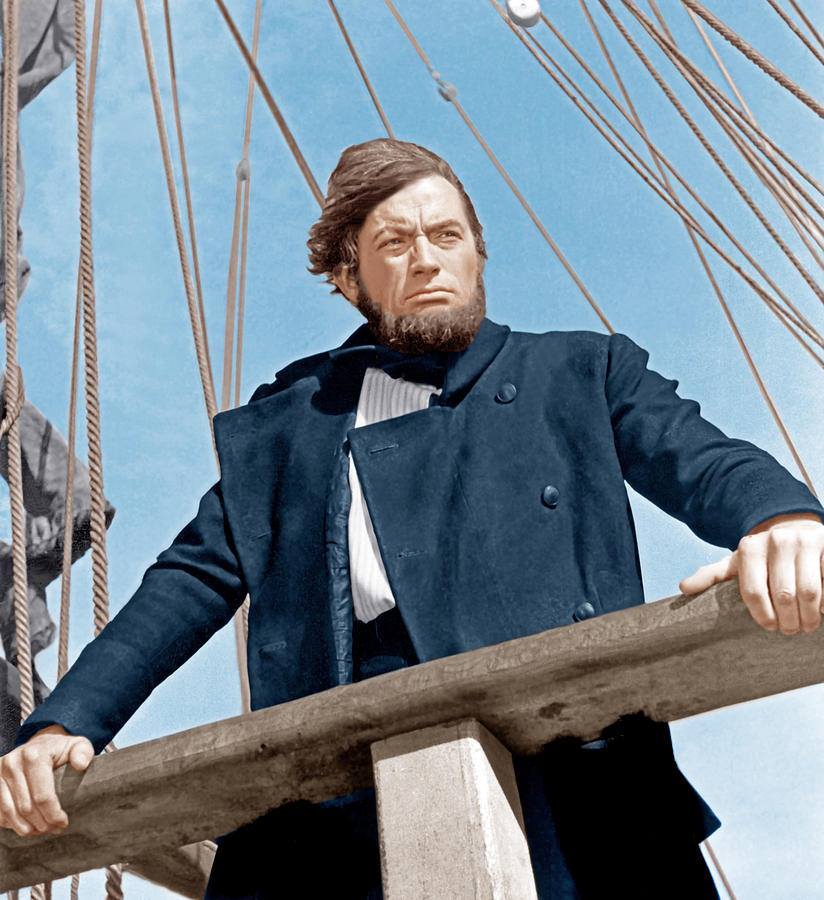

    PHOTO: Not-very-austere Puffins off the coast of Maine

  • Armstrong Gibbs Underrated British Composer

    Armstrong Gibbs Underrated British Composer

    I’m not going to strong-arm anyone into liking Armstrong. It’s easy enough to fall in love with the easy charm and seductive melodies of Armstrong Gibbs.

    Cecil Armstrong Gibbs (1889-1960) is mostly known for his songs. He studied composition with Ralph Vaughan Williams at the Royal College of Music. Nevertheless, he is often dismissed for gravitating toward musical forms that could easily be described as “slight.”

    He did contribute his share of British Light Music, to be sure, but he also wrote symphonies. The second of these, the “Odysseus Symphony,” for soloists, chorus, and orchestra, is clearly cut from the same cloth as Vaughan Williams’ “A Sea Symphony.”

    It was Princess Elizabeth – the current Queen Elizabeth II – who requested of Armstrong a piece for her eighteenth birthday. The result was this gorgeous miniature, called “Dusk,” which became one of Gibb’s best-known works.

    Happy birthday, Armstrong Gibbs!

  • Sea Captain Movie Music Sail WWFM

    Sea Captain Movie Music Sail WWFM

    Taste the lash, and prepare to be keelhauled!

    This week on “Picture Perfect,” we stand tall against tyrannical sea captains, with music from “The Sea Wolf” (by Erich Wolfgang Korngold), “Moby Dick” (Philip Sainton), “The Caine Mutiny” (Max Steiner), and “Mutiny on the Bounty” (Bronislau Kaper). Strawberries will be pilfered and arms distributed among the crew, this Friday evening at 6:00 EDT, on WWFM – The Classical Network and wwfm.org.


    CAPTAINS OUTRAGEOUS (clockwise from left): Gregory Peck as Captain Ahab, Edward G. Robinson as Wolf Larsen, Humphrey Bogart as Captain Queeg, and Trevor Howard as Captain Bligh

  • Victor Young Forever The Composer Remembered

    Victor Young Forever The Composer Remembered

    He may have died in 1956, but his music is forever Young. Victor Young was born in Chicago on this date in 1900.

    The composer of “Stella by Starlight” and “When I Fall in Love” was classically trained and thoroughly drilled: a violinist from the age of 6, he studied at the Warsaw Imperial Conservatory and found employment (following further training on the piano at the Paris Conservatory) while still a teen in the Warsaw Philharmonic Orchestra.

    His talent was admired by Czar Nicholas II, but his ability to capitalize on the connection was sharply curtailed as Russia boiled over into revolution, and Young barely escaped with his life. He fled to Warsaw and then Paris, and he didn’t stop running until he reached the United States.

    Here, he acted as a conductor and arranger of popular music. He was responsible for transforming Hoagy Carmichael’s “Stardust,” which had previously been played as an up-tempo dance number, into a romantic ballad, which secured its status as a mega-hit. “Stardust” went on to become one of the most-recorded songs of all time.

    In the mid-‘30s, Young made the move to film, where his gift for melody served him well. Over the course of the next two decades, he received 22 Academy Award nominations. Twice, he was nominated four times within a single year. Young holds the record for the most nominations prior to a win.

    Unfortunately, the honor of Oscar gold would be bestowed posthumously. His score for “Around the World in 80 Days” was recognized in 1957. Young died of a cerebral hemorrhage in November of 1956.

    In 20 years, he managed to compose 300 scores, among them those for “Reap the Wild Wind,” “The Glass Key,” “The Palm Beach Story,” “For Whom the Bell Tolls,” “The Uninvited,” “State of the Union,” “A Connecticut Yankee in King Arthur’s Court,” “Sands of Iwo Jima,” “Samson and Delilah,” “Rio Grande,” “The Greatest Show on Earth,” “Scaramouche,” “The Quiet Man,” “Shane,” “Three Coins in a Fountain” and “Johnny Guitar.”

    In 1960, he received a star on the Hollywood Walk of Fame. In 1970, he was inducted into the Songwriters Hall of Fame.

    Happy birthday, Victor Young. What you might have accomplished had you lived to be old!


    Nat King Cole singing “When I Fall in Love”

    “Scaramouche” (1952)

    “The Quiet Man” (1952)
    https://www.youtube.com/watch…

    “Around the World in 80 Days” (1956):


    PHOTO: Orson, Bing and Young

Tag Cloud

Aaron Copland (93) Beethoven (95) Composer (114) Film Music (137) Film Score (143) Film Scores (255) Halloween (94) John Williams (195) KWAX (229) Leonard Bernstein (103) Marlboro Music Festival (125) Movie Music (152) Mozart (88) Opera (208) Philadelphia Orchestra (89) Picture Perfect (174) Princeton Symphony Orchestra (108) Radio (88) Ross Amico (244) Roy's Tie-Dye Sci-Fi Corner (290) The Classical Network (101) The Lost Chord (268) Vaughan Williams (103) WPRB (396) WWFM (881)

DON’T MISS A BEAT

Receive a weekly digest every Sunday at noon by signing up here


RECENT POSTS