Category: Daily Dispatch

  • Debussy’s La Mer Das Merde Szell Fails?

    Debussy’s La Mer Das Merde Szell Fails?

    One wag commented on a performance of Debussy’s impressionistic magnum opus conducted by George Szell, “He tried Debussy’s ‘La Mer’ once. It came out as ‘Das Merde.’”

    Great conductor. Great composer. But not all marriages are meant to be (as Debussy well knew).

    Happy birthday, Claude Debussy!

    Debussy in the W.C.?

  • Haydn, Rochberg & Marlboro’s Musical Rebellion

    Haydn, Rochberg & Marlboro’s Musical Rebellion

    On this week’s “Music from Marlboro,” you may be good at Haydn, but there’s no escaping the Roch. And I don’t mean Alcatraz.

    George Rochberg’s big claim to fame – or, in some circles, notoriety – is that he was one of the first composers to emerge from the predominant serialism of the 1960s to embrace a new tonality, a shift brought on, it is said, by the untimely death of his son.

    Rochberg found the brand of expressionism he had been exploring at mid-career inadequate to convey the strong emotional upheaval he felt. The reintroduction of tonal passages into his works acted as a kind of balm, even as it lit a slow fuse that would blow wide open the future for up-and-coming composers. At the time, this would have been viewed by some as a criminal offense.

    Rochberg is often credited with having ushered in the Age of Pluralism. Now a composer can write any way he or she wants and still be taken seriously. It’s easy to forget that that was not always the case.

    Rochberg’s desire to communicate must have been a latent one, since his Trio for Clarinet, Horn, and Piano, from 1947 (predating his “twelve tone” period), is direct and, in its second movement adagio, introspective and full of feeling. We’ll hear it performed at the 2007 Marlboro Music Festival by clarinetist Charles Neidich, hornist José Vicente Castelló, and pianist Igor Levit.

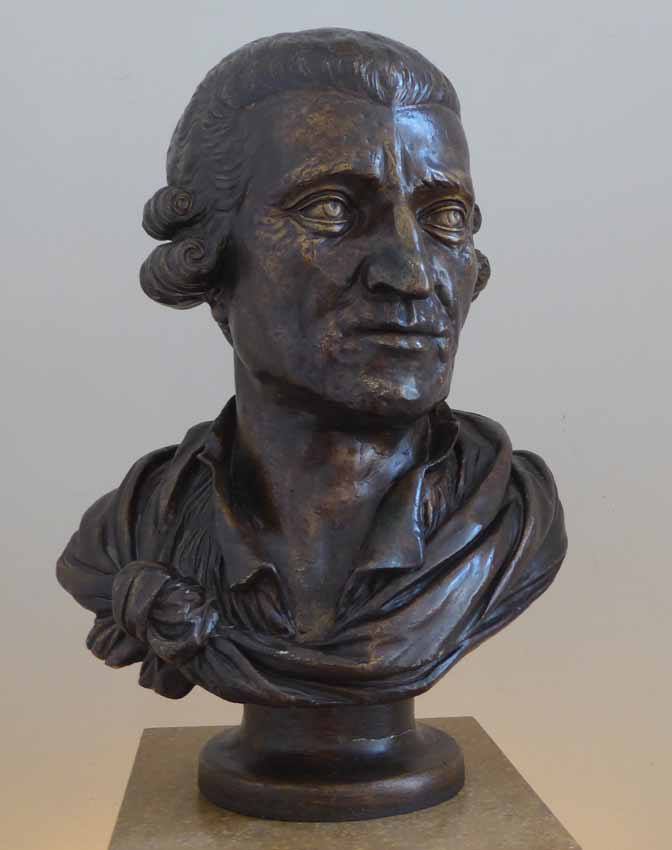
    The trio will be bookended by two works associated with Franz Joseph Haydn – the String Quartet in B flat major, Op. 33, No. 4, by turns puckish and transporting, and Johannes Brahms’ “Variations on a Theme of Haydn.”

    Who cares that the theme that inspired Brahms to write his variations isn’t by Haydn at all? The “Saint Anthony Chorale” that forms the basis of the slow movement of Haydn’s Divertimento No. 1 in B flat major, Hob. II: 46, is a preexisting melody. In fact, the composer of the divertimento itself has been disputed. A clear case of forgery?

    A lenient judge would understand that none of that really matters in music this well-crafted, especially when performed at the 1976 Marlboro Music Festival by pianists Stephanie Brown and Cynthia Raim.

    Haydn’s Op. 33, No. 4, will open the hour. We’ll hear it played by a band on the run, from 1990, made up of violinists Chee-Yun Kim and Felix Galimir, violist Caroline Levine, and cellist Jean-Guihen Queyras.

    Haydn and Rochberg get busted on this week’s “Music from Marlboro,” Wednesday evening at 6:00 EDT, on WWFM – The Classical Network and wwfm.org.

    Marlboro School of Music and Festival: Official Page

  • Newman & Oltman at Raritan River Music Festival

    Newman & Oltman at Raritan River Music Festival

    On today’s Noontime Concert on The Classical Network, we’re all rarin’ to go. That is to say, we’re rarin’ to go to the Raritan River Music Festival.

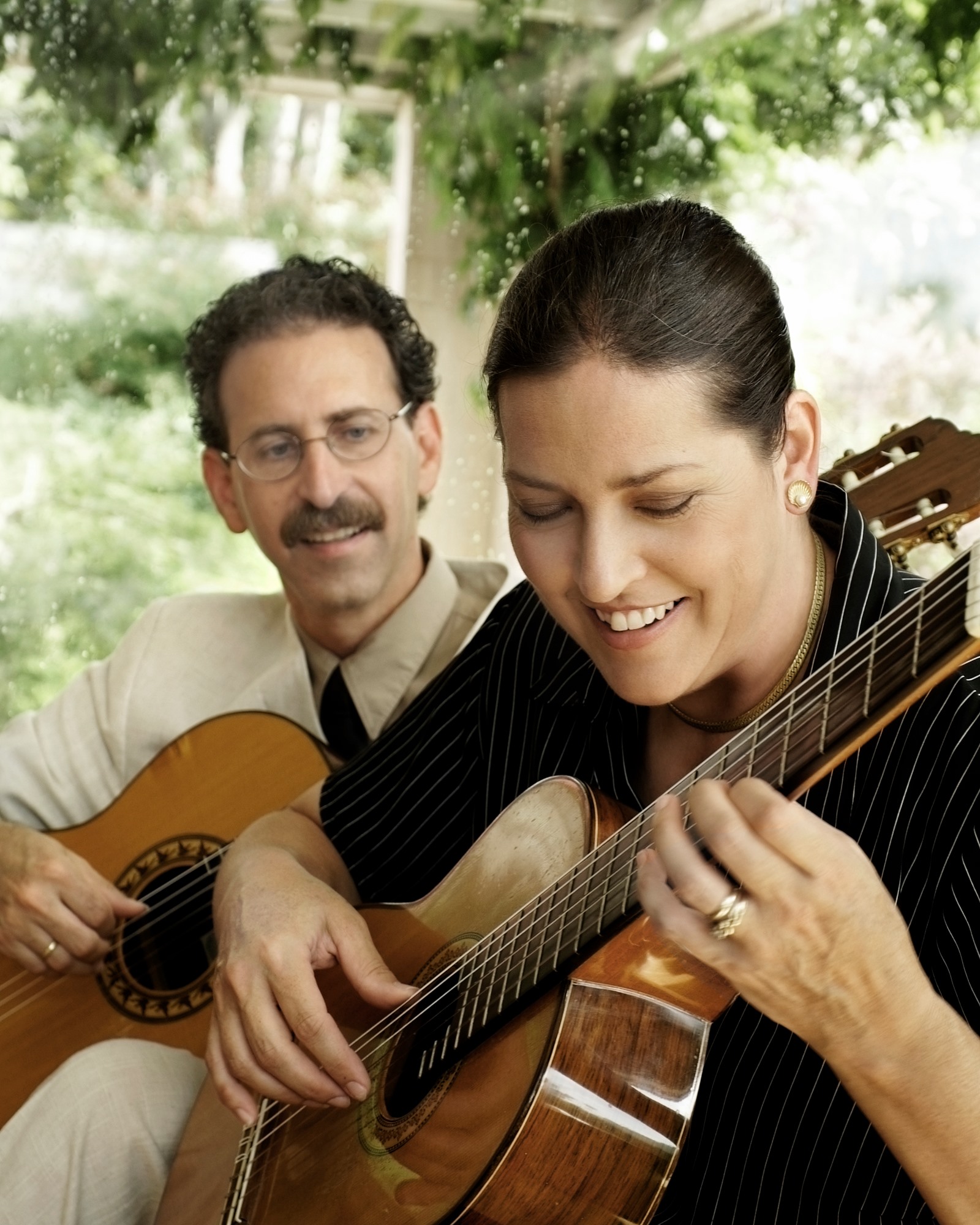
    Join me for the Newman & Oltman Guitar Duo and friends and a program titled “All Americas: Music of the New World.” The concert will include music from the United States and Brazil, as well as selections from the world premiere performance of “El Libro del los Seres Imaginarios” (“The Book of Imaginary Beings”), written specifically for the duo, by the Cuban master Leo Brouwer. Also on hand will be guitarist-composers Clarice Assad and João Luiz.

    The Raritan River Music Festival was founded by Michael Newman and Laura Oltman in 1989 as a stimulating series of concerts that embrace new music, world music, and straightforward classical repertoire, presented by world-class musicians, in intimate, historic venues in Hunterdon and Warren Counties. The annual festival is held during the month of May. However, Raritan River Music also offers year-round outreach programs for students, seniors, and patients at healthcare facilities. You can learn more by visiting raritanrivermusic.org.

    Then stick around! The heat index values are projected to be 100 again today. We’ll have plenty of cool music for you, from 12 to 4 p.m. EDT, on WWFM – The Classical Network and wwfm.org.

  • William Henry Fry’s Fry Day Surprise

    William Henry Fry’s Fry Day Surprise

    Raising the false hopes of workers everywhere, Monday is “Fry Day” this week – as today happens to coincide with the birthday of William Henry Fry. Maybe.*

    Fry was born in Philadelphia in 1813. A pioneering figure in American music, he was the first native-born composer to write on a large scale. He composed orchestral works and the first opera by an American to be performed publicly in his lifetime (“Leonora,” in 1845). He was an outspoken advocate of American music – that is, music composed by Americans – at a time when German imports ruled the roost. It would be decades before American music would gain a toehold in the concert halls, which makes Fry an even more remarkable figure.

    Fry studied music with a former bandleader in Napoleon Bonaparte’s army, who went on to become the head of Philadelphia’s Musical Fund Society. Fry himself would become the society’s secretary.

    He was also a journalist, a writer on music, and the first music critic to write for a major American newspaper. He was a foreign correspondent for the Philadelphia Public Ledger and acted as music critic for the New York Herald Tribune.

    He composed seven symphonies, all of them of a descriptive nature. His “Santa Claus Symphony,” after Clement Moore, is more of a Straussian tone poem. My personal favorite, though, is the “Niagara Symphony.” Written for P.T. Barnum, the work is conceived for enormous forces augmented by a mind-blowing eleven timpani.

    Hear this sublime work this afternoon on The Classical Network in a recording on the Naxos label. The album features liner notes by my friend and colleague Kile Smith. For 18 years, Kile was curator of the Fleisher Collection of Orchestral Music at the Free Library of Philadelphia, the world’s largest lending library of orchestral performance materials, where Fry’s scores are housed.

    Kile, of course, is also an entertaining writer, a personable radio presence, and a terrific composer. His latest album, “The Arc in the Sky,” was released last month on Navona Records, a subsidiary of Parma Recordings. The hour-long work was commissioned by the Grammy Award winning choir, The Crossing. It is one of five CDs of Kile’s music to be issued over the past year.

    I’ll further exploit the Fry connection to share some of Kile’s music this afternoon, following on the heels of the “Niagara Symphony.” Out of the Fry and into the Kile, so to speak.

    It will be more fun than going over the falls in a barrel, from 4 to 7 p.m. EDT, on WWFM – The Classical Network and wwfm.org.


    • There is some discrepancy regarding the date of Fry’s birth, with some sources giving August 10, and others August 19. So maybe it is just Monday, after all.

    More about Kile Smith here: kilesmith.com

  • Suk’s Summer’s Tale Healing After Tragedy

    Suk’s Summer’s Tale Healing After Tragedy

    Josef Suk’s 30th year was a tragic one, marked by the deaths of both his young wife, Otilie, and his former teacher, her father, Antonín Dvořák. Not surprisingly, a sense of morbidity colors much of his mature output. The double-loss directly inspired Suk’s “Asrael Symphony” (named for the Angel of Death).

    This Sunday night on “The Lost Chord,” we’ll take a look at “A Summer’s Tale,” the next step in Suk’s emotional rehabilitation. The work is a five-movement symphonic poem, the second of a four-part cycle, that contemplates death and the meaning of life. More affirmative than the grim “Asrael,” which is full of pain, loss and grief, “A Summer’s Tale” explores the healing powers of nature, in a score that at times reflects the epic romanticism of Gustav Mahler and at others the impressionism of Claude Debussy. It was composed over the course of just six weeks in the summer of 1907. Further tinkering took place over the next year-and-a-half. The work received its premiere in January of 1909.

    Suk later described the theme of the piece as “finding a soothing balm in nature.” I hope you’ll join me as I clear a path to “Healing by Nature” – Josef Suk’s “A Summer’s Tale” – this Sunday night at 10:00 EDT, on WWFM – The Classical Network and wwfm.org.

Tag Cloud

Aaron Copland (93) Beethoven (95) Composer (114) Film Music (137) Film Score (143) Film Scores (255) Halloween (94) John Williams (195) KWAX (229) Leonard Bernstein (103) Marlboro Music Festival (125) Movie Music (152) Mozart (88) Opera (208) Philadelphia Orchestra (89) Picture Perfect (174) Princeton Symphony Orchestra (108) Radio (88) Ross Amico (244) Roy's Tie-Dye Sci-Fi Corner (290) The Classical Network (101) The Lost Chord (268) Vaughan Williams (103) WPRB (396) WWFM (881)

DON’T MISS A BEAT

Receive a weekly digest every Sunday at noon by signing up here


RECENT POSTS