Category: Daily Dispatch

  • Wizard of Oz at 80 Still a Classic

    Wizard of Oz at 80 Still a Classic

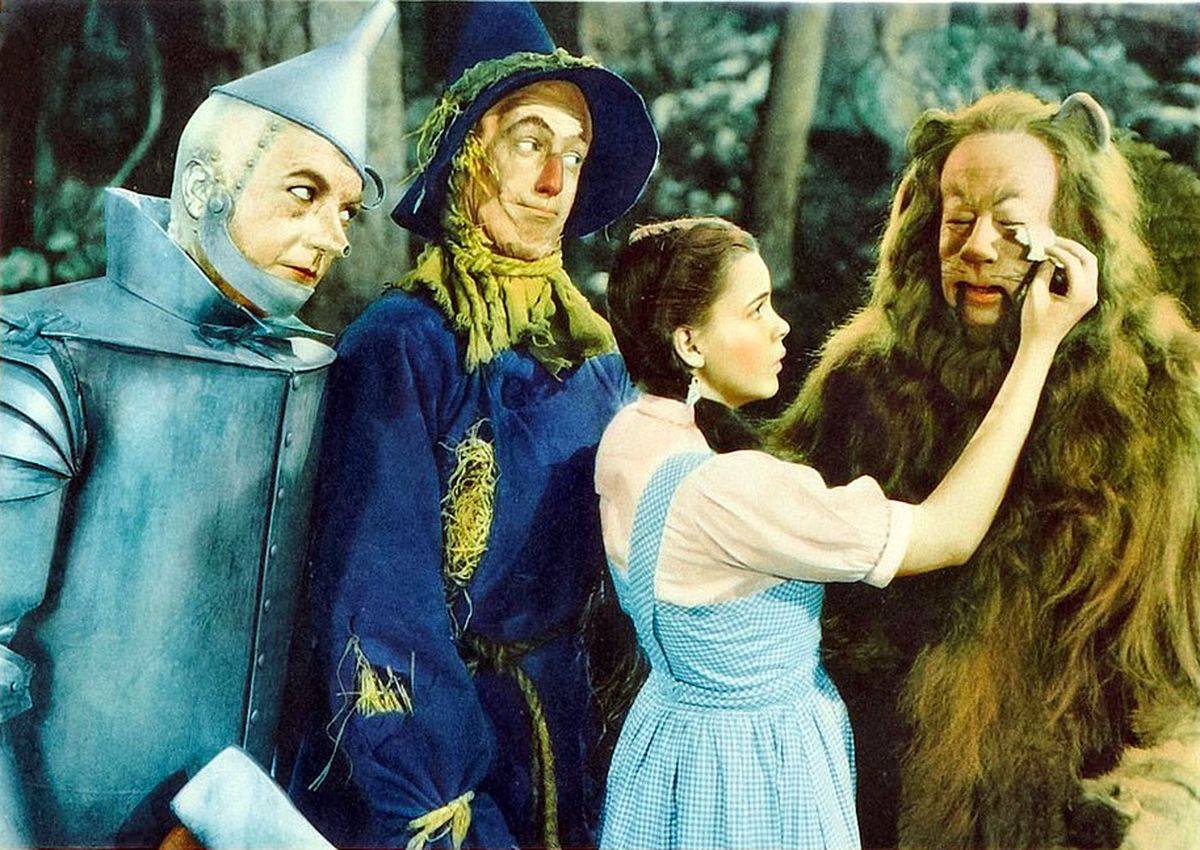
    Happy 80th birthday, “The Wizard of Oz” – according to the Library of Congress, the most viewed movie of all time. Herbert Stothart wrote the original underscore. The songs by Harold Arlen and Yip Harburg are deservedly immortal. All three were honored with Academy Awards. “Over the Rainbow” was the recipient of an Oscar for the Best Original Song of 1939. Judy Garland was also recognized with a special “juvenile” Oscar for her work on “Oz” and “Babes in Arms.” Undoubtedly there would have been more had the film not opened the same year as “Gone with the Wind.”

    #StillBetterThanAvengersEndgame

  • Summer Film Scores A European Vacation Soundtrack

    Summer Film Scores A European Vacation Soundtrack

    With two weeks left in August, there’s still time for a quick European vacation. This week on “Picture Perfect,” we glance across the pond for an hour of music from foreign films with summer settings.

    “A Summer Story” (1988), based on a tale of John Galsworthy, tells of a young London lawyer and a farm girl who fall profoundly in love at the turn of last century. Georges Delerue provides the poignant score.

    The juxtaposition of “Igmar Bergman” and “comedy” may seem like something of an oxymoron, but the dour Swede’s “Smiles of a Summer Night” (1955) proves to be a witty examination of the folly of the human heart. Frequent Bergman collaborator Erik Nordgren wrote the music.

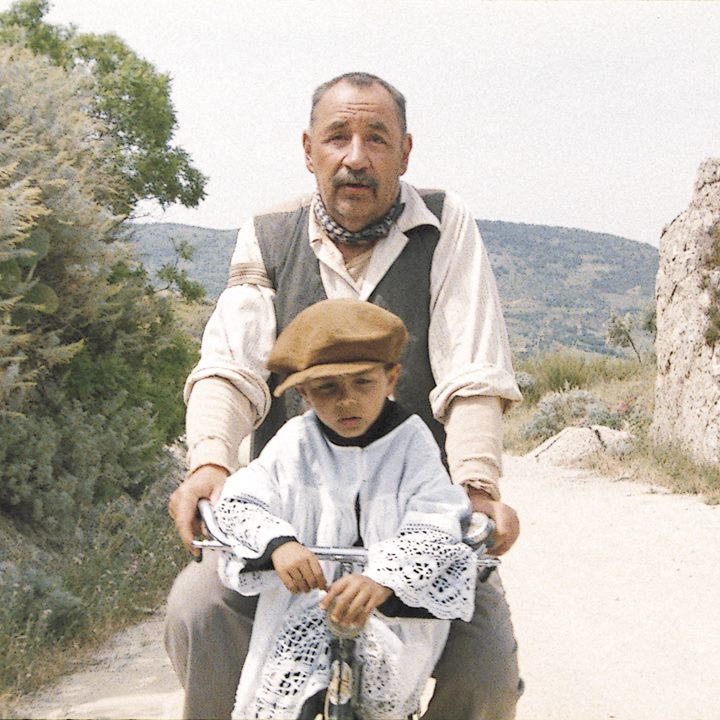
    Director Yves Robert adapted the memoirs of Marcel Pagnol, who spent his childhood summers in the south of France, into two lovely films, “My Father’s Glory” and “My Mother’s Castle” (1990). We’ll hear music composed for both by Vladimir Cosma. Pagnol’s experiences in Provence marked him for life, informing the films and writings of his maturity, including “The Baker’s Wife,” and “Jean de Florette.”

    Finally, we’ll have a generous sampling from one of Ennio Morricone’s most beloved scores, that for “Cinema Paradiso” (1988). “Cinema Paradiso,” set in a post-war Sicily where it seems always to be summer, is a nostalgic paean to the shared experience of film and the significance it holds in our lives. It won a special jury prize at the Cannes Film Festival and was honored with an Academy Award for Best Foreign Film.

    Music is the universal language. Join me for summer overseas on “Picture Perfect,” this Friday evening at 6:00 EDT, on WWFM – The Classical NetworkWWFM and wwfm.org.

  • Sha Na Na at Woodstock? Grease for Peace

    Sha Na Na at Woodstock? Grease for Peace

    Woodstock organizer Michael Lang had wanted Roy Rogers to conclude his now-iconic festival with a performance of “Happy Trails.” (Needless to say, Rogers declined.) But that’s far from the strangest thing about Woodstock.

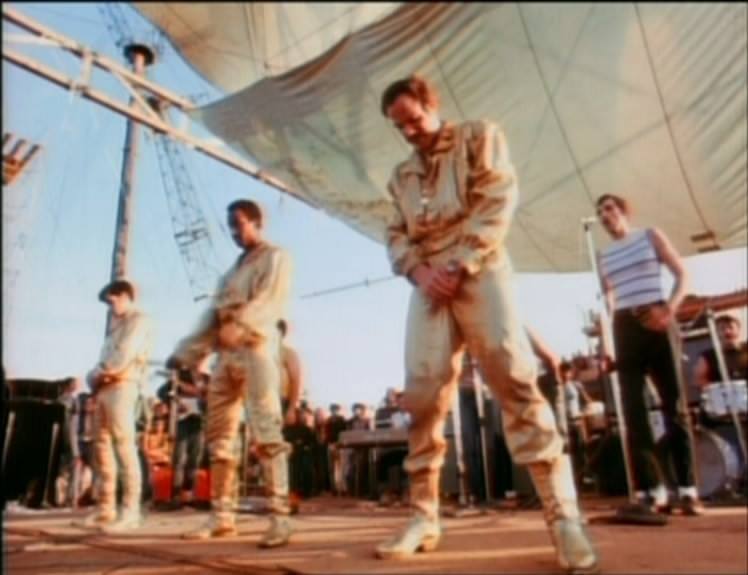
    Consider the festival’s penultimate act, presented at 7:30 on Monday morning, August 18. Sandwiched between the Paul Butterfield Blues Band (at 6) and Jimi Hendrix (at 9) was – Sha Na Na??!!

    What was a fifties tribute band doing at Woodstock? A lot of caffeine, apparently (at best).

    There at the request of Hendrix, all that gold lamé must have confused a lot of hippies.

    The group’s high-energy performance of “At the Hop” makes it sound like a proto-punk anthem. Their instant notoriety kicked off or tapped into a tsunami of fifties nostalgia that left in its wake “American Graffitti,” “Grease,” “Happy Days,” and the band’s own syndicated variety show. Not too shabby, considering “At the Hop” was only 12 years-old.

    Woodstock commenced with Richie Havens at 5:07 p.m. EDT, 50 years ago today. (Sweetwater, the group originally scheduled to open the festival, was delayed by the police.)

    Grease for peace!

  • Hindemith’s Octet: An Endurance Test

    Hindemith’s Octet: An Endurance Test

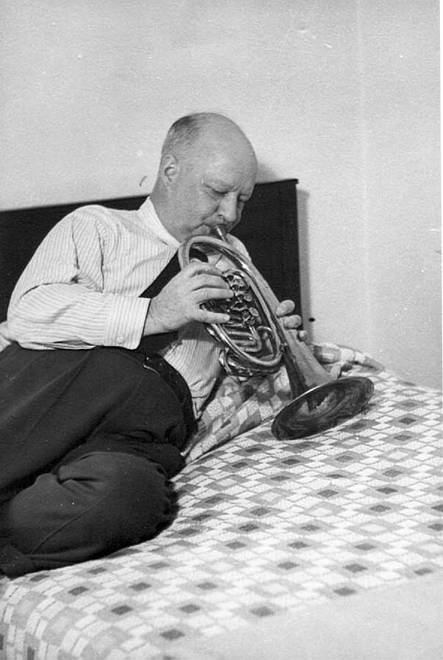
    There’s Hindemith on a good day. Then there’s the Hindemith of the Octet for Winds and Strings.

    At 27 minutes, Hindemith’s Octet is something of an endurance test for performers, and perhaps even more so for listeners. The piece is ugly, grey, cranky, and noodly – gebrauchsmusik at its worst. And I say this as a Hindemith fan. There are times when Hindemith’s music can be glorious, thrilling, or transcendent, even. And then there are those when he just makes you feel like you’ve been reading a newspaper in the back seat on a too-long car trip.

    This is not a piece I would attempt to share under the glare of a sunny summer’s day. But there are thunderstorms in the forecast, so let the good times roll.

    Eight talented musicians make of it what they can, on this week’s “Music from Marlboro.” We’ll hear as fine a performance of the piece as you’re ever likely to encounter, from the 1983 Marlboro Music Festival.

    Then, by way of apology, I’ll do the best that I can to repair our friendship with Beethoven’s wholly delightful Serenade in D major, Op. 25. Beethoven’s Serenade is a late entry in the 18th century divertimento craze. Its date of composition is uncertain, but recent scholarship places it around the time Beethoven wrote his popular Septet. We’ll hear a performance from Marlboro in 1980, with flutist Christine Nield, violinist Young Uck Kim, and violist Michael Tree (of the legendary Guarneri Quartet).

    Hindemith may have had Beethoven and Schubert in mind when he embarked on his Octet. But beyond that, I have no idea what he was thinking. Form is no substitute for content, on this week’s “Music from Marlboro,” this Wednesday evening at 6:00 EDT, on WWFM – The Classical Network and wwfm.org.

    Marlboro School of Music and Festival: Official Page


    HINDEMITH: Whatever pops into my head is gold

  • Korngold’s Symphony on The Classical Network

    Korngold’s Symphony on The Classical Network

    The Tuesday noon concert is on hiatus for the remainder of the summer. So I’ll have a blank slate this afternoon, on The Classical Network.

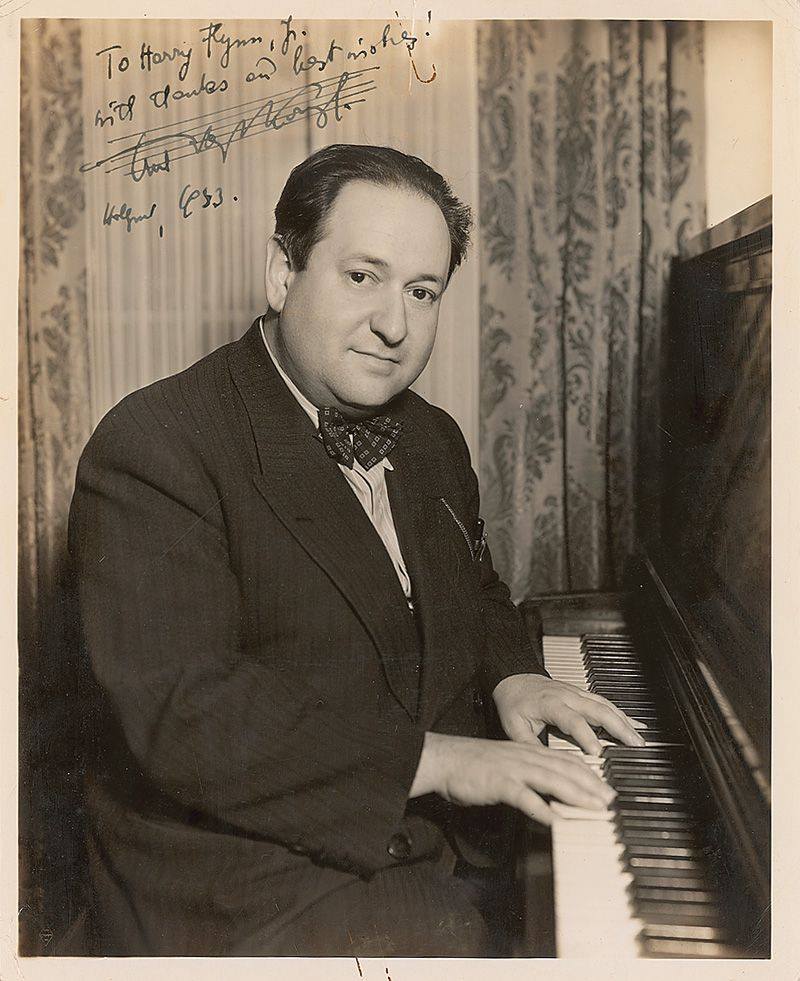
    With another stormpocalypse bearing down on the Trenton-Princeton area (maybe), I’ll present, among my featured highlights, Erich Wolfgang Korngold’s Symphony in F-sharp, the composer’s emotional and artistic reaction to war-torn Vienna.

    As a Jew, Korngold lived as an exile in Hollywood following the Anschluss, earning fame and fortune through his film scores for Errol Flynn. In fact, he once quipped that Robin Hood had saved his life. Korngold may have survived the war, but by 1945 the world he had known was gone forever. When he attempted to reestablish his career back home, he found himself regarded as an uncomfortable reminder of shame, guilt, and destruction, and the late Romantic syntax of his music had come to seem like the product of a bygone era. To lend perspective, John Cage unveiled his 4’33” in 1952, the same year that Korngold completed his symphony.

    The Symphony in F-sharp is not by any means “film music,” though it does allude to some of the scores he wrote for Warner Brothers – “Juarez,” “The Private Lives of Elizabeth and Essex,” “Captain Blood,” and “Kings Row.” The work includes an obligatory Korngoldian happy ending, but the overall mood is one of loss and ruination. It was performed only thrice during the composer’s lifetime. The first performance was so under-rehearsed that the composer tried (unsuccessfully) to put a halt to it.

    Over a decade after Korngold’s death, the score was rediscovered by conductor Rudolf Kempe in the library of the Munich Philharmonic. Kempe set down the world-premiere recording for RCA in 1972. Alongside RCA’s Classic Film Scores Series and a new recording of “Die Tote Stadt,” it set the ball rolling, slowly but inexorably, toward a reassessment of Korngold’s music, which gradually picked up pace in the 1990s, as musicians and record companies began to look further afield with the realization that everyone had already replaced their LPs of the standard repertoire on compact disc.

    The conductor Dmitri Mitropoulos once wrote of Korngold’s symphony, “All my life I have searched for the perfect modern work. In this symphony I have found it.” Unfortunately, Mitropoulos died before he could realize his plan to perform it.

    Korngold was a good man – he shared the wealth of his success in Hollywood to help family and displaced friends in need – but he was not a religious man. Nor was he very much tied up in his heritage. He commented that he and his family had always thought of themselves as Viennese; it was Hitler who made them Jewish. Korngold dedicated his symphony to the memory of Franklin Delano Roosevelt, president of the country that had become his second home. Korngold died in Los Angeles in 1957.

    Tune in this afternoon to hear Korngold’s Symphony in F-sharp, among my featured works, between 12 and 4 p.m. EDT, on WWFM – The Classical Network and wwfm.org.


    NOTE: The symphony will be performed on Saturday night at the Fisher Center at Bard, as part of the second weekend of this year’s Bard Music Festival, held at Bard College, “Korngold and His World.” More information is available at fishercenter.bard.edu.
Tag Cloud

Aaron Copland (93) Beethoven (95) Composer (114) Film Music (137) Film Score (143) Film Scores (255) Halloween (94) John Williams (195) KWAX (229) Leonard Bernstein (103) Marlboro Music Festival (125) Movie Music (152) Mozart (88) Opera (208) Philadelphia Orchestra (89) Picture Perfect (174) Princeton Symphony Orchestra (108) Radio (88) Ross Amico (244) Roy's Tie-Dye Sci-Fi Corner (290) The Classical Network (101) The Lost Chord (268) Vaughan Williams (103) WPRB (396) WWFM (881)

DON’T MISS A BEAT

Receive a weekly digest every Sunday at noon by signing up here


RECENT POSTS