Category: Daily Dispatch

  • Mario Davidovsky Pulitzer-Winning Composer Dies at 85

    Mario Davidovsky Pulitzer-Winning Composer Dies at 85

    It was announced by the American Academy of Arts and Letters earlier today that the composer Mario Davidovsky has died. Davidovsky, who was born in Argentina, studied with Aaron Copland and Milton Babbitt. He was a former member of the composition faculty at Columbia University and a past director of the Columbia-Princeton Electronic Music Center.

    Davidovsky emigrated to the United States in 1960. His work, “Synchronisms No. 6,” for piano and electroacoustic sounds played from tape, was honored with the Pulitzer Prize for Music in 1971. At the time of his death, on Friday, Davidovsky was 85 years-old.


    Synchronisms No. 6:


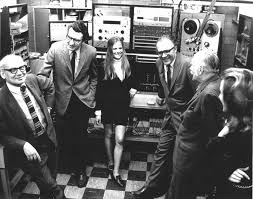
    PHOTO (left to right): CPEMC personnel Milton Babbitt, Mario Davidovsky, Pril Smiley, Vladimir Ussachevsky, Otto Luening, and Alice Shields, circa 1970

  • NYC Early Music Concert & American Road Trip

    NYC Early Music Concert & American Road Trip

    New Amsterdam was established by the Dutch in the 17th century at the southern tip of Manhattan. Today’s Noontime Concert on The Classical Network comes to us from contemporary New York City.

    The New Amsterdam Consort will present music by composers whose lives coincided with the infancy of the island’s European settlement, including Antonio Bertali (1605-1669), Heinrich Ignaz Franz Biber (1644-1704), Ricardo Rognoni (c.1550-1620), and Georg Muffat (1553-1704).

    The program was recorded at St. Bartholomew’s Church, 325 Park Avenue, on October 18, 2018. Free midtown concerts are presented at the Chapel at St. Bart’s on Thursdays at 1:15 p.m. during the regular season. This year, that season commences on September 5 with The Vivaldi Project performing classical string trios.

    These concerts are made possible in part by Gotham Early Music Scene, or GEMS. GEMS is a non-profit corporation that supports artists and organizations in New York City devoted to Early Music. Learn more and check out the events calendar at gemsny.org.

    Then stick around: with Labor Day weekend ahead, we’ll hit the road with an afternoon of American music evocative of some of our country’s natural and man-made wonders. It’s a journey that will encompass a number of our cities, states, and favorite vacation spots.

    Among our featured works will be “Yellowstone,” for violin and orchestra, by Jett Hitt, Composer. Hitt, who holds a doctorate in composition, conducts guided horseback tours at the national park.

    The RV is all gassed up and ready to go. We’ll hit the pike, from 12 to 4 p.m. EDT, on WWFM – The Classical Network and wwfm.org.

  • Remembering Wolfgang Sawallisch & Philadelphia

    Remembering Wolfgang Sawallisch & Philadelphia

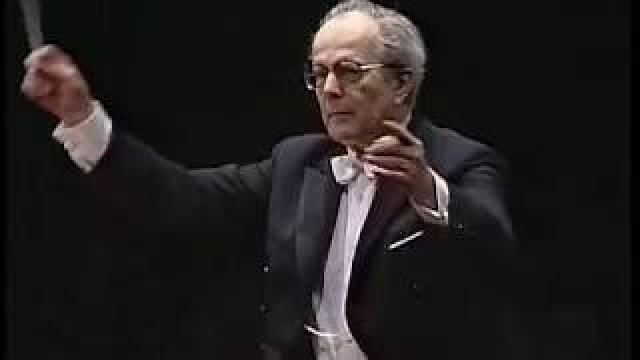
    I remember being told by a friend over coffee, back in the early ‘90s – still a few years away from the brushfire circulation of news on the internet – that Wolfgang Sawallisch was to be the next music director of the Philadelphia Orchestra.

    Sawallisch?!!

    It was a name I associated with Old World integrity and classic (mono) recordings of Richard Strauss. Also, a fabulous, underrated recording of “Ma Vlast” I had discovered while doing college radio, with the Suisse Romande Orchestra, of all things.

    Had he ever even been to the United States? How old was he? I guess at the time he must have been around 70. In the event, he died in 2013, only six months shy of his 90th birthday. Philadelphia would prove to be the high-profile capstone of a very respectable, indeed enviable, if not exactly glamorous career.

    Still, after the intensity and flash of Riccardo Muti, it would be a nice corrective. And I offer that as a Muti fan. This was Philadelphia, after all, where Ormandy roosted for 40 years.

    While Sawallisch was not the most thrilling music director (the word
    “kapellmeister” was bandied a lot), he provided solid leadership and proved on more than one occasion that on a good day he could still surprise.

    I remember a concert on which he programmed works by Kodály and Miklós Rózsa (the rarely-heard Viola Concerto), which were interspersed with performances by a traditional Hungarian band, complete with cimbalom. He may have to some degree drained Einojuhani Rautavaara’s Symphony No. 8 of some of its Finnishness, but at least he secured its premiere. When a severe snowstorm meant the orchestra couldn’t make it in for a scheduled concert of scenes from Wagner’s “Tannhäuser” and “Die Walküre” (including all of Act I), he made the impromptu decision to throw open the doors of the Academy of Music and play the accompaniment himself at the keyboard, with Deborah Voigt, Heikki Suikola, and chorus, for the enjoyment of anyone who cared to show up.

    He was generally all about Beethoven and Bruckner and, yes, Strauss – a concert performance of “Ariadne auf Naxos” was a highlight of his tenure (with Werner Klemperer, Colonel Klink, as the Majordomo!) – but he could also turn around and play the tar out of something like Bohuslav Martinu’s Symphony No. 4. All in all, not a bad legacy.

    I hope you’ll join me – once again over coffee – as I remember Wolfgang Sawallisch, with a selection of his recordings, as conductor and pianist. They’ll be among my featured highlights on this, his birthday, this afternoon from 4 to 7 p.m. EDT, on WWFM – The Classical Network and wwfm.org.

  • Bernstein Blitzstein Airborne Symphony

    Bernstein Blitzstein Airborne Symphony

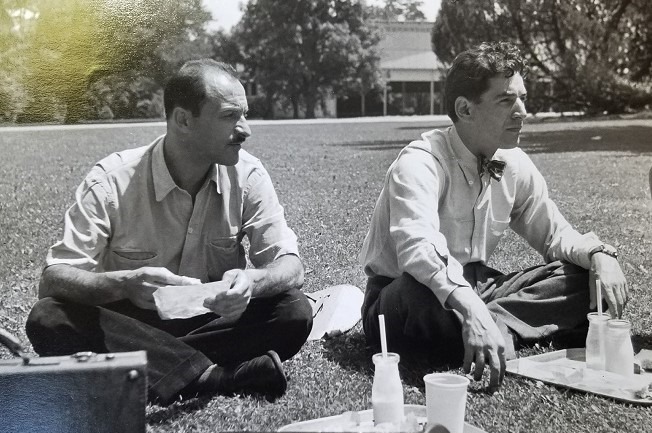
    This Sunday night on “The Lost Chord,” to coincide with what would have been the 101st birthday of Leonard Bernstein, we’ll do our part in helping to wrap up the two-year, worldwide celebration of the Lenny centenary with, if not the most profound of his recordings, then surely one of the more unusual.

    Bernstein was a lifelong admirer of the Philadelphia-born composer Marc Blitzstein. He mounted a performance of Blitzstein’s notorious pro-labor musical, “The Cradle Will Rock,” while still at student at Harvard. He also dedicated his own opera, “Trouble in Tahiti” to him.

    Blitzstein’s “Airborne Symphony” was written on a commission from the U.S. Army while the composer was serving in its Air Force. The work traces the evolution of flight from its conception in theory to its use in modern warfare. The piece was envisaged by him as a big symphony on the theme of “the sacred struggle of airborne free men of the world… to crush the monstrous fascist obstructionist in their path.”

    Blitzstein began the work in 1943, at the height of World War II. It would not be completed until after the war, in 1946. Bernstein conducted the premiere virtually while the ink was still wet on the page. He recorded the piece twice. We’ll hear the second of the two recordings, from 1966, with Orson Welles as narrator, vocal soloists, the New York Philharmonic, and the men of the Choral Arts Society.

    I hope you’ll join me in celebrating Bernstein and Blitzstein – wrapping up the Bernstein centenary – on “Flight of Fancy,” this Sunday night at 10:00 EDT, on WWFM – The Classical Network and wwfm.org.

    Bernstein sings Blitzstein’s “Zipperfly”

    https://www.youtube.com/watch?v=VixrUZOppdI

  • Artist Biopics Soundtracks Picture Perfect

    Artist Biopics Soundtracks Picture Perfect

    How to translate visual art to the big screen? Generally, by focusing on the drama in the artists’ lives, that’s how.

    And what drama!

    This week on “Picture Perfect,” expand your palette with music from movies about the great artists.

    “The Agony and the Ecstasy” (1965), based on the novel of Irving Stone, dramatizes the friction between Michelangelo (Charlton Heston) and his benefactor, Pope Julius II (Rex Harrison), over the painting of the ceiling of the Sistine Chapel. For his part, Michelangelo would have been perfectly content to stick to sculpture. Alex North’s score is an Early Music banquet, with allusions to – and sometimes outright quotations of – music of the Renaissance.

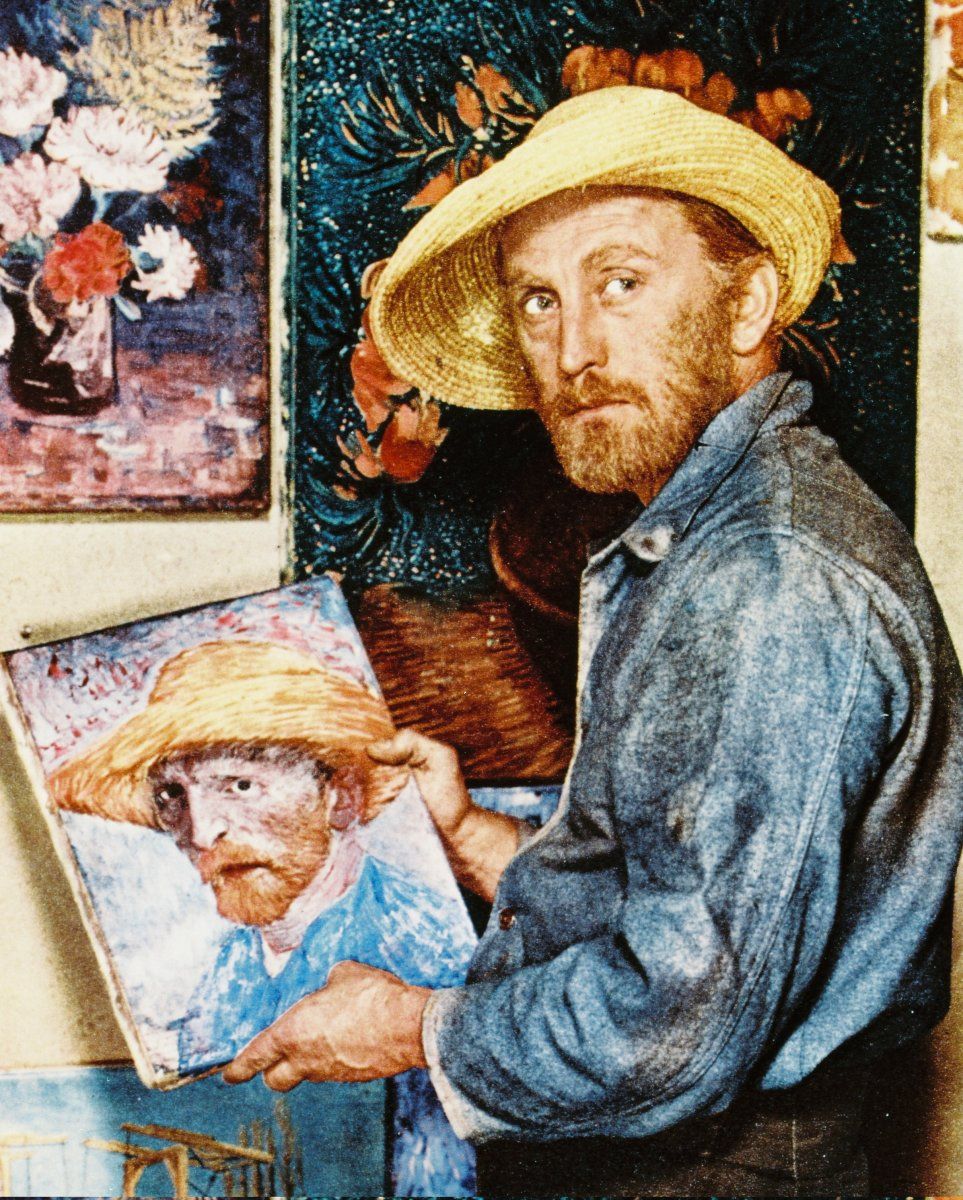
    Stone had another bestseller in “Lust for Life” (1956), about the tormented Vincent van Gogh. This time Kirk Douglas plays one of his most sympathetic roles – and looks remarkably like the artist. Anthony Quinn turns up as his “frenemy,” the painter Paul Gaugin, and earns an Academy Award for Best Supporting Actor. The great Miklós Rózsa wrote the music, softening up the edges of his brawny Hungarian sound with the softer palette of the French Impressionists.

    John Huston brought Pierre La Mure’s novel about Henri de Toulouse-Lautrec to the big screen as “Moulin Rouge” (1952) – not to be confused with the more recent Baz Luhrmann spectacle starring Nicole Kidman and Ewan McGregor, which relegated the artist to a supporting role. José Ferrer dominates the earlier version, spending most of the film walking through off-camera trenches and shuffling along on his knees. Georges Auric, one of the composers of Les Six (which also included Francis Poulenc and Darius Milhaud), captures the spirit of the titular cabaret. The score became one of Auric’s best-known, thanks to the waltz becoming a popular hit, “Where is Your Heart.”

    “The Picasso Summer” (1969) is a departure from the usual formula of focusing on the artist himself. Instead, a young couple (Albert Finney and Yvette Mimieux), admirers of Picasso’s work, take off on a European adventure in an attempt to track him down. Originally Picasso himself had agreed to appear, but some off-screen drama involving a matador friend and Yul Brynner’s wife drove him off. The film was based on a short story by Ray Bradbury. Bradbury hated the adaptation, as did the studio, and “The Picasso Summer,” after being heavily cut and patched with new footage, was never released theatrically in the United States. The film is striking for its extended animation sequences inspired by Picasso’s paintings, and for its score by Michel Legrand.

    Join me for a brush with greatness – music from movies about the great artists – on “Picture Perfect,” this Friday evening at 6:00 EDT, on WWFM – The Classical Network and wwfm.org.
Tag Cloud

Aaron Copland (93) Beethoven (95) Composer (114) Film Music (137) Film Score (143) Film Scores (255) Halloween (94) John Williams (195) KWAX (229) Leonard Bernstein (103) Marlboro Music Festival (125) Movie Music (152) Mozart (88) Opera (208) Philadelphia Orchestra (89) Picture Perfect (174) Princeton Symphony Orchestra (108) Radio (88) Ross Amico (244) Roy's Tie-Dye Sci-Fi Corner (290) The Classical Network (101) The Lost Chord (268) Vaughan Williams (103) WPRB (396) WWFM (881)

DON’T MISS A BEAT

Receive a weekly digest every Sunday at noon by signing up here


RECENT POSTS