Category: Daily Dispatch

  • Schubert’s Bittersweet Farewell at Marlboro

    Schubert’s Bittersweet Farewell at Marlboro

    Blissful days, you are eternally past!

    On this week’s “Music from Marlboro,” as this year’s Marlboro Music Festival approaches its final weekend, we’ll partake of an hour of bittersweet musings, courtesy of Franz Schubert. Even at the best of times, Schubert’s emotional equilibrium could be extraordinarily sensitive to change. But the works of his final year seem especially intimate – confessional, even.

    Is the melancholy traveler borne out to sea in “Auf dem Strom” (“On the River”) actually parting from life? The narrator is cut off from all human contact. He is unable to hear songs from the distant shore. His memory of his beloved is intense, even as she grows increasingly distant. The text, by Ludwig Rellstab, was originally intended for Beethoven, but Beethoven died before he could set to work on it.

    We’ll hear a performance of this remarkable art song from the 1960 Marlboro Music Festival, featuring soprano Benita Valente, hornist Myron Bloom, and pianist Rudolf Serkin.

    Faced with his own mortality, Schubert reacted as only Schubert could, by churning out masterpiece after masterpiece: two piano trios, three piano sonatas, the String Quintet in C, the song cycle “Schwanengesang,” and “The Shepherd on the Rock,” alongside assorted smaller works, all within the span of only six months. It’s an extraordinary act of defiance, or perhaps acceptance, of the inevitable.

    The haunting second movement of his Piano Trio No. 2 in E-flat major was written just as he received the news that his illness was beyond cure and that the end was near. The music holds the tragic and the romantic in devastating balance.

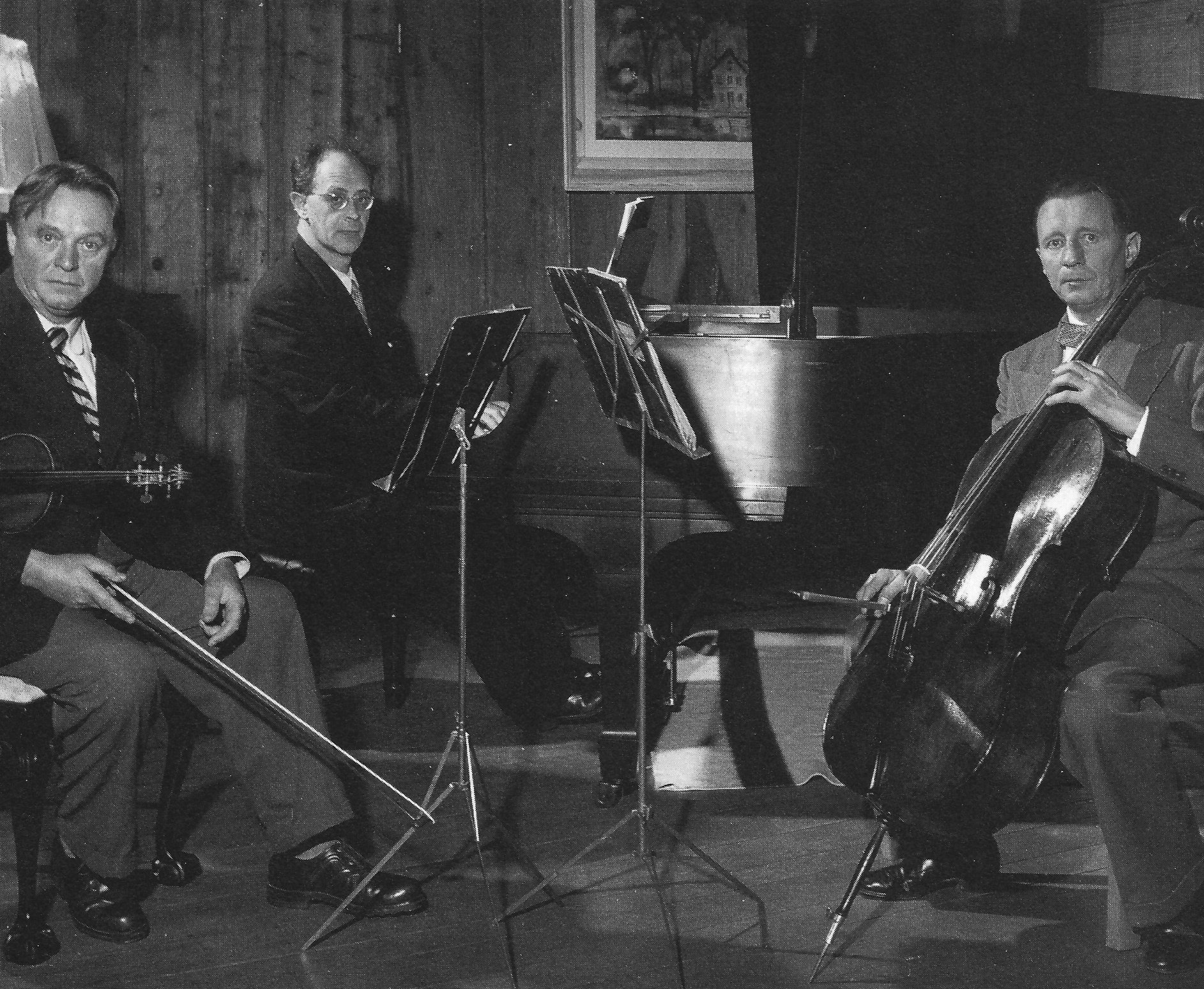
    The entire trio will be heard in a recording made in Brattleboro, VT, all the way back at the beginning, on October of 1951, featuring Marlboro cofounders, pianist Rudolf Serkin, violinist Adolf Busch, and cellist Herman Busch.

    By coincidence, tomorrow, August 8, is Adolf Busch’s birthday. What better way to celebrate than to remember him making music with those he loved?

    Both of these works, by the way, were presented on the only public concert devoted exclusively to Schubert’s music during the composer’s lifetime. The concert was held on the first anniversary of Beethoven’s death, March 26, 1828. Schubert himself would be dead only eight months later, at the age of 31.

    For more information on the concluding weekend of this summer’s Marlboro Music Festival, and its three valedictory concerts, visit marlboromusic.org.

    All good things must come to an end, on the next “Music from Marlboro,” this Wednesday evening at 6:00 EDT, on WWFM – The Classical Network and wwfm.org.

    Marlboro School of Music and Festival: Official Page


    PHOTO: Rudi and the Busches
  • Toni Morrison Nobel Laureate Dies at 88

    Toni Morrison Nobel Laureate Dies at 88

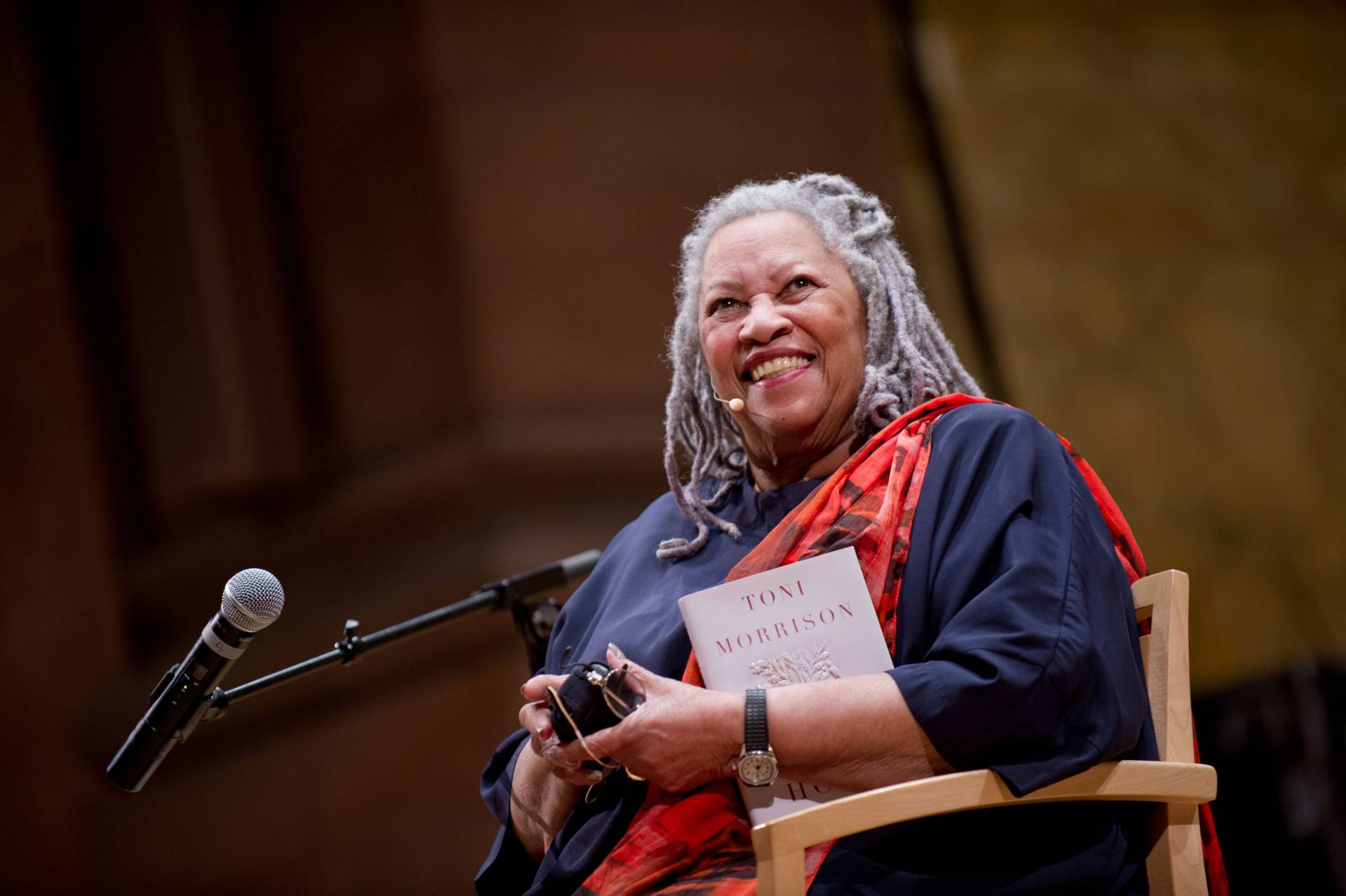
    Longtime Princeton University faculty member Toni Morrison has died. Morrison was the first African-American woman to be awarded the Nobel Prize for Literature (in 1993). The author of 11 novels, Morrison was also honored with a National Book Critics Circle Award for “Song of Solomon” in 1977 and the Pulitzer Prize for Fiction for “Beloved” in 1988.

    In addition to her work as a novelist, Morrison wrote the libretto for Richard Danielpour’s opera “Margaret Garner.” Garner was the runaway slave whose life inspired “Beloved.” She also provided the poems for André Previn’s song cycle, “Honey and Rue.” Kathleen Battle, moved by Morrison’s novel, “The Bluest Eye,” coordinated the commission and sang the work’s premiere. It was subsequently recorded by Deutsche Grammophon, together with Samuel Barber’s “Knoxville: Summer of 1915.”

    Morrison died yesterday. She was 88 years-old.


    Battle sings “Honey and Rue,” on texts by Toni Morrison:

    Denyce Graves and Gregg Baker in the Opera Company of Philadelphia’s production of “Margaret Garner:”

  • Ryland Angel Bach on The Classical Network

    Ryland Angel Bach on The Classical Network

    On today’s Noontime Concert on The Classical Network, it’s the Second Coming of Ryland Angel.

    You may recall, violent thunderstorms swept through the region on a Monday night two weeks ago, leaving many of us without power. While the station was able to continue to broadcast, thanks to a back-up generator, certain aspects of our daily operations, which we all generally take for granted – such niceties as light, air conditioning, phones, and internet – were out.

    Unfortunately, this meant that relevant sound files were temporarily inaccessible, so the Tuesday concert had to be postponed. But we’ll give it another shot today. Of course, there are more storms in the forecast, but at this point they don’t appear to be all that threatening. Famous last words?

    As for content, just to refresh your memory:

    Countertenor Ryland Angel will be joined by organist Richard Erickson in works by Johann Sebastian Bach, Johann Anastasius Freylinghausen, and Johann Rudolf Ahle, collected in the “Schemellis Gesangbuch.” Georg Christian Schemelli published his songbook in Leipzig in 1736. His son, Christian Friedrich, had been a student at the Thomasschule from 1733 to 1735 and later continued his studies at Leipzig University. Bach, of course, served as Thomaskantor from 1723 until his death in 1750.

    The concert was recorded in October at the chapel of Saint Bartholomew’s Church, 325 Park Avenue, in New York City. Free Midtown Concerts are held at St. Bart’s every Thursday at 1:15 p.m. during the regular season, brought to you in part to Gotham Early Music Scene, or GEMS. GEMS is a nonprofit organization that promotes and supports artists in New York City devoted to Early Music. You can learn more about Gotham Early Music Scene at gemsny.org.

    Following today’s concert broadcast, stick around for one of Anton Bruckner’s spiritually-infused symphonies, with the Vienna Philharmonic conducted by Bruckner pioneer Carl Schuricht.

    Hopefully I am not again tempting Fate by appropriating this image of Blake’s “Angel of the Revelation.” Ryland Angel was born on Saint Cecilia’s Day, so here’s hoping the patron saint of music is in our corner.

    The music will be heavenly, the performances revelatory, between 12 and 4 p.m. EDT, on WWFM – The Classical Network and wwfm.org.

  • Sibelius Travel Mug Cool Design for Music Lovers

    Sibelius Travel Mug Cool Design for Music Lovers

    Look what arrived over the weekend! Bound to inspire envy in anyone who espies me swilling from it, it’s my new Sibelius travel mug.

    When I imbibe from this cool-looking 20 oz. stainless steel vessel, I make the statement that I like my beverages austere, just like my symphonies.

    The snazzy, quasi-1950s design is by artist Irina Ivanova. A lot of her work is inspired by music and musicians. You’ll find more at her shop on society6.com.

    https://society6.com/irinaivanova

    or at her website

    https://iraivanova.wixsite.com/arti/portraits

    The vacuum seal delivers, keeping my joe hot and my shirts looking as fresh and pure as the unsullied snows of Lapland.

    Speaking of Sibelius, we’ll enjoy some of his music, as well as that of his fellow Finns, Tauno Pylkkänen and Oskar Merikanto, among my featured composers today, between 4 and 7 p.m. EDT, on WWFM – The Classical Network and wwfm.org.

  • British Composers Abroad on The Lost Chord

    British Composers Abroad on The Lost Chord

    This Sunday night on “The Lost Chord,” the only thing missing will be a dour Dame Maggie Smith, as we holiday on the Continent with the British. It’s an hour of music by English composers inspired by their travels abroad.

    Elisabeth Lutyens must have been a rather prickly personality herself. She wrote principally in a modified twelve tone idiom. While she despised the modal melodies of the English pastoralists (in reference to whose works, she coined the term “cow-pat music”), she was equally dismissive of strict serialism.

    It’s interesting that someone who made so many enemies could turn around and write a piece like “En Voyage,” a delightful suite of British Light Music. But I suppose it served to keep Lutyens in cucumber sandwiches.

    Lennox Berkeley met Benjamin Britten at a contemporary music festival in Barcelona in 1936. While there, the pair witnessed some Catalan folk dancing in a park. Britten jotted down some of the melodies onto an envelope, and the two composers worked closely to create an orchestral suite called “Mont Juic.”

    Finally, it was the remembrance of a trip to Upper Bavaria that inspired the Elgars to collaborate on a set of part-songs, which would be called “Scenes from the Bavarian Highlands.” Edward Elgar (not yet knighted), set texts of his wife, C. Alice Elgar. Three of the movements would later be published separately, in a purely orchestral version, much better known, as “Three Bavarian Dances.”

    Send word for the valet to pack up your steamer trunk. We’ll be “Channel Hopping,” with the English abroad, this Sunday night at 10:00 EDT, on WWFM – The Classical Network and wwfm.org.

Tag Cloud

Aaron Copland (93) Beethoven (95) Composer (114) Film Music (137) Film Score (143) Film Scores (255) Halloween (94) John Williams (195) KWAX (229) Leonard Bernstein (103) Marlboro Music Festival (125) Movie Music (152) Mozart (88) Opera (208) Philadelphia Orchestra (89) Picture Perfect (174) Princeton Symphony Orchestra (108) Radio (88) Ross Amico (244) Roy's Tie-Dye Sci-Fi Corner (290) The Classical Network (101) The Lost Chord (268) Vaughan Williams (103) WPRB (396) WWFM (881)

DON’T MISS A BEAT

Receive a weekly digest every Sunday at noon by signing up here


RECENT POSTS