Category: Daily Dispatch

  • Whitman’s 200th Birthday Celebration on WWFM

    Whitman’s 200th Birthday Celebration on WWFM

    Whitman Week is underway!

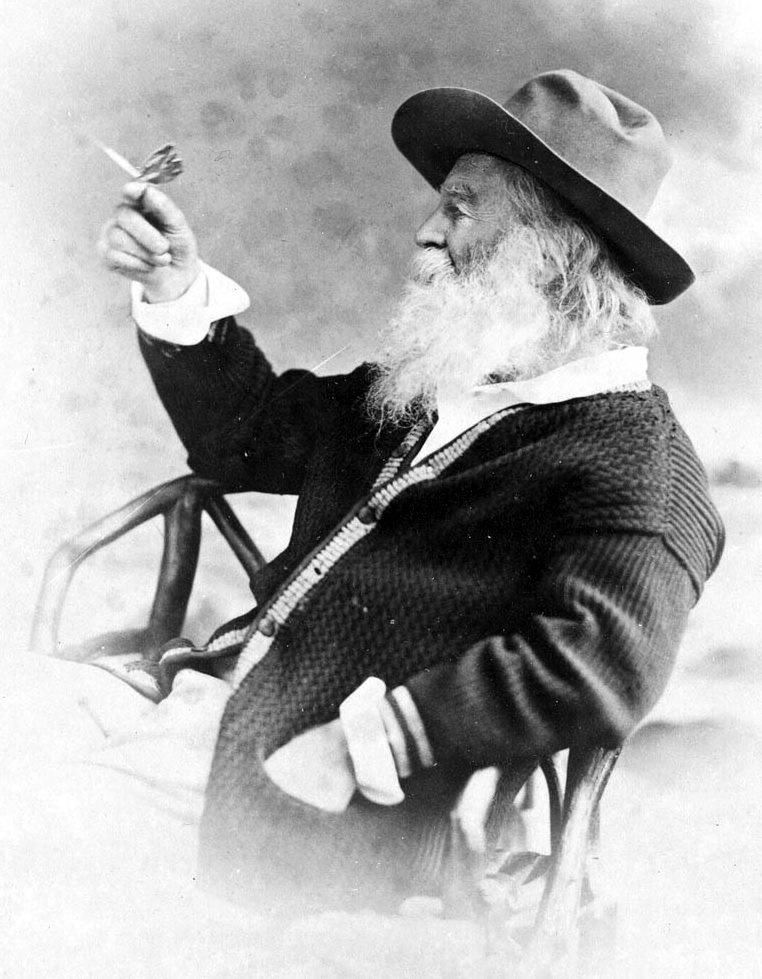
    May 31st marks the 200th anniversary of the birth of America’s “bard of democracy.” We’ve been celebrating this most influential of American poets, all month long, with music inspired by his verse.

    Over the past several weeks, we’ve taken side trips to England and Germany. This Sunday night on “The Lost Chord,” we’ll conclude, as we began the series, with an all-American program.

    Howard Hanson wrote several works inspired by Whitman. Hanson lived from 1896 to 1981. For some 40 years, he was the director of the Eastman School of Music. The recipient of the Pulitzer Prize in 1944 for his Symphony No. 4, he is really best remembered for his Second Symphony, from 1930. Subtitled the “Romantic,” the moniker pretty much sums up Hanson’s personal and artistic disposition.

    We’ll experience his setting of “The Mystic Trumpeter,” from 1969. The speaker will be none other than James Earl Jones.

    Lowell Liebermann, born in New York City in 1961, has met with considerable success in the writing tonal, immediately accessible music. His Flute Concerto, written for James Galway, has entered the repertoire, as has his Flute Sonata, and his suite for piano, “Gargoyles.”

    Liebermann studied at Julliard with David Diamond and Vincent Persichetti. Over the course of his career, he has written symphonies, concertos, operas, and ballet, as well as chamber and instrumental music. He is currently on the faculty of the Mannes School.

    Liebermann evidently has great affection for the music of Sergei Prokofiev, and a refreshing open-heartedness characterizes his output. In fact, like Hanson, he has been criticized in some circles for being so ingratiating, a throwback to less cynical times – to which I say, own it, brother!

    Liebermann’s Symphony No. 2, for large chorus and orchestra, was composed for the centennial of the Dallas Symphony Orchestra and Chorus. It was given its first performance in the year 2000.

    The work unfolds in one continuous, 40-minute span, yet manages to honor the conventions of a traditional, four-movement structure. Liebermann incorporates Whitman texts in a spirit of optimism and affirmation.

    Whitman’s verse has inspired literally hundreds of musical responses. We’ll conclude our four-week survey of choral works, orchestral pieces, and songs – merely scratching the surface, with eleven works by ten composers – on “Joy, Shipmate, Joy,” this Sunday night at 10:00 EDT, on WWFM – The Classical Network and wwfm.org.


    PLEASE NOTE: This is not the end of our Whitman celebrations on The Classical Network. On Saturday at 7:30 p.m., we’ll offer a live broadcast, from Washington’s National Cathedral, of Bernard Herrmann’s radio play “Whitman.” Baritone William Sharp will assume the title role, with the PostClassical Ensemble conducted by Angel Gil-Ordóñez. In addition, the program will include Herrmann’s Clarinet Quintet “Souvenirs de Voyage” and “Psycho: A Narrative for String Orchestra.”

    We’ve also got something cooking for Friday afternoon, the actual anniversary of Whitman’s birth. Watch this space for further developments.
  • Whitman’s Cinema & Music Bicentennial Celebration

    Whitman’s Cinema & Music Bicentennial Celebration

    I am proud to have documentarian H. Paul Moon of Zen Violence Films as a follower of this page. Paul has been working very hard to get ready for the Walt Whitman bicentennial. Here is his definitive analysis of every appearance by Whitman in cinema and television.

    This video essay is part of a trilogy of Moon’s short films about Whitman that will be screened at Rhizome DC, located in the Takoma neighborhood of Washington, on May 31, the actual anniversary of Whitman’s birth.

    Watch it in preparation for tomorrow night’s broadcast of “The Lost Chord,” the last in a four-part series celebrating Whitman in music. Of the literally hundreds of musical responses inspired by Whitman’s verse, I’ve been able to touch on only ten composers. But what variety! Tune in this week for two openhearted and ecstatic works for chorus and orchestra by Howard Hanson and Lowell Liebermann. “Joy, Shipmate, Joy” will air this Sunday night at 10:00 EDT, on WWFM – The Classical Network.

    And if you just can’t get enough of Whitman, Rachel Katz will also focus on “the Good, Gray Poet” on “A Tempo,” as she speaks with Malcolm J. Merriweather, music director of The Dessoff Choirs. The group will present three world premieres of Whitman settings, again on the actual anniversary of his birth, as part of a Whitman Bicentennial Festival. The concert will take place at the Church of St. Paul and St. Andrew in New York City on May 31. “A Tempo” can be heard on WWFM The Classical Network Saturday evening (tonight) at 7:00 EDT.

    If you miss the Whitman broadcasts, both will be archived at the WWFM website sometime next week, as have been past installments of “The Lost Chord” series. You’ll find them at wwfm.org. Click on “About Us,” then “Our Programs A-Z,” and then the individual shows, which are listed alphabetically. (“The Lost Chord” appears under the letter T.)

    Or if you have the time and the patience to scroll through everything, simply click on “Classical” and then “Webcasts.”

    Now voyager sail thou forth to seek and find!

  • Civil War Films: Music & Memorial Day

    Civil War Films: Music & Memorial Day

    Memorial Day has its roots in Decoration Day, a time to honor those who gave “the last full measure of their devotion” during the War Between the States. This week on “Picture Perfect,” we acknowledge the heroism and sacrifice of ordinary Americans placed in extraordinary circumstances.

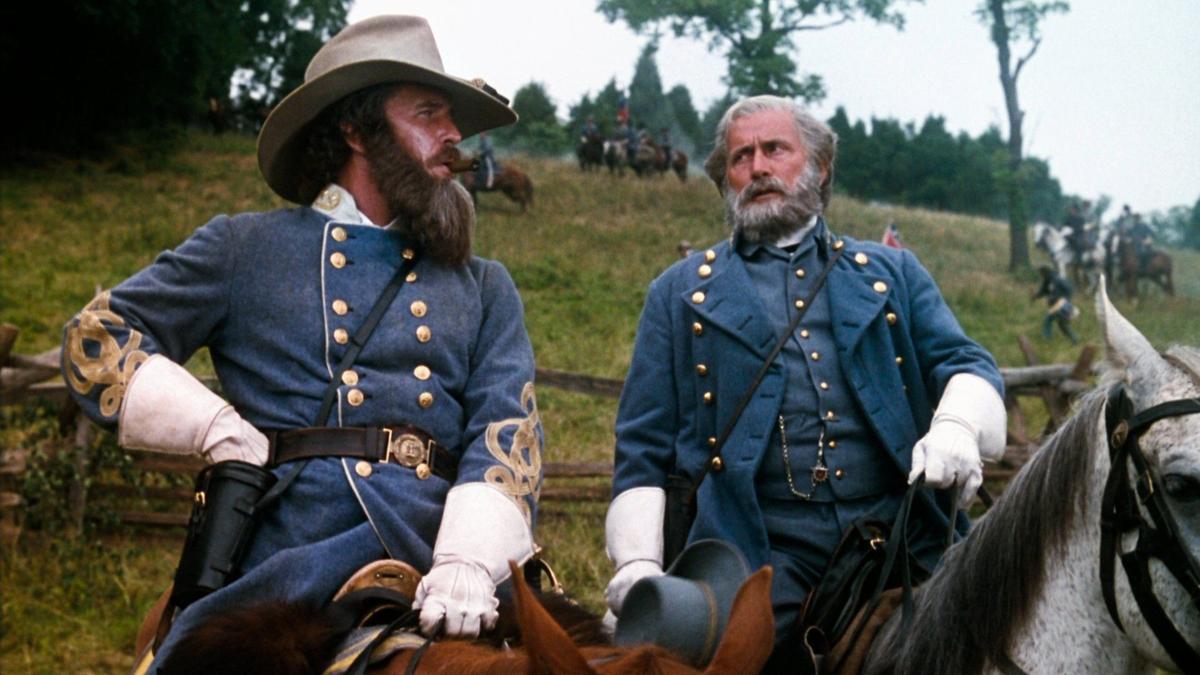
    The Civil War drama, “Gettysburg” (1993) – based on the Pulitzer Prize-winning novel, “The Killer Angels,” by Michael Shaara – was originally intended to be a television mini-series, but when Ted Turner was struck by the quality of the production, he turned around and released it theatrically. Despite the 254 minute running time, and some fairly ridiculous facial hair, “Gettysburg” yet manages to be engrossing, moving, and at times exhilarating.

    The film stars Tom Berenger, Jeff Daniels (who’s never been better), and Martin Sheen. It’s a testament to the power of the storytelling that “Gettysburg” yet manages to engage – despite Berenger’s “Cousin It” beard. In fact, my friends and I always refer to this film as “Gettys-BEARD.”

    Perhaps another indication of its television origins – a transparent attempt to keep a lid on the budget – is the score by Randy Edelman, which is performed, in large part, on electronic, as opposed to acoustic, instruments. I guess that’s the price you pay for a four-hour film with a cast of thousands. It would have been nice had Turner splurged on an orchestra, but the music still manages to inspire.

    There was no such cost-cutting in evidence on “Gone with the Wind” (1939). Max Steiner goes all out with a full symphony orchestra. So much of the film deals with the personal interactions between Scarlett O’Hara, Ashley Wilkes, Melanie Hamilton, and a certain “visitor from Charleston.” However, the human story is set against the sprawling backdrop of the Antebellum, Civil War and Reconstruction eras. We’ll hear music associated with the Civil War segments at the heart of the film, including the memorable sequence with Scarlett walking among the wounded.

    When the nine-part Ken Burns’ television documentary, “The Civil War” (1990), first aired, over five consecutive nights, it became the most watched program in PBS history. The theme music is particularly well known, as “Ashokan Farewell.” Its composer is Jay Ungar, who performs it on the series’ original soundtrack, with Molly Mason and the ensemble Fiddle Fever.

    Finally, “Glory” (1989) dramatizes a valorous campaign undertaken by Colonel Robert Gould Shaw’s 54th Massachusetts Voluntary Regiment, an all African American outfit that distinguished itself in a hopeless assault on Fort Wagner, near Charleston, South Carolina. The film sports a terrific cast, including Morgan Freeman, Matthew Broderick, and Cary Elwes, with an Oscar-winning performance by Denzel Washington.

    James Horner’s score can be a little derivative at times, but, with the participation of the Harlem Boy Choir, it manages to tug the heart strings at all the key moments.

    Hundreds of thousands laid down their lives so that we can troll one another on the internet. We’re bigger than our differences, people. Preserve the union of history and entertainment on “Picture Perfect” – music for the movies – this Friday evening at 6:00 EDT, on WWFM – The Classical Network and wwfm.org.


    PHOTO: Tom Berenger (left), breaking the beard budget

  • Newman & Oltman Premiere Brouwer’s New Work

    Newman & Oltman Premiere Brouwer’s New Work

    Here’s another one for your Classic Ross Amico pin-up collection:

    At WWFM – The Classical Network with Michael Newman and Laura Oltman, of the Newman and Oltman Guitar Duo.

    Newman and Oltman dropped by the WWFM studios on Monday to share conversation and music, including a generous live performance – the world broadcast premiere, as a matter of fact – of two movements from Leo Brouwer’s “The Book of Imaginary Beings.” This was music written expressly for them by arguably Cuba’s foremost living composer.

    Newman and Oltman will perform the complete work for the first time in concert this weekend, on the final program of this year’s Raritan River Music Festival. The concert will take place on Saturday at 7:30 p.m., at Stanton Reformed Church, in Stanton, NJ. For details, look online at raritanrivermusic.org.

    Newman and Oltman will then take the piece to New York City for a second performance, at the New York Guitar Seminar, with the composer in attendance, on June 26. You’ll find more information by following the link at N & O’s website, guitarduo.com.

    And if you missed it, here’s our interview, complete with in-studio musical teasers:

  • Mozart’s Genius at Marlboro Music

    Mozart’s Genius at Marlboro Music

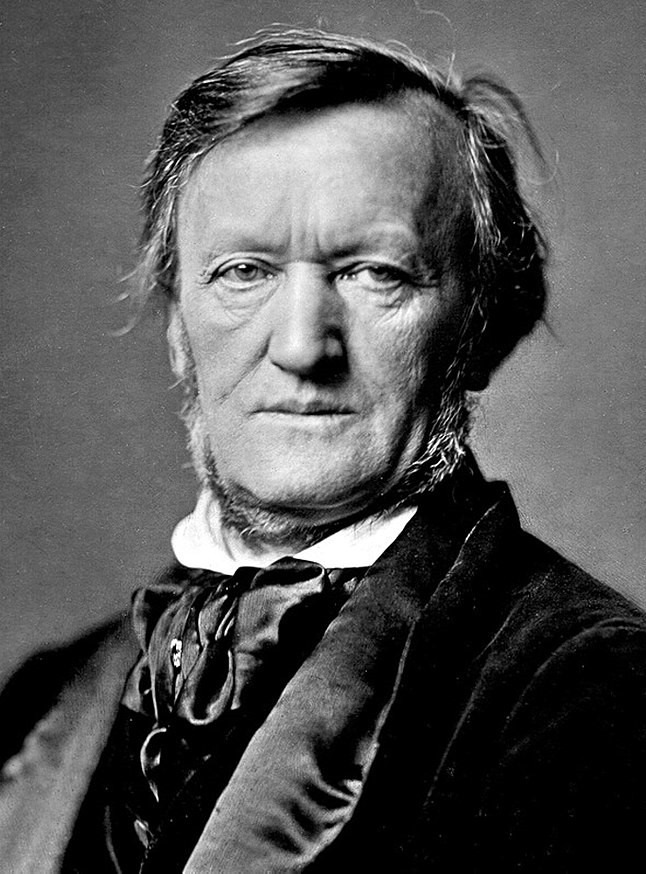
    “The most tremendous genius raised Mozart above all masters, in all centuries and in all the arts.”

    – Richard Wagner

    So glad to hear you say that, Richie. Then you won’t mind if we enjoy an all-Mozart hour for your birthday, on this week’s “Music from Marlboro.”*

    Mozart doubles the violas in his String Quintet No. 5 in D Major, K. 593. Composed in 1790, the work was recollected by the composer’s widow, Constanze, as having been written for a musical amateur, often speculated to be Johann Trost. Trost must have been quite the gifted dilettante. He also knew Haydn from Esterhaza, and Haydn dedicated some of his quartets to him.

    When Haydn and Mozart played through the D Major Quintet together before Haydn’s first visit to London, the two men took turns indulging in the first viola part. The work was known for centuries as the “Zigzag” because of an alteration to the original manuscript that modified what had been a descending chromatic figure in the final movement into something decidedly more humorous.

    We’ll hear it played at the 2005 Marlboro Music Festival by Sarah Kapustin and Diana Cohen, violins; Mark Holloway and Sebastian Krunnies, violas; and David Soyer, cello.

    Mozart wrote his Symphony No. 35 in 1782. Subtitled the “Haffner,” it is not to be confused with his “Haffner Serenade,” though both works had their origins in commissions from the eminent Haffner family of Salzburg.

    The “Serenade” was composed in 1776 to celebrate the wedding of Marie Elisabeth Haffner. A second serenade was written four years later for her brother, Mozart’s friend, Sigmund Haffner the Younger, for the occasion of his ennoblement. Mozart complained to his father at the time that he was “up to his eyeballs in work.” On top of his usual teaching obligations, he was pressed to complete an arrangement of his opera “The Abduction from the Seraglio,” even as he was looking to move into a house in Vienna prior to his marriage to Constanze Weber. Nevertheless, he began churning out music, sending it piecemeal to his father.

    It was only later, when Mozart found a moment of calm, that he was able to take a look at what he had actually written and realized that it wasn’t half bad. He arranged material from this second “Haffner” serenade and expanded the orchestration to create what we now know as the “Haffner” Symphony – his Symphony No. 35 – in 1783.

    We’ll hear an inspired performance of the work, featuring an ad hoc orchestra under the direction of Pablo Casals. Together, they manage to convey joy, intimacy, and exuberance in a cherishable recording from the 1967 Marlboro Music Festival.

    Get the most from Mozart, on the next “Music from Marlboro,” this Wednesday evening at 6:00 EDT, on WWFM – The Classical Network and wwfm.org.

    Marlboro School of Music and Festival: Official Page

    (*For all you Wagnerites, tune in a little early to enjoy some of HIS music between 4 and 6!)

Tag Cloud

Aaron Copland (93) Beethoven (95) Composer (114) Film Music (137) Film Score (143) Film Scores (255) Halloween (94) John Williams (195) KWAX (229) Leonard Bernstein (103) Marlboro Music Festival (125) Movie Music (152) Mozart (88) Opera (208) Philadelphia Orchestra (89) Picture Perfect (174) Princeton Symphony Orchestra (108) Radio (88) Ross Amico (244) Roy's Tie-Dye Sci-Fi Corner (290) The Classical Network (101) The Lost Chord (268) Vaughan Williams (103) WPRB (396) WWFM (881)

DON’T MISS A BEAT

Receive a weekly digest every Sunday at noon by signing up here


RECENT POSTS