Category: Daily Dispatch

  • Homer’s Homesick Sounds on WWFM

    Homer’s Homesick Sounds on WWFM

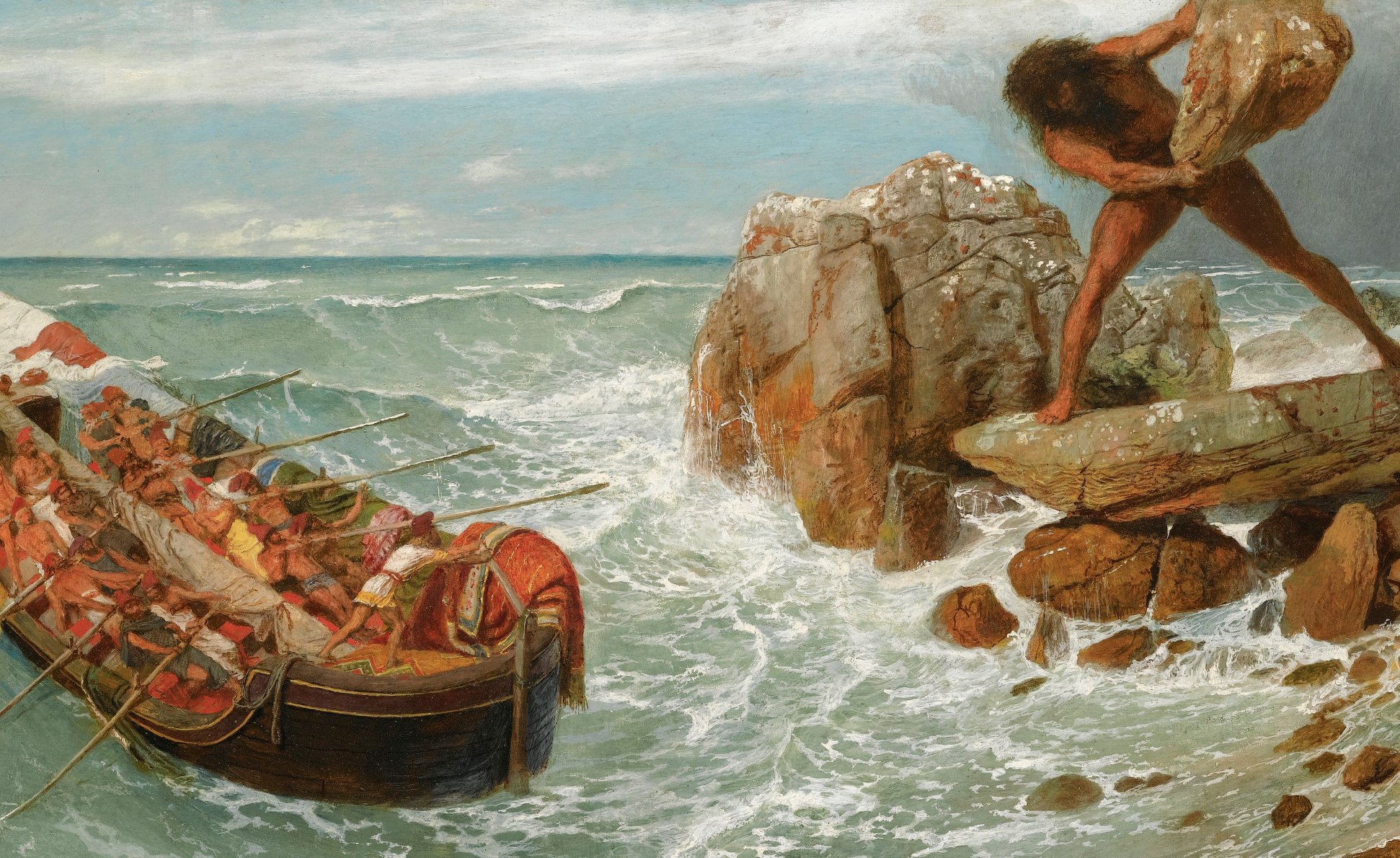
    As one who seemingly can’t find his way home, I thought I would offer up an afternoon of music inspired by the ultimate wanderer.

    Our centerpiece will be a rarely-heard work, “Odysseus: Symphony in Four Movements,” by the English composer Armstrong Gibbs. Its four movements are meant to evoke the “Escape from Calypso,” “Circe,” “Cyclops,” and “The Return.” If you’re a fan of Vaughan Williams’ “A Sea Symphony,” you might also enjoy this.

    “The Return,” of course, refers to Odysseus’ return to Ithaca, after 20 years’ absence, when he finally strings his bow and lays waste to his rivals in one of the most satisfying bloodbaths in all of literature. It also forms the climax of Benjamin Britten’s “The Rescue of Penelope,” a radio play for vocal soloists and orchestra. In the work’s only recording, we’ll hear none other than Dame Janet Baker as the speaker.

    I’ll try to mix it up from there, with music suggested by “The Iliad” and “The Odyssey.”

    We’re homesick for Homer, from 12 to 4 p.m. EDT, on WWFM – The Classical Network and wwfm.org.

  • Brouwer Premiere LIVE on The Classical Network

    Brouwer Premiere LIVE on The Classical Network

    ¡Hola!

    Tune in this afternoon on The Classical Network to get a taste of LEO BROUWER, LIVE.

    Join me for a special visit from Michael Newman and Laura Oltman of the Newman and Oltman Guitar Duo. Newman and Oltman will drop by to talk about the final concert of this year’s Raritan River Music Festival, which will take place this Saturday at 7:30 p.m., at Stanton Reformed Church, in Lebanon, NJ, and will include the WORLD PREMIERE of Brouwer’s “El Libro de los Seres Imaginarios” (“The Book of Imaginary Beings”).

    Brouwer, who turned 80 in March, is Cuba’s foremost composer and arguably the most important living composer of music for the classical guitar. “El Libro” is a 16-minute, four movement work, inspired by a compendium of mythological beings by Jorge Luis Borges.

    The fulfillment of the commission, which was planned to coincide with Newman and Oltman’s 40th anniversary as a guitar duo and the 30th anniversary of the Raritan River Music Festival, has been years in the making, the culmination of a successful pentathlon of sorts, guitarists and composer bounding over the hurdles of language, geography, culture, politics, and bureaucracy.

    What makes Newman and Oltman’s visit today particularly exciting is that they plan to perform selections from Brouwer’s new work, LIVE, IN-STUDIO, which means the music will be heard FOR THE FIRST TIME ANYWHERE. Following Saturday’s premiere, the couple will take the piece to New York City for the opening of the New York Guitar Seminar on June 26. The duo holds exclusive performance and recording rights to the piece.

    Saturday’s program, “New Music of the Americas: Compositions from Brazil, Cuba, & USA,” will also include music by Paul Moravec and works by festival guests Clarice Assad and João Luiz.

    The Raritan River Music Festival was founded by Newman and Oltman in 1989, as a stimulating series of concerts that embrace new music, world music, and straightforward classical repertoire, presented by professional musicians, in intimate, historic venues in Hunterdon and Warren Counties.

    This year’s festival has included concerts by the Horszowski Trio, performing Schumann and Elliot Carter, at Greenwich Presbyterian Church in Stewartsville; Eileen Ivers and the unIVERSal Roots Band, in a celebration of Americana music and its Irish roots, at Clinton Presbyterian Church in Clinton; and harmonicist Robert Bonfiglio and flutist Clare Hoffman, performing works by Native American and Grand Canyon-inspired composers, at Prallsville Mills in Stockton.

    For more information about Saturday’s concert and the Raritan River Music Festival, visit raritanrivermusic.org; to learn more about Newman and Oltman, look online at guitarduo.com; and for scintillating music and conversation, tune in at 5:00, the core of today’s broadcast with Classic Ross Amico, which will take place, as always, from 4 to 7 p.m. EDT, on WWFM – The Classical Network and wwfm.org.

  • Whitman’s Lilacs: Hartmann & Higdon’s Musical Echoes

    Whitman’s Lilacs: Hartmann & Higdon’s Musical Echoes

    “When Lilacs Last in the Dooryard Bloom’d,” Walt Whitman’s pastoral elegy, written in the wake of the assassination of Abraham Lincoln, drew its most famous musical response from Paul Hindemith. Hindemith dedicated his requiem to the memory of Franklin Delano Roosevelt. This Sunday night on “The Lost Chord,” we continue our celebration of the bicentennial of the birth of America’s national poet (on May 31, 1816) with two lesser-known works inspired by the same source.

    Karl Amadeus Hartmann died within weeks of Hindemith (who fled Germany in 1938), in December of 1963. An anti-fascist composer who made the decision to remain at home during Hitler’s reign of terror, Hartmann’s music was condemned as degenerate and banned from public performance. Holding fast was a dangerous game for an artist at odds with the regime. This type of opposition was described by writer Thomas Mann as “inner immigration.”

    Following the war, Hartmann was one of the few surviving anti-fascists in Bavaria whom the Allied Forces could promote to a position of responsibility. He used that trust to reintroduce the world to music which had been prohibited since 1933 under National Socialist aesthetic policy.

    Hartmann remained in Munich for the rest of his life, where his administrative duties cut heavily into what would have been his own compositional time and energy. His own greatest champions were his contemporaries, and performances of his music nearly died out with them. However, in recent years, his works have received more exposure thanks to recordings.

    Hartmann wrote Symphony No. 1 in 1935 as an act of political dissidence. Naturally, at the time, no one in Germany would touch it, and Hartmann cemented his “undesirable” status. It would be over a decade before the piece would receive its first performance, in 1948. Following revisions, the work reached its final form in 1955.

    Subtitled “Versuch eines Requiems” (or “Attempt at a Requiem”), the symphony employs texts selected from Whitman’s poetry. Unusually, it falls into five movements, as opposed to four. Four of them employ a contralto, but the third is purely instrumental, a set of variations on a theme from Hartmann’s anti-war opera, “Simplicius Simplicissimus.”

    Closer to home, Philadelphia-based composer Jennifer Higdon scored her setting, “Dooryard Bloom,” for baritone and orchestra. The work was written on a commission from the Brooklyn Philharmonic in 2004.

    Higdon, born in Brooklyn in 1962, but raised in Atlanta and Seymour, TN, took up composition while studying as a flutist at Bowling Green State University. She went on to earn an Artist’s Diploma from the Curtis Institute of Music, and a Master’s Degree from the University of Pennsylvania. She is now on the faculty of Curtis, and her works are frequently programmed by the Philadelphia Orchestra. She was the recipient of the Pulitzer Prize for Music in 2010 for her Violin Concerto.

    I hope you’ll join me for the third of four weeks devoted to music inspired by the verse of Walt Whitman. Whitman chants his song of “sane and sacred death,” on “Lilacs Last,” this Sunday night at 10:00 EDT, on WWFM – The Classical Network and wwfm.org.


    Clockwise from left: Lilacs, Whitman, Hartmann, and Higdon (with helper)

  • Remembering Robert Stallman Greece 1969

    Remembering Robert Stallman Greece 1969

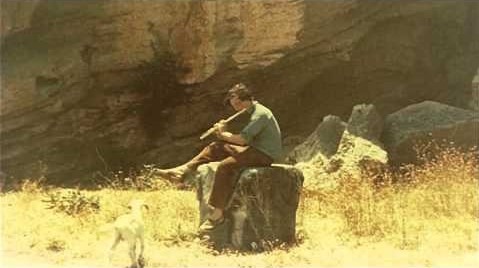
    Great photo of my friend, Robert Stallman, footloose and fancy free in Greece in 1969, playing Debussy’s “Syrinx.” Note the kid goat. Bob died last Sunday at the age of 73.

  • Superhero Movie Music Picture Perfect

    Superhero Movie Music Picture Perfect

    Look! Up in the sky! This week on “Picture Perfect,” the focus is on superheroes!

    We’ll begin with music from Tim Burton’s “Batman” (1989). It’s true, I wasn’t all that crazy about the film. In fact, I’m still waiting for someone to make the Batman movie I’ve got in my head. But that probably isn’t going to happen – we’re too far down the computer generated road at this point.

    At least Danny Elfman actually made the effort to write a decent score. I admit I was underappreciative of it at the time. To me, he was still “that guy from Oingo Boingo.” But it sounds better and better in light of all that has followed. Elfman’s love for Bernard Herrmann is evident. And don’t worry, I will spare you the Prince songs.

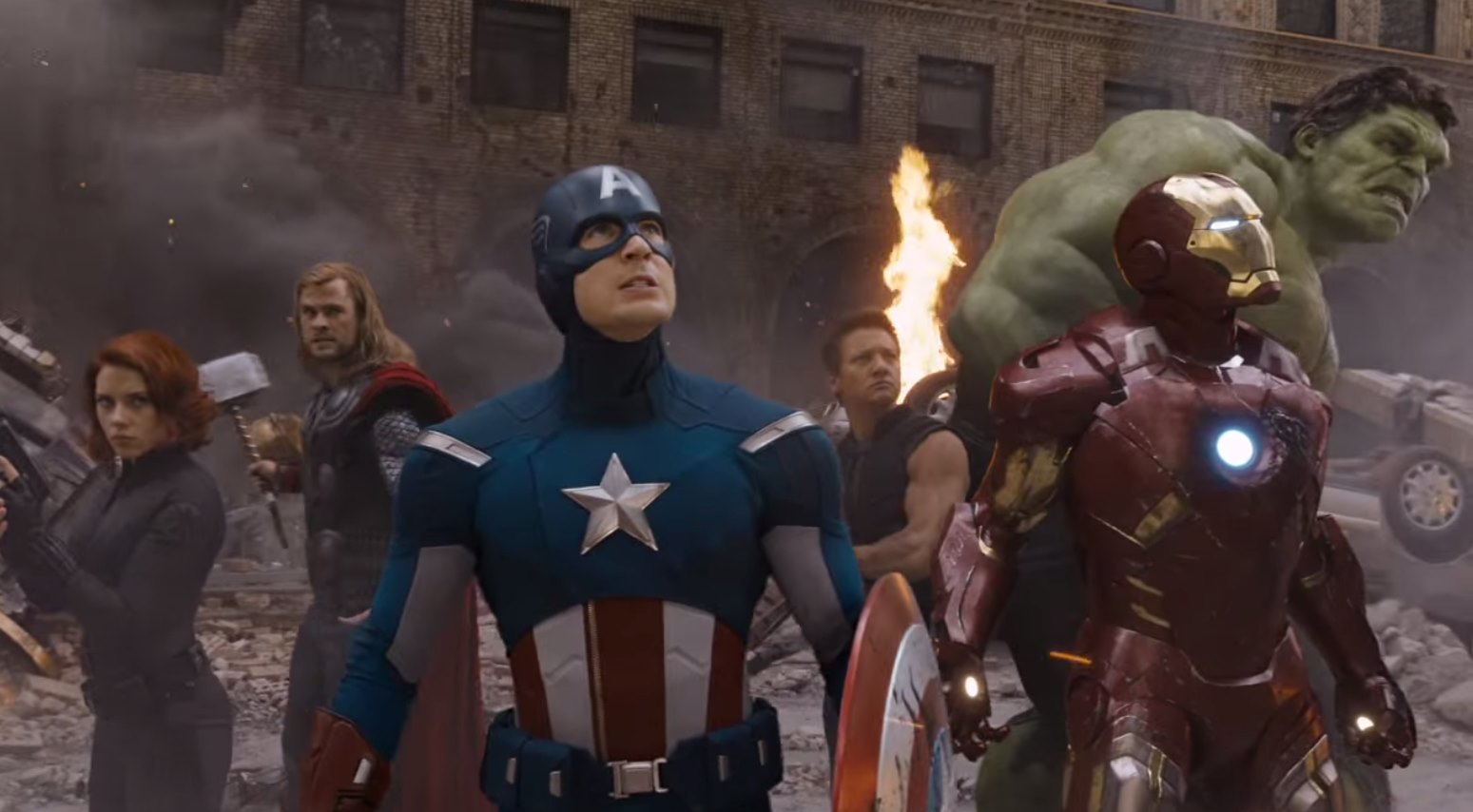
    “The Avengers” may have provided the satisfaction of seeing Iron Man, Captain America, Thor, and the Hulk on the screen all at the same time, but arguably “The Incredibles” (2004) was more fun. Pixar’s clever satire/adventure featured the vocal talents of Craig T. Nelson, Holly Hunter, and Samuel L. Jackson.

    The score is a smart throwback to the swinging espionage films of the 1960s. Originally the producers approached John Barry to write the music, hoping for something very much in the style of his work on the James Bond films. But Barry declined, not wanting to return to his earlier style. In the event, composer Michael Giacchino was only too happy to step into Barry’s well-polished shoes.

    “The Avengers” (2012), of course, is the 800-pound gorilla of superhero franchises, but in these days when each hyper spectacle seems to surpass the last, not only in terms of din and seizure-inducing effects, but in the epic scope of its box office, that could very well change at any time. With the latest sequel, “Avengers: Endgame,” now in theaters, I thought it would be as good a time as any to play music from the first film, by Alan Silvestri.

    To truly understand what is missing from superhero music these days, one need only refer to the gold standard of the genre, “Superman” (1978). John Williams’ score was from smack-dab in the middle of his heroic period, falling as it did, between “Star Wars” and “Raiders of the Lost Ark.” Its star-spangled fanfare and march beautifully conjure memories of Superman music past – for the George Reeves TV series and, before that, the Fleischer Brothers cartoons – yet effortlessly surpass them like leaping a tall building in a single bound.

    I know, I know, not every film can be, nor should be, the same, and Williams’ primary colors wouldn’t sit as well, perhaps, with the dark streets of Gotham. But why does everything have to be so grim these days? I read comic books when I was a kid, and I don’t remember everything being so hopeless.

    I don’t want to hear about how the real world is a gritty place right now. “Superman” was made in the wake of Watergate and Vietnam, for crying out loud. Entertainment molds the world, every bit as much as the world shapes our entertainment. Is it too much to ask for a little fun and inspiration from our superhero movies? Can we leave the theatres feeling exhilarated, for a change, as opposed to simply exhausted?

    All kryptonite will be encased in lead for “Everything’s Super,” this Friday evening at 6:00 EDT, on WWFM – The Classical Network and wwfm.org.
Tag Cloud

Aaron Copland (93) Beethoven (95) Composer (114) Film Music (137) Film Score (143) Film Scores (255) Halloween (94) John Williams (195) KWAX (229) Leonard Bernstein (103) Marlboro Music Festival (125) Movie Music (152) Mozart (88) Opera (208) Philadelphia Orchestra (89) Picture Perfect (174) Princeton Symphony Orchestra (108) Radio (88) Ross Amico (244) Roy's Tie-Dye Sci-Fi Corner (290) The Classical Network (101) The Lost Chord (268) Vaughan Williams (103) WPRB (396) WWFM (881)

DON’T MISS A BEAT

Receive a weekly digest every Sunday at noon by signing up here


RECENT POSTS