Category: Daily Dispatch

  • Samantha Josephson Tribute Premieres NJ Concert

    Samantha Josephson Tribute Premieres NJ Concert

    Poignantly, the University of South Carolina awarded a posthumous degree to the parents of Samantha Josephson on Saturday. Josephson, who was a resident of Robbinsville, NJ, was found murdered in March after climbing into a vehicle she mistook for an Uber.

    The tragedy has been widely reported in the media. Now Josephson’s cousin, composer Louis A. Josephson has a written a moving tribute to her memory.

    The work, “Remember Her Name,” will be given its world premiere by the Westminster Community Chorus at the Princeton Meadow Event Center on Friday at 8 p.m. Also on the program will be choral works by Brahms, Mendelssohn, Mozart, Franck, Brant Adams, and Ēriks Ešenvalds, and orchestral music by Copland, Ravel, Dvořák, and Sibelius, performed by the Westminster Community Orchestra.

    Louis A. Josephson and Ruth Ochs, music director of the WCO, will drop by The Classical Network this afternoon at 5:00 EDT to tell us more about the concert, the new work, and What’s My Name, an organization set up by Samantha Josephson’s parents to promote awareness of the importance ride share safety (additional information at whatsmyname.org).

    I’ve also programmed music by Sir Arthur Sullivan, Joseph Achron, and Ottokar Nováček, to be offered on the anniversary of their births, and Jane Glover will conduct Haydn, among the featured selections, between 4 and 7 p.m. EDT, on WWFM – The Classical Network and wwfm.org.

  • Whitman’s British Isles Influence

    Whitman’s British Isles Influence

    While Walt Whitman has attained a venerable status here in the United States, as essentially America’s national poet, more surprising, perhaps, was his impact on composers of the British Isles.

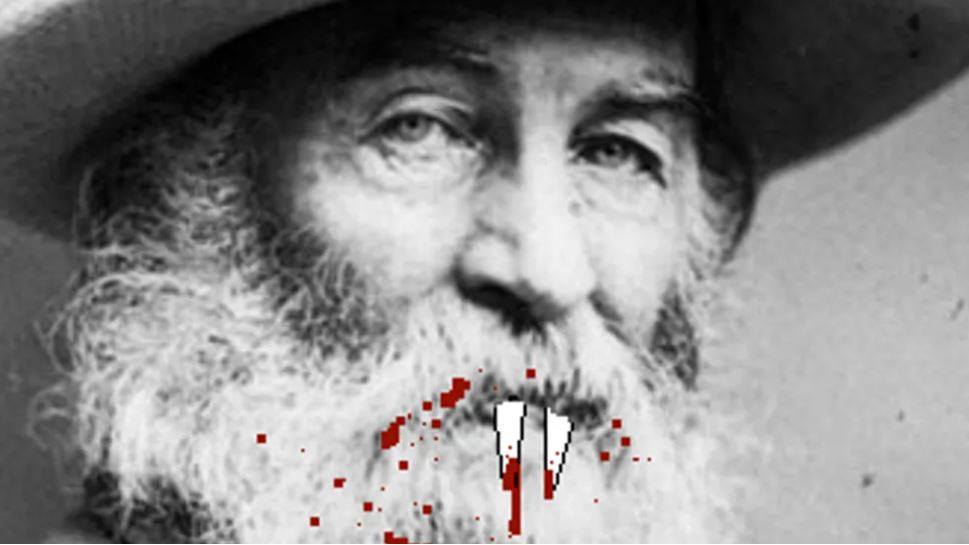
    Whitman was beloved by artists in the U.K. Interestingly, I learned in doing some reading in preparation for these shows that writer Bram Stoker was so taken with Whitman, the man, that allegedly he modeled his characterization of Dracula upon him (for more, follow the links below). And he meant it as a compliment! Stoker viewed Whitman as the quintessential man and kept up a correspondence with him until the poet’s death.

    More to our purposes, this Sunday night on “The Lost Chord,” we’ll hear two works by Gustav Holst, composer of “The Planets:” the “Walt Whitman Overture,” written in 1899, when Holst was about 25 years-old, and “The Mystic Trumpeter” from 1904.

    Holst first encountered Whitman’s poetry while still a student at the Royal College of Music. He would go on to set a number of Whitman texts. “The Mystic Trumpeter” made a particularly strong impression on him. His musical response was an important stepping stone in the composer’s artistic development, emerging as he was from a decade of Wagner worship and not yet giving himself over to the absorption of folk English material. Still, there are certainly glimpses of the mature artist to come.

    Holst’s good friend and colleague, Ralph Vaughan Williams, was also influenced by Whitman, not only in the writing of his frequently recorded “A Sea Symphony,” portions of his cantata “Dona nobis pacem,” and his work for chorus and orchestra, “Toward the Unknown Region,” but also in the less frequently encountered mini song cycle, “Three Poems by Walt Whitman.” The set consists of “Nocturne,” “A Clear Midnight,” and “Joy, Shipmate, Joy!” Written in 1925, the songs are products of Vaughan Williams’ maturity. The composer was around 53 years-old.

    Frederick Delius was yet another English composer deeply influenced by Whitman. Delius’ settings for baritone, chorus, and orchestra, titled “Sea Drift,” from 1903-04, are collectively regarded as one of the composer’s finest achievements. “Sea Drift” was composed at the peak of Delius’ vitality.

    His “Songs of Farewell,” however, were produced under quite different circumstances. Delius was both blind and paralyzed, suffering from the effects of advanced syphilis, when he received an unexpected gift in the arrival of a young musician by the name of Eric Fenby, who offered his services as an amanuensis. The result was a rekindling of Delius’ creativity.

    “Songs of Farewell,” a cycle of dreamy choral settings after Whitman, was dictated to Fenby by Delius in 1929-30. There are five songs: “How sweet the silent backward tracings;” “I stand as on some mighty eagle’s beak;” “Passage to you;” “Joy, shipmate, joy!;” and “Now finale to the shore.”

    We continue our celebration of “the good gray poet,” all month long, for the occasion of the bicentennial of his birth. Whitman was born in Huntingdon, NY, on Long Island, on May 31, 1819, and he died in Camden, NJ, on March 26, 1892.

    “Walk out with me toward the unknown region…” Join me for “The Mystic Trumpeter,” the second of four programs, this Sunday night at 10:00 EDT, on WWFM – The Classical Network and wwfm.org.


    Read Bram Stoker’s effusive letter to Whitman here:

    https://www.brainpickings.org/2019/01/09/bram-stoker-walt-whitman-letter/

    Walt Whitman’s influence on “Dracula” and (possibly) the 1931 “Frankenstein:”

    https://bigthink.com/book-think/walt-whitman-frankenstein-dracula-and-the-afterlife

  • Irving Berlin and Fred Astaire Birthday Celebration

    Happy Birthday, Irving Berlin:

    And Fred Astaire (whose birthday it was yesterday):

    https://vimeo.com/6971656

  • How European Composers Won the West

    How European Composers Won the West

    Before American composers like Jerome Moross and Elmer Bernstein made the western distinctly their own, the task of scoring the genre fell largely to European émigrés. This week on “Picture Perfect,” to coincide with the birthdays today of Max Steiner and Dimitri Tiomkin, we’ll take a look at some outside perspectives on how the West was won.

    Steiner, who was literally the godson of Richard Strauss, came from Vienna, where he studied with Johannes Brahms and Robert Fuchs. He scored such classic films as “King Kong,” “Gone with the Wind” and “Casablanca.”

    Among his over 300 film projects were a number of westerns. One of these was “They Died with Their Boots On” (1941), which starred Errol Flynn as George Armstrong Custer and Olivia de Havilland as Libby, the woman who becomes his wife. Steiner’s score features familiar folk material, some old-fashioned “faux” Indian music, and one of his characteristically lush love themes.

    Tiomkin was a pupil of Alexander Glazunov. Born in Ukraine in 1894, he became a fresh voice of the American West, when he wrote the music for “High Noon,” the first of his western “ballad” scores. Advanced word, based on an early screening for the press, was that the picture would be a failure. However, Tiomkin had such faith in the theme song, sung in the film by Tex Ritter, that he hired Frankie Laine to record it, and the record became a world-wide hit. In fact, his score is largely credited with having saved the film.

    Tiomkin was recognized with two Academy Awards: one for Best Original Song, and one for the score itself. It is the first time a composer won two Oscars for his work on the same movie. It also changed the way western scores were done. In the 1950s, Tiomkin became THE western composer of choice. He produced a number of subsequent western ballad scores, including that for “Gunfight at the O.K. Corral” (1957). Asked how it was that a composer from Ukraine could write so convincingly for the American West, Tiomkin quipped, “A steppe is a steppe is a steppe.”

    Franz Waxman, perhaps another unexpected source for classic western music, was born in Upper Silesia. He arrived in the U.S. by way of Germany. Nevertheless, as part of the composer’s varied and prolific output, he did indeed score a number of films in the genre, including “The Furies” (1950), a peculiar noir-western hybrid. Walter Huston, in his final film role, plays a cattle baron who remarries and throws his empire into jeopardy. Barbara Stanwyck is his strong-willed daughter.

    Hungarian-born composer Miklós Rózsa scored many films with historical settings – “Quo Vadis,” “Ben-Hur,” and “King of Kings,” among them. However, to my knowledge, his only western was “Tribute to a Bad Man” (1956). James Cagney stars as a rancher who doles out some frontier justice.

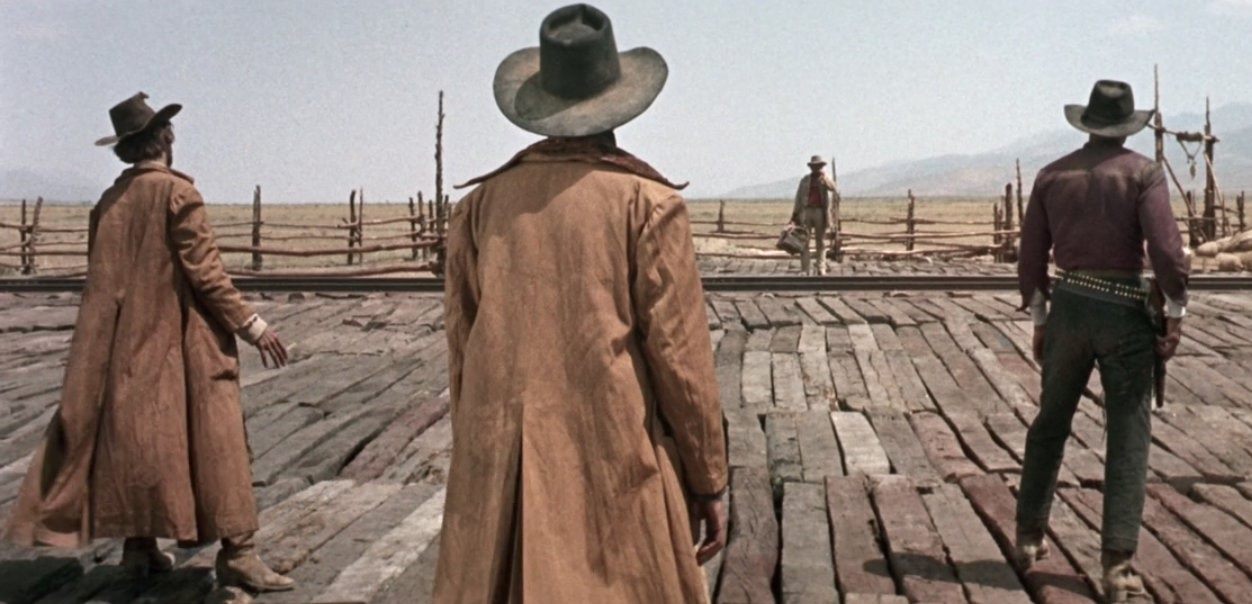
    Finally, we’ll have music by Ennio Morricone, from arguably the most operatic of all spaghetti westerns, “Once Upon a Time in the West” (1968). As a reaction to Tiomkin’s ballad scores and the neo-Coplandisms of Elmer Bernstein and the rest, Morricone brings his own quirky sensibility to bear on the classic western iconography. Get ready for indelible motifs for harmonica and banjo, but also an unexpectedly moving elegiac arioso, underscoring the close of the American West with the arrival of the railroad.

    Set your pocket watches for “Picture Perfect,” music for the movies. The next coach leaves this Friday evening at 6:00 EDT, on WWFM – The Classical Network and wwfm.org.

  • Strauss, Busch & Marlboro’s Divergent Paths

    Strauss, Busch & Marlboro’s Divergent Paths

    On the next “Music from Marlboro,” we’ll have works by two German composers who traveled widely divergent paths.

    As the aging elder statesman of Romantic opulence, Richard Strauss was in his late 60s when the Nazis seized control of Germany in 1933. He was 75 at the outbreak of World War II. Controversially, he remained at home, hoping to preserve and promote German music (including his own) and to shield his Jewish daughter-in-law and grandchildren. While comprehending Strauss’ importance as a propaganda tool, Goebels wasn’t actually fond of his music, referring to him privately as a “decadent neurotic.”

    All that was still decades in the future at the time Strauss wrote his Piano Quartet in C minor, in 1883-84, at the tender age of 20. Interestingly, for a composer who became celebrated for the apotheosis of the lavish tone poem, Strauss here channels his admiration for Johannes Brahms, and in a genre not generally associated with a follower of the post-Wagnerian “New Music School.” Brahms was at the height of his fame while the young Strauss was living in Berlin. In fact, Strauss attended the premiere of Brahms’ Fourth Symphony, following his appointment as music director in Meiningen at 21.

    We’ll hear Strauss’ quartet, performed at the 1972 Marlboro Music Festival, with Walter Klien at the keyboard, in his early 40s and at the peak of his pianistic powers. The string players will include violinist Edith Peinemann, violist Philipp Naegele, and cellist Miklós Perènyi.

    Violinist Adolf Busch lived with his family – and friend, future son-in-law Rudolf Serkin – in Berlin in the 1920s, as Serkin established himself as one of Europe’s outstanding young pianists. The musicians remained in Germany until 1927. The much-respected Busch, who was not Jewish, vehemently opposed the National Socialists. He was one of the first prominent non-Jews to do so. With the rise of Hitler, Serkin and the Busches relocated to Switzerland. Busch repudiated Germany entirely in 1933.

    He and Serkin arrived in the United States, with the rest of Busch’s family, in 1938, with Europe on the brink of war. They settled in Vermont in the 1940s. There, alongside flutist Marcel Moyse, they founded the Marlboro Music School and Festival in 1951, having successfully eluded the horrors that had claimed so many others to create something of lasting beauty – a chamber music retreat in what must have seemed like a bucolic paradise.

    In addition to being one of the great violinists, Busch was also a talented composer. We’ll hear his “Divertimento for 13 Solo Instruments,” from 1925, in a 1982 recording featuring Marlboro musicians: Isidore Cohen and Irene Serkin, violins; Caroline Levine, viola; Robie Brown Dan, cello; Carolyn Davis, double bass; Odile Renault, flute; Rudolph Vrbsky, oboe; Cheryl Hill, clarinet; Stefanie Przybylska, bassoon; Robin Graham and Stewart Rose, French Horns; Henry Nowak, trumpet; and Neil Grover, timpani, all under the direction of Sol Schoenbach.

    The path of least resistance leads to misery, on the next “Music from Marlboro,” this Wednesday evening at 6:00 EDT, on WWFM – The Classical Network and wwfm.org.

    Marlboro School of Music and Festival: Official Page


    More about Strauss’ complicated relationship with the Third Reich here:

    http://holocaustmusic.ort.org/politics-and-propaganda/third-reich/reichskulturkammer/strauss-richard/


    PHOTO: Adolf Busch and Rudolf Serkin in 1928

Tag Cloud

Aaron Copland (93) Beethoven (95) Composer (114) Film Music (137) Film Score (143) Film Scores (255) Halloween (94) John Williams (195) KWAX (229) Leonard Bernstein (103) Marlboro Music Festival (125) Movie Music (152) Mozart (88) Opera (208) Philadelphia Orchestra (89) Picture Perfect (174) Princeton Symphony Orchestra (108) Radio (88) Ross Amico (244) Roy's Tie-Dye Sci-Fi Corner (290) The Classical Network (101) The Lost Chord (268) Vaughan Williams (103) WPRB (396) WWFM (881)

DON’T MISS A BEAT

Receive a weekly digest every Sunday at noon by signing up here


RECENT POSTS