Category: Daily Dispatch

  • Walt Whitman Songs of Democracy

    Walt Whitman Songs of Democracy

    “Happiness… not in another place but this place, not for another hour but this hour…”

    Celebrate America’s national poet with the first of four installments, in anticipation of the 200th anniversary of Walt Whitman, on May 31, 1819. Enjoy music inspired by his verse, including choral works, orchestral pieces, and songs, from an international array of composers.

    This week, it’s an all-American program, featuring selections by Roy Harris, Frederick Converse, and Pulitzer Prize-winner George Walker.

    Re-examine all that you have been told. Join me in honoring Walt Whitman with “Songs of Democracy,” on “The Lost Chord,” this Sunday night at 10:00 EDT, on WWFM – The Classical Network and wwfm.org.

  • Walt Whitman’s Musical Legacy on WWFM

    Walt Whitman’s Musical Legacy on WWFM

    Walt Whitman was born in Huntingdon, NY, on Long Island, on May 31, 1819. He died in Camden, NJ, on March 26, 1892.

    We’ll celebrate the 200th anniversary of the birth of this most influential of American poets all month long, Sunday nights on “The Lost Chord,” with music inspired by his verse, including choral works, orchestral pieces, and songs, from an array of international composers.

    Tune in this week for an all-American program, featuring selections by Roy Harris, Frederick Shepherd Converse, and Pulitzer Prize-winner George Walker.

    Harris, who lived from 1898 to 1979, was one of our great symphonists. His Symphony No. 3 enjoyed particular acclaim. He certainly had the makings of a Man of Destiny – born in log cabin on Lincoln’s birthday, in Lincoln County, Oklahoma.

    We’ll enjoy his 1959 setting of “Give Me the Splendid Silent Sun,” for baritone and orchestra. The poem first appeared in Whitman’s “Drum-Taps,” in 1865. Whitman had returned to Brooklyn, on the verge of mental collapse, following his experiences working in army hospitals in the field for three years during the Civil War.

    Then we’ll turn to a work by George Walker, who lived from 1922 to 2018. Walker was the first African-American recipient of the Pulitzer Prize for Music – as recently as 1996 – for his work, “Lilacs,” for soprano and orchestra.

    “Lilacs” falls into four sections, utilizing the first three and 13th stanzas from Walt Whitman’s “When Lilacs Last in the Dooryard Bloom’d,” a poignant meditation on the assassination of Abraham Lincoln.

    Finally, we’ll bask in a romantic effusion of Frederick Shepherd Converse. Converse lived from 1871 to 1940, the only composer tonight whose life actually overlapped with that of Whitman.

    Converse was born in Newton, Massachusetts. He studied composition with George Whitefield Chadwick, and in Munich with Josef Rheinberger. His opera, “The Pipe of Desire,” was the first by an American to be performed at New York’s Metropolitan Opera, in 1905.

    From 1904, we’ll hear his orchestral fantasy, “The Mystic Trumpeter.” The literary program, taken from “Leaves of Grass,” was manipulated by the composer to suit his own structural needs. The work’s five sections – “Mystery and Peace;” “Love;” “War and Struggle;” “Humiliation;” and “Joy” – are played without pause.

    Sing the body electric, as we honor Walt Whitman, Sunday nights in May at 10:00 EDT. That’s “Songs of Democracy,” on WWFM – The Classical Network and wwfm.org.


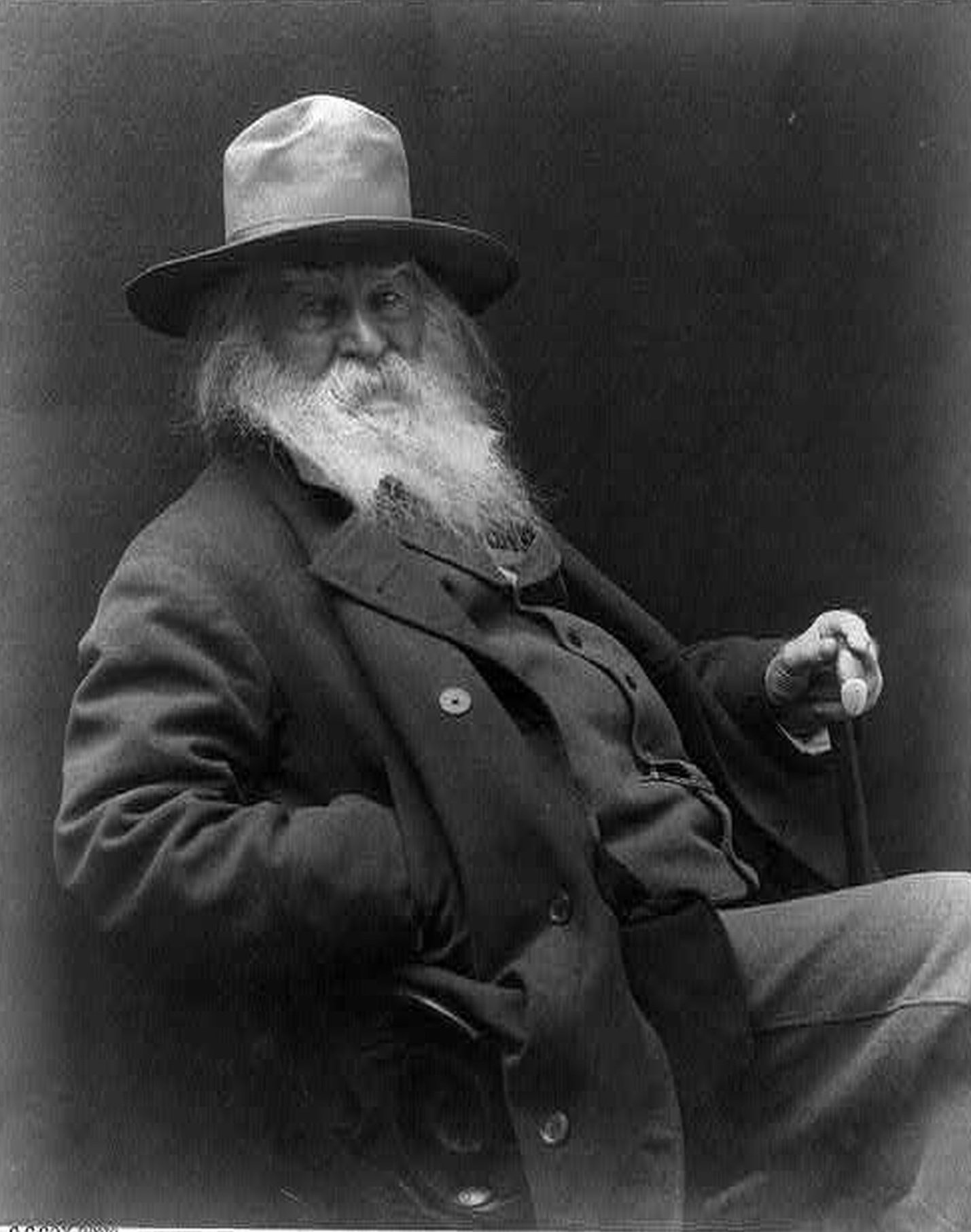
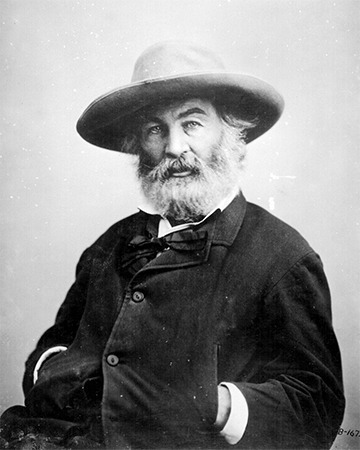
    PHOTOS: Uncle Walt with (top to bottom) Roy Harris, George Walker, and Frederick Shepherd Converse
  • CD Rot & Bronzing: The Silent CD Killers

    CD Rot & Bronzing: The Silent CD Killers

    Classic Ross Amico annoyance du jour:

    Yesterday I happened to pull down from the shelf one of my old opera boxes, a multi-CD set purchased in the 1980s, and when I opened the clamshell case, a wave of trepidation swept over me, as I discovered that I had left the sheets of protective foam inside.

    For those of you who aren’t old enough to remember, or never purchased anything with more than a single disc in those dark days, it was common practice for CD manufacturers to include thin squares of foam in each of the separate compartments to protect a disc in the event that it was shaken loose from its spindle. Like the practice (long since abandoned, thankfully) of distributing CDs in horrendous plastic blister packs that are still, I’m sure, padding out landfills everywhere, they were an entirely superfluous addition.

    In any case (no pun intended), about eight years ago, I took down my set of the Solti Ring cycle – 15 CDs – only to discover, to my surprise and horror, that the foam had begun to dissolve, as if some classical music Thanos had snapped his fingers, and that, in the more severe cases, some of the foam had begun to cling to and actually eat into the surfaces of the individual CDs. Some protective covering! Needless to say, I immediately began to scour the shelves for any other multi-disc sets I had purchased during that era and began dumping out the foam.

    Well, I missed at least one of them, as yesterday I opened my Tebaldi recording of “La bohème” to encounter sheets of browned foam that, sure enough, began to dissolve the moment I touched them. Fortunately I was prepared and in the vicinity of a trash can. One of the discs is slightly pocked, but so far, none of the CDs in my collection have been damaged to the point of unplayability. I can’t vouch for long(er) term effects. Granted, I’ve already had many of these CDs for over 30 years. But I urge you, if you haven’t done so in a good long while, to go through all of your multi-disc sets from the ‘80s and ‘90s, and to chuck that foam! Just be sure to do it over a trash can. Don’t inhale, and don’t do it near any foodstuffs.

    This also brings to mind the issue of bronzing (which has nothing to do with foam). That’s the unpleasant phenomenon of a CD taking on something of a bronzish hue, sometimes turning a little transparent around the edges, and its beginning to lose information or readability to the point that there is a kind of repetitive swishing or chugging sound when the disc is put into a player – if it even plays at all. Thanks be to the CD gods that this only ever happened to maybe three or four discs in my collection. Classical CDs on the ASV, Hyperion, and Unicorn-Kanchana labels seemed to have been particularly susceptible. I remember reading once that the problem was traced to a single plant in England that was using something unstable in its CD production. The issue was long ago resolved, but some collectors and consumers may still be dealing with the effects.

    At any rate, I have since replaced the CDs in question and have had no further problems with bronzing, although I have also encountered the disturbing phenomenon when working at various radio stations.

    Thankfully I haven’t yet had the same experience as this chap, whose CDs have become unplayable.

    https://www.avhub.com.au/editors-blog/hi-fi/cd-rot-returns-415833

    Powerful arguments for downloads or digital streaming? Nah, the hell with that stuff. I’ll be designing my pyramid with ample space for all the CDs and books I’ll be taking with me to the afterlife… Anubis willing.


    Clockwise from upper left: (1) CD rot from superfluous foam packaging; (2) the creeping horror of bronzing; (3) the heinous practice of blister packaging; (4) Anubis

  • Horse Racing Movie Music on Picture Perfect

    Horse Racing Movie Music on Picture Perfect

    It’s a rare horse race where everyone comes out a winner. This week on “Picture Perfect,” we beat the odds. On the eve of the 145th running of the Kentucky Derby, we’ll have beautiful and rousing music from films about horses and horse racing.

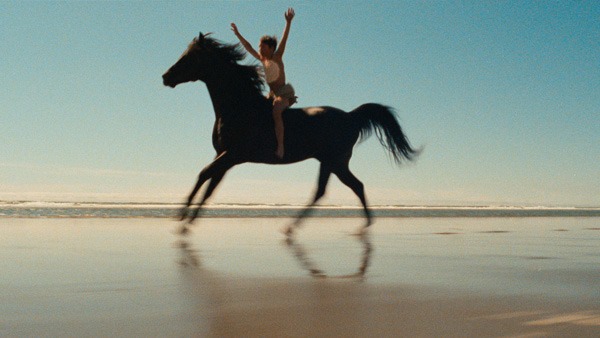
    “The Black Stallion” (1979), based on the classic novel by Walter Farley, depicts the bonding of a shipwrecked boy and an Arabian stallion, whose shared destiny takes them to the race track. Mickey Rooney’s uncharacteristically subdued performance as the former trainer who finds a new lease on life earned him an Academy Award nomination for Best Supporting Actor.

    Francis Ford Coppola executive produced the film, and his father, Carmine Coppola, wrote the music. Reportedly the unsung Shirley Walker, who had been hired as an orchestrator, wound up contributing a fair amount to it, when the composer was put off by requests from director Carroll Ballard that portions of the music be rewritten.

    “The Reivers” (1969), after William Faulkner’s Pulitzer Prize winning novel, is a coming-of-age story about a boy swept into automobile theft and illicit horse racing in the American south. Mark Rydell directed, and Steve McQueen stars as the rakish Boon Hogganbeck. The narration was by Burgess Meredith, who reprises his role in the recording we’ll hear, with John Williams conducting his own music.

    For the film, Williams provided an alternately wistful and carefree Americana score. It’s said that his work on “The Reivers” is what moved Steven Spielberg to hire him to write the music for his first theatrical feature, “The Sugarland Express.” The Spielberg association brought Williams to “Jaws,” the first of his truly iconic film scores. He would worked with Rydell again on “The Cowboys” (1972), “Cinderella Liberty” (1973), and “The River” (1984).

    It was inevitable that the nonfiction bestseller “Seabiscuit: An American Legend” would be given the Hollywood treatment. The miraculous ascent of the real-life dark horse who became a symbol of hope during the Great Depression seemed tailor-made for dramatization.

    Though it presses all the right buttons, “Seabiscuit” (2003) is not to be confused with a superior documentary that was shown on PBS around the same time. Nonetheless, the feature film, which starred Tobey McGuire, Jeff Bridges, and Chris Cooper, was nominated for seven Academy Awards, including Best Picture. Randy Newman wrote the music.

    Finally, we’ll turn to “Hidalgo” (2004), also allegedly based on a true story, though the source material – the memoir of distance rider Frank T. Hopkins – has also inspired a fair degree of skepticism. In 1890, Hopkins became the first American invited to compete in a centuries-old 3000-mile survival race across the Arabian Desert.

    Viggo Mortensen plays Hopkins, and Omar Sharif is the sheik who asks him to put up or shut up, over the claim made by Buffalo Bill’s Wild West Show that he and his horse are the greatest distance runners in the world. The music is by James Newton Howard.

    It’s a sure thing, so place your bets on “Picture Perfect” and music from movies about horse racing, this Friday evening at 6:00 EDT, on WWFM – The Classical Network and wwfm.org.

  • Deborah Cook, Philadelphia Soprano, Dies at 80

    Deborah Cook, Philadelphia Soprano, Dies at 80

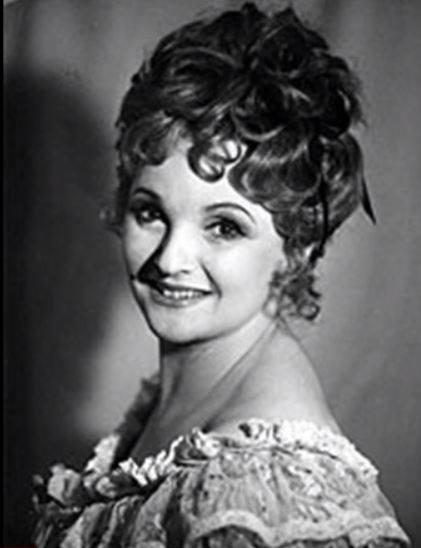
    The Philadelphia-born soprano Deborah Cook has died.

    Cook made her debut with the Philadelphia Lyric Opera Company at the Academy of Music in 1965. Her international debut followed in 1971. She appeared at the Royal Opera House, Covent Garden, for the first time in 1976. Thereafter, her career was focused primarily in Germany, which became her base of operations, though she continued to tour Europe and the United States.

    With her marriage in 1985, she returned to the U.S. and took the position of executive secretary for the head of oncology at Children’s Hospital of Philadelphia. She must have had a total lack of ego to just walk away like that (she would have been about 46 years-old), though she did keep an oar in as a teacher of voice at Haverford College, Bryn Mawr College, and Westtown School.

    Cook received particular acclaim for her revival of Meyerbeer’s “Dinorah,” which she recorded, and appeared on Solti’s recording of “Ariadne auf Naxos,” with Leontyne Price, in the supporting role of Naiad. Deborah Cook is not to be confused with Barbara Cook, the musical theater singer, who died in 2017. She was 80 years-old.

    A more complete obituary here:

    https://www.penbaypilot.com/article/deborah-cook-marlowe-obituary/117224

    Deborah Cook as “Dinorah:”

Tag Cloud

Aaron Copland (93) Beethoven (95) Composer (114) Film Music (137) Film Score (143) Film Scores (255) Halloween (94) John Williams (195) KWAX (229) Leonard Bernstein (103) Marlboro Music Festival (125) Movie Music (152) Mozart (88) Opera (208) Philadelphia Orchestra (89) Picture Perfect (174) Princeton Symphony Orchestra (108) Radio (88) Ross Amico (244) Roy's Tie-Dye Sci-Fi Corner (290) The Classical Network (101) The Lost Chord (268) Vaughan Williams (103) WPRB (396) WWFM (881)

DON’T MISS A BEAT

Receive a weekly digest every Sunday at noon by signing up here


RECENT POSTS