Category: Daily Dispatch

  • May Day Music Sullivan Bax on WWFM

    May Day Music Sullivan Bax on WWFM

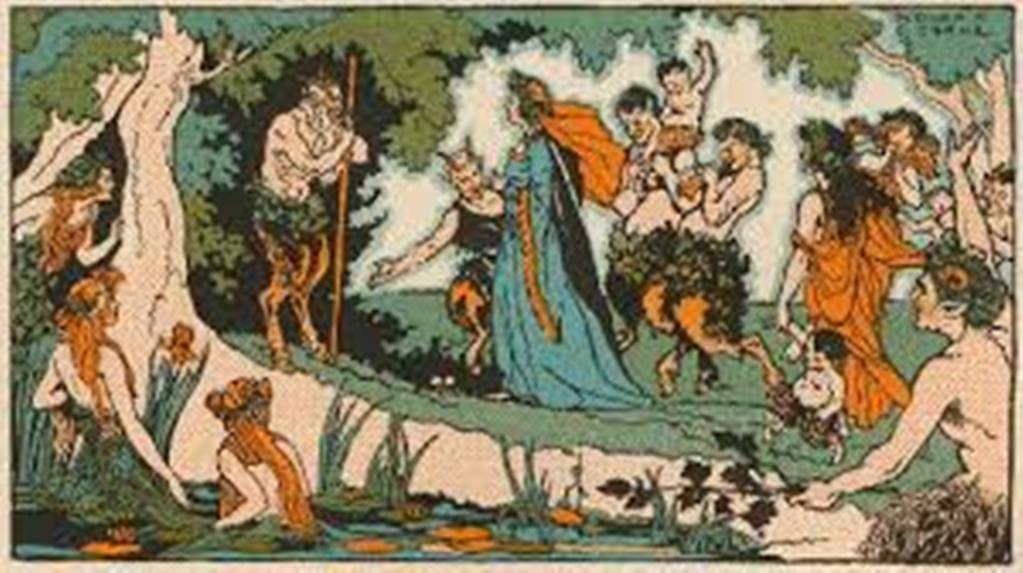
    This Sunday night on “The Lost Chord,” with the First of May right around the corner, we don our May Day finery and caper about the Maypole, to a couple of works by English composers.

    The first is by Sir Arthur Sullivan – he of Gilbert & Sullivan fame – who, in 1897, set to music a “Jubilee Hymn,” as part of the Diamond Jubilee celebrations surrounding the reign of Queen Victoria, which were held in May of that year.

    Concurrently, he was commissioned to write a ballet to mark sixty years of the Alhambra Theatre in Leicester Square. The result was “Victoria and Merrie England,” which was made up of nationalistic tableaux celebrating the history, legends, and royalty of Great Britain.

    We’ll listen to Scenes II & III from the ballet, together titled “May Day in Queen Elizabeth’s Time” (this alluding, of course, to the reign of Elizabeth I). The suite includes colorful descriptive subsections like “Procession of the Mummers and the Revelers,” “Knights and Rose Maidens,” “Friar Tuck and the Dragon” and “Maypole Dance.”

    Then we’ll turn to one of the earliest programmatic works by Arnold Bax (later SIR Arnold Bax). “Spring Fire,” composed in 1913 and 1914, is meant to suggest the awakening of mythological beings in early spring.

    The subject matter was an attempt to cash in on the fashionable “paganism craze” sparked by the Ballets Russes and its composers. Bax’s affection for the writings of Algernon Swinburne had recently yielded the symphonic poem “Nympholept.” Quotations from Swinburne also adorn portions of the score to “Spring Fire.”

    The piece was scheduled for performance several times, but repeatedly cancelled, first because of the outbreak of war, then because of the work’s difficulty. Ultimately, it would never be performed during Bax’s lifetime. The manuscript was consumed in a fire in 1964, and all hope of ever hearing the score vanished. Fortunately, a copy was discovered, and the piece was finally recorded in 1986.

    The work is meant to evoke a woodland sunrise in early spring, as ancient denizens of the forest shrug off their winter sleep. They skip with mad antics down the glades. Forest lovers loll in their ecstatic dreams, until they are rudely awakened by a turbulent rout of satyrs and maenads. Sounds like spring to me.

    I hope you’ll join me for “Spring into May Day,” this Sunday night at 10:00 EDT, on WWFM – The Classical Network and wwfm.org.

  • Fuct Supreme Court A High School Reunion?

    Fuct Supreme Court A High School Reunion?

    One of my former high school cronies has his day in (Supreme) Court. You might not want to click if you are easily offended by homonyms.

    https://www.gq.com/story/fuct-supreme-court-hearing

    On the other hand, if you are interested in hearing the case argued, I found this on YouTube – an unconventional, if accurate, representation:

  • Beauty Patches & Royal Romps on Picture Perfect

    Beauty Patches & Royal Romps on Picture Perfect

    Beauty patches are back!

    This week on “Picture Perfect,” it’s an hour of lace and licentiousness, with music from movies set during the reign of Charles II.

    “Restoration” (1995) features quite a cast, with a pre-“Iron Man” Robert Downey, Jr., as a young doctor torn between duty and debauchery. He succumbs to the latter at the court of Charles, played by Sam Neill, before finding redemption as he battles the Great Plague and braves the Fire of London. The film also stars David Thewlis, Polly Walker, Meg Ryan, Ian McKellan and Hugh Grant.

    The main title of James Newtown Howard’s score takes its impetus from Henry Purcell’s “The Fairy Queen.” And indeed there are baroque inflections throughout.

    George Sanders plays Charles in “The King’s Thief” (1955). Edmund Purdom is a highwayman who pilfers an incriminating book from David Niven. An aristocratic schemer, Niven will stop at nothing to get it back. The swashbuckling score is by Miklós Rózsa.

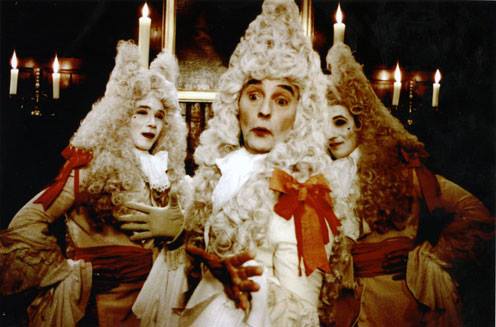
    I don’t recall Charles making an appearance in “The Draughtsman’s Contract” (1982), Peter Greenaway’s saucy though strangely aloof Restoration opus. However, there is plenty of licentiousness and an abundance of outlandish wigs. And, it being a Greenaway film, it is certainly strange in more ways than one. Michael Nyman’s score puts a minimalist spin on baroque sources.

    Finally, “Forever Amber” (1947) is based on a then-scandalous novel by Kathleen Winsor, about an ambitious young woman’s rise through the bedchambers of the Royal Court. The film was directed by Otto Preminger. Linda Darnell is Amber. Once again, George Sanders plays Charles, eight years before reprising the role for “The King’s Thief.” Cornel Wilde, Richard Greene and Jessica Tandy are also in the cast. Philadelphia-born composer David Raksin, of “Laura” fame, plays fast and loose with music of the era.

    Bwoo-hoo-hoo-hoo! It’s so naughty! Everyone, giggle into your handkerchiefs and wear ribbons on your shoes, this Friday evening at 6:00 EDT, on WWFM – The Classical Network and wwfm.org.
  • Heather Harper Soprano Dead at 88

    Heather Harper Soprano Dead at 88

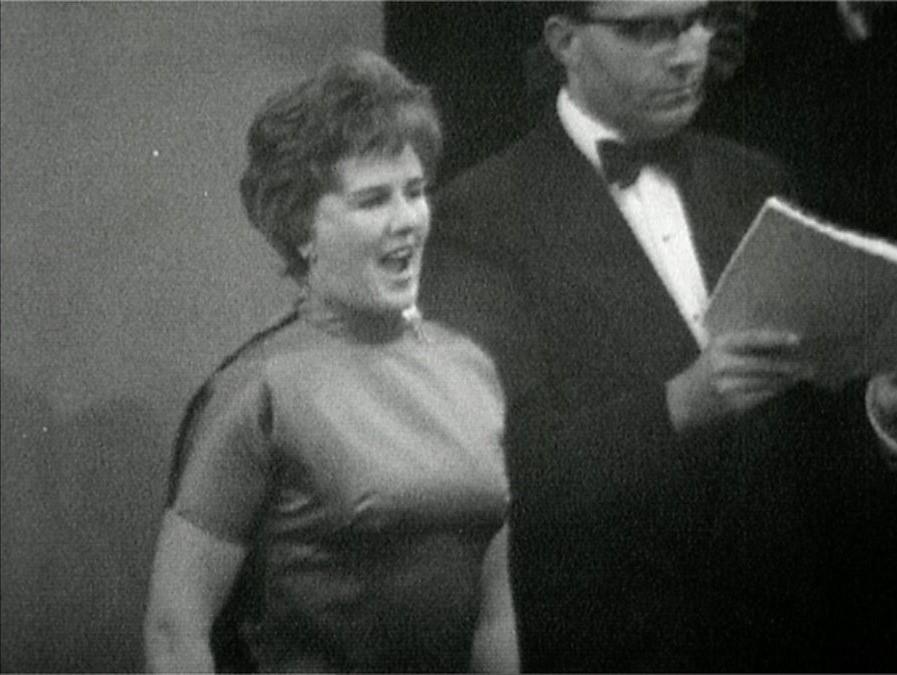
    News of the death of soprano Heather Harper has been fanning out across British media since her passing on Monday at the age of 88, and obituaries are now beginning to appear on our shores.

    Harper, who is closely identified with the works of Benjamin Britten, is probably best known for having stepped in for Galina Vishnevskaya, when the latter was unable to obtain permission from the Soviet authorities to sing in the premiere of Britten’s “War Requiem.” (Vishnevskaya does, however, appear on the classic recording.) The other soloists on that occasion were Peter Pears and Dietrich Fischer-Dieskau. Britten’s requiem was presented to mark the consecration of the reconstructed Coventry Cathedral. The original 14th century structure was destroyed by bombing in World War II.

    Harper also sang in André Previn’s classic recording of Vaughan Williams’ “Pastoral Symphony.” Her other achievements are layed out in this appreciation in the Washington Post.

    https://www.washingtonpost.com/local/obituaries/heather-harper-versatile-british-operatic-soprano-dies-at-88/2019/04/24/4828423c-65e3-11e9-8985-4cf30147bdca_story.html?utm_term=.9512aac40924

  • Casals’ Beethoven at Marlboro Music

    Casals’ Beethoven at Marlboro Music

    The Marlboro Music Festival is recognized far and wide as a chamber music mecca. Summer after summer, Marlboro Music brings together classical music luminaries and rising young talent, as it continues to add links to a chain, begun by Rudolf Serkin, Adolf Busch, Marcel Moyse, and the rest, all the way back in 1951.

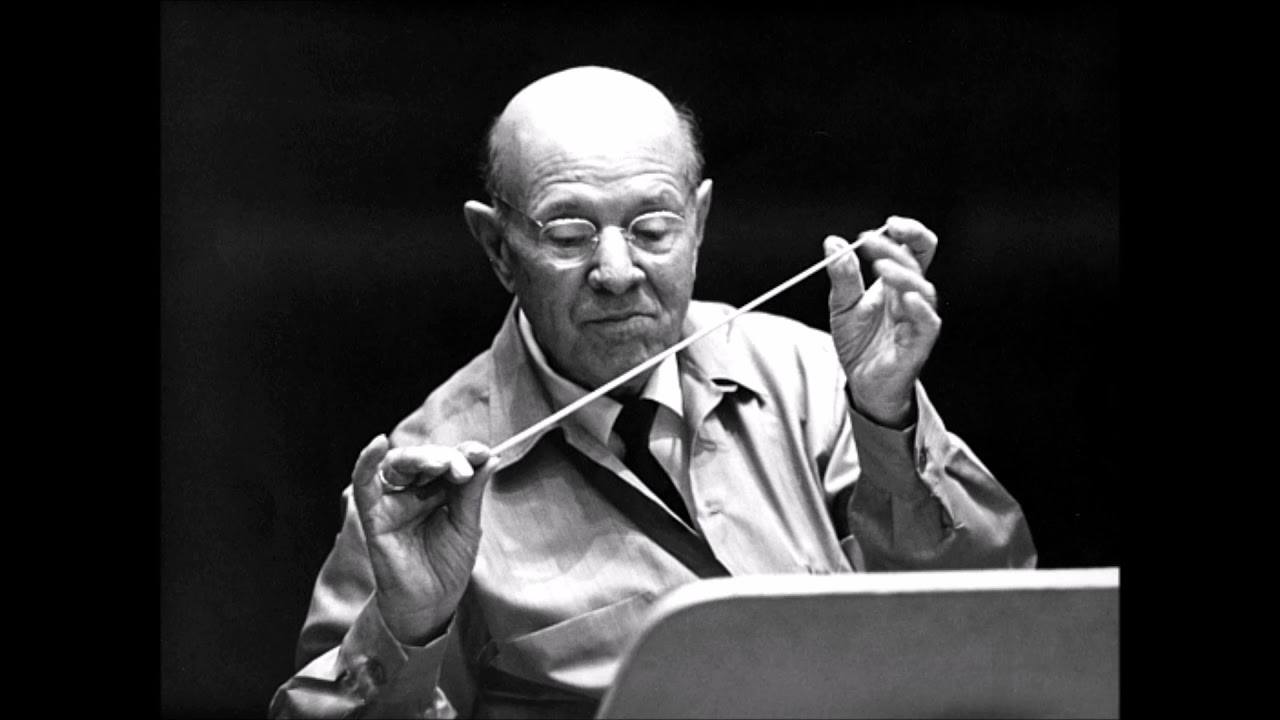
    Though chamber music is indeed Marlboro’s principal area of focus, every once in a while it’s fun to get everyone together to do a reading from the orchestral literature. On this week’s “Music from Marlboro,” we’ll listen in on one such occasion, as Marlboro players perform under the loving direction of Pablo Casals.

    Beethoven’s Symphony No. 3, the “Eroica (written in 1803-04) is enshrined in the history books as one of the torches that touched off the Romantic Era, but, on closer inspection, the composer was already playing with black powder in his Symphony No. 2.

    In his second symphony, completed two years earlier, Beethoven swaps out the Haydn-issue minuet for a scherzo, a move that would be emulated so frequently by other composers that it became the new standard.

    “Scherzo” is Italian for “joke,” and the last two movements of Beethoven’s symphony are full of them. I can’t say that they’re knee-slappers, but the composer plays enough with convention that it triggered a smart backlash from critics at the work’s premiere. One critic described the symphony as “a hideously writhing, wounded dragon that refuses to die, but writhing in its last agonies and, in the fourth movement, bleeding to death.”

    Ouch!

    I don’t think it’s anyone’s favorite Beethoven symphony, but in the hands of Pablo Casals, it is given a little more dignity than usual, in part because he just lets the music do its thing. There are no volcanic shifts in dynamics or hairpin turns in tempi. Many conductors interpret the earlier symphonies of Beethoven with retroactive insight, imposing a degree of vehemence more appropriate to the angrier passages of the 5th or the 9th. Casals non-interventionist approach allows the music to speak for itself.

    We’ll hear a performance from the 1969 Marlboro Music Festival. Casals directs a performance brimming with affection, and his players responding accordingly.

    Then, to fill out the remainder of the hour, we’ll find further delight in music by Wolfgang Amadeus Mozart – his Sonata in B-flat for Bassoon and Cello, K. 292. The 1975 performance will feature bassoonist Alexander Heller and a 19 year-old cellist named Yo-Yo Ma, also evidently having a good time.

    We’ll let the music do the talking, on the next “Music from Marlboro,” this Wednesday evening at 6:00 EDT, on WWFM – The Classical Network and wwfm.org.
    Marlboro School of Music and Festival: Official Page


    PHOTOS: Casals tames the dragon

Tag Cloud

Aaron Copland (93) Beethoven (95) Composer (114) Film Music (137) Film Score (143) Film Scores (255) Halloween (94) John Williams (195) KWAX (229) Leonard Bernstein (103) Marlboro Music Festival (125) Movie Music (152) Mozart (88) Opera (208) Philadelphia Orchestra (89) Picture Perfect (174) Princeton Symphony Orchestra (108) Radio (88) Ross Amico (244) Roy's Tie-Dye Sci-Fi Corner (290) The Classical Network (101) The Lost Chord (268) Vaughan Williams (103) WPRB (396) WWFM (881)

DON’T MISS A BEAT

Receive a weekly digest every Sunday at noon by signing up here


RECENT POSTS